The Purity Threshold: Why VIM Engineering Defines the Future of Inert Anodes
May 05, 2026
The Hostile Reality of Electrolysis
In the world of industrial material science, the electrolysis cell is a crucible of chaos. It is a high-temperature, corrosive environment that punishes structural imperfection. For inert anodes to survive, "good enough" metallurgy is a recipe for catastrophic failure.
The performance of an anode depends entirely on the integrity of its alloy—specifically the Ni-Fe-Cu (Nickel-Iron-Copper) matrix.
At this level of engineering, the challenge shifts from simply "making an alloy" to "managing every single atom." This is where Vacuum Induction Melting (VIM) moves from being a luxury to a systemic necessity.
The Invisible Saboteurs: Gas and Oxygen
Most metallurgical failures start with what you cannot see. When metals are melted in an open atmosphere, they act like sponges for oxygen, nitrogen, and hydrogen.
1. The Degassing Protocol
Under the deep vacuum of a VIM furnace, these dissolved gases are forcibly extracted.
- Oxygen removal prevents the formation of internal oxides that act as stress concentrators.
- Hydrogen extraction eliminates the risk of internal "hydrogen embrittlement."
- Nitrogen control ensures that the grain boundaries remain clean.
2. The Preservation of Active Elements
In a standard melt, active elements oxidize almost instantly. By creating a environment of "nothingness," the vacuum inhibits oxidation. This ensures that your Ni-Fe-Cu ratios remain exactly as calculated, rather than losing critical components to the slag.
The Kinetic Architecture of the Melt
A VIM furnace does more than heat; it organizes. The use of electromagnetic induction introduces a phenomenon known as Electromagnetic Stirring.
| Feature | Technical Mechanism | Benefit to Inert Anodes |
|---|---|---|
| Induction Currents | Directional magnetic force | Continuous homogenization of the melt |
| Homogeneity | Zero localized pockets | Uniform corrosion resistance across the entire surface |
| Thermal Control | Direct coupling with the metal | Precise microstructure and grain size management |
Without this active stirring, heavier elements tend to settle, creating "chemical drift." In an inert anode, a 1% deviation in composition can be the difference between a five-year lifespan and a six-month failure.
The Economic Logic of Ultra-Purity
Engineering is often the art of managing trade-offs. VIM is, by definition, a capital-intensive process. It requires vacuum-tight chambers, precision sensors, and advanced cooling systems.
However, the psychology of R&D is shifting.
The "cost" of a VIM furnace is offset by the longevity of the result. When the goal is to produce materials that survive extreme electrolytic stress, the most expensive path is the one that leads to frequent replacement.
Ultra-purity is not an indulgence—it is an insurance policy against downtime.
Optimizing for Specific Performance Goals
When implementing VIM technology, the strategy should align with the desired failure-mode prevention:
- For Corrosion Resistance: Focus on the vacuum’s ability to remove volatile contaminants that initiate chemical pits.
- For Mechanical Strength: Utilize controlled cooling under vacuum to maximize microstructural density.
- For High-Volume Precision: Leverage induction stirring to ensure the first ingot is identical to the thousandth.
Engineering the Future with THERMUNITS
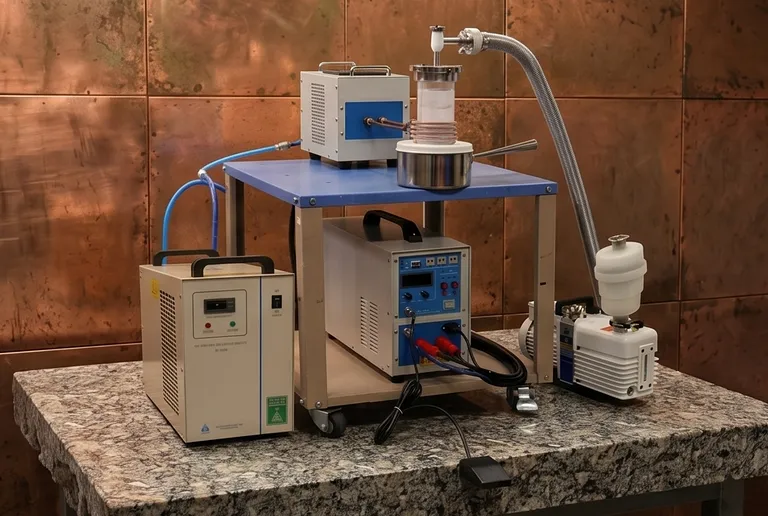
At THERMUNITS, we view thermal processing as the foundation of innovation. We don't just build furnaces; we build the environments where next-generation materials are born. Our Vacuum Induction Melting (VIM) systems are designed for the rigorous demands of Ni-Fe-Cu alloy production, providing the vacuum integrity and induction precision required for semiconductor-grade R&D.
Beyond VIM, our ecosystem includes:
- CVD/PECVD Systems: For advanced surface engineering.
- Atmosphere & Vacuum Furnaces: Precision heat treatment across all scales.
- Rotary & Hot Press Furnaces: Specialized solutions for complex material forming.
The journey toward a more efficient industrial future starts with the purity of the raw material. To explore how our thermal solutions can stabilize your production outcomes, Contact Our Experts.
Quick Links
Suggested Products
1900C Maximum High Temperature 7KW Vacuum Induction Melting System with 60mm Quartz Tube and Manual Temperature Control for Metallic Alloy Research Induction Melting Casting Furnace 1750C Vacuum High Frequency Metal Processing Unit High Temperature Induction Melting System with Integrated Ultra High Purity Glove Box for Metallic Alloy Processing Atmosphere Controlled Induction Melting Casting System 1600C 10L Capacity Atmosphere Controlled Induction Melting Granulating Casting Furnace 1500C 5kg Capacity
ThermUnits
Last updated on Apr 15, 2026
Related Products
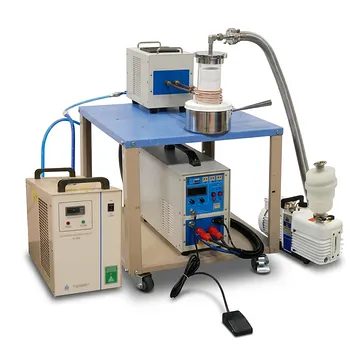
1900C Maximum High Temperature 7KW Vacuum Induction Melting System with 60mm Quartz Tube and Manual Temperature Control for Metallic Alloy Research
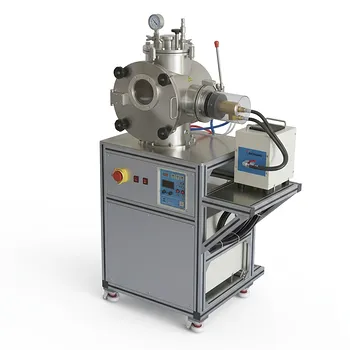
Induction Melting Casting Furnace 1750C Vacuum High Frequency Metal Processing Unit
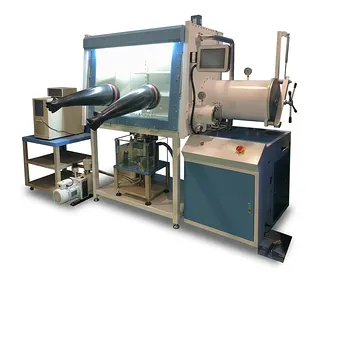
High Temperature Induction Melting System with Integrated Ultra High Purity Glove Box for Metallic Alloy Processing
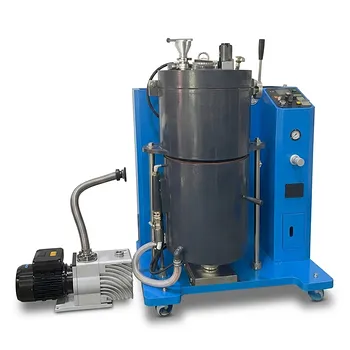
Atmosphere Controlled Induction Melting Casting System 1600C 10L Capacity
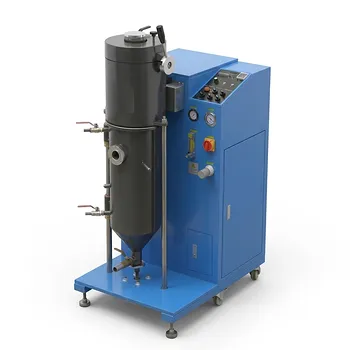
Atmosphere Controlled Induction Melting Granulating Casting Furnace 1500C 5kg Capacity
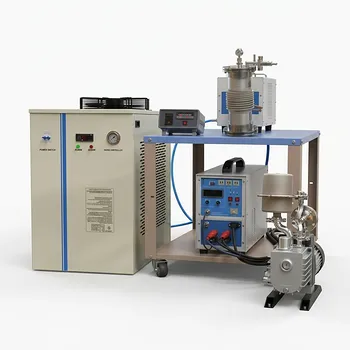
Induction Heating System with Temperature Control for High Temperature Vacuum Sintering and Melting
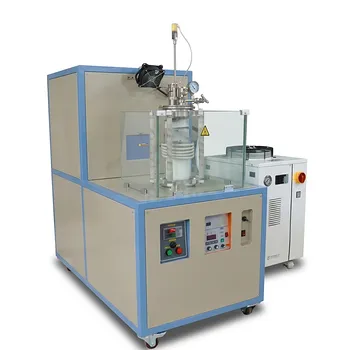
15KW Induction Melting System with Top Suction Casting for Thin Rod Production Up to 1200°C
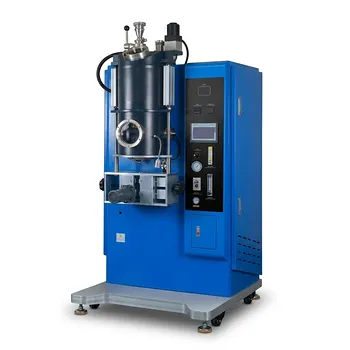
Atmosphere Controlled Continuous Casting Furnace with Secondary Charge Function for Induction Melting and Metal Alloy Wire Production
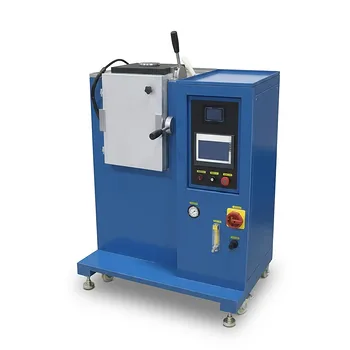
High Throughput Induction Melting and Casting Furnace for Superalloy Research 1700C Atmosphere Controlled Multi Sample System
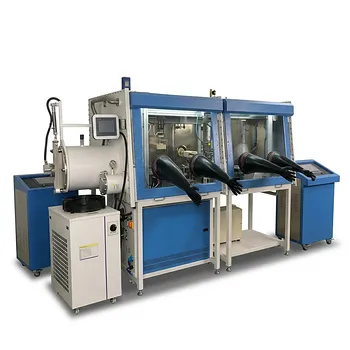
Automatic 10 Crucible Induction Melting and Casting System with Stirring Function and Glovebox Integration 2000C
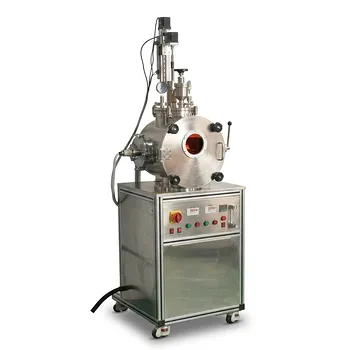
High Vacuum Melting Casting Furnace with Mechanical Stirring and Secondary Charge for Metallic Alloy Research
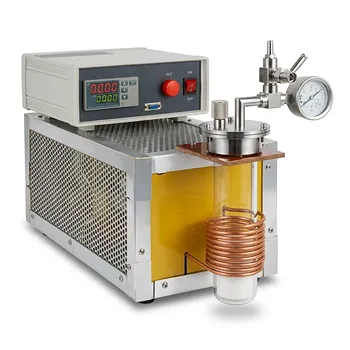
High Temperature Mini Induction Heating Furnace 1600C Laboratory Material Melting System
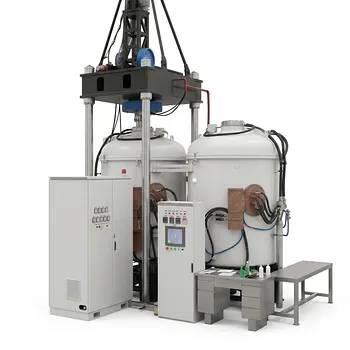
High Pressure 600T Vacuum Induction Hot Press Furnace for Advanced Material Heat Treatment and Sintering
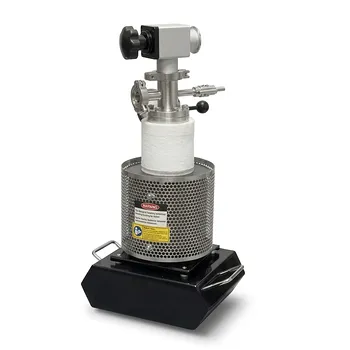
High Temperature 1100C Compact Top Loading Vertical Vacuum Tube Furnace for High Vacuum Noble Metal Melting and Material Research
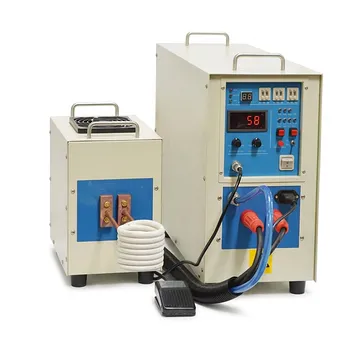
High Frequency Desktop Induction Heater 15 KVA Induction Heating System with Automatic Timer Control for Material Research and Metal Melting
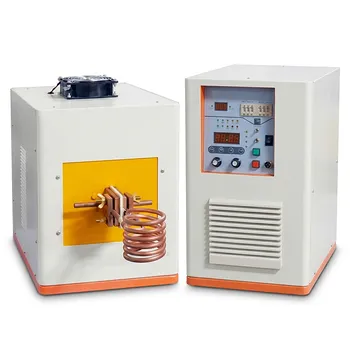
30KW High Frequency Induction Heater for Metal Melting and Industrial Heat Treatment 80-200kHz
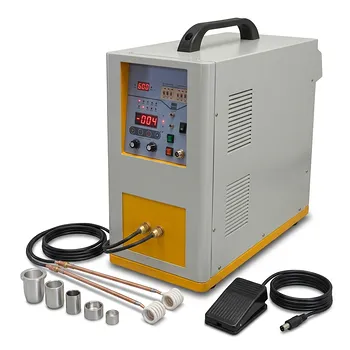
Desktop High Frequency Induction Heater 6KW 100-500kHz for Precision Metal Melting and Heat Treatment
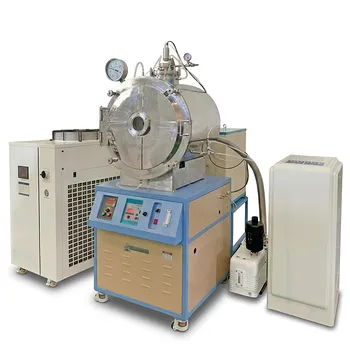
Ultra High Temperature Induction Heated Vacuum Furnace with Molten Salt Electrolysis Capability and 3000 Degree Precision Control
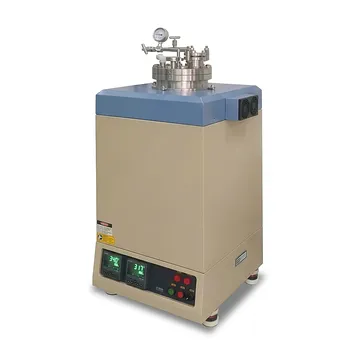
High Temperature 1000C Vacuum Furnace with 8 Inch ID Chamber for Material Sintering and Research Annealing