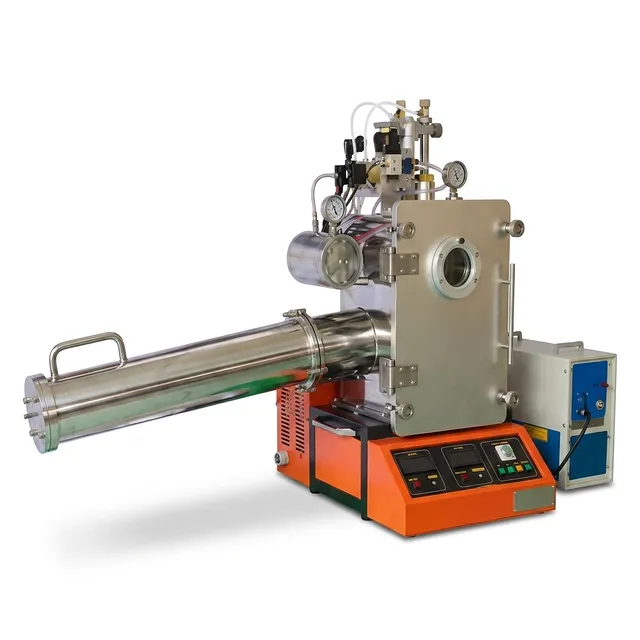
Vacuum Melt-Spinning Furnace
Mini Multifunctional Melt Spinning Machine for Amorphous and Nanocrystalline Material Development
Item Number: TU-SDA
Shipping: Contact us to get shipping details Enjoy On-time Dispatch Guarantee.
Product Overview
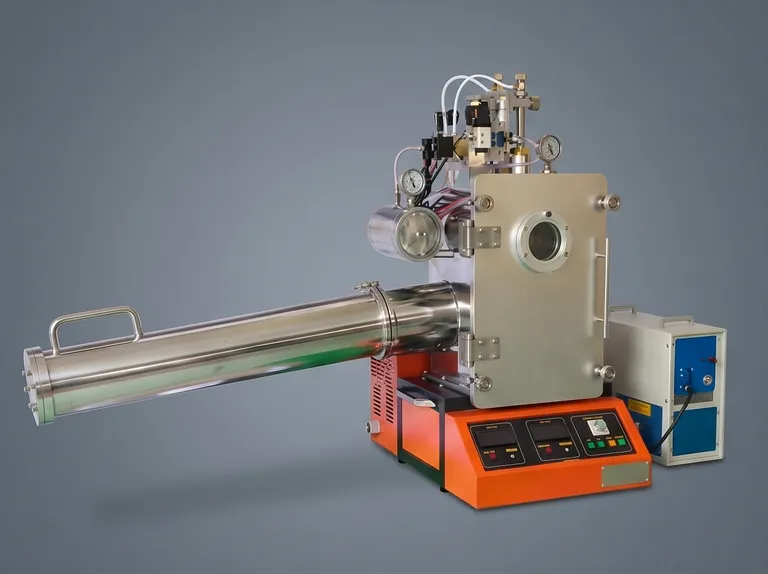
This mini multifunctional melt-spinning machine is a specialized laboratory platform designed for rapid solidification processing of metallic alloys. It integrates high-frequency induction melting with precision-controlled melt-spinning and casting capabilities, enabling researchers to produce amorphous, nanocrystalline, and other metastable materials in ribbon or bulk form. The system is engineered to deliver the extreme cooling rates required for glass formation while maintaining precise control over atmosphere and temperature.
Researchers and engineers in materials science, metallurgy, and condensed matter physics rely on this equipment for the discovery and optimization of advanced functional materials. Typical applications include the synthesis of amorphous soft magnetic alloys for energy-efficient transformers, nanostructured permanent magnet ribbons for high-performance motors, and hydrogen storage alloys for clean energy systems. The small sample capacities (20 g for melt-spinning, 200 g for casting) make it especially well-suited to combinatorial screening and small-batch prototyping in both academic and industrial R&D environments.
Every aspect of this furnace is built for consistency and durability. The high-vacuum chamber achieves pressures below 5×10⁻⁴ Pa to prevent oxidation of reactive elements, while the water-free copper roller with speeds from 1 to 3000 rpm provides a wide range of cooling rates. Combined with a broad melt-spinning temperature range of 500–1700°C, the system ensures reproducible results across a diverse array of alloy systems. Its compact desktop design reduces floor space requirements and energy consumption, making advanced melt-spinning accessible to laboratories of all sizes.
Key Features
- Integrated Induction Heating: The system employs a 7 kW high-frequency induction power supply, delivering rapid, contactless heating with precise temperature control up to 2200°C. This facilitates uniform melting of even refractory metals while minimizing contamination and energy loss.
- Dual Melt-Spinning and Casting Modes: Seamlessly switch between ribbon production via melt-spinning onto a rotating copper roller and casting of bulk samples in dedicated crucibles. This dual functionality eliminates the need for separate equipment, streamlining workflow and reducing capital expenditure.
- Precision Roller Speed Control: The Ø200 mm × 40 mm copper roller operates over a speed range of 1 to 3000 r/min, giving researchers exact command over cooling rates. Fine speed adjustments are critical for achieving the amorphous phase or modulating nanocrystalline grain size.
- Ultra-High Vacuum Environment: A robust vacuum chamber (300×300×480 mm) with high-quality seals and pumping system reaches ultimate vacuum levels better than 5×10⁻⁴ Pa. This ultra-clean environment prevents oxidation and nitride formation during processing of highly reactive alloys.
- Wide Operational Temperature Range for Ribbon Fabrication: Dedicated melt-spinning and injection casting temperature range of 500°C to 1700°C accommodates nearly all metallic glass-forming compositions, from low-melting Al-based alloys to high-temperature Fe- and Co-based systems.
- Versatile Crucible Selection: The melting station uses a high-purity alumina crucible for casting, while the melt-spinning module accepts boron nitride (BN) or quartz crucibles. These materials provide excellent thermal shock resistance and chemical inertness with diverse metal charges.
- Controlled Ribbon Dimensions: Ribbon width can be precisely adjusted from 1 to 10 mm, with consistent thickness achieved through stable roller dynamics. This uniformity is essential for subsequent magnetic, electrical, or mechanical characterization.
- Compact, Energy-Saving Design: With overall dimensions of just 620×560×780 mm, this desktop unit occupies minimal bench space and operates with low power consumption. Its integrated design consolidates all subsystems, eliminating the need for external chillers or extensive facility modifications.
- Robust Industrial Construction: All structural components, electrical connections, and vacuum seals are manufactured from high-grade materials to withstand repeated thermal cycling and continuous operation. The result is a system with a long service life and minimal maintenance requirements.
- User-Friendly Operation: An intuitive control interface simplifies parameter setting for power, roller speed, and vacuum sequencing. Clear readouts and safety interlocks reduce operator error and training time, allowing new users to achieve productive results quickly.
Applications
| Application | Description | Key Benefit |
|---|---|---|
| Amorphous Soft Magnetic Alloys | Melt-spinning of Fe-, Co-, and Ni-based alloys (e.g., FINEMET, NANOMET) to produce ribbons with amorphous structure for use in high-efficiency transformer cores, inductive components, and electromagnetic shielding. The process suppresses crystallinity to minimize eddy current losses and maximize soft magnetic performance. | Achieves high cooling rates (up to 10⁶ K/s) critical for glass formation, yielding low coercivity and high permeability materials. |
| Bulk Metallic Glass (BMG) Development | Combined use of suction casting and melt-spinning to rapidly screen alloy compositions for glass-forming ability. Bulk samples up to 200 g are cast for mechanical testing, while ribbons provide rapid XRD/DSC characterization, accelerating the development cycle for new BMG systems. | Integrated casting and ribbon production reduces equipment footprint and enables direct comparison of bulk and ribbon properties. |
| Rare-Earth Permanent Magnet Ribbons | Fabrication of Nd-Fe-B, Sm-Co, and nanocomposite ribbon precursors via melt-spinning. Subsequent controlled annealing crystallizes the optimal microstructure for high coercivity and remanence, used in high-performance motors, generators, and actuators. | Uniform ribbon thickness (±5%) ensures consistent magnetic properties along the ribbon length, critical for industrial production scalability. |
| High-Entropy Alloy (HEA) Exploration | Rapid solidification of multicomponent HEAs to suppress intermetallic formation and produce single-phase metastable or nanostructured ribbons. This enables efficient composition-property mapping for structural and functional applications. | Reproducible processing conditions allow direct comparison of alloy performance, expediting discovery. |
| Hydrogen Storage Alloy Strips | Production of Mg-based, TiFe-based, and other hydrogen storage alloy ribbons with tailored nanocrystalline/amorphous microstructures. Melt-spinning refines grain size and introduces defects that enhance hydrogen absorption/desorption kinetics for clean energy storage. | Inert vacuum processing prevents oxidation, preserving high hydrogen capacity and cycling stability. |
| Thermoelectric Material Synthesis | Melt-spinning of skutterudites (e.g., CoSb₃), half-Heuslers, or Mg₂Si-based alloys to generate nanostructured precursors that, after compaction, exhibit drastically reduced lattice thermal conductivity and improved ZT. | Rapid solidification creates multiscale nanostructures that enhance phonon scattering without impairing electrical transport. |
| Shape Memory Alloy Thin Strips | Fabrication of NiTi-based and Cu-based shape memory alloy ribbons for micro-actuators, medical stents, and flexible electronics. Controlled cooling rates tailor transformation temperatures and functional fatigue properties. | Precise width and thickness control simplify post-processing into device geometries. |
| Academic Teaching and Research | Hands-on equipment for graduate and undergraduate laboratories to illustrate principles of rapid solidification, phase transformations, and materials design. The system's compact size and ease of use make it suitable for educational settings with limited space and budget. | Lowers the barrier to advanced solidification experiments, fostering deeper understanding and innovation. |
Technical Specifications
The TU-SDA mini multifunctional melt-spinning machine is built to the following specifications.
| Parameter | Value |
|---|---|
| Model | TU-SDA |
| Maximum Casting Capacity | 200 g |
| Casting Crucible Size | Ø35 mm × 70 mm |
| Melt-Spinning Sample Capacity | 20 g |
| Maximum Melting Temperature | 2200°C |
| Melt-Spinning/Injection Casting Temperature Range | 500°C – 1700°C |
| Roller Dimensions | Ø200 mm × 40 mm (without water cooling) |
| Roller Speed Range | 1 – 3000 r/min |
| Ultimate Vacuum | < 5 × 10⁻⁴ Pa |
| Induction Melting Power Supply | 7 kW |
| Melting Crucible Material | Alumina |
| Melt-Spinning Crucible Material Options | Boron nitride (BN), Quartz |
| Ribbon Width Adjustment Range | 1 – 10 mm |
| Vacuum Chamber Dimension | 300 mm (L) × 300 mm (W) × 480 mm (H) |
| Overall Equipment Size | 620 mm (L) × 560 mm (W) × 780 mm (H) |
| Standard Configuration | Main unit + induction power supply |
| Design Characteristic | Desktop, compact, energy-efficient |
Why Choose This Product
- Proven Reliability for Critical Research: This melt-spinning machine is engineered for repeatable performance in demanding materials science environments. Every unit undergoes rigorous factory testing of vacuum, temperature, and roller dynamics, ensuring that researchers can depend on consistent ribbon quality and minimal downtime year after year.
- Integrated Functionality, Minimal Footprint: By combining induction melting, melt-spinning, and casting into a single desktop chassis, the system saves valuable laboratory space and reduces setup complexity. The energy-efficient design lowers operating costs without compromising on the advanced capabilities needed for leading-edge research.
- Versatility Across Material Systems: With a maximum melting temperature of 2200°C, a melt-spinning range of 500–1700°C, and multiple crucible options, this unit accommodates everything from low-melting aluminum glasses to refractory metal alloys. Such flexibility supports diverse research portfolios, from magnetic materials to hydrogen storage.
- Precision Control for Superior Results: The ability to finely adjust roller speed (1–3000 rpm) and maintain ultra-high vacuum (<5×10⁻⁴ Pa) gives researchers an unmatched level of control over cooling rates and environmental purity. This translates into narrower ribbon width distributions and higher amorphous phase fractions.
- Expert Support and Customization: Our team of applications engineers provides comprehensive installation guidance, training, and ongoing technical support. Custom configurations—such as alternative roller sizes, extended temperature ranges, or specialized crucible materials—can be developed to meet unique experimental requirements.
Invest in a melt-spinning solution built on precision engineering and deep domain expertise. Contact us today to discuss your project needs or request a customized quotation.
REQUEST A QUOTE
Our professional team will reply to you within one business day. Please feel free to contact us!
Related Products
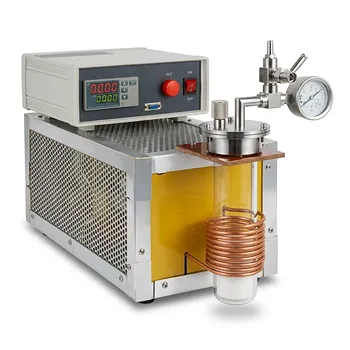
High Temperature Mini Induction Heating Furnace 1600C Laboratory Material Melting System
High performance mini induction furnace for rapid material melting up to 1600C. Compact design fits glovebox antechambers for specialized R&D. Advanced PID control and rapid heating rates ensure precision thermal processing for material science and industrial metallurgy labs.
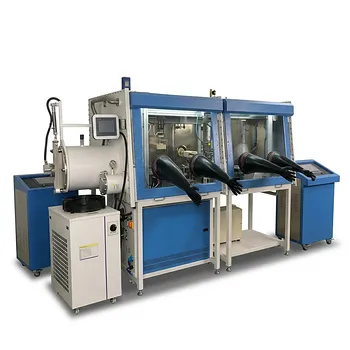
Automatic 10 Crucible Induction Melting and Casting System with Stirring Function and Glovebox Integration 2000C
Streamline alloy research with this automatic 10-crucible induction melting and casting system. Featuring integrated stirring and 2000ºC capability within an ultra-pure glovebox, it enables high-throughput material discovery and 24/7 automated operation for demanding industrial and R&D laboratories.
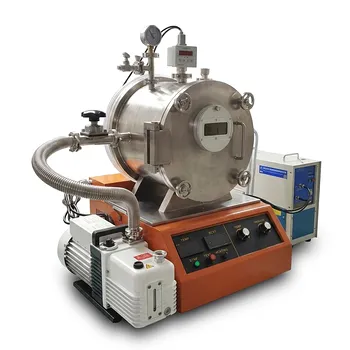
Benchtop Micro Vacuum Induction Melting Furnace for Alloy Refining and Material Science Research
This benchtop micro vacuum induction melting furnace delivers rapid alloy synthesis, precise real-time infrared temperature monitoring, and controlled atmosphere casting for advanced university material science laboratories and demanding high-purity industrial metallurgical research applications.
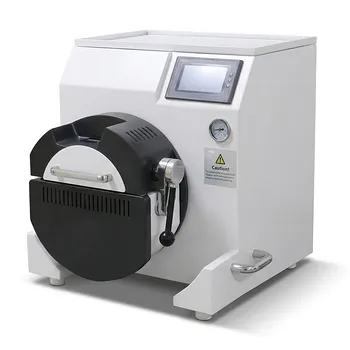
Desktop Induction Melting Furnace with Automatic Rotary Casting Function up to 1700C for Advanced Metal Alloy Research
This high-performance desktop induction melting furnace features automatic rotary casting and precise 1700C temperature control for advanced material science and alloy development in industrial R&D and laboratory environments. Optimize your thermal processing with this efficient casting solution today.
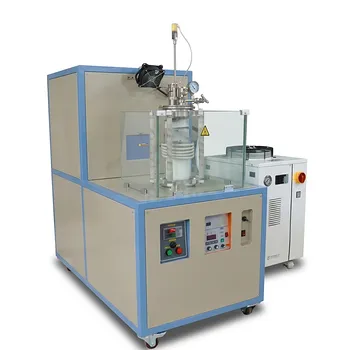
15KW Induction Melting System with Top Suction Casting for Thin Rod Production Up to 1200°C
This professional 15KW induction melting system features a unique top-suction casting mechanism for producing high-quality thin alloy rods up to 1200°C. It effectively reduces shrinkage cavity defects while ensuring rapid solidification for demanding material science research applications today. Premium performance.
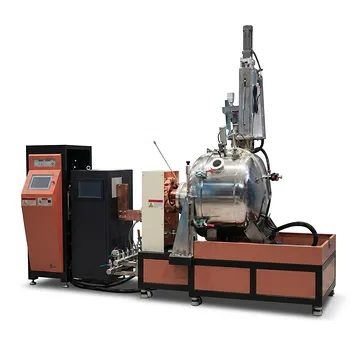
10kg Vacuum Induction Melting Furnace with Mechanical Stirring
Industrial 10kg vacuum induction melting furnace with mechanical stirring, designed for precise alloy preparation under vacuum or protective atmosphere. Featuring PLC control and rapid melting, ideal for research and production, this system provides high purity and consistent results.
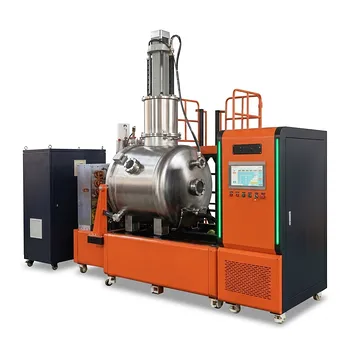
25kg Horizontal Vacuum Induction Melting Furnace
High-performance 25kg horizontal vacuum induction melting furnace for material science. Delivers ultimate vacuum of 6.67×10⁻³ Pa, 1800°C max temperature, and precise PLC touchscreen control. Designed for stainless steel, nickel alloys, copper, and rare earth metals melting and refining.
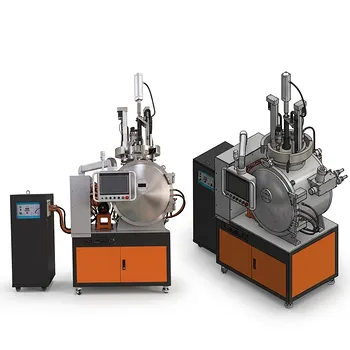
High Temperature Vacuum Induction Melting Furnace with Ultrasonic Agitation and Double Secondary Feeding
Accelerate your advanced materials research with this high performance vacuum induction melting furnace, featuring precise ultrasonic agitation, double secondary feeding, and a robust water cooled stainless steel chamber engineered specifically for demanding laboratory and industrial metallurgical casting applications
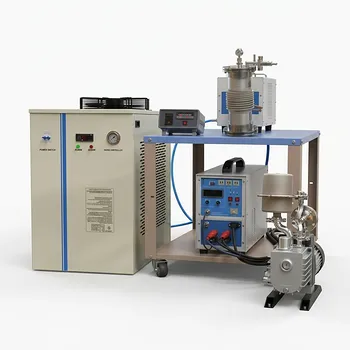
Induction Heating System with Temperature Control for High Temperature Vacuum Sintering and Melting
This professional induction heating system provides rapid thermal processing up to 1900ºC for advanced metallurgy. Featuring precise PID temperature control, vacuum capability, and integrated water cooling, it ensures exceptional reliability for metal melting, sintering, and innovative material research.
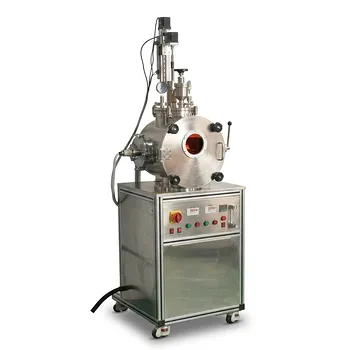
High Vacuum Melting Casting Furnace with Mechanical Stirring and Secondary Charge for Metallic Alloy Research
Advanced high vacuum melting casting furnace with mechanical stirring and secondary material feeder. Designed for precise metallic alloy preparation and research, featuring 1200C heating, high vacuum stability, and triple-dopant injection for superior material homogeneity and reliable performance outcomes.
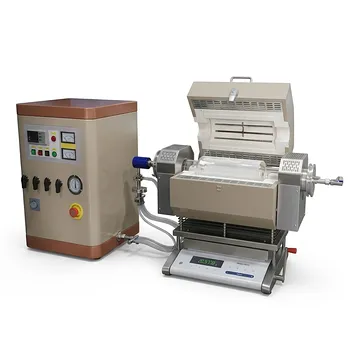
Mini Rotary Tubular Furnaces for Precision Powder Heat Treatment and Thermogravimetric Analysis
High-performance mini rotary tubular furnaces designed for dynamic thermal processing and real-time thermogravimetric analysis. Featuring 1000°C resistance heating, PID control, and vacuum capabilities, this system ensures uniform material heating for advanced research and industrial powder engineering applications.
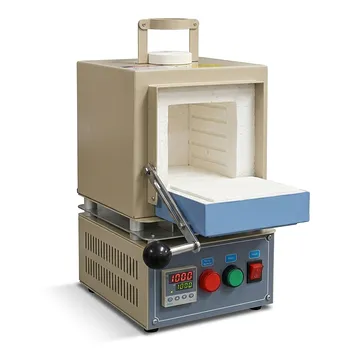
Compact 1000C Muffle Furnace with Programmable Controller and 2 Inch Top Port for Vacuum and Atmosphere Material Research
Precision thermal processing meets compact design in this 1000°C muffle furnace featuring a programmable controller and top port for vacuum or atmosphere tasks. It is ideal for material research, sintering, and glove box integration in professional scientific R&D labs.