The Architecture of Movement: Managing Gravity and Heat in Rotary Furnaces
Apr 22, 2026
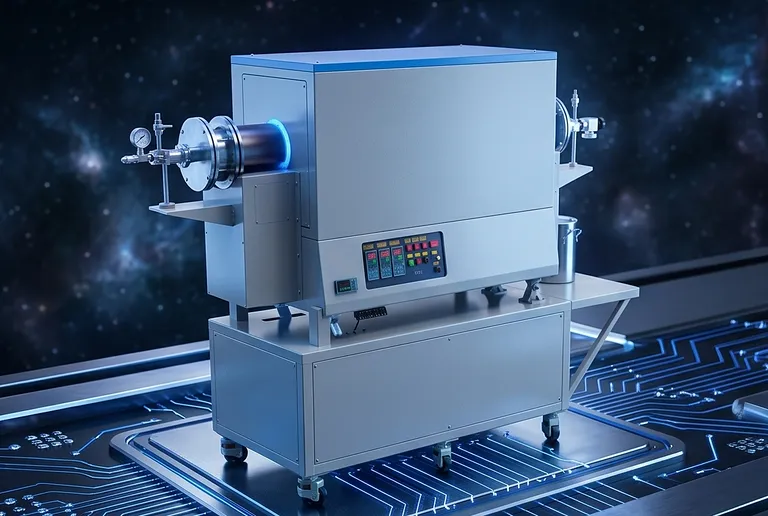
The Invisible Choreography of Heavy Industry
In the world of high-temperature material science, we often fixate on the flame. We study the thermodynamics, the gas concentrations, and the chemical phase changes. But there is a silent, mechanical choreography happening beneath the heat that dictates whether a process succeeds or fails.
A rotary furnace is a contradiction. It is a massive, multi-ton structure that must operate with the precision of a laboratory instrument. It must remain perfectly aligned while being subjected to temperatures that cause steel to expand and soften.
Understanding the support and rotation system isn't just about maintenance; it is about understanding how to manage the fundamental forces of gravity and friction under duress.
The Gravity of the Situation: Load Distribution
At the heart of the furnace are the riding rings, or tyres. These are not merely decorative bands; they are the primary interfaces between the rotating world and the stationary one.
The entire weight of the kiln—including its refractory lining and the material being processed—rests on these contact points. This load is then transferred to the support rollers.
The physics here is unforgiving. If the contact between the ring and the roller is uneven, the resulting stress concentrations can lead to "spalling" or surface fatigue. In engineering, as in psychology, the points of highest pressure are often the first to crack.
The Role of Low-Friction Bearings
- Smoothness: High-quality bearings ensure that the rotational torque is spent moving the material, not fighting internal resistance.
- Energy Efficiency: Reduced friction directly correlates to lower operational costs and a longer lifespan for the drive motor.
- Stability: Bearings must dampen the vibrations inherent in tumbling heavy, uneven loads.
The Geometry of Time: Managing Material Residence
We do not just spin a furnace to keep it from sagging; we spin it to move material. This is where the drive system and the kiln incline become a tool for temporal control.
Most rotary kilns are set at an incline of 1 to 4 degrees. This angle, combined with the rotation speed (RPM), determines the "residence time"—exactly how long a particle of material stays in the hot zone.
The Balancing Act
- Rotation Speed: Faster rotation increases mixing and throughput but accelerates mechanical wear.
- Axial Alignment: Because the kiln is inclined, gravity constantly tries to pull the entire assembly "downhill."
- Thrust Rollers: These specialized components act as the physical "stop," preventing the kiln from migrating off its supports.
The Psychology of Friction vs. Throughput
In the pursuit of production, there is a constant temptation to push the limits of rotation. However, mechanical systems have a psychological profile: they are predictable until they are pushed past their design limits.
Increasing throughput by 20% might feel like a win today. But if that speed increases the wear on the girth gear by 50%, the long-term cost of downtime will far outweigh the short-term gains.
True optimization requires finding the "steady state" where thermal precision and mechanical longevity intersect.
The Invisible War: Thermal Expansion
A furnace at room temperature is a different machine than a furnace at 1200°C. Steel expands. A kiln shell can grow significantly in both diameter and length as it reaches operating temperature.
If the support system is too rigid, this expansion has nowhere to go. The shell may warp, or the riding rings may bind. Modern engineering solves this through "floating" designs that allow the shell to breathe while remaining centered.
Misalignment is not just a mechanical error; it is a failure to account for the physical reality of heat.
System Performance Matrix
| Component | Primary Function | Operational Impact |
|---|---|---|
| Riding Rings | Load Transmission | Distributes weight to prevent shell deformation. |
| Support Rollers | Structural Cradling | Ensures smooth rotation and handles radial loads. |
| Girth Gear/Drive | Torque Delivery | Governs material residence time and mixing. |
| Thrust Rollers | Axial Control | Counteracts gravity to maintain longitudinal alignment. |
Engineering Precision with THERMUNITS
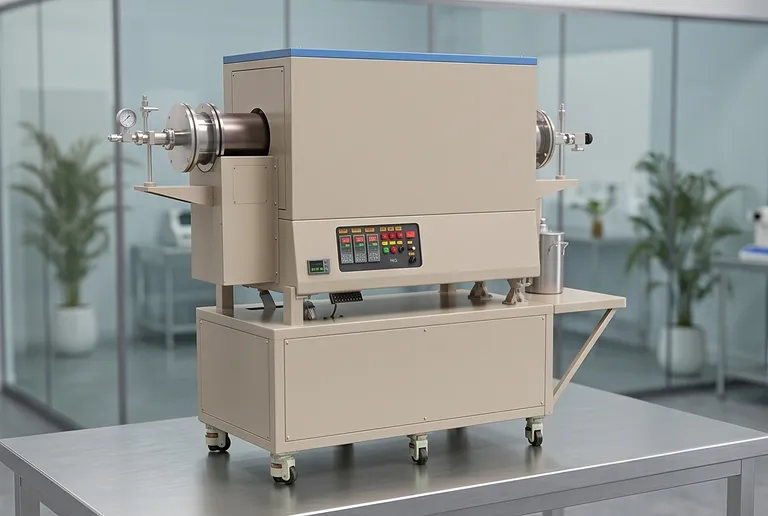
Reliable thermal processing is impossible without a foundation of mechanical excellence. At THERMUNITS, we design our rotary systems to handle the complex interplay of high-temperature physics and mechanical stress.
Whether you are scaling a process in an electric rotary kiln, performing high-vacuum metallurgy in a VIM furnace, or exploring the boundaries of material science with CVD/PECVD systems, our equipment is built for the "engineer’s romance"—the perfect marriage of power and precision.
Maximize your research potential with systems engineered for durability. Contact Our Experts
Quick Links
Suggested Products
Electric Rotary Kiln Continuous Working Small Rotary Furnace Heating Pyrolysis Plant Electric Rotary Kiln Small Rotary Furnace for Activated Carbon Regeneration Electric Rotary Kiln Small Rotary Furnace Biomass Pyrolysis Plant 900°C Max Rotary Tube Furnace with 8 Inch 310S Alloy Tube and Optional Multi Zone Heating for Industrial Material Calcination Three Zone Rotary Tube Furnace for High Temperature Powder Processing and Material ResearchFurther Reading
The Geometry of Heat: Why Electric Rotary Kilns are Winning the Efficiency War The Architecture of Equilibrium: Why Rotation is the Antidote to Thermal Stagnation The Architecture of Heat: Why the Kiln Shell is a Masterclass in Structural Compromise The Architecture of Absence: Why Inertia Defines the Quality of Pyrolysis
ThermUnits
Last updated on Apr 15, 2026
Related Products
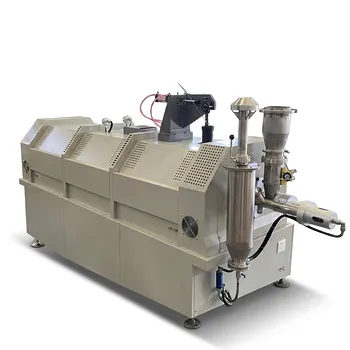
Electric Rotary Kiln Continuous Working Small Rotary Furnace Heating Pyrolysis Plant
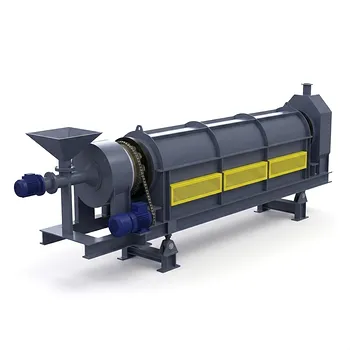
Electric Rotary Kiln Small Rotary Furnace for Activated Carbon Regeneration
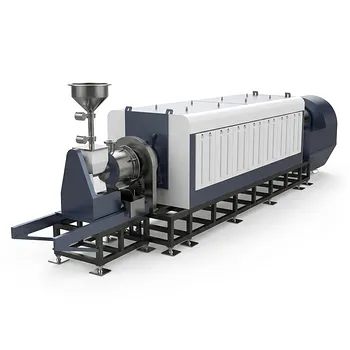
Electric Rotary Kiln Small Rotary Furnace Biomass Pyrolysis Plant
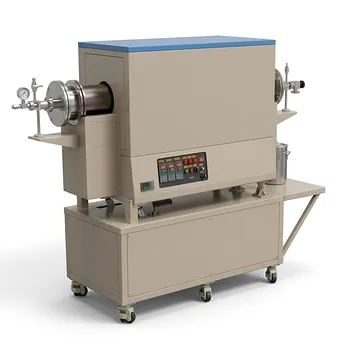
900°C Max Rotary Tube Furnace with 8 Inch 310S Alloy Tube and Optional Multi Zone Heating for Industrial Material Calcination
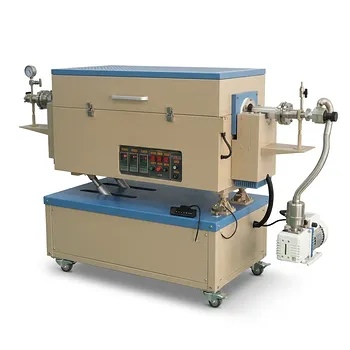
Three Zone Rotary Tube Furnace for High Temperature Powder Processing and Material Research
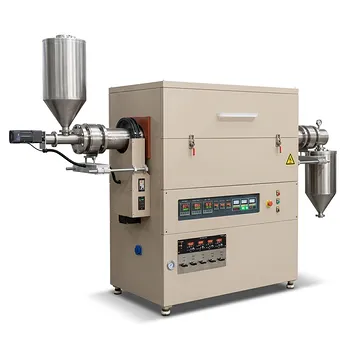
High Temperature Tilting Rotary Tube Furnace with Integrated Mass Flow Control and Multi Zone Heating
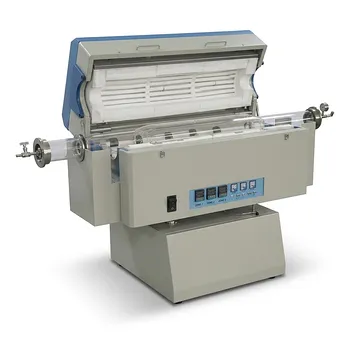
Large Three Temperature Zone Rotating Tube Furnace for High Uniformity Material Sintering
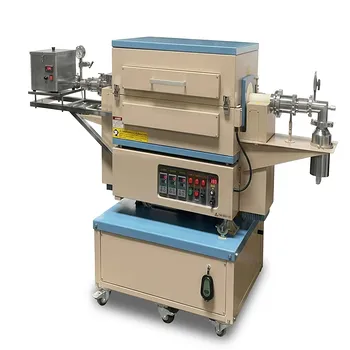
1500C 3-Zone Rotary Tube Furnace 60mm with Automatic Powder Feeding and Receiving System for Continuous Material Synthesis
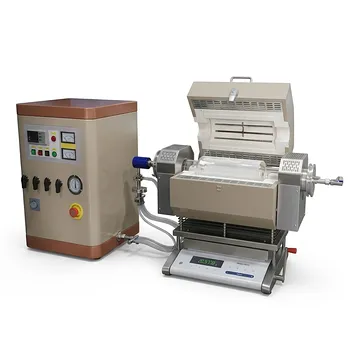
Mini Rotary Tubular Furnaces for Precision Powder Heat Treatment and Thermogravimetric Analysis
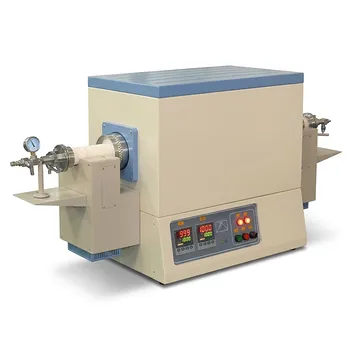
High Temperature 1700C Dual Zone Rotary Tube Furnace with 60mm Alumina Tube and Precision Rotation Control
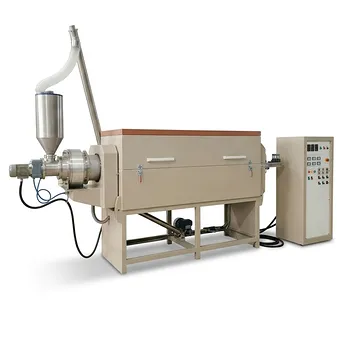
Continuous Feeding Rotary Tube Furnace for Industrial Powder Heat Treatment and Material Research
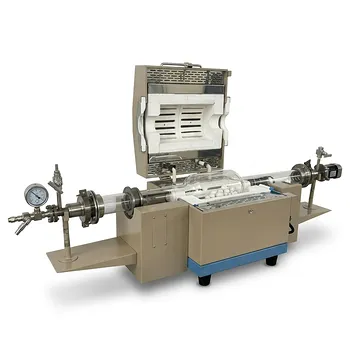
High Temperature Rotary Tube Furnace with Integrated Ball Milling and Gas Flow Function for Powder Nitriding
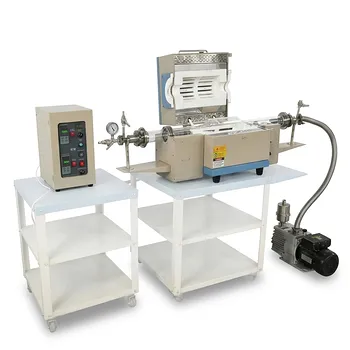
Two Zone Rotary Tube Furnace for Powder CVD Coating and Core Shell Material Synthesis 1100C
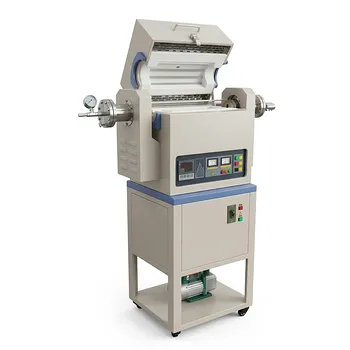
High Temperature Rotary Tilt Tubular Furnaces for Advanced Powder Sintering and Material Processing
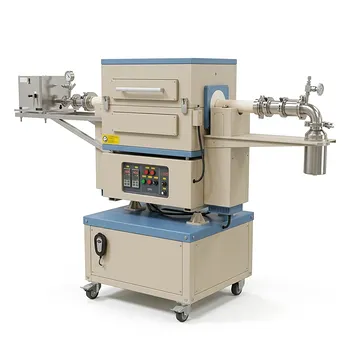
1500C Max Dual Zone Rotary Tube Furnace with 60 mm OD Alumina Tube for High Temperature Material Synthesis
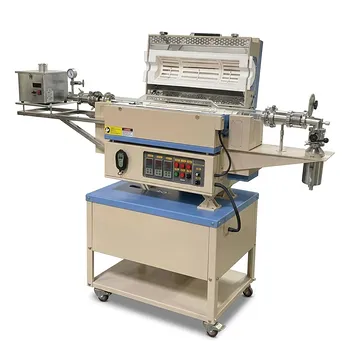
5 Inch Rotary Tube Furnace with Automatic Feeding and Receiving System 1200C Three Zone CVD Powder Processing
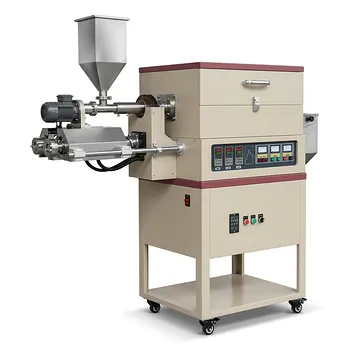
Laboratory Tilting Rotary Tubular Furnaces for Material Science and Industrial Heat Treatment
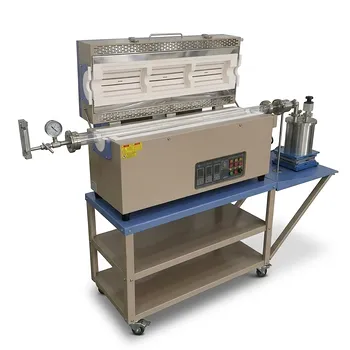
5 Inch Two Zone Rotary Tube Furnace 1100C for Powder CVD and Material Synthesis
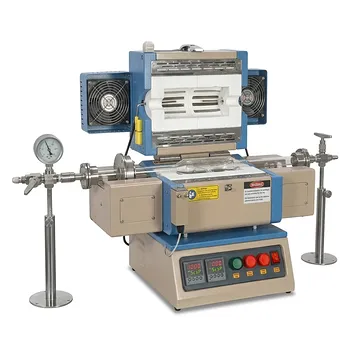
Dual Zone Rotary Tube Furnace for Uniform Powder Calcination 1000C 2 Inch Quartz Tube