The Geometry of Equilibrium: Mastering CoNiCr Alloy Homogenization at 1250°C
May 16, 2026
The Invisible Architecture of Metal
In the world of advanced material science, what we see is rarely what we get. When a CoNiCr-based superalloy is first cast, its internal structure is a chaotic landscape of "dendrites"—tree-like formations where elements have branched out unevenly.
This chemical segregation is a hidden liability. It creates local brittleness that can cause a high-performance component to fail under stress.
Homogenization is the process of forced harmony. It is an attempt to use raw thermal energy to redistribute atoms, dissolving the dendritic "ghosts" and creating a uniform, single-phase matrix. But to achieve this, the furnace must become more than a heater; it must be a precision-controlled environment.
The 10-Hour Threshold
Successful homogenization of CoNiCr alloys happens at a specific, unforgiving frontier: 1250°C.
At this temperature, atomic diffusion begins in earnest. However, the process is not instantaneous. To ensure elements move across the entire microstructure, the material must often "soak" for 10 hours or more.
The Problem with Thermal Drift
For an engineer, a 10-hour soak is a test of system reliability. If the temperature fluctuates by even a few degrees, the diffusion rate changes.
- Too low: The segregation remains, leaving the alloy "unfinished."
- Too high: You risk incipient melting, effectively destroying the sample from the inside out.
High-precision programmable PID controllers are the safeguard here. They act as the "brain" of the furnace, negating the thermal drift that naturally occurs during long-duration runs.
The Oxygen Paradox
Heat is the catalyst for perfection, but it is also a catalyst for destruction. At 1250°C, oxygen becomes a violent interloper.
Without total atmospheric isolation, the surface of a CoNiCr alloy will undergo severe oxidation and decarburization. You might achieve internal uniformity, but only at the cost of a degraded surface that compromises the material's integrity.
Engineering the Shield
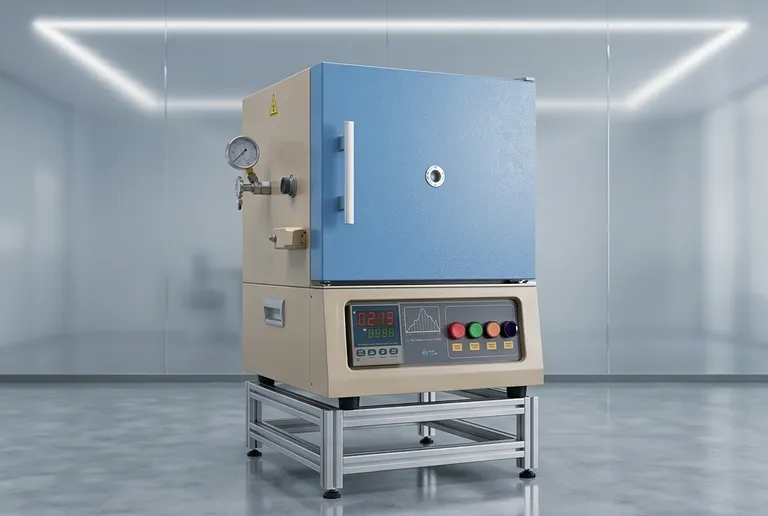
To prevent this, the furnace must offer one of two "protective silos":
- High Vacuum: Removing the medium of reaction entirely.
- Inert Gas (High-Purity Argon): Displacing oxygen with a noble gas that refuses to react.
For specialized research, some processes even require H2/Ar mixtures to manage carbon layers. This requires a furnace system designed with airtight seals and gas management systems that can withstand the pressure and chemical demands of high-temperature operation.
Choosing the Vessel: Muffle vs. Tube
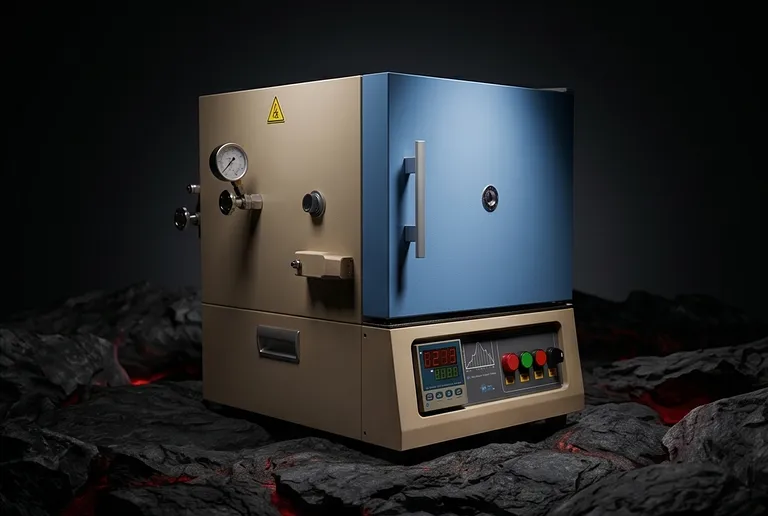
The choice of hardware defines the limits of the experiment. There is a psychological trade-off between volume and purity.
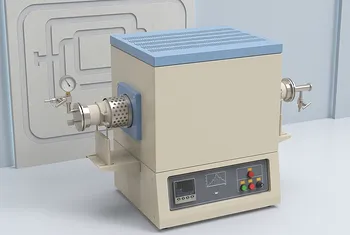
| Feature | Muffle (Box) Furnaces | Tube Furnaces |
|---|---|---|
| Primary Strength | Large internal volume for bulk ingots. | Superior atmosphere control and fast purging. |
| Best For | Processing multiple samples or large components. | High-purity R&D where oxidation is the primary enemy. |
| Uniformity | Relies on a large, stable hot zone. | Relies on precise gas flow and zone heating. |
| Metallurgical Goal | Industrial-scale homogenization. | Microstructural research and purity testing. |
The "Romantic" Precision of THERMUNITS
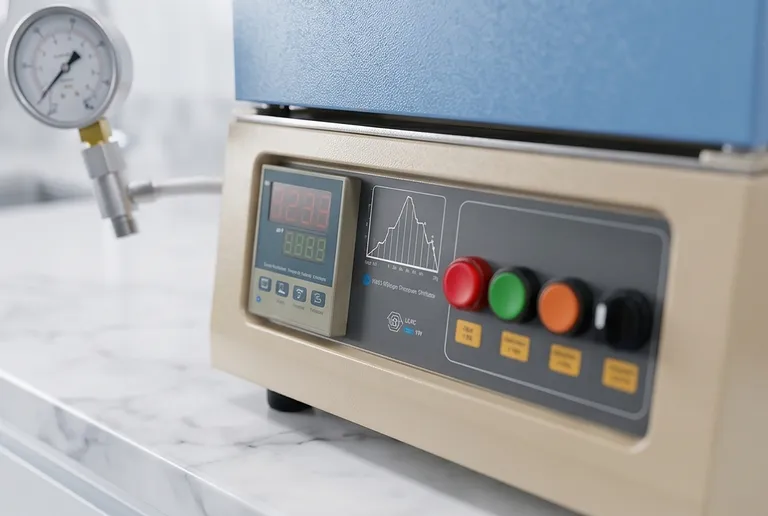
In the lab, the equipment is the bridge between a theoretical alloy and a physical reality. At THERMUNITS, we understand that a furnace is not just a tool—it is a system that must maintain a perfect state of equilibrium for hours on end.
Whether you are eliminating dendritic structures in a casting or researching the next generation of superalloys, the technical requirements remain constant: stability, isolation, and precision.
Our suite of thermal solutions is engineered specifically for these high-stakes environments:
- Atmosphere & Vacuum Furnaces: For those who cannot afford a single atom of oxidation.
- High-Temp Tube Furnaces: For the researcher requiring extreme gas purity and multi-segment control.
- Vacuum Induction Melting (VIM): For creating the alloy baseline before the homogenization even begins.
- Muffle & Rotary Furnaces: For scaling R&D into industrial reality.
Achieving a single-phase matrix in CoNiCr alloys requires a furnace that respects the physics of diffusion. Design your process with equipment built for the 1250°C frontier.
Quick Links
Suggested Products
1200C High Temperature Muffle Furnace with Motorized Door and Automated PC Control for Industrial Sintering and Material Processing 27 Liter 1200°C Five Side Heating Atmosphere Controlled Muffle Furnace 64 Liter High Uniformity Box Furnace for Material Synthesis High Temperature Muffle Furnace with Alloy Chamber for Debinding and Sintering Applications Top Loading Muffle Furnace 1200°C High Temperature Crucible Furnace with 9 Liter Chamber and Programmable PID Controller 1200°C High Temperature Muffle Furnace 19L Chamber with 50 Segment Programmable Controller
ThermUnits
Last updated on Apr 14, 2026
Related Products
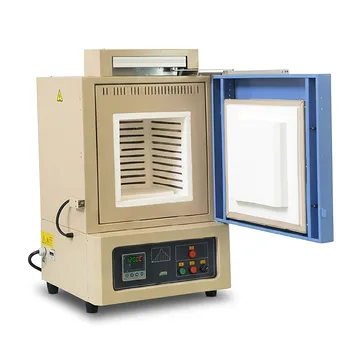
1200C High Temperature Muffle Furnace with Motorized Door and Automated PC Control for Industrial Sintering and Material Processing 27 Liter
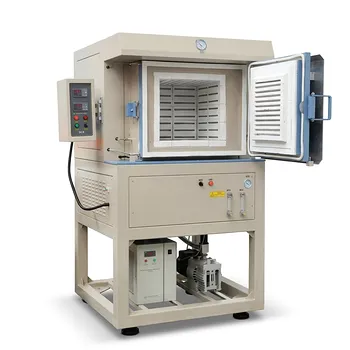
1200°C Five Side Heating Atmosphere Controlled Muffle Furnace 64 Liter High Uniformity Box Furnace for Material Synthesis
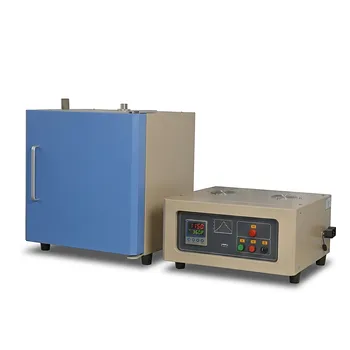
High Temperature Muffle Furnace with Alloy Chamber for Debinding and Sintering Applications
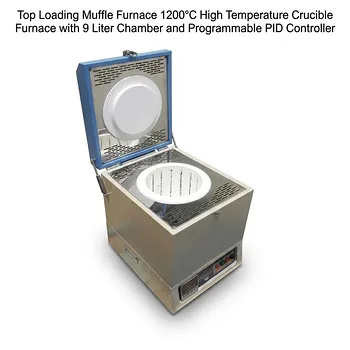
Top Loading Muffle Furnace 1200°C High Temperature Crucible Furnace with 9 Liter Chamber and Programmable PID Controller
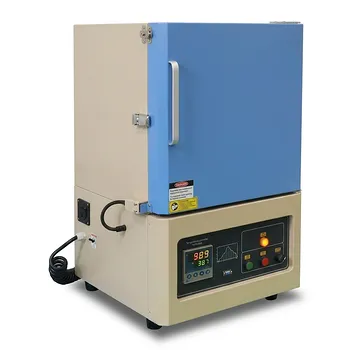
1200°C High Temperature Muffle Furnace 19L Chamber with 50 Segment Programmable Controller
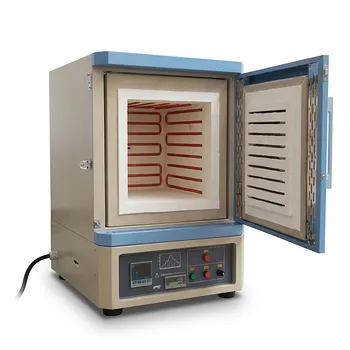
Five Side Heating Muffle Furnace 1200C High Uniformity 64L Chamber 16x16x16 Inch Industrial Heat Treatment
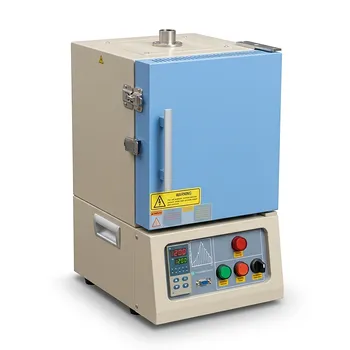
1200°C Small Box Furnace 4.2 Liter Programmable Muffle Furnace with High Purity Alumina Insulation and PID Control
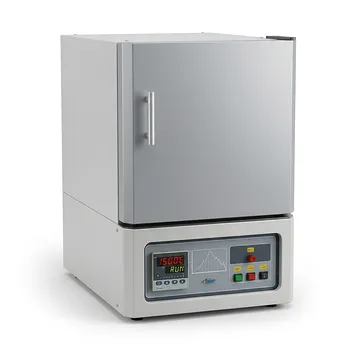
High Temperature 1500C Benchtop Muffle Furnace 3.6L Alumina Fiber Chamber Programmable Controller Sintering Annealing Carbonization Thermal Processing System
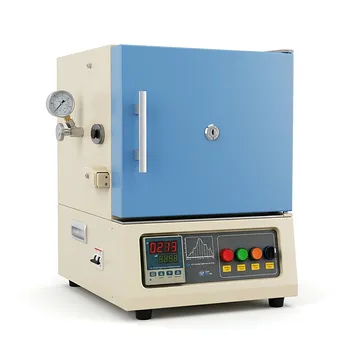
1200C Hybrid Muffle and Tube Furnace for Material Research with Dual Atmosphere Control Quartz Tubes
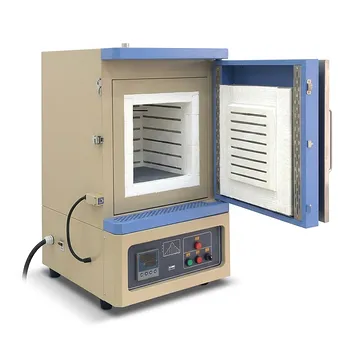
Five Side Heating Muffle Furnace High Purity Alumina Fiber 27L Chamber 1200C High Temperature Thermal Processing System for Sintering Annealing and Materials Research
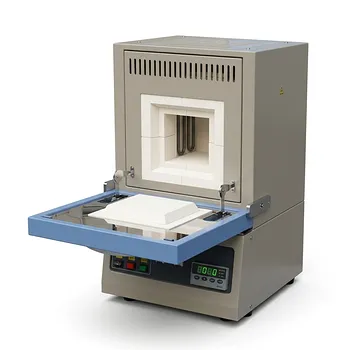
Five Sided Heating Muffle Furnace High Uniformity 1200C Lab Box Furnace 27L Alumina Fiber Chamber
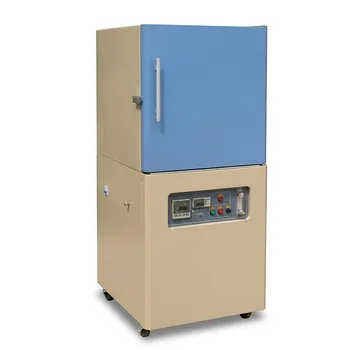
High Temperature Muffle Furnace with Dual Controllers and 36L Large Chamber 1700C Max
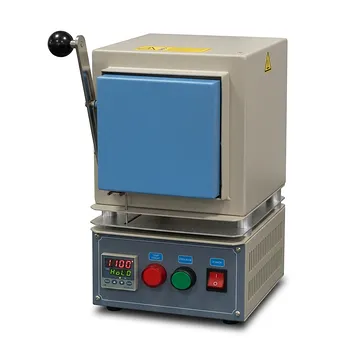
Compact 1100C Muffle Furnace with Programmable Temperature Control and High Purity Alumina Insulation for Material Research
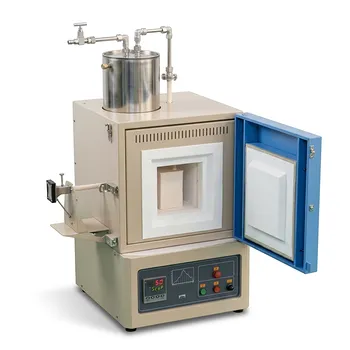
High Temperature Bench Top Muffle Furnace 1700C with Integrated Evaporating Particle Collection and 8x8x8 Alumina Fiber Chamber
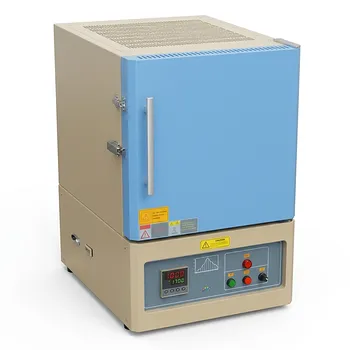
Large Bench Top 1700C High Temperature Muffle Furnace with 19L Chamber for Advanced Material Sintering and Annealing
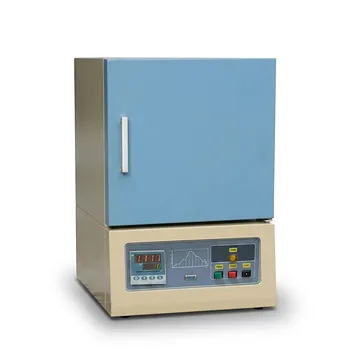
Ultra High Temperature Bench Top Muffle Furnace 1750C Sintering System with Kanthal Super Heating Elements and Precision Digital Control
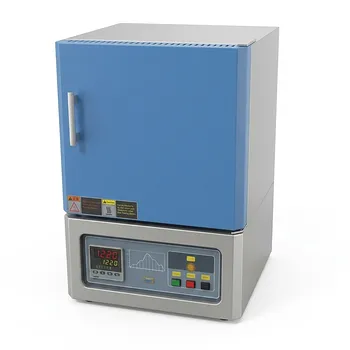
High Temperature Benchtop Muffle Furnace 1700C 10L Chamber Alumina Fiber Insulation MoSi2 Heating Elements
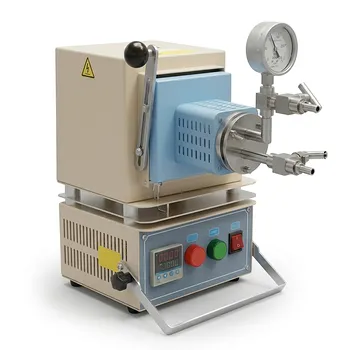
Compact Hybrid Muffle and Tube Furnace for 1000C Controlled Atmosphere Laboratory Material Sintering
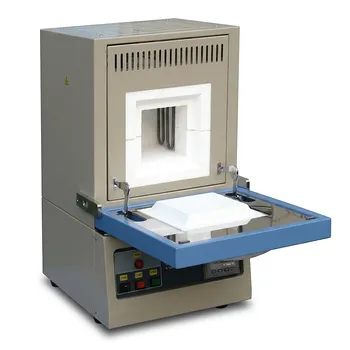
High Temperature 1800C Compact Muffle Furnace with Kanthal Super 1900 Heating Elements and 1.7L Alumina Chamber