The Physics of Clarity: Why 1300°C and $10^{-6}$ Bar are Non-Negotiable for Silica Glass
Apr 25, 2026
The Invisible Margin of Error
In material science, transparency is not a default state; it is a hard-won victory over chaos. To transform a porous "green body" of silica into a piece of glass that transmits light without distortion, an engineer must win a battle against the invisible: trapped gas and microscopic friction.
At the final stage of densification, the difference between a cloudy ceramic and a high-purity optical lens comes down to two numbers: 1300°C and $10^{-6}$ bar.
These are not arbitrary settings. They are the physical thresholds where atomic structures stop resisting and start to flow.
The Threshold of Viscous Flow
At room temperature, silica nanoparticles are rigid. Even as you apply heat, they remain distinct individuals. However, as the temperature climbs toward 1050°C and stabilizes near 1300°C, the material undergoes a psychological shift—it begins to behave like a liquid.
Driving Atomic Fusion
This "viscous flow" is the fundamental mechanism of sintering. Under the right thermal pressure:
- The surface energy of the nanoparticles drives them to fuse.
- Gaps that once held air are squeezed out by the flowing silica.
- The "green body" shrinks, becoming a truly dense, amorphous structure.
If the temperature is uneven by even a few degrees, internal stresses develop. The result is a glass that might look perfect but will fail under the slightest thermal or mechanical shock.
The Vacuum: A Siege Against Bubbles
Heat provides the energy for motion, but a vacuum provides the space. When silica particles fuse, they risk trapping whatever atmosphere surrounds them.
In a standard atmospheric furnace, nitrogen or oxygen molecules become permanent residents inside the glass. These microscopic bubbles act as light-scattering centers, turning a clear material into a translucent one.
The $10^{-5}$ to $10^{-6}$ Bar Mandate
A high-vacuum environment—ranging from $10^{-5}$ to $10^{-6}$ bar—is a vacuum of such purity that it effectively removes the "interference" of the outside world.
- Gas Extraction: It draws out air trapped between particles before the "gates" of viscous flow close.
- Dehydration: It facilitates the removal of silanol groups (Si-OH), the residual moisture that can degrade the glass's long-term chemical stability.
The Delicate Velocity of Change
In engineering, as in life, the fastest way to failure is often moving too quickly. While 1300°C is the destination, the journey there must be measured.
Heating too rapidly causes thermal shock. If the exterior of the silica densifies before the interior has "outgassed," the internal pressure will crack the framework. A controlled ramp—often as slow as 3°C per minute—is the price paid for structural integrity.
Balancing the Trade-offs
| Process Condition | Parameter Value | Critical Role |
|---|---|---|
| Thermal Range | 1050°C - 1300°C | Facilitates viscous flow and nanoparticle fusion. |
| Vacuum Level | $10^{-5}$ to $10^{-6}$ bar | Prevents gas entrapment; ensures optical clarity. |
| Heating Rate | ~3°C per minute | Prevents thermal shock and manages gas discharge. |
| Environment | High Vacuum | Removes Si-OH groups and prevents contamination. |
Engineering the Ideal Environment
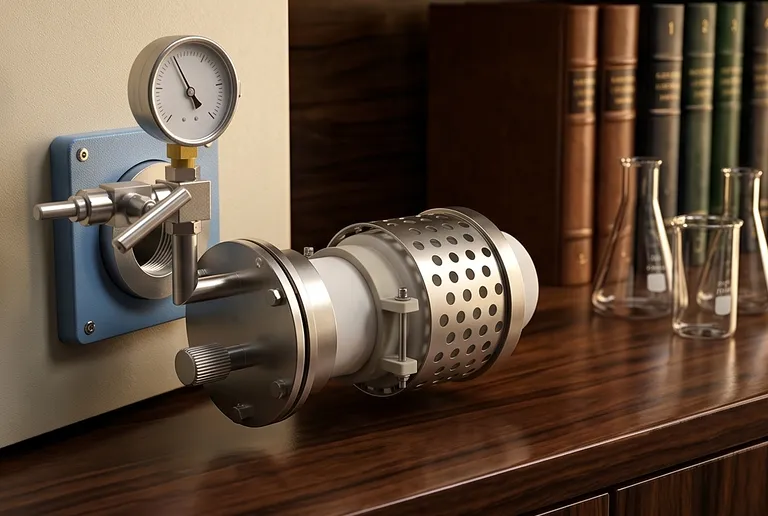
Systemic reliability is the hallmark of advanced R&D. To achieve the specific equilibrium required for silica glass, the equipment must be as precise as the physics it facilitates.
THERMUNITS specializes in this intersection of heat and pressure. We design high-vacuum tube furnaces and thermal systems that provide the stable, repeatable environments necessary for material breakthroughs.
From Muffle and Vacuum furnaces to advanced CVD and Rotary systems, our technology is built to handle the rigors of high-temperature laboratorial and industrial research. When your goal is absolute material density, you need a system that understands the physics of the vacuum.
Quick Links
Suggested Products
Vacuum Dental Porcelain Sintering Furnace for High Precision Ceramic Restorations High Temperature 1700C Vertical Tube Furnace for Powder Spherification and Material Sintering Dental Porcelain Zirconia Sintering Ceramic Furnace Chairside with Transformer 1750C Compact Muffle Furnace 1.7L Ultra High Temperature Laboratory Sintering System for Advanced Ceramics and Material Science Research 950C Rapid Thermal Processing Furnace for 12 Inch Wafer CSS Coating with Rotating Substrate HolderFurther Reading
The Invisible Forge: Why Thermal Precision Governs Human Anatomy The Invisible Symphony: Mastering Thermal Synchronicity in Dental Ceramics The Geometry of the Invisible: Why High Vacuum is the Silent Architect of La2O2S Clarity The Invisible Architecture of a Smile: Engineering Dental Ceramics at 1700°C
ThermUnits
Last updated on Apr 15, 2026
Related Products
Vacuum Dental Porcelain Sintering Furnace for High Precision Ceramic Restorations

High Temperature 1700C Vertical Tube Furnace for Powder Spherification and Material Sintering
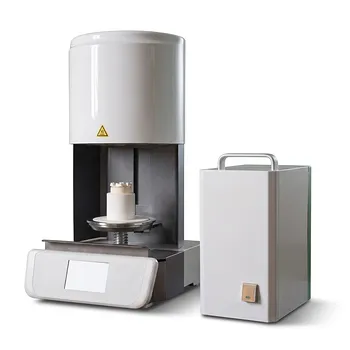
Dental Porcelain Zirconia Sintering Ceramic Furnace Chairside with Transformer
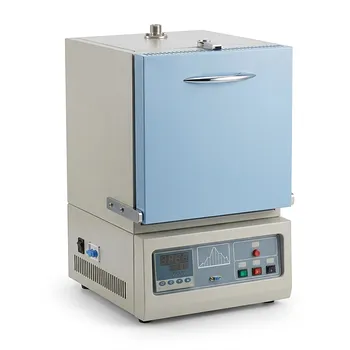
1750C Compact Muffle Furnace 1.7L Ultra High Temperature Laboratory Sintering System for Advanced Ceramics and Material Science Research
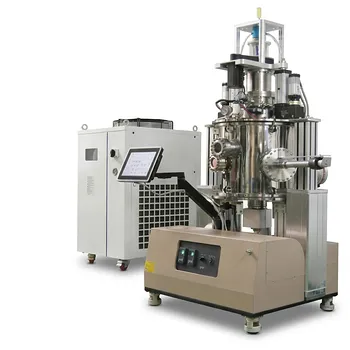
950C Rapid Thermal Processing Furnace for 12 Inch Wafer CSS Coating with Rotating Substrate Holder
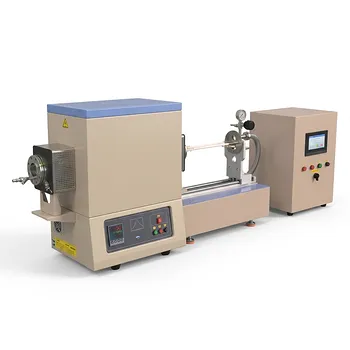
High Temperature Horizontal Electrical Assisted Sintering Furnace with 3KW Programmable Power Source for Advanced Ceramic Materials
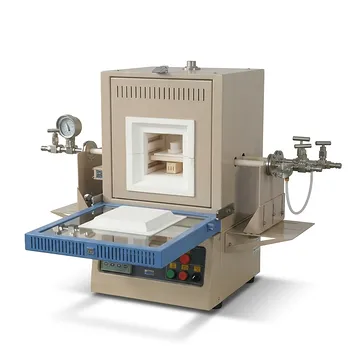
1700C Compact Hybrid Furnace with Dual Layer Box Sintering and Controlled Atmosphere Alumina Tubes
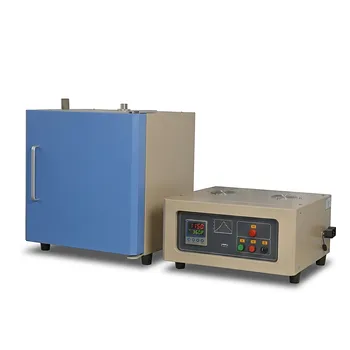
High Temperature Muffle Furnace with Alloy Chamber for Debinding and Sintering Applications
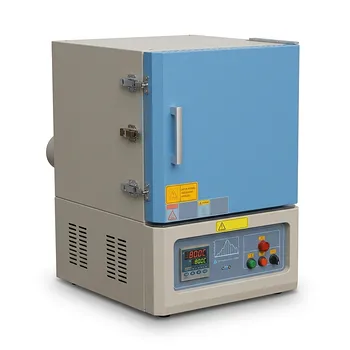
1800C Bench Top Muffle Furnace 18 Liters with Kanthal Super 1900 Heating Elements for High Purity Ceramic Sintering and Material Research
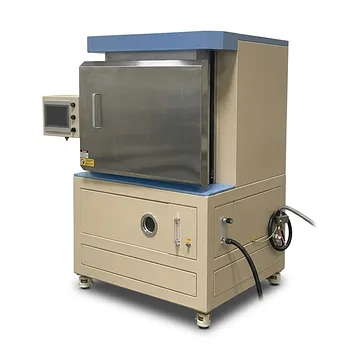
1650C High Temperature Atmosphere Controlled Box Furnace with 65L Chamber for Advanced Material Sintering and Industrial Heat Treatment
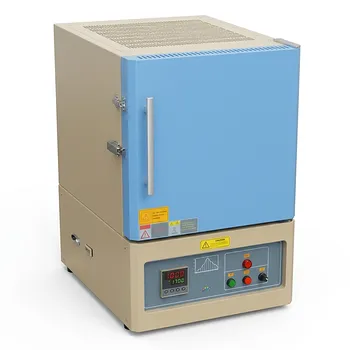
Large Bench Top 1700C High Temperature Muffle Furnace with 19L Chamber for Advanced Material Sintering and Annealing
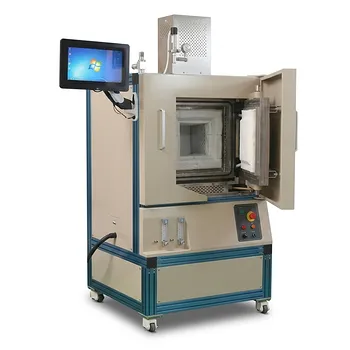
High Temperature Oxygen and Inert Atmosphere Controlled Furnace 8 Liter 1700C Sintering System for Advanced Materials RD
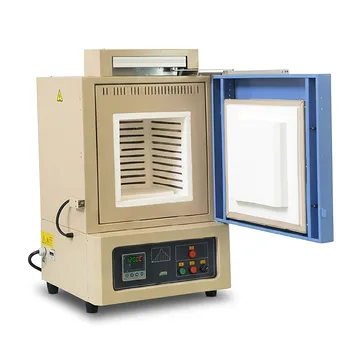
1200C High Temperature Muffle Furnace with Motorized Door and Automated PC Control for Industrial Sintering and Material Processing 27 Liter
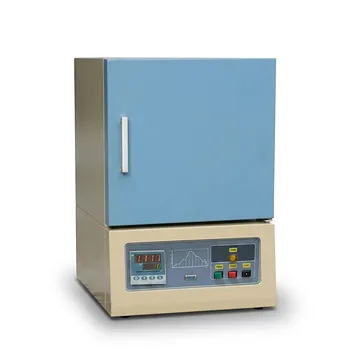
Ultra High Temperature Bench Top Muffle Furnace 1750C Sintering System with Kanthal Super Heating Elements and Precision Digital Control
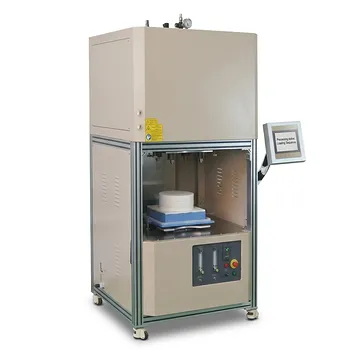
High Temperature Vertical Atmosphere Controlled Furnace with Automatic Bottom Loading and 1700°C Capacity for Advanced Material Research
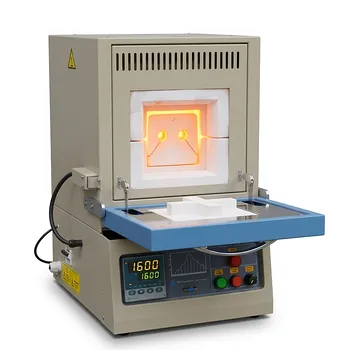
High Temperature Compact Muffle Furnace 1700 C with 30 Segment Programmable Controller and 1.7L Cubic Chamber
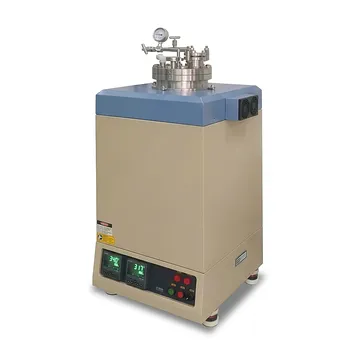
High Temperature 1000C Vacuum Furnace with 8 Inch ID Chamber for Material Sintering and Research Annealing
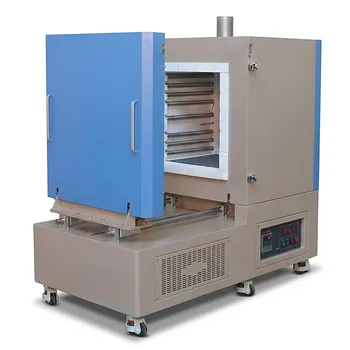
1200C Five Side Heating Muffle Furnace with Sliding Door 125L Volume High Temperature Heat Treatment System for Large Scale Sintering and Annealing