What is the significance of a gas flow control system in the reduction process of MoWNi alloys? Achieve Superior Purity
Updated 5 months ago
Precise gas flow control is the cornerstone of MoWNi alloy synthesis. By utilizing devices like mass flow meters to maintain a constant flow rate—typically around 75 mL/min—researchers ensure a stable concentration gradient of the reduction atmosphere within the furnace. This level of control is essential for managing reaction kinetics, achieving full precursor reduction, and preventing structural defects in the final alloy powder.
A gas flow control system transforms a furnace from a simple heat source into a precision chemical reactor. Its primary value lies in its ability to maintain a consistent reduction environment while simultaneously purging harmful byproducts that would otherwise degrade the alloy's quality.
Stabilizing the Reduction Environment
Maintaining a Constant Concentration Gradient
The flow control system ensures that the reduction gas is distributed evenly throughout the reaction tube.
Without a constant flow, the concentration of the reducing agent would fluctuate, leading to "dead zones" where the chemical reaction stalls.
Ensuring Kinetic Control
The speed and thoroughness of the alloying process depend on the availability of the reducing gas at the particle surface.
By regulating the flow, the system allows the reduction of Mo, W, and Ni precursors to occur at a predictable, synchronized rate.
Managing Reaction Byproducts
The Critical Removal of Water Vapor
The reduction process inherently generates water vapor as a chemical byproduct.
If this vapor is not actively swept away by a consistent gas stream, it can linger near the powder bed and interfere with the chemical equilibrium.
Preventing Agglomeration and Oxidation
Excessive moisture at high temperatures often leads to particle agglomeration, where the powder clumps together.
Furthermore, failing to remove water vapor can cause non-uniform oxidation, which compromises the purity and performance of the MoWNi alloy.
Understanding the Trade-offs
The Risk of Insufficient Flow
If the flow rate is too low, the concentration of byproducts increases, leading to incomplete reduction and coarse, uneven particles.
This often results in an alloy that lacks the desired mechanical properties or chemical homogeneity.
The Consequences of Excessive Flow
Conversely, sets the flow rate too high can lead to gas wastage and potential temperature fluctuations within the furnace.
In some cases, extreme flow rates may even physically displace the fine precursor powders, leading to material loss or contamination of the furnace exhaust.
How to Apply This to Your Project
When configuring your MoWNi reduction setup, your gas flow strategy should align with your specific material requirements.
- If your primary focus is Particle Uniformity: Prioritize a mass flow meter with high precision to ensure the "sweep" effect is constant, preventing moisture-induced clumping.
- If your primary focus is Chemical Purity: Ensure the flow rate is high enough to maintain a steep concentration gradient, pushing the reaction toward full metallic reduction.
- If your primary focus is Scalability: Implement automated flow control to maintain consistency across longer furnace tubes or larger powder batches.
Mastering the balance of gas dynamics is the most effective way to guarantee the structural integrity and performance of MoWNi alloys.
Summary Table:
| Key Function | Impact on MoWNi Reduction | Benefits to Final Alloy |
|---|---|---|
| Constant Flow Rate | Maintains stable concentration gradients | Prevents "dead zones" and ensures full precursor reduction. |
| Byproduct Removal | Actively sweeps away water vapor | Prevents particle agglomeration and non-uniform oxidation. |
| Kinetic Control | Regulates surface reaction speeds | Achieves chemical homogeneity and predictable particle sizing. |
| Atmosphere Stability | Prevents fluctuation in reducing agents | Ensures structural integrity and high mechanical performance. |
Elevate Your Alloy Synthesis with THERMUNITS Precision Technology
Precise gas flow and thermal stability are non-negotiable for high-performance material science. THERMUNITS is a leading manufacturer of high-temperature laboratory equipment, providing the advanced thermal processing solutions required for complex MoWNi alloy reduction.
Our specialized Atmosphere Furnaces, Tube Furnaces, and CVD/PECVD systems are designed to give you total control over reaction kinetics and environment purity. Whether you are focused on industrial R&D or advanced material synthesis, our equipment—including Vacuum, Rotary, and Hot Press furnaces—ensures your research meets the highest standards of excellence.
Ready to optimize your lab’s heat treatment efficiency? Contact us today to discuss your specific requirements and discover how THERMUNITS can empower your next breakthrough.
References
- Yongxin Zhao, Pengcheng Dai. Ternary MoWNi Alloy as a Bifunctional Catalyst for Alkaline Hydrogen Oxidation and Evolution Reactions. DOI: 10.3390/catal15010015
Mentioned Products
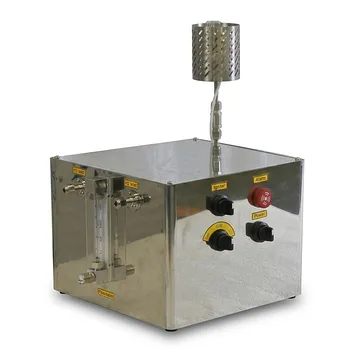
- Flammable Gas Control and Disposal Device with H2 Gas Leaking Detector and Safety Interlock System
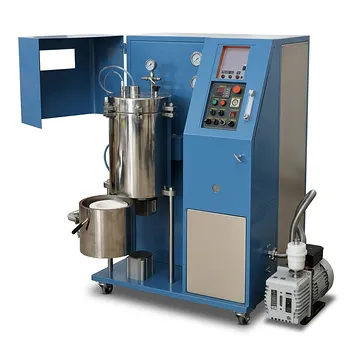
- High Pressure Induction Melting Casting System 1700C Max for Alloy Granulation and Infiltration Equipment
People Also Ask
- How does a precision gas control system for H2/Ar mixtures contribute to Mo2C catalysts? Optimize Phase Purity.
- How does a high-precision gas flow meter contribute to the study of biomass pyrolysis kinetics? Enhance Data Accuracy
- How do Mass Flow Controllers (MFC) and gas mixing systems work together during nanobelt yarn tests? Precision Gas Sensing
- How do precise gas flow meters and cylinder systems contribute to controlled zinc volatilization? Enhance Your Results
- Why is a high-precision mass flow meter required to control 5% H2/Ar mixed gas during the thermal treatment of FeCoNiMnCr catalysts? Essential for HEA-HEO Synthesis

Tech Team · ThermUnits
Last updated on Apr 14, 2026