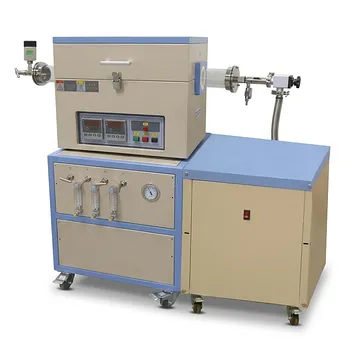
How does a precision gas control system for H2/Ar mixtures contribute to Mo2C catalysts? Optimize Phase Purity.
Updated 3 months ago
Precision gas control is the fundamental enabler of phase purity and structural stability during the synthesis of molybdenum carbide catalysts. By regulating the exact ratio of hydrogen to argon, the system creates a stable reducing environment that transforms molybdenum-based precursors into the highly conductive Mo2C phase. This precise atmospheric management ensures that secondary metals, such as nickel, remain anchored to the support surface rather than sintering into inactive, oversized particles.
The core value of a precision gas control system lies in its ability to manage the thermodynamics of the reduction-carbonization process. It dictates the depth of carbonization and the dispersion of active metal sites, directly determining the catalyst's final efficiency and durability.
Enabling Chemical Transformation and Phase Purity
The Dual Role of the H2/Ar Mixture
Hydrogen serves as the active chemical agent, responsible for reducing excess oxide components within the precursor during the carbonization stages. Argon acts as a chemically inert carrier gas, maintaining a stable flow rate and ensuring the concentration of hydrogen remains at the precise levels required for controlled reduction.
Formation of the Mo2C Crystal Lattice
Precision control allows for programmed temperature ramping, typically between 300°C and 500°C, under a flowing reduction-carbonization atmosphere. This gradual process ensures that carbon atoms are incorporated into the molybdenum crystal lattice at a controlled rate, facilitating the formation of the specific beta-Mo2C crystal phase rather than disordered mixtures.
Regulating Carbonization Depth
By utilizing high-precision flow meters to maintain preset atmosphere concentrations, the system prevents surface carbon deposition. Excessive carbon buildup can block active sites, but a precisely tuned H2/Ar environment ensures the molybdenum-based precursor transforms into a conductive carbide while maintaining a high specific surface area.
Structural Stability and Particle Dispersion
Anchoring Active Metal Ions
In catalysts containing secondary metals like nickel, the precision gas environment facilitates the formation of Ni-O-Mo bonds. These bonds securely anchor nickel ions to the support surface, preventing them from being prematurely reduced into large, ineffective metallic particles at high temperatures.
Preventing Thermal Sintering
The system acts as a technical safeguard against excessive sintering, where metal grains grow and merge, losing their catalytic activity. By maintaining a strict, high-precision atmosphere, the catalyst bed achieves an ideal distribution of metal on the support, which is critical for long-term performance in industrial reactions.
Control of Nanoparticle Nucleation
High-temperature treatment with H2/Ar mixtures triggers a critical reduction and nucleation process. The balance of gases converts surface oxides into metallic nanoparticles while using surface tension to shrink thin films into nano-sized catalytic active sites with specific diameter distributions.
Understanding the Trade-offs and Risks
The Risk of Spontaneous Combustion
Molybdenum carbide is a highly active material that can undergo violent spontaneous combustion if exposed to air immediately after heat treatment. Precision gas systems must account for this by facilitating a low-temperature passivation step, often using a trace oxygen mixture (e.g., 5% O2/N2) to form a thin, protective oxide film.
Balancing Reduction vs. Over-Reduction
If hydrogen concentrations are too high or flow rates are inconsistent, the system may over-reduce the catalyst. This can result in the loss of the Ni-O-Mo anchoring bonds, leading to the growth of large nickel clusters that significantly reduce the catalyst’s total available surface area.
Carbon Deposition Hazards
Inadequate flow of the carrier gas or an imbalance in the carbon-to-hydrogen ratio can lead to coking. This deposition of graphitic carbon on the catalyst surface acts as a physical barrier, poisoning the catalyst and requiring aggressive regeneration cycles that can damage the Mo2C structure.
How to Apply Gas Control to Your Catalyst Goals
Making the Right Choice for Your Goal
To achieve the best results with molybdenum carbide catalysts, the gas control strategy must be tailored to the specific desired outcome of the heat treatment.
- If your primary focus is High Electrical Conductivity: Prioritize a steady hydrogen flow at higher temperatures to ensure the complete transformation of precursors into the metallic Mo2C phase.
- If your primary focus is Maximizing Active Surface Area: Implement staged temperature ramping (300°C to 500°C) with high argon dilution to prevent rapid sintering and surface carbon buildup.
- If your primary focus is Long-term Structural Stability: Use precision flow meters to maintain strict Ni-O-Mo bonding environments, ensuring nickel ions remain anchored to the molybdenum support.
- If your primary focus is Safe Handling and Storage: Integrate a secondary gas inlet for low-temperature passivation to create a dense, sub-nanometer oxide protective layer before exposing the catalyst to air.
By mastering the precision of the H2/Ar atmosphere, researchers can move beyond basic synthesis to the targeted engineering of high-performance molybdenum carbide catalysts.
Summary Table:
| Process Step | Role of Precision Gas Control | Impact on Catalyst |
|---|---|---|
| Reduction-Carbonization | Regulates H2/Ar ratio & temperature ramping | Facilitates pure Mo2C phase formation |
| Particle Anchoring | Maintains environment for Ni-O-Mo bonding | Prevents thermal sintering of active sites |
| Surface Management | Prevents excessive carbon deposition (coking) | Maximizes specific active surface area |
| Passivation | Controls trace O2 flow post-treatment | Ensures safe handling and prevents combustion |
Elevate Your Material Research with THERMUNITS Precision Solutions
Precision gas control is the key to achieving high-performance molybdenum carbide catalysts. As a leading manufacturer of high-temperature laboratory equipment, THERMUNITS provides the advanced thermal processing solutions needed for rigorous material science and industrial R&D.
Our specialized equipment—including CVD/PECVD systems, Atmosphere furnaces, Vacuum furnaces, and Tube furnaces—delivers the exact atmospheric stability and temperature uniformity required to optimize phase purity and particle dispersion. Whether you are working on nanoparticle nucleation or complex reduction-carbonization processes, our systems ensure your materials reach their full potential.
Ready to optimize your catalyst heat treatment? Contact THERMUNITS today to discuss your specific furnace and gas control requirements with our technical experts.
References
- Mengyun Hou, Chen Chen. Microenvironment reconstitution of highly active Ni single atoms on oxygen-incorporated Mo2C for water splitting. DOI: 10.1038/s41467-024-45533-3
Mentioned Products
- Flammable Gas Control and Disposal Device with H2 Gas Leaking Detector and Safety Interlock System
- Automatic Flammable Gas Control and Disposal Device for Hydrogen Atmosphere Furnaces
- 1100C Dual Zone Hydrogen Gas Tube Furnace with Quartz Tube and Integrated H2 Leak Detection System
- Dual Tube 100mm 80mm CVD Sliding Furnace with 4 Channel Gas Mixing and Vacuum System
- 1500C Compact Hydrogen Gas Tube Furnace with 2 Inch Alumina Tube and Hydrogen Detector
People Also Ask
- How does a high-precision gas flow meter contribute to the study of biomass pyrolysis kinetics? Enhance Data Accuracy
- How do Mass Flow Controllers (MFC) and gas mixing systems work together during nanobelt yarn tests? Precision Gas Sensing
- How do precise gas flow meters and cylinder systems contribute to controlled zinc volatilization? Enhance Your Results
- Why is a high-precision mass flow meter required to control 5% H2/Ar mixed gas during the thermal treatment of FeCoNiMnCr catalysts? Essential for HEA-HEO Synthesis
- How a Nitrogen Flow Meter Ensures Reproducibility in Aux-CN Thermal Annealing: Achieving Precise Material Consistency

Tech Team · ThermUnits
Last updated on Jun 02, 2026
Related Products
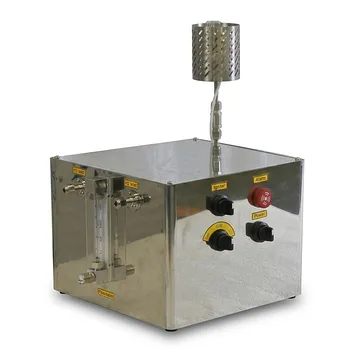
Flammable Gas Control and Disposal Device with H2 Gas Leaking Detector and Safety Interlock System
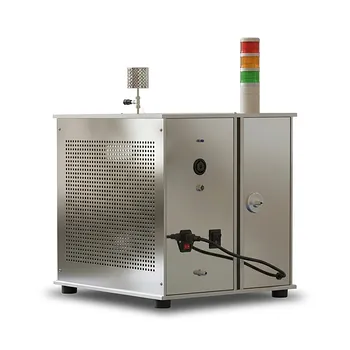
Automatic Flammable Gas Control and Disposal Device for Hydrogen Atmosphere Furnaces
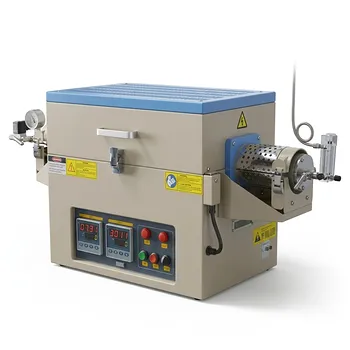
1100C Dual Zone Hydrogen Gas Tube Furnace with Quartz Tube and Integrated H2 Leak Detection System
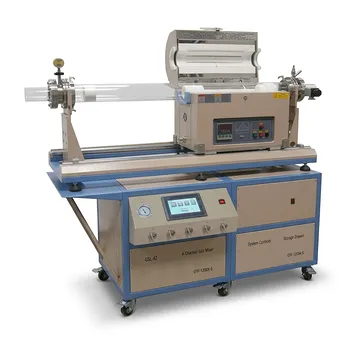
Dual Tube 100mm 80mm CVD Sliding Furnace with 4 Channel Gas Mixing and Vacuum System
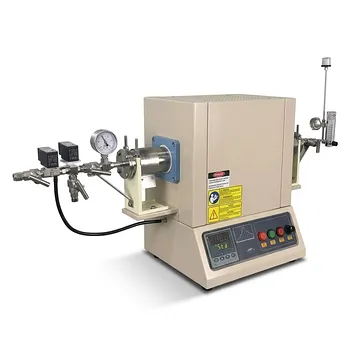
1500C Compact Hydrogen Gas Tube Furnace with 2 Inch Alumina Tube and Hydrogen Detector
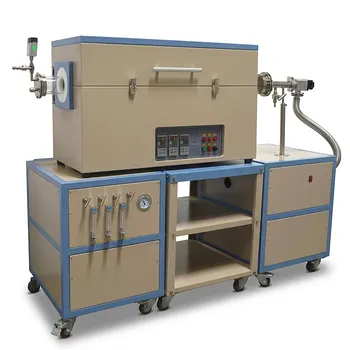
Three Zone Quartz Tube Furnace with 3 Channel Gas Mixer Vacuum Pump and Anti Corrosive Vacuum Gauge
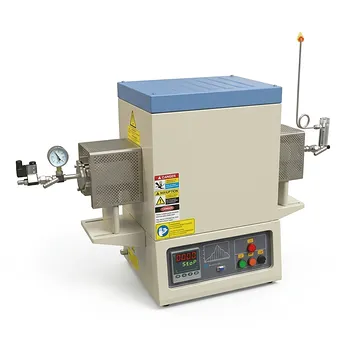
1700C Hydrogen Gas Tube Furnace with 60mm Alumina Process Tube and Integrated Hydrogen Safety Detector