How do precise gas flow meters and cylinder systems contribute to controlled zinc volatilization? Enhance Your Results
Updated 3 months ago
Precise gas flow meters and cylinder systems are the fundamental drivers of kinetic control in zinc volatilization experiments. By maintaining a steady flow rate—often standardized at 2 L/min—these systems ensure the reactor accurately mimics industrial reduction environments. Their primary function is to regulate oxygen potential and physically sweep zinc vapor away from the reaction interface to prevent the process from reaching a standstill.
These systems enable continuous zinc recovery by preventing the reaction zone from reaching saturation equilibrium. By managing gas-phase chemistry and removing reaction products, they maintain the thermodynamic driving force necessary for complete volatilization.
Maintaining Thermodynamic Stability
Precise gas control is not merely about volume; it is about establishing the specific chemical conditions required for zinc to transition from a solid or liquid phase into a gas.
Oxygen Potential Regulation
The gas cylinder system provides a controlled atmosphere that dictates the oxygen potential within the reactor. By precisely mixing gases, researchers can create a reducing environment that allows zinc oxides to break down and volatilize efficiently.
Simulating Industrial Parameters
Flow meters allow for the replication of specific industrial flow velocities, such as a constant 2 L/min flow rate. This consistency is vital for ensuring that experimental data is scalable and relevant to large-scale smelting or recycling operations.
Overcoming Kinetic Barriers
In a closed or stagnant system, the air near the zinc source quickly becomes saturated with zinc vapor, which halts the reaction. Gas control systems solve this through active transport.
Removal of Zinc Vapor
The flow meter ensures a continuous stream of "fresh" gas that carries zinc vapor away from the reaction interface. This physical removal reduces the local partial pressure of the zinc, allowing more material to evaporate.
Preventing Saturation Equilibrium
Without a precise flow, the system would reach saturation equilibrium, where the rate of volatilization equals the rate of condensation. Constant gas flow ensures the reaction always moves in one direction: toward the collection or discharge of zinc gas.
Understanding the Trade-offs
While high precision is beneficial, there are critical factors that can compromise the accuracy of a volatilization experiment if not managed correctly.
Flow Rate Sensitivity
If the flow rate is too low, the partial pressure of zinc builds up, leading to underestimated volatilization rates. Conversely, excessively high flow rates may cool the reactor or decrease the residence time required for gas-phase reactions to occur.
Pressure Drop and Calibration
Gas cylinders lose pressure over time, and the reactor itself may create backpressure. Without high-quality flow meters that compensate for these changes, the actual volume of gas reaching the reaction interface can fluctuate, leading to inconsistent results.
Optimizing Your Volatilization Setup
To achieve reproducible results in zinc recovery, you must align your gas control strategy with your specific experimental objectives.
- If your primary focus is kinetic modeling: Ensure your flow meter is calibrated to maintain an exact, unwavering flow rate to isolate the effects of temperature on volatilization speed.
- If your primary focus is industrial simulation: Use the cylinder system to strictly control the oxygen potential, matching the specific gas compositions found in commercial furnaces.
- If your primary focus is maximum zinc recovery: Focus on maximizing the sweeping effect by ensuring the gas delivery nozzle is positioned directly over the reaction interface to minimize local saturation.
The mastery of gas flow dynamics is the bridge between theoretical zinc reduction and a successful, high-yield volatilization process.
Summary Table:
| Feature | Function in Zinc Volatilization | Key Benefit |
|---|---|---|
| Flow Rate Regulation | Physically sweeps zinc vapor from the reaction interface. | Prevents saturation equilibrium & ensures continuous recovery. |
| Atmosphere Control | Precisely mixes gases to regulate oxygen potential. | Maintains the reducing environment needed for zinc breakdown. |
| Industrial Simulation | Replicates commercial flow velocities (e.g., 2 L/min). | Ensures experimental data is scalable for large-scale smelting. |
| Kinetic Management | Overcomes kinetic barriers through active transport. | Maintains thermodynamic driving force for complete volatilization. |
Optimize Your Thermal Processing with THERMUNITS
Precision is the key to successful material science research and industrial R&D. THERMUNITS is a leading manufacturer of high-temperature laboratory equipment, providing the tools you need for controlled atmosphere and volatilization experiments.
Our comprehensive range of thermal solutions includes:
- Atmosphere & Vacuum Furnaces for precise oxygen potential control.
- Tube & Rotary Furnaces designed for consistent gas flow dynamics.
- CVD/PECVD & Hot Press Systems for advanced material synthesis.
- Specialized Dental & Induction Melting Furnaces (VIM).
Whether you are refining zinc recovery processes or developing new alloys, our equipment ensures accuracy, reliability, and scalability. Contact us today to discover how our high-performance furnaces can enhance your laboratory's efficiency and research outcomes.
References
- Zeng Peng, Xuchang Wei. Volatilization Kinetics of Zinc from the Flotation Products of Low-Grade Lead–Zinc Oxide Ore during Carbothermic Reduction. DOI: 10.3390/su16062326
Mentioned Products
- Flammable Gas Control and Disposal Device with H2 Gas Leaking Detector and Safety Interlock System
- Automatic Flammable Gas Control and Disposal Device for Hydrogen Atmosphere Furnaces
- Versatile Chemical Vapor Deposition Tube Furnace System for Advanced Material Research and Industrial Coating Processes
- High Temperature Vertical Tube Furnace for Small Solid Oxide Fuel Cell Testing with Four Channel Gas Control
- Multi Heating Zones CVD Tube Furnace System for Precision Chemical Vapor Deposition and Advanced Material Synthesis
People Also Ask
- How does a precision gas control system for H2/Ar mixtures contribute to Mo2C catalysts? Optimize Phase Purity.
- How does a high-precision gas flow meter contribute to the study of biomass pyrolysis kinetics? Enhance Data Accuracy
- How do Mass Flow Controllers (MFC) and gas mixing systems work together during nanobelt yarn tests? Precision Gas Sensing
- Why is a high-precision mass flow meter required to control 5% H2/Ar mixed gas during the thermal treatment of FeCoNiMnCr catalysts? Essential for HEA-HEO Synthesis
- How a Nitrogen Flow Meter Ensures Reproducibility in Aux-CN Thermal Annealing: Achieving Precise Material Consistency

Tech Team · ThermUnits
Last updated on Jun 03, 2026
Related Products
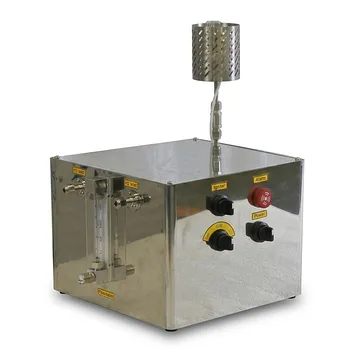
Flammable Gas Control and Disposal Device with H2 Gas Leaking Detector and Safety Interlock System
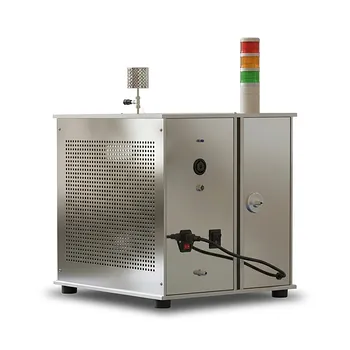
Automatic Flammable Gas Control and Disposal Device for Hydrogen Atmosphere Furnaces
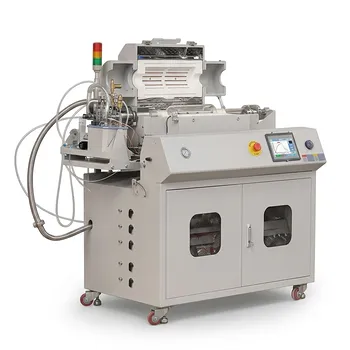
Versatile Chemical Vapor Deposition Tube Furnace System for Advanced Material Research and Industrial Coating Processes
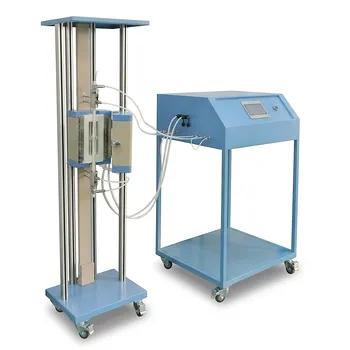
High Temperature Vertical Tube Furnace for Small Solid Oxide Fuel Cell Testing with Four Channel Gas Control