How do Mass Flow Controllers (MFC) and gas mixing systems work together during nanobelt yarn tests? Precision Gas Sensing
Updated 3 months ago
The synergy between Mass Flow Controllers (MFC) and gas mixing chambers is the foundation of precise gas sensing characterization. In nanobelt yarn tests, MFCs precisely meter the flow rates of analyte and carrier gases into a mixing chamber to achieve a specific target concentration. This setup allows for the rapid, automated creation of concentration gradients necessary to measure a sensor's performance metrics accurately.
Core Takeaway: By combining the high-precision metering of MFCs with the homogenization of a mixing chamber, researchers create a controllable, dynamic environment that isolates the sensor's performance from environmental variability, ensuring repeatable results.
The Mechanics of Flow-Controlled Gas Mixing
Precision Regulation via MFCs
Mass Flow Controllers act as the gatekeepers of the system, using thermal or pressure-based sensors to regulate the mixing ratio of gases. In a typical setup, one MFC handles the carrier gas (such as dry air), while another manages the test gas (such as hydrogen) to ensure the volume delivered is exactly according to the experimental design.
Homogenization in the Mixing Chamber
The mixing chamber serves as the staging area where separate gas streams converge to become a uniform mixture. This stage is critical for nanobelt yarn sensors, as any pockets of uneven concentration would result in "noise" or inconsistent resistance readings during the test.
Achieving Dynamic Balance
The interaction between these two components creates a dynamic balance of gas flow. By maintaining a constant total flow rate while varying the ratio of individual gases, the system keeps the pressure stable within the testing environment.
Impact on Sensor Performance Evaluation
Establishing Concentration Gradients
To determine the sensitivity and linearity of a nanobelt yarn, the MFCs incrementally adjust the gas ratios to create a staircase of concentration levels. This allows researchers to see how the sensor reacts to minute changes in parts-per-million (ppm) or parts-per-billion (ppb) levels.
Facilitating Rapid Switching
The system is designed for rapid switching of gas concentrations, which is essential for measuring response and recovery times. By quickly purging the chamber with pure carrier gas or introducing a new analyte concentration, the system reveals how fast the nanobelt yarn can adsorb and desorb gas molecules.
Ensuring Data Repeatability
Because MFCs are electronically controlled, the exact environmental conditions of a test can be replicated across different days. This consistency is vital for verifying that the nanobelt yarn’s performance is a result of its material properties rather than fluctuations in gas delivery.
Navigating the Technical Trade-offs
The Challenge of Dead Volume
A larger mixing chamber ensures better homogenization but increases dead volume, which can lead to a "lag" in concentration changes. If the chamber is too large, the measured response time might reflect the system's plumbing rather than the actual speed of the nanobelt yarn sensor.
Calibration and Gas Compatibility
MFCs are often calibrated for specific gases; using an MFC calibrated for nitrogen to measure hydrogen without a correction factor will lead to significant errors. Maintaining the accuracy of the concentration gradient requires regular cross-calibration between the MFC hardware and the actual output at the mixing chamber.
Optimizing Your Gas Sensing Test Bench
When integrating MFCs and mixing chambers for nanobelt yarn research, your configuration should match your specific analytical goals.
- If your primary focus is response time accuracy: Minimize the tubing length and mixing chamber volume to ensure the gas reaches the sensor as quickly as possible.
- If your primary focus is sensitivity at low concentrations: Invest in high-resolution MFCs with a low full-scale range to ensure precise metering of the analyte gas.
- If your primary focus is sensor longevity and baseline stability: Use a dedicated MFC for high-purity carrier gas to ensure the sensor is completely "cleaned" between test cycles.
The integration of precise flow control and uniform gas mixing transforms a raw material into a quantifiable sensing technology.
Summary Table:
| Component | Primary Function | Benefit to Nanobelt Yarn Sensing |
|---|---|---|
| Mass Flow Controller (MFC) | Precision metering of carrier & analyte gases | Accurate concentration gradients (ppm/ppb levels) |
| Mixing Chamber | Gas stream homogenization | Eliminates measurement noise & inconsistent readings |
| System Synergy | Dynamic flow balance & rapid switching | Precise response/recovery time & high repeatability |
| Optimization | Minimizing dead volume | Reduces system lag for faster material characterization |
Elevate Your Material Science Research with THERMUNITS
Precision in gas sensing begins with high-quality material synthesis and heat treatment. THERMUNITS is a leading manufacturer of high-temperature laboratory equipment, providing the specialized tools needed for industrial R&D and material science innovation.
Our comprehensive range of thermal processing solutions includes:
- CVD/PECVD Systems for advanced nanobelt and nanomaterial growth.
- Tube, Muffle, & Vacuum Furnaces for precise heat treatment.
- Atmosphere, Rotary, & Hot Press Furnaces for diverse research applications.
- VIM & Dental Furnaces and high-quality Thermal Elements.
Ready to enhance your lab's efficiency and achieve superior material performance? Contact our expert team today to find the perfect thermal solution for your research goals!
References
- Junseong Ahn, Inkyu Park. Nanoribbon Yarn with Versatile Inorganic Materials. DOI: 10.1002/smll.202311736
Mentioned Products
- Dual Tube 100mm 80mm CVD Sliding Furnace with 4 Channel Gas Mixing and Vacuum System
- Flammable Gas Control and Disposal Device with H2 Gas Leaking Detector and Safety Interlock System
- Three Zone Quartz Tube Furnace with 3 Channel Gas Mixer Vacuum Pump and Anti Corrosive Vacuum Gauge
- Split Chamber CVD Tube Furnace with Vacuum Station Chemical Vapor Deposition System Machine
- Automatic Flammable Gas Control and Disposal Device for Hydrogen Atmosphere Furnaces
People Also Ask
- How does the Sweet Spot region within a chemical vapor deposition reactor influence the morphology control of VOx particles?
- What is the purpose of placing quartz crystals at the inlet and outlet of a CVD reaction tube? Optimize MoS2 Synthesis
- Why is a double-zone tube furnace required for CVD of WS2? Master Thermal Precision for High-Quality 2D Materials
- What are the temperature control requirements for a tube furnace used in pyrolysis and CVD? Master Thermal Precision
- What is the primary function of a dual-zone tube furnace in CVD MoS2 synthesis? Achieve Precise Thermal Control

Tech Team · ThermUnits
Last updated on Jun 03, 2026
Related Products
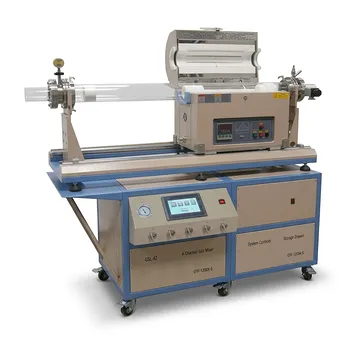
Dual Tube 100mm 80mm CVD Sliding Furnace with 4 Channel Gas Mixing and Vacuum System
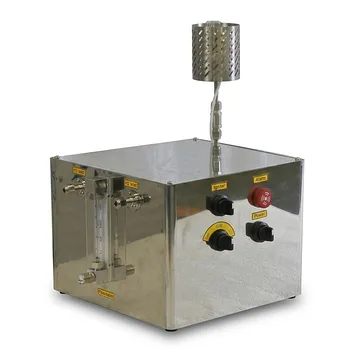
Flammable Gas Control and Disposal Device with H2 Gas Leaking Detector and Safety Interlock System
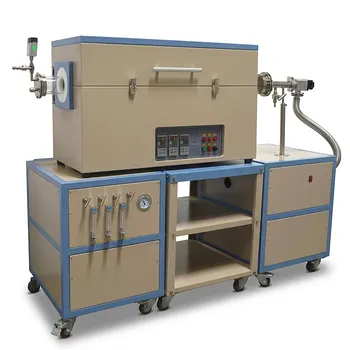
Three Zone Quartz Tube Furnace with 3 Channel Gas Mixer Vacuum Pump and Anti Corrosive Vacuum Gauge
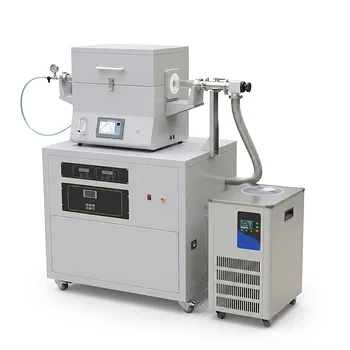
Split Chamber CVD Tube Furnace with Vacuum Station Chemical Vapor Deposition System Machine
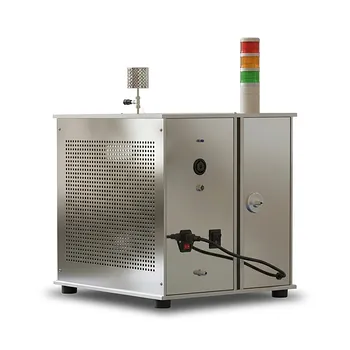
Automatic Flammable Gas Control and Disposal Device for Hydrogen Atmosphere Furnaces