What is the function of high-performance ceramic boats as reaction vessels? Ensure Purity in Material Synthesis
Updated 3 months ago
High-performance ceramic boats serve as chemically inert, thermally stable vessels that facilitate the synthesis of advanced composites by providing a contamination-free environment at temperatures up to 1773 K. They function as critical load-bearing containers that prevent side reactions between the vessel and the raw materials—such as silicon, graphite, or phosphorus—thereby ensuring the absolute purity of the final synthesized material.
Core Takeaway: Ceramic boats are not merely containers; they are essential process-enabling tools that maintain structural and chemical integrity under extreme vacuum and thermal conditions, preventing impurity migration and allowing for precise control over reactant volatilization.
Ensuring Material Purity and Chemical Integrity
Prevention of Elemental Contamination
The primary function of a high-performance ceramic boat is to act as a non-reactive barrier between the furnace environment and the raw materials. At temperatures reaching 1500°C (1773 K), most standard materials would react with silicon powder or graphite, introducing metallic or non-metallic impurities. High-purity ceramics, such as alumina, remain inert, ensuring the synthesized anode materials or composites meet strict purity standards.
Stability in Reactive Atmospheres
In processes involving phosphorus, sulfur, or selenium, the boat must resist high-temperature erosion from volatile vapors. These vessels are designed to withstand reducing atmospheres and corrosive gas flows without participating in the reaction. This chemical stability is vital for preventing container-derived contamination from interfering with the microstructure analysis or the electrochemical activity of the final product.
Enabling Precise Process Control
Regulating Precursor Volatilization
In Chemical Vapor Deposition (CVD) and vacuum adsorption, the precise placement of the ceramic boat allows operators to control the evaporation rate of solid precursors. By managing the temperature gradient relative to the boat's position in the furnace, the concentration of reactants in the atmosphere can be finely tuned. This regulation is critical for the uniform synthesis of thin films and carbon nanotubes.
Managing Gas Flow and Delivery
The physical geometry of the ceramic boat helps shape the gas flow over the surface of the phosphorus or sulfur source. This ensures the stable generation and delivery of reactant gases, such as phosphine, to the precursor surface. Controlled transport by carrier gases is necessary for achieving a uniform chemical transformation across the entire sample.
Structural Resilience at Extreme Temperatures
High-Temperature Load-Bearing Capability
At the extreme heat required for silicon/silicon carbide composite preparation, materials often lose their structural rigidity. High-performance ceramic boats maintain their mechanical strength and shape while supporting the weight of raw powder loads. This prevents the vessel from deforming or failing during the long thermal treatment cycles required for material synthesis.
Resistance to Thermal Shock
Material synthesis often involves rapid temperature changes or long annealing processes. Ceramic boats are engineered for high thermal shock resistance, allowing them to undergo repeated heating and cooling cycles without cracking. This durability ensures the consistency of the reaction environment across multiple production batches.
Understanding the Trade-offs
Material Compatibility and Brittleness
While ceramic boats offer superior chemical inertness, they are inherently brittle and susceptible to mechanical failure if handled improperly. Furthermore, no single ceramic material is universal; for instance, while alumina is excellent for many processes, specific highly aggressive precursors may require specialized compositions like boron nitride or quartz.
Thermal Lag and Gradient Issues
The wall thickness of a ceramic boat can create a slight thermal lag, meaning the material inside may not reach the furnace's ambient temperature immediately. If the boat is too thick or the heating ramp is too aggressive, it can lead to non-uniform reactions within the precursor powder. Engineers must balance the boat's structural thickness with the need for efficient heat transfer.
How to Apply This to Your Project
Selecting the Right Vessel for Your Synthesis Goal
When integrating ceramic boats into your material synthesis workflow, the choice of material and geometry should be dictated by your specific thermal and chemical requirements.
- If your primary focus is extreme purity (e.g., semiconductor-grade anodes): Use high-purity alumina boats (>99%) to ensure zero chemical migration at temperatures exceeding 1500°C.
- If your primary focus is controlling reaction kinetics (e.g., CVD thin films): Utilize shallow, long boats and precise furnace positioning to regulate the surface area-to-volume ratio for evaporation.
- If your primary focus is corrosive vapor resistance (e.g., phosphorization): Select ceramic boats specifically rated for chemical stability against volatile phosphorus or sulfur species to prevent vessel erosion.
Choosing the correct high-performance ceramic boat is a fundamental step in transitioning from laboratory-scale synthesis to the reliable production of high-specification advanced materials.
Summary Table:
| Feature | Function & Benefit |
|---|---|
| Chemical Inertness | Prevents side reactions with raw materials like Si, C, or P at 1500°C. |
| Thermal Stability | Maintains mechanical strength and shape up to 1773 K (1500°C). |
| Process Control | Regulates precursor volatilization rates in CVD and vacuum adsorption. |
| Material Purity | High-purity alumina (>99%) prevents metallic/non-metallic contamination. |
| Durability | High thermal shock resistance allows for repeated heating/cooling cycles. |
Elevate Your Material Research with THERMUNITS
Precision in material science starts with the right thermal environment. THERMUNITS is a leading manufacturer of high-temperature laboratory equipment, providing advanced solutions for material science and industrial R&D.
Our comprehensive range includes Muffle, Vacuum, Atmosphere, Tube, Rotary, and Hot Press furnaces, CVD/PECVD systems, Dental Furnaces, electric rotary kilns, and vacuum induction melting furnaces (VIM). We also provide high-quality Thermal Elements and specialized ceramic vessels to ensure your high-temperature processes are contamination-free and perfectly controlled.
Whether you are synthesizing semiconductor-grade anodes or developing advanced carbon nanotubes, our equipment delivers the reliability your innovation demands.
Contact THERMUNITS Expert Team Today to find the perfect heat treatment solution for your lab!
References
- Liyong Wang Liyong Wang, Lei Liu Shengliang Hu and Quangui Guo Lei Liu Shengliang Hu and Quangui Guo. Silicon/Silicon Carbide/Graphite Composite Anode Material for Rechargeable Lithium-Ion Batteries by High-Temperature Vacuum Adsorption Method. DOI: 10.52568/001466/jcsp/46.03.2024
Mentioned Products
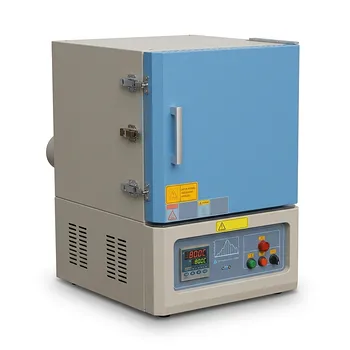
- 1800C Bench Top Muffle Furnace 18 Liters with Kanthal Super 1900 Heating Elements for High Purity Ceramic Sintering and Material Research
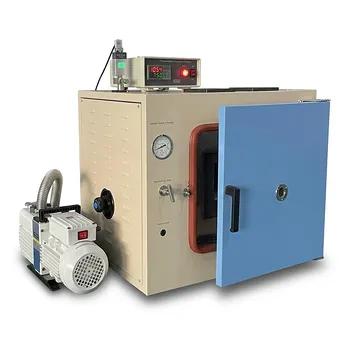
- Compact High Vacuum Box Furnace 1050C Max 6.2L Ceramic Chamber Stainless Steel Shell Programmable Temperature Controller for Material Science Research
People Also Ask
- Why is a benchtop muffle furnace essential for U3O8 micromaterials? Achieve precision stoichiometry and purity.
- What materials are typically used for heating elements in muffle furnaces? A Guide to Performance & Temperature Limits
- What role does a laboratory high-temperature muffle furnace play in the ash analysis phase of biomass co-firing research? [Guide]
- Why is a sintering furnace or Rapid Thermal Processing (RTP) equipment necessary for the formation of electrodes? Master Solar Ohmic Contacts.
- What function does argon serve in MOF melt-quenching? Prevent oxidation and ensure chemical integrity.

Tech Team · ThermUnits
Last updated on Jun 02, 2026