Why is a sintering furnace or Rapid Thermal Processing (RTP) equipment necessary for the formation of electrodes? Master Solar Ohmic Contacts.
Updated 3 months ago
The formation of high-efficiency solar electrodes requires sintering or Rapid Thermal Processing (RTP) to transform metal pastes into functional electrical contacts through controlled chemical reactions. These thermal systems allow metal particles to etch through protective passivation layers and bond with the underlying semiconductor. Without this precise thermal "firing," a solar cell cannot effectively transfer generated electricity, resulting in high resistance and low power output.
Sintering and RTP equipment are critical for establishing ohmic contacts by facilitating a controlled melt where glass frit etches through passivation to bond metal to silicon. This process must be perfectly calibrated to ensure low electrical resistance while protecting the cell's delicate internal junctions.
The Mechanics of Contact Formation
Penetrating the Passivation Layer
Modern solar cells are coated with a passivation layer to prevent energy loss, but this layer also acts as an insulator. During the sintering process, the glass frit within the silver paste melts and chemically etches through this layer.
This allows the silver particles to reach the polycrystalline silicon, creating a direct path for electron flow. The furnace must maintain a precise peak temperature, often around 730 °C, to trigger this reaction.
Establishing the Ohmic Bond
The primary goal of thermal processing is to create a high-quality ohmic contact between the metal and the semiconductor. As the metal cools along a specific curve, it forms a solid bond with the silicon layer.
This bond ensures that the electrical current can flow in both directions with minimal resistance. If the temperature or cooling rate is off, the bond will be weak, leading to poor mechanical durability and high energy loss.
Precision Control and Material Integrity
Managing Thermal Uniformity
The depth of metal penetration is governed by how evenly heat is distributed across the wafer. Thermal uniformity within the sintering furnace ensures that every part of the electrode etches to the same depth.
Inconsistent heating leads to "hot spots" where the metal may penetrate too deeply, or "cold spots" where the contact is never fully established. This uniformity is the difference between a high-yield production line and a high-waste one.
Atmospheric Protection and Diffusion
In specific architectures, such as CdTe cells, thermal processing occurs in a vacuum annealing furnace with nitrogen protection. This environment prevents the oxidation of electrode materials which would otherwise increase resistance.
The heat also promotes the moderate diffusion of atoms, such as copper, into the semiconductor layers. This diffusion repairs interface defects and is a key driver in increasing the solar cell's Fill Factor (FF).
Understanding the Trade-offs and Risks
The Danger of Over-Firing
The most significant risk in electrode formation is excessive etching. If the furnace stays at peak temperature for too long, the silver can punch through the thin tunneling or passivation layers entirely.
When these layers are damaged, the cell’s internal voltage drops significantly. This creates a permanent "shunt" that ruins the cell's ability to hold a charge and convert light into power.
Balancing Resistance and Passivation
Manufacturers must constantly balance low contact resistance against high passivation performance. Higher temperatures generally improve electrical contact but degrade the protective passivation qualities of the wafer.
Achieving the "sweet spot" requires equipment capable of rapid temperature transitions (RTP). This allows the chemicals to react quickly without soaking the entire wafer in high heat for longer than necessary.
Optimizing Your Thermal Processing Strategy
How to Apply This to Your Project
To achieve the best results in electrode formation, you must align your equipment settings with your specific cell architecture and paste chemistry.
- If your primary focus is reducing series resistance: Prioritize equipment with high vacuum capabilities and precise nitrogen flow to prevent electrode oxidation and promote atom diffusion.
- If your primary focus is protecting thin tunneling layers: Implement Rapid Thermal Processing (RTP) to minimize the "time at temperature," reducing the risk of over-etching the passivation.
- If your primary focus is high-throughput consistency: Invest in sintering furnaces with advanced thermal mapping to ensure uniform peak temperatures across the entire belt width.
The success of a solar cell ultimately depends on the precision of the thermal interface where metal meets silicon.
Summary Table:
| Feature/Process | Function in Electrode Formation | Impact on Solar Cell |
|---|---|---|
| Glass Frit Etching | Chemically penetrates the insulation layer | Enables electron flow to silicon |
| Ohmic Contact | Creates low-resistance metal-to-silicon bond | Minimizes energy loss/resistance |
| Thermal Uniformity | Ensures consistent heat across the wafer | Prevents hot spots and high-waste yields |
| RTP Precision | Rapid heating/cooling transitions | Prevents over-firing and shunts |
| Atmospheric Control | Vacuum or nitrogen protection | Prevents oxidation and repairs defects |
Maximize Your Solar Efficiency with THERMUNITS
As a leading manufacturer of high-temperature laboratory equipment for material science and industrial R&D, THERMUNITS offers specialized thermal processing solutions to perfect your solar cell electrode formation.
Our comprehensive range, including Rapid Thermal Processing (RTP), Vacuum, Tube, and Atmosphere furnaces, provides the precise thermal mapping and atmospheric control needed to achieve superior ohmic contacts while protecting delicate passivation layers. Whether you are optimizing CdTe architectures or standard silicon wafers, our equipment ensures high-throughput consistency and improved Fill Factor (FF).
Contact our technical experts today to find the ideal furnace for your lab!
References
- Qinqin Wang, Jianning Ding. Effects on Metallization of n+-Poly-Si Layer for N-Type Tunnel Oxide Passivated Contact Solar Cells. DOI: 10.3390/ma17112747
Mentioned Products
- High Temperature Horizontal Electrical Assisted Sintering Furnace with 3KW Programmable Power Source for Advanced Ceramic Materials
- 1700C Compact Hybrid Furnace with Dual Layer Box Sintering and Controlled Atmosphere Alumina Tubes
- Roller Table Atmosphere Furnace 1500C High Temperature Battery Material Sintering System 112L Capacity
- Ultra High Temperature Bench Top Muffle Furnace 1750C Sintering System with Kanthal Super Heating Elements and Precision Digital Control
- Compact High Temperature 1600C Tube Furnace with 50mm Alumina Tube and Vacuum Flanges for Material Sintering
People Also Ask
- How does the temperature control precision of a high-temperature sintering furnace affect Na1+xLa1-xZr2O6-δ ceramics?
- How does a high-temperature sintering furnace environment enhance NdFeB magnets? Achieve 98%+ density with precision.
- Why is a high-temperature sintering furnace required for the preparation of Li(Nb,Ta)O3 precursors? Essential Insights
- How does a high-temperature sintering furnace contribute to the interfacial strengthening of SS316L and zirconia?
- What role does a sintering furnace play with silver paste? Essential Thermal Management for Power Device Packaging

Tech Team · ThermUnits
Last updated on Jun 03, 2026
Related Products
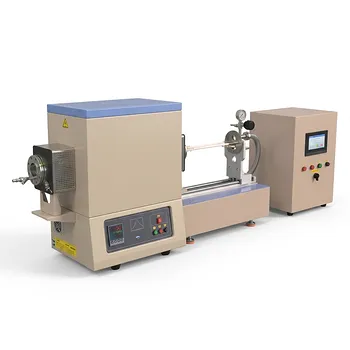
High Temperature Horizontal Electrical Assisted Sintering Furnace with 3KW Programmable Power Source for Advanced Ceramic Materials
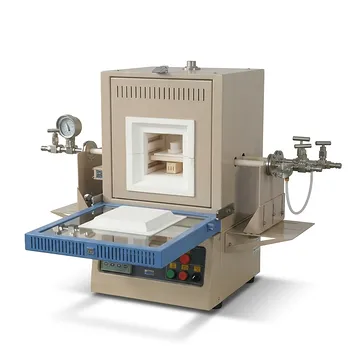
1700C Compact Hybrid Furnace with Dual Layer Box Sintering and Controlled Atmosphere Alumina Tubes
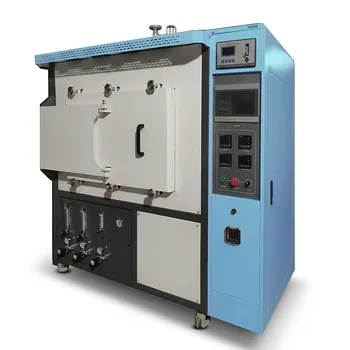
Roller Table Atmosphere Furnace 1500C High Temperature Battery Material Sintering System 112L Capacity
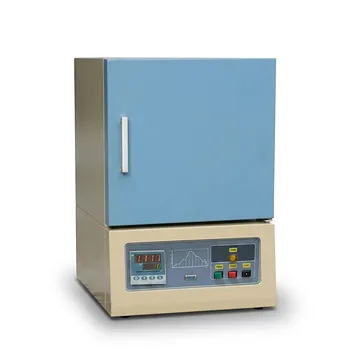
Ultra High Temperature Bench Top Muffle Furnace 1750C Sintering System with Kanthal Super Heating Elements and Precision Digital Control

Compact High Temperature 1600C Tube Furnace with 50mm Alumina Tube and Vacuum Flanges for Material Sintering
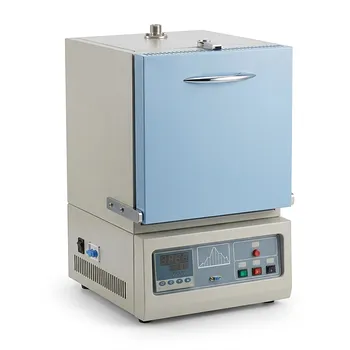
1750C Compact Muffle Furnace 1.7L Ultra High Temperature Laboratory Sintering System for Advanced Ceramics and Material Science Research
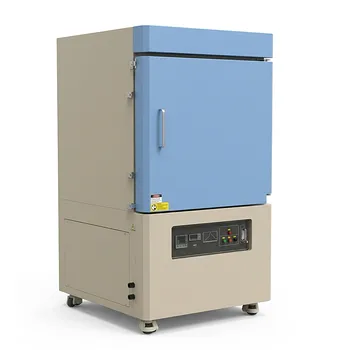
Industrial Large Box Furnace 1700C 216L High Temp Muffle Sintering System

High Temperature 1700C Vertical Tube Furnace for Powder Spherification and Material Sintering
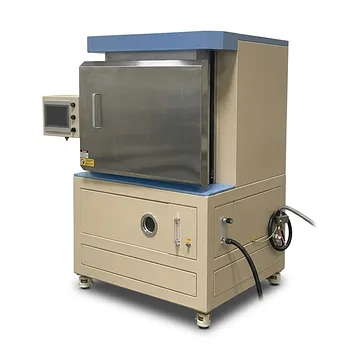
1650C High Temperature Atmosphere Controlled Box Furnace with 65L Chamber for Advanced Material Sintering and Industrial Heat Treatment
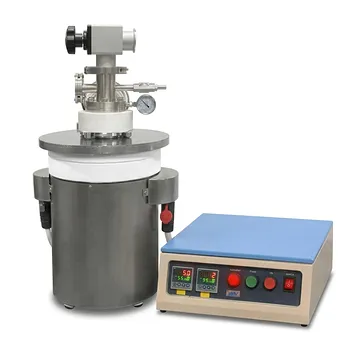
1100C High Temperature Vacuum Crucible Furnace with Quartz Chamber for Thermal Processing and Sintering
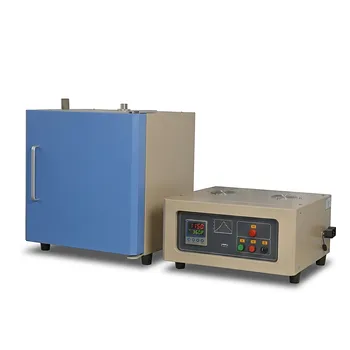
High Temperature Muffle Furnace with Alloy Chamber for Debinding and Sintering Applications
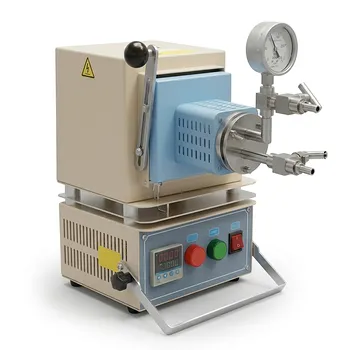
Compact Hybrid Muffle and Tube Furnace for 1000C Controlled Atmosphere Laboratory Material Sintering
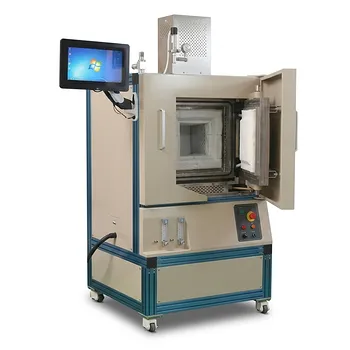
High Temperature Oxygen and Inert Atmosphere Controlled Furnace 8 Liter 1700C Sintering System for Advanced Materials RD
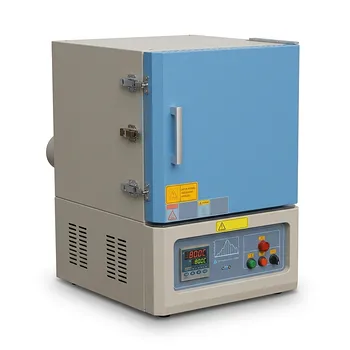
1800C Bench Top Muffle Furnace 18 Liters with Kanthal Super 1900 Heating Elements for High Purity Ceramic Sintering and Material Research
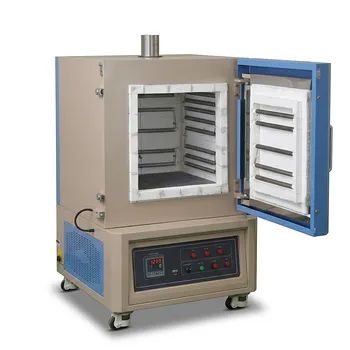
1200C High Temperature 125L Muffle Furnace 5 Side Heating for Large Batch Sintering with Optional Alloy Debinding Chamber
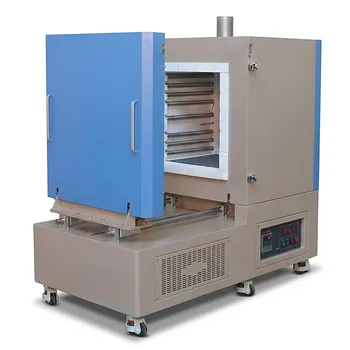
1200C Five Side Heating Muffle Furnace with Sliding Door 125L Volume High Temperature Heat Treatment System for Large Scale Sintering and Annealing
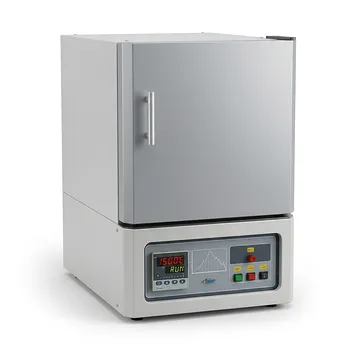
High Temperature 1500C Benchtop Muffle Furnace 3.6L Alumina Fiber Chamber Programmable Controller Sintering Annealing Carbonization Thermal Processing System
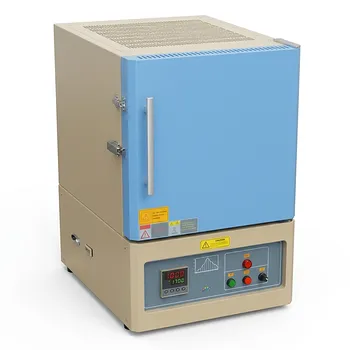
Large Bench Top 1700C High Temperature Muffle Furnace with 19L Chamber for Advanced Material Sintering and Annealing
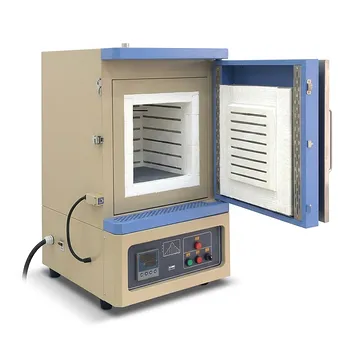
Five Side Heating Muffle Furnace High Purity Alumina Fiber 27L Chamber 1200C High Temperature Thermal Processing System for Sintering Annealing and Materials Research