Why is the Type B thermocouple used for high-temperature slag research? Stability and Precision up to 1800°C
Updated 3 months ago
The Type B thermocouple is the primary choice for high-temperature slag research because it maintains exceptional thermoelectric stability and oxidation resistance at temperatures reaching 1800°C. In the specific range required for slag viscosity measurements (1723 K to 1923 K), these sensors provide the high precision and low drift rates necessary to correlate thermal conditions with complex melt dynamics accurately.
Core Takeaway: Type B thermocouples offer a unique combination of high-temperature durability and measurement reliability, making them the only viable option for long-term, precise monitoring in the harsh, oxidative environments typical of slag and metallurgical research.
Superior Thermal Endurance and Range
Sustained High-Temperature Operation
Type B thermocouples, composed of platinum-rhodium 30% and platinum-rhodium 6%, are specifically engineered for extreme environments. They can sustain a long-term maximum operating temperature of 1800°C, far exceeding the limits of base-metal thermocouples.
Performance in the Slag Critical Zone
Research involving slag viscosity and mold flux often occurs between 1700 K and 1900 K. The Type B thermocouple is optimized for this window, providing consistent performance where other sensors might melt or suffer from rapid calibration degradation.
Precision and Data Integrity
Minimal Thermoelectric Drift
One of the most critical requirements in slag research is long-term stability. Type B sensors exhibit very low drift rates, ensuring that the temperature data remains reliable over the course of extended experiments or frequent thermal cycling.
High-Accuracy Reproducibility
In experiments where variables like the TiO2 activity coefficient or diffusion coefficients are measured, even small temperature fluctuations can skew results. Type B thermocouples provide accuracy levels up to ±3 K, ensuring that experimental conditions are reproducible and scientifically valid.
Real-Time Feedback for Melt Dynamics
By positioning the thermocouple near the bottom of the crucible or within the reaction zone, researchers receive real-time feedback. This allows for the precise correlation of temperature changes with physical property shifts, such as changes in viscosity or dissolution rates.
Resilience in Corrosive Environments
Exceptional Oxidation Resistance
Slag research often involves oxidative atmospheres that would rapidly degrade other materials. The platinum-rhodium composition of the Type B thermocouple is inherently resistant to oxidation, allowing it to maintain its integrity throughout high-temperature slag reduction processes.
Protection via Specialized Shielding
To further enhance longevity and accuracy, these thermocouples are typically encased in recrystallized alumina protection tubes. This shielding prevents direct contact with corrosive slag vapors while allowing the sensor to remain close to the sample for direct monitoring.
Understanding the Trade-offs
Sensitivity at Lower Temperatures
Type B thermocouples are not suitable for low-temperature measurements. Their output is extremely low below 600°C, making them virtually useless for room-temperature monitoring or low-heat applications.
Material Cost and Fragility
Because they are made of precious metals (platinum and rhodium), Type B thermocouples are significantly more expensive than Type K or J sensors. Additionally, while they resist oxidation well, they are susceptible to mechanical shock and contamination if the alumina shielding is compromised.
How to Apply This to Your Research
Implementing the Right Sensor Strategy
- If your primary focus is long-term stability above 1600°C: Utilize Type B thermocouples as your primary furnace control to ensure a steady thermal environment over many hours.
- If your primary focus is high-precision viscosity data: Position a Type B thermocouple in an alumina tube as close to the crucible base as possible to capture the most accurate local temperature.
- If your primary focus is thermal cycling (1500 K to 1700 K): Rely on the Type B’s low drift rates to maintain consistent calibration across multiple heating and cooling runs.
- If your primary focus is cost-effective low-temp monitoring: Avoid Type B sensors and instead use Type R or S for moderately high temperatures, or Type K for applications below 1200°C.
The Type B thermocouple remains the definitive tool for slag researchers who require uncompromising accuracy and durability in the face of extreme heat.
Summary Table:
| Feature | Specification/Detail | Research Benefit |
|---|---|---|
| Composition | Platinum-Rhodium 30% / 6% | Exceptional stability at extreme heat |
| Max Temperature | Up to 1800°C | Ideal for metallurgical melt dynamics |
| Accuracy | Approx ±3 K | Ensures reproducible and valid data |
| Atmosphere | Highly Oxidative Resistant | Resists degradation in corrosive slag environments |
| Critical Range | 1723 K to 1923 K | Precise monitoring in the slag critical zone |
| Stability | Very Low Drift Rate | Consistent calibration during long-term experiments |
Optimize Your Research with High-Precision Thermal Solutions
Precise temperature control is the backbone of successful material science and industrial R&D. At THERMUNITS, we understand the rigorous demands of high-temperature slag research and metallurgical analysis. As a leading manufacturer, we provide a comprehensive range of thermal processing equipment designed for uncompromising accuracy.
Whether you need Muffle, Vacuum, Atmosphere, or Tube furnaces, or advanced systems like CVD/PECVD, Rotary Kilns, and Hot Press furnaces, our solutions are engineered to handle the most challenging environments. We also offer high-quality Thermal Elements and Type B thermocouples to ensure your laboratory heat treatment equipment performs at its peak.
Ready to elevate your lab's capabilities? Contact THERMUNITS today to discuss your specific requirements and let our experts help you find the perfect high-temperature solution for your next breakthrough.
References
- Elin Åström, J. Björkvall. Influence of Vanadium Oxide on the Viscosity Within the CaO–SiO2–“FeO”–MgO System. DOI: 10.1007/s11663-024-03322-9
Mentioned Products
- High Temperature Benchtop Muffle Furnace with Quartz Observation Window for Thermal Imaging and Material Analysis
- High Temperature Three Zone Tube Furnace 1700C with Alumina Tube and Water Cooled Flanges
- Triple Tube Compact Hybrid Muffle Furnace 1000C High Vacuum Thermal Processing System
- Elongated Two Temperature Zone Pipe Furnace for Industrial Heat Treatment and Material Science Research
- High Temperature Bench Top Muffle Furnace 1700C with Integrated Evaporating Particle Collection and 8x8x8 Alumina Fiber Chamber
People Also Ask
- What is the function of a muffle furnace in aluminoborosilicate glass prep? Stabilize Raw Materials for Superior Purity
- What is the function of a high-temperature muffle furnace in phosphorus-modified zeolite catalyst preparation?
- What is the function of a high-temp muffle furnace in Ni-V oxide synthesis? Optimize your material's performance.
- What role does a high-temperature muffle furnace play in evaluating the mineral composition of rock samples? LOI & XRF Guide
- What is the purpose of using muffle or tube furnaces in glass synthesis? Achieve Precise Melt-Quenching & Homogeneity

Tech Team · ThermUnits
Last updated on Jun 03, 2026
Related Products
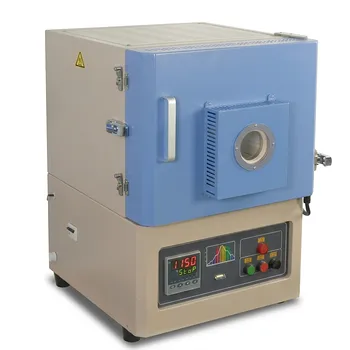
High Temperature Benchtop Muffle Furnace with Quartz Observation Window for Thermal Imaging and Material Analysis
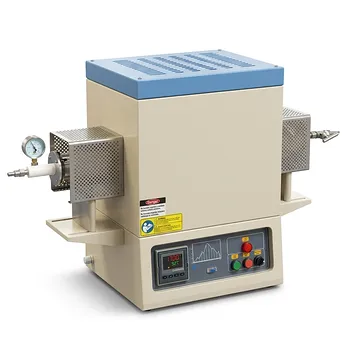
High Temperature Three Zone Tube Furnace 1700C with Alumina Tube and Water Cooled Flanges
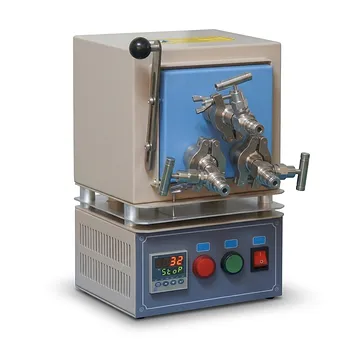
Triple Tube Compact Hybrid Muffle Furnace 1000C High Vacuum Thermal Processing System
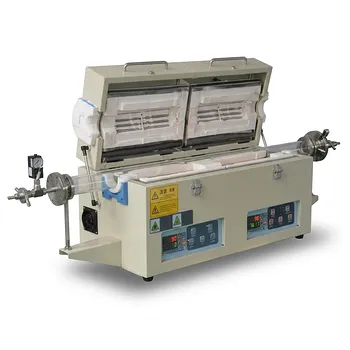
Elongated Two Temperature Zone Pipe Furnace for Industrial Heat Treatment and Material Science Research
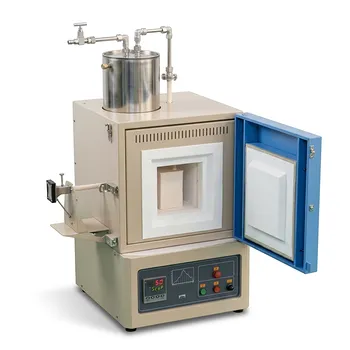
High Temperature Bench Top Muffle Furnace 1700C with Integrated Evaporating Particle Collection and 8x8x8 Alumina Fiber Chamber
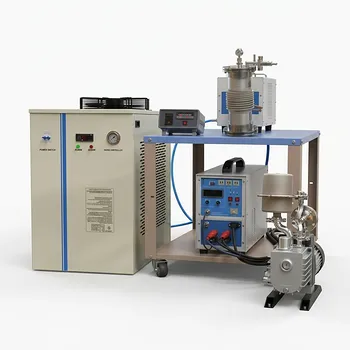
Induction Heating System with Temperature Control for High Temperature Vacuum Sintering and Melting
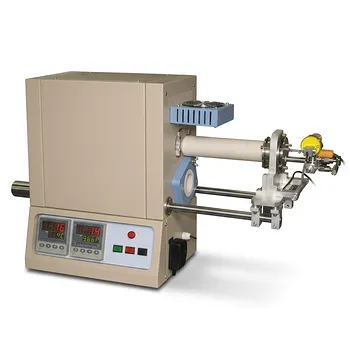
High Temperature Tube Furnace 1500C with Sliding Flanges and 50mm OD for Rapid Thermal Processing Fast Heating and Cooling
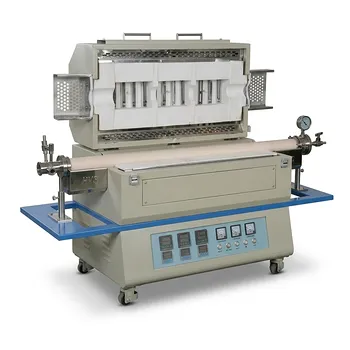
Three Temperature Zone Fast Heating Furnace 1500C Laboratory High Precision Thermal Processing System
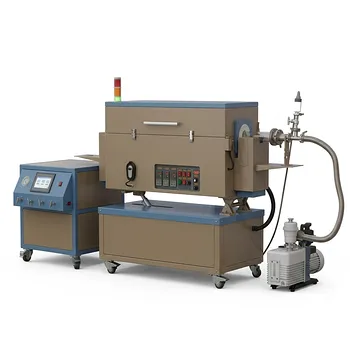
5 Inch Three Zone Rotary Tube Furnace with Integrated Gas Delivery System and 1200C Capability for Advanced Material CVD Processing
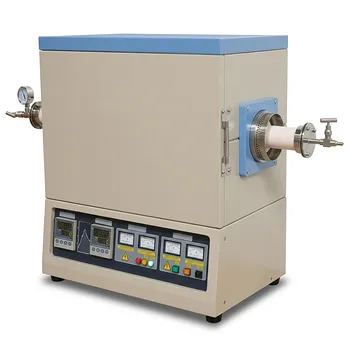
High Temperature 1700C Dual Zone Tube Furnace for Material Science and Industrial Chemical Vapor Deposition Research
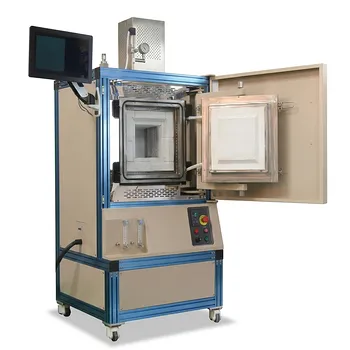
High Temperature Hydrogen Atmosphere Box Furnace 1650C Max Reducing Environment Material Synthesis System 8x8x8 Chamber
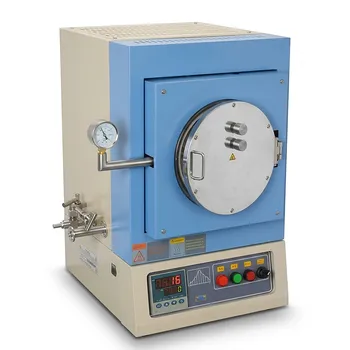
1100°C High Temperature Quartz Chamber Furnace 8 Inch OD with 7.6 Liter Capacity and Vacuum Atmosphere Capability
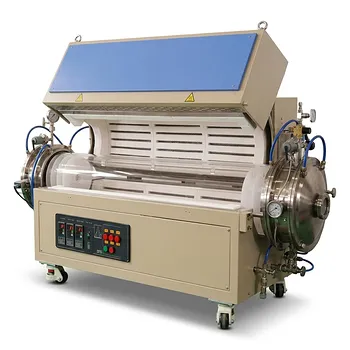
High Temperature Three Zone Split Tube Furnace 1200C Max 35.4 Inch Heating Length 8 Inch ID Tube
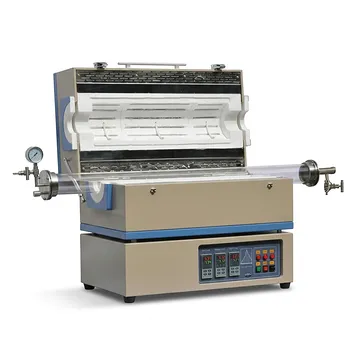
24 Inch Three Zone Split Tube Furnace with Optional Quartz Tube and Vacuum Flange System for High Temperature Material Synthesis
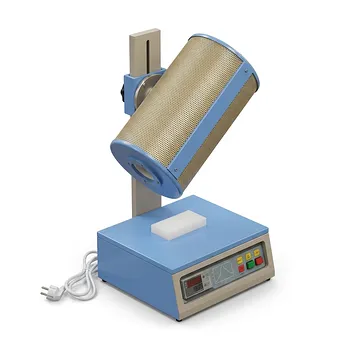
1100°C Vertical Laboratory Furnace for DIY Tubular Reactors with PID Temperature Controller
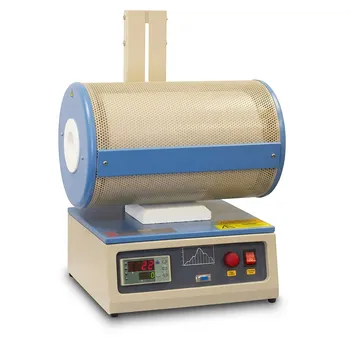
Multi Position Tube Furnace 1100C for Laboratory Material Research and Advanced Industrial Thermal Processing
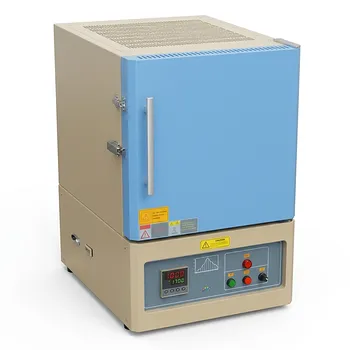
Large Bench Top 1700C High Temperature Muffle Furnace with 19L Chamber for Advanced Material Sintering and Annealing
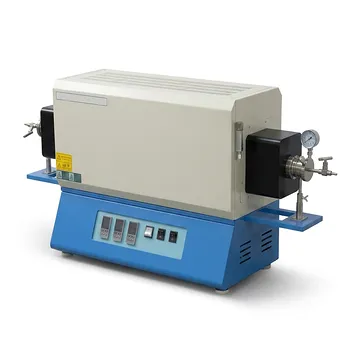
High Temperature Three Temperature Zone Tube Furnace for Advanced Material Science Sintering and Chemical Vapor Deposition Applications
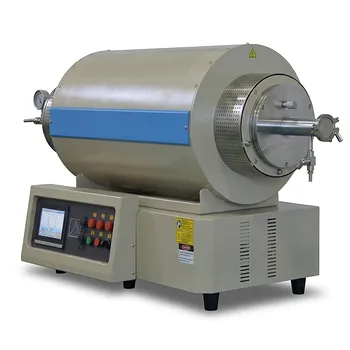
1200C Max Three Zone Tube Furnace 6 Inch OD Max with Tube and Flange