Why is a covered quartz crucible used for g-C3N4 synthesis? Enhance Your Thermal Polymerization & Yield.
Updated 3 months ago
The use of a covered quartz crucible is a critical tactical choice for controlling the chemical environment during thermal polymerization. By creating a semi-closed local atmosphere, the lid prevents the rapid escape of volatile intermediate products and precursor vapors that are essential for the reaction. This containment ensures a high reaction yield and promotes the development of the well-ordered, layered graphitic carbon nitride ($g-C_3N_4$) structure.
Core Takeaway: A covered crucible transforms an open furnace into a controlled micro-reactor by trapping gaseous intermediates and maintaining the local pressure required for complete polymerization. Without this "semi-closed" environment, precursor sublimation would lead to significant mass loss and poor structural crystallinity.
Establishing a Controlled Micro-Environment
Trapping Volatile Intermediates
The synthesis of $g-C_3N_4$ typically involves precursors like melamine or urea, which are highly prone to sublimation at high temperatures. The lid acts as a physical barrier that prevents these precursors and their intermediate gaseous products from escaping the reaction zone prematurely.
Creating Micro-Positive Pressure
As the temperature rises, the decomposition of precursors generates gases that build a micro-positive pressure within the crucible. This slight pressure increase is vital for shifting the chemical equilibrium toward solid-phase condensation, rather than total gasification.
Extending Vapor Residence Time
By confining the vapors, the lid increases the residence time of the reactant molecules in the hot zone. This extended contact allows for more collisions and interactions between gas-phase intermediates, which is a prerequisite for building large, stable molecular chains.
Optimizing the Polymerization Process
Promoting Thermal Polycondensation
High-quality $g-C_3N_4$ requires a high degree of polymerization to achieve its characteristic layered properties. The semi-closed environment maintains a sufficient concentration of reactants to drive the polycondensation process to completion.
Guiding Morphological Evolution
The confined atmosphere can also act as a gas-template. For example, the temporary retention of gases like ammonia ($NH_3$) can guide the growth of the material, sometimes causing planar nanosheets to curl into specialized structures like nanotubes.
Enhancing Structural Crystallinity
Consistent local conditions within the crucible lead to better crystallinity. When the reaction environment is stable and saturated with precursor vapors, the resulting powder exhibits more uniform growth and a more stable yellow-colored graphitic phase.
Practical Advantages in Thermal Stability
Uniform Heat Distribution
The crucible and its lid help to buffer temperature fluctuations from the furnace heating elements. This ensures that the material inside experiences uniform heating, which prevents localized over-heating or "cold spots" that could cause inconsistent performance.
Maintaining Material Purity
Quartz is selected for its chemical inertness and high-temperature resistance. Using a covered quartz vessel protects the sample from external contaminants and ensures that the final $g-C_3N_4$ composite remains pure and free from furnace-derived impurities.
Understanding the Trade-offs
Risk of Pressure Build-up
While micro-positive pressure is beneficial, a completely sealed or "tight" lid can lead to excessive pressure during the rapid release of ammonia or carbon dioxide. This can occasionally cause the crucible to crack or the lid to "pop," leading to an abrupt loss of the controlled atmosphere.
Influence of Gas Composition
The entrapment of byproducts like ammonia can influence the final surface chemistry of the $g-C_3N_4$. Depending on the desired electronic properties, the retention of these gases may be either a benefit or a limitation that requires careful calibration of the lid's "fit."
Choosing the Right Setup for Your Synthesis
To achieve the best results in your thermal processing, consider the following recommendations:
- If your primary focus is maximizing yield: Use a tightly fitting lid to ensure that almost all precursor mass is converted into the solid graphitic product.
- If your primary focus is morphological control (e.g., nanotubes): Monitor the ramp rate of the furnace to control the release of template gases trapped under the cover.
- If your primary focus is high purity: Opt for high-quality quartz or corundum materials to prevent the leaching of metal oxides into your carbon nitride sample.
Mastering the semi-closed atmosphere is the single most effective way to ensure the reproducible synthesis of high-performance graphitic carbon nitride.
Summary Table:
| Key Feature | Functional Benefit | Impact on g-C3N4 Synthesis |
|---|---|---|
| Vapor Trapping | Prevents precursor escape | Maximizes reaction yield and mass retention |
| Micro-Pressure | Shifts equilibrium to solid-phase | Enhances structural crystallinity and order |
| Residence Time | Increases molecular interactions | Promotes complete thermal polycondensation |
| Thermal Buffering | Ensures uniform heat distribution | Prevents inconsistent phases and impurities |
Elevate Your Material Research with THERMUNITS
Precision in thermal processing is the key to high-performance materials like graphitic carbon nitride. At THERMUNITS, we are a leading manufacturer specializing in high-temperature laboratory equipment designed for the rigors of material science and industrial R&D.
Our comprehensive range of thermal solutions—including Muffle, Vacuum, Atmosphere, Tube, and Rotary furnaces, as well as advanced CVD/PECVD systems and Vacuum Induction Melting (VIM)—provides the stable, controlled environments necessary for successful chemical synthesis and heat treatment.
Our Value to You:
- Unmatched Stability: Achieve the precise temperature control required for micro-environment regulation.
- Versatile Equipment: From Dental Furnaces to Hot Presses, we support diverse laboratory and industrial applications.
- Expert Engineering: High-quality thermal elements and inert quartz components ensure maximum purity for your samples.
Ready to optimize your synthesis yield and achieve superior material properties?
Contact THERMUNITS Today for a Consultation
References
- Mariusz Pietrowski, Robert Wojcieszak. <i>In situ</i> growth of N-doped carbon nanotubes from the products of graphitic carbon nitride etching by nickel nanoparticles. DOI: 10.1039/d3na00983a
Mentioned Products
- 1100C High Temperature Vacuum Crucible Furnace with Quartz Chamber for Thermal Processing and Sintering
- Vertical Crucible Furnace 1000C High Temperature Laboratory Equipment 4.7 Inch Diameter Chamber SS316 Anti Corrosive Enclosure
- High Temperature Vertical Crucible Furnace with 22L Heating Chamber and 1200C Maximum Temperature
- 1100C Crucible Melting Furnace with Stirring Function for Glovebox and Air Sensitive Alloy Research
- Compact Crucible Melting Furnace 1100C Programmable Temperature Controller Metal Sintering Equipment
People Also Ask
- How does the temperature control precision of a high-temperature sintering furnace affect Na1+xLa1-xZr2O6-δ ceramics?
- How does a high-temperature sintering furnace environment enhance NdFeB magnets? Achieve 98%+ density with precision.
- Why is a high-temperature sintering furnace required for the preparation of Li(Nb,Ta)O3 precursors? Essential Insights
- How does a high-temperature sintering furnace contribute to the interfacial strengthening of SS316L and zirconia?
- What is the function of high-vacuum furnaces in (Mo2/3V1/3)n+1AlCn MAX phase synthesis? Ensure Purity & Diffusion.

Tech Team · ThermUnits
Last updated on Jun 03, 2026
Related Products
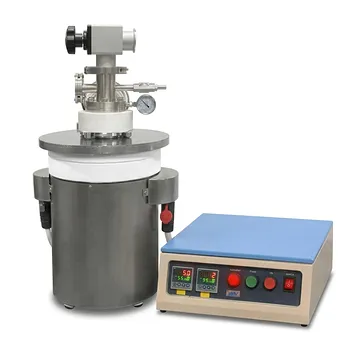
1100C High Temperature Vacuum Crucible Furnace with Quartz Chamber for Thermal Processing and Sintering
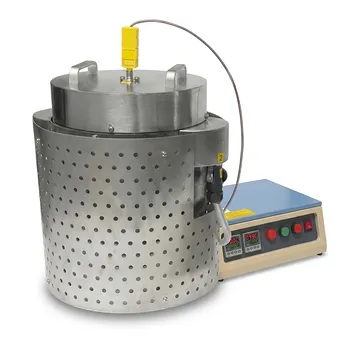
Vertical Crucible Furnace 1000C High Temperature Laboratory Equipment 4.7 Inch Diameter Chamber SS316 Anti Corrosive Enclosure
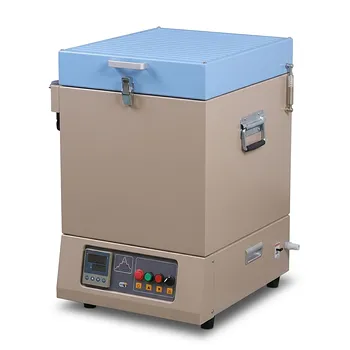
High Temperature Vertical Crucible Furnace with 22L Heating Chamber and 1200C Maximum Temperature
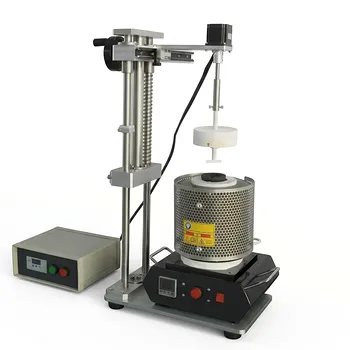
1100C Crucible Melting Furnace with Stirring Function for Glovebox and Air Sensitive Alloy Research
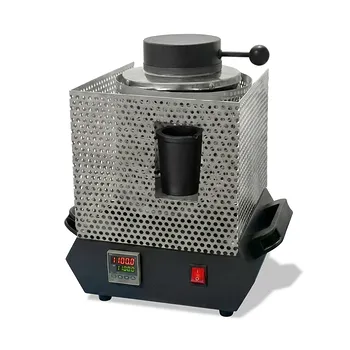
Compact Crucible Melting Furnace 1100C Programmable Temperature Controller Metal Sintering Equipment
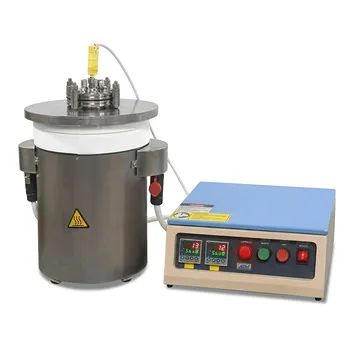
600°C Vertical Crucible Furnace with SS316 Alloy Reactor and 6 Port Vacuum Flange