What role does vacuum furnace technology play in the aerospace and aviation industry? | Advanced Heat Treatment
Updated 5 months ago
Vacuum furnace technology is the backbone of modern aerospace manufacturing, providing the sterile, high-temperature environment necessary to produce flight-critical components. By eliminating atmospheric gases, these furnaces enable the processing of advanced alloys and ceramics that would otherwise degrade, ensuring the structural integrity of engines, landing gear, and turbine systems.
Core Takeaway: Vacuum furnaces are indispensable for aerospace because they provide a contamination-free environment that maximizes the fatigue resistance and efficiency of high-performance materials, directly impacting flight safety and engine longevity.
Material Integrity in Extreme Environments
Processing Superalloys and Titanium
Aerospace engines rely on nickel-based superalloys and titanium alloys to withstand extreme heat and pressure. Vacuum furnaces provide the precise thermal control needed to heat treat these materials without the risk of atmospheric contamination.
The Importance of Microscopic Cleanliness
In a vacuum, the absence of oxygen prevents the formation of oxide inclusions within the metal. This microscopic cleanliness is vital for maintaining the internal purity of the component, which prevents premature structural failure.
Achieving High Fatigue Resistance
Components like landing gear are subject to repetitive, high-stress cycles during takeoff and landing. Vacuum processing ensures these parts have the fatigue resistance necessary to survive thousands of flight hours without developing cracks.
Specialized Manufacturing Processes
Advanced Brazing of Complex Assemblies
Aerospace designs often require joining intricate parts into a single, high-strength assembly. Vacuum brazing allows for the joining of these complex components without using flux, resulting in cleaner, stronger joints that can withstand high-vibration environments.
Sintering High-Performance Ceramics
Next-generation propulsion systems increasingly utilize advanced ceramics for their heat resistance. Vacuum furnaces are used for sintering these materials, ensuring they achieve maximum density and uniform structural properties.
Enhancing Propulsion Efficiency
By allowing for tighter tolerances and higher-quality material finishes, vacuum technology directly contributes to propulsion efficiency. This means engines can run hotter and more efficiently, reducing fuel consumption and environmental impact.
Understanding the Trade-offs
High Capital and Operational Costs
Vacuum furnaces represent a significant investment compared to standard atmospheric furnaces. The systems required to maintain a high-vacuum seal and the energy needed for cooling cycles contribute to higher per-part processing costs.
Complexity of Maintenance
Maintaining a vacuum environment requires rigorous upkeep of seals, pumps, and sensors. Any minor leak can lead to batch contamination, potentially ruining expensive aerospace components and causing production delays.
Limited Throughput for Large Parts
Because vacuum furnaces typically operate as batch processors, they may create a bottleneck in high-volume production lines. Balancing the need for vacuum-level quality with the demands of rapid manufacturing schedules requires careful logistical planning.
Applying Vacuum Technology to Aerospace Goals
How to Apply This to Your Project
To maximize the benefits of vacuum furnace technology, you must align the process with the specific performance requirements of your aerospace components.
- If your primary focus is Turbine Blade Longevity: Use vacuum heat treatment to optimize the grain structure of nickel-based superalloys for maximum creep resistance.
- If your primary focus is Structural Weight Reduction: Prioritize vacuum processing for titanium components to ensure high strength-to-weight ratios without the risk of hydrogen embrittlement.
- If your primary focus is Leak-Proof Fluid Systems: Utilize vacuum brazing for complex manifolds to ensure flux-free, high-integrity joints that withstand high pressure.
By leveraging the unique environment of the vacuum furnace, manufacturers can push the boundaries of material science to ensure the next generation of aircraft is safer, lighter, and more efficient.
Summary Table:
| Key Application | Target Materials/Process | Critical Benefit |
|---|---|---|
| Engine Components | Superalloys & Titanium | Prevents oxidation; maintains high-purity grain structure |
| Landing Gear | High-Stress Steel Alloys | Maximizes fatigue resistance for repetitive takeoff/landing |
| Complex Assemblies | Vacuum Brazing | Flux-free, high-strength joints for high-vibration environments |
| Propulsion Systems | Advanced Ceramics Sintering | Ensures maximum density and uniform structural properties |
Elevate Your Aerospace R&D with THERMUNITS
As a leading manufacturer of high-temperature laboratory equipment for material science and industrial R&D, THERMUNITS provides the precision technology required to meet the rigorous standards of the aerospace and aviation sectors.
Our comprehensive range of thermal processing solutions is designed to maximize material integrity and innovation:
- Advanced Furnaces: Vacuum, Muffle, Atmosphere, Tube, Rotary, and Hot Press furnaces.
- Specialized Systems: CVD/PECVD systems, Vacuum Induction Melting (VIM) furnaces, and Electric Rotary Kilns.
- Precision Tools: Dental Furnaces and high-quality Thermal Elements.
Whether you are optimizing superalloy fatigue resistance or sintering next-generation ceramics, our expert team is ready to provide the high-performance tools your project demands.
Ready to achieve superior material performance?
Contact THERMUNITS Today to discuss your specific heat treatment requirements!
Mentioned Products
- Ultra High Temperature Induction Heated Vacuum Furnace with Molten Salt Electrolysis Capability and 3000 Degree Precision Control
- High Temperature 1000C Vacuum Furnace with 8 Inch ID Chamber for Material Sintering and Research Annealing
- 1200°C Bottom Loading Vacuum Furnace with Rapid Gas Cooling and 8.6 Inch Diameter Quartz Chamber
- High Pressure 600T Vacuum Induction Hot Press Furnace for Advanced Material Heat Treatment and Sintering
- High Temperature Vacuum Lamination Hot Press Furnace Machine for Semiconductor Wafer Bonding and Advanced Composite Thermal Processing
People Also Ask
- What roles do an induction furnace and a graphite crucible play in the slag pre-melting process? Optimize Slag Prep.
- What is the function of high-vacuum furnaces in (Mo2/3V1/3)n+1AlCn MAX phase synthesis? Ensure Purity & Diffusion.
- What is the typical operating temperature range for vacuum furnaces? Expert Guide to High-Precision Heat Treatment
- How do vacuum furnaces compare to atmosphere or salt-bath furnaces in terms of material properties? Gain Peak Purity
- What are the technical advantages of using a vacuum furnace over a traditional atmosphere furnace? Maximize Purity

Tech Team · ThermUnits
Last updated on Apr 14, 2026
Related Products
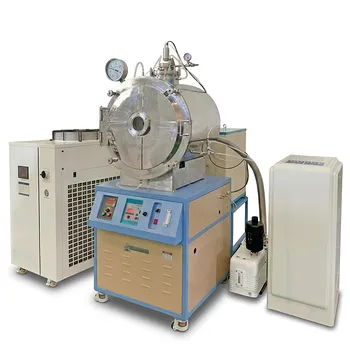
Ultra High Temperature Induction Heated Vacuum Furnace with Molten Salt Electrolysis Capability and 3000 Degree Precision Control
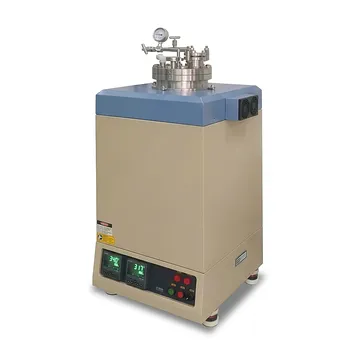
High Temperature 1000C Vacuum Furnace with 8 Inch ID Chamber for Material Sintering and Research Annealing
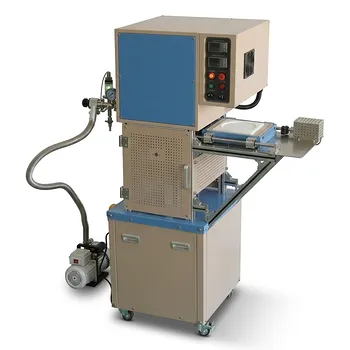
1200°C Bottom Loading Vacuum Furnace with Rapid Gas Cooling and 8.6 Inch Diameter Quartz Chamber
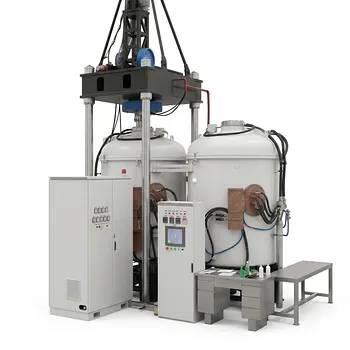
High Pressure 600T Vacuum Induction Hot Press Furnace for Advanced Material Heat Treatment and Sintering
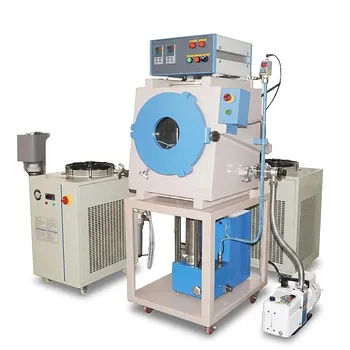
High Temperature Vacuum Lamination Hot Press Furnace Machine for Semiconductor Wafer Bonding and Advanced Composite Thermal Processing
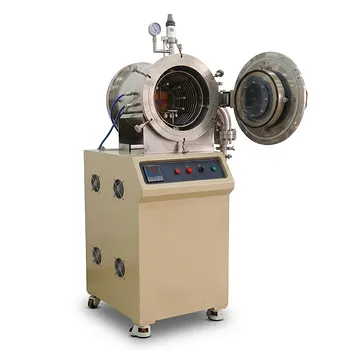
High Temperature Cold Wall High Vacuum Chamber Furnace 1400C for Advanced Material Processing
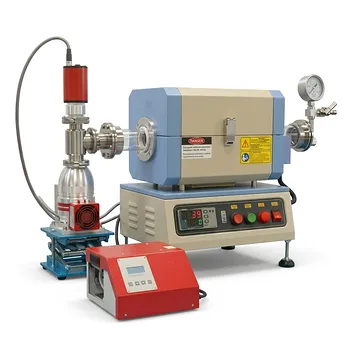
High Vacuum Compact Tube Furnace 1200C with Integrated Turbo Pump System and 8 Inch Heating Zone
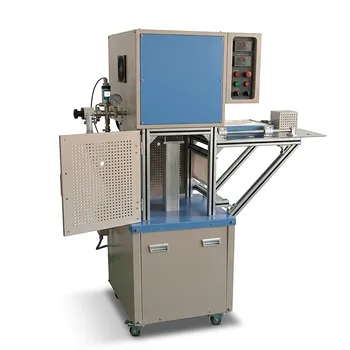
Bottom Loading Vacuum Furnace 1200C Rapid Cooling Atmosphere Control Quartz Chamber
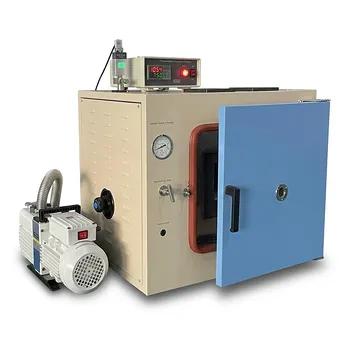
Compact High Vacuum Box Furnace 1050C Max 6.2L Ceramic Chamber Stainless Steel Shell Programmable Temperature Controller for Material Science Research
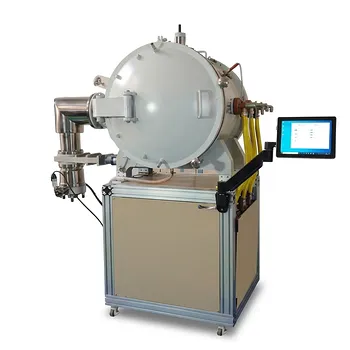
High Temperature Cold Wall Vacuum Furnace for Advanced Material Sintering and Annealing 1600C Heating Area 200x200x300mm
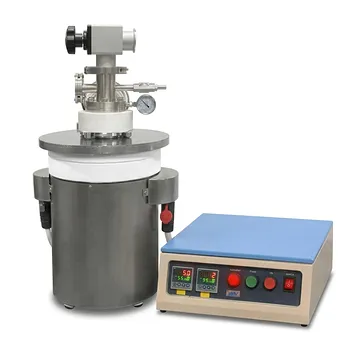
1100C High Temperature Vacuum Crucible Furnace with Quartz Chamber for Thermal Processing and Sintering
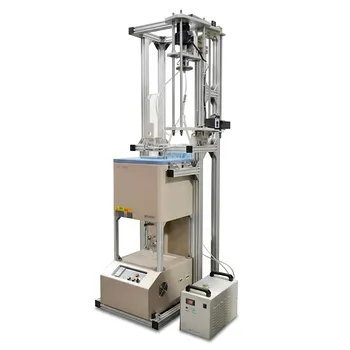
500C Vacuum Vertical Tube Furnace 84mm OD Sample Rotation Lifting System
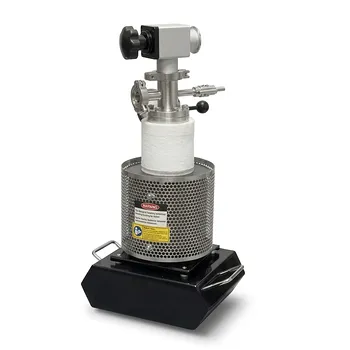
High Temperature 1100C Compact Top Loading Vertical Vacuum Tube Furnace for High Vacuum Noble Metal Melting and Material Research

1800C High Temperature Compact Vacuum Tube Furnace with 60mm OD Alumina Tube and Kanthal MoSi2 Heating Elements
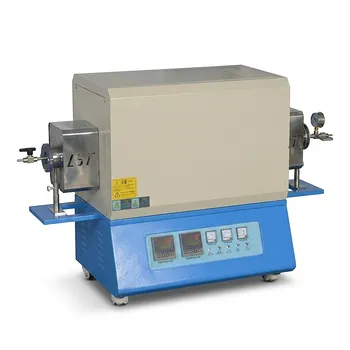
High Temperature Dual Zone Vacuum Tube Furnace for Material Research and CVD Processing
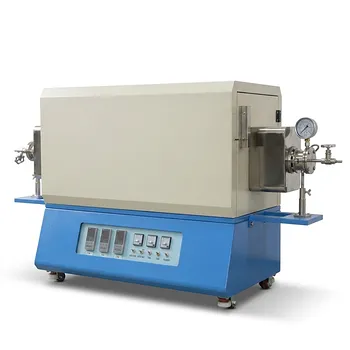
Three Temperature Zone High Temperature Vacuum Tube Furnace for CVD and Material Sintering
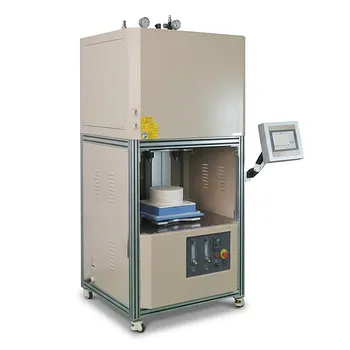
High Temperature Vertical Atmosphere Controlled Furnace 1700C Automatic Bottom Loading 13 Liter Vacuum Thermal System
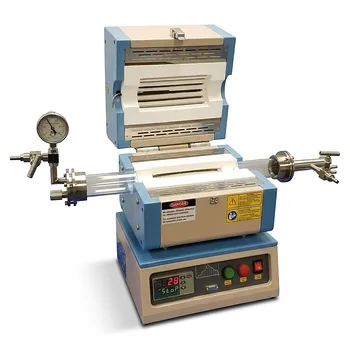
Compact Split Tube Furnace with Integrated Vacuum System and Precision Temperature Calibrator
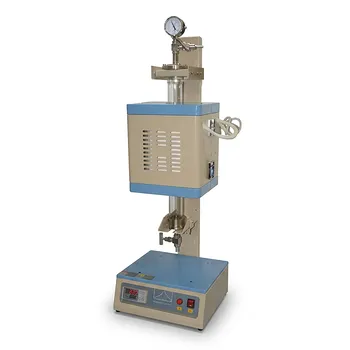
Compact Vertical Split Quartz Tube Furnace with Stainless Steel Vacuum Flanges for Rapid Thermal Quenching and Controlled Atmosphere Material Processing