Why is vacuum-assisted firing important for the production of dental veneers? Enhance Strength and Aesthetic Realism
Updated 5 months ago
Vacuum-assisted firing is the critical variable that determines the clinical success and aesthetic realism of dental veneers. This specialized process uses a vacuum environment to remove air bubbles and trapped gases from the ceramic material during the sintering stage. By eliminating these internal voids, technicians ensure the veneer achieves the high density, structural strength, and natural translucency required to function within the human mouth.
Core Takeaway: Vacuum firing transforms porous ceramic powder into a dense, monolithic restoration by removing air that would otherwise cause structural weakness and opacity. This process is essential for matching the optical properties of natural teeth and ensuring the restoration's long-term resistance to fractures.
Eliminating Internal Defects and Porosity
The Removal of Gas Entrapment
Microscopic air bubbles are naturally introduced into the material during the manual layering of porcelain powder. A vacuum furnace draws these gases out of the furnace chamber before the ceramic reaches its vitrification point, preventing internal voids from being permanently trapped.
Achieving Maximum Densification
As air is removed, ceramic particles are able to fuse more tightly together during the sintering cycle. This leads to full densification, creating a uniform microstructure that allows the material to meet international standards for mechanical properties.
Preventing Micro-Pores
Without a vacuum, residual air remains between ceramic particles, forming micro-pores that compromise the material's integrity. Removing this air ensures the ceramic body remains homogenous and stable, providing a reliable foundation for the final restoration.
Optimizing Aesthetic and Optical Integration
Enhancing Translucency and Color
Internal air bubbles act as light-scattering centers, making a veneer appear "milky" or unnaturally opaque. A vacuum environment allows for superior color integration, ensuring light passes through the porcelain in a way that mimics the depth and translucency of natural enamel.
Ensuring Surface Integrity and Luster
A dense, pore-free ceramic allows for a flawless surface texture that is easier to glaze and polish. This results in a high-gloss finish that resists plaque accumulation and maintains its appearance over years of service.
Controlling Crystal Development
Precise vacuum cycles allow for proper leucite crystal development and complete vitrification of the ceramic. This technical precision is what allows the laboratory to match the specific shade and light-reflective properties of the patient's existing dentition.
Engineering Long-Term Durability
Reducing Risks of Cracking and Chipping
Porosity serves as a collection of stress concentrators where cracks are likely to initiate. By eliminating these defects, vacuum firing significantly lowers the risk of the veneer chiping or fracturing under the repeated stress of biting and chewing.
Strengthening the Material Bond
In complex restorations, vacuum firing promotes better interface wetting between the porcelain and its substructure (such as zirconia). This creates a superior bond strength that prevents the layers from delaminating during clinical use.
Maintaining Thermal Stability
The vacuum environment helps maintain the correct coefficient of thermal expansion within the veneering ceramic. This prevents internal stresses from developing as the veneer cools, further protecting it from late-stage failure.
Understanding the Technical Trade-offs
The Necessity of Precise Calibration
Vacuum firing is not a "set and forget" process; it requires highly specific temperature curves and vacuum start/stop points. If the vacuum is released too early, the ceramic may lose its translucency; if applied incorrectly, the material may not reach the required density.
Sensitivity to Heating Rates
Modern furnaces often utilize rapid heating rates (e.g., 55-60 °C/min) to reach temperatures of 900-960 °C. While efficient, these high speeds require a perfectly functioning vacuum to ensure that all air is evacuated before the surface of the porcelain "skins over" and traps gases inside.
Equipment Maintenance and Contamination
To ensure biocompatibility and surface integrity, the vacuum chamber must remain free of contaminants and oxides. Failure to maintain an oxygen-free atmosphere during specific cycles can lead to embrittlement in certain materials or discoloration of the final veneer.
How to Apply These Principles for Optimal Results
Depending on the specific requirements of the patient's case, the vacuum firing process should be adjusted to prioritize different outcomes.
- If your primary focus is natural aesthetics: Ensure the vacuum is maintained until the maximum holding temperature is reached to eliminate all light-scattering micro-pores.
- If your primary focus is maximum strength: Prioritize high-density sintering cycles that focus on removing every trace of internal porosity to prevent future stress fractures.
- If your primary focus is bonding to zirconia: Use a vacuum-assisted cooling cycle to promote better wetting and interface strength between the ceramic layers.
By mastering the nuances of vacuum-assisted firing, you ensure that every dental veneer provides the perfect balance of life-like beauty and engineered resilience.
Summary Table:
| Benefit Category | Impact on Veneer Quality | Key Technical Outcome |
|---|---|---|
| Structural Integrity | Eliminates internal air bubbles | Maximum densification and fracture resistance |
| Aesthetic Realism | Prevents "milky" opacity | Superior translucency and natural color depth |
| Surface Quality | Removes surface micro-pores | Flawless high-gloss finish that resists plaque |
| Durability | Reduces stress concentrators | Lower risk of chipping under biting pressure |
| Bond Strength | Enhances interface wetting | Stable integration between porcelain and zirconia |
Elevate Your Restoration Quality with THERMUNITS Precision
Achieving the perfect balance of aesthetic translucency and structural durability requires world-class thermal equipment. THERMUNITS is a leading manufacturer specializing in high-performance laboratory equipment for material science and industrial R&D.
Whether you need advanced Dental Furnaces for vacuum-assisted firing or high-precision Muffle, Vacuum, and Atmosphere Furnaces for complex heat treatments, we offer the comprehensive solutions your laboratory demands. Our equipment—ranging from CVD/PECVD systems to vacuum induction melting furnaces (VIM)—is designed to give you absolute control over temperature and atmosphere.
Ready to optimize your thermal processing? Contact our experts today to discover how THERMUNITS can enhance your lab's efficiency and product quality!
Mentioned Products
- Ultra High Temperature Induction Heated Vacuum Furnace with Molten Salt Electrolysis Capability and 3000 Degree Precision Control
- High Temperature 1000C Vacuum Furnace with 8 Inch ID Chamber for Material Sintering and Research Annealing
- 1200°C Bottom Loading Vacuum Furnace with Rapid Gas Cooling and 8.6 Inch Diameter Quartz Chamber
- High Pressure 600T Vacuum Induction Hot Press Furnace for Advanced Material Heat Treatment and Sintering
- High Temperature Vacuum Lamination Hot Press Furnace Machine for Semiconductor Wafer Bonding and Advanced Composite Thermal Processing
People Also Ask
- What roles do an induction furnace and a graphite crucible play in the slag pre-melting process? Optimize Slag Prep.
- What is the function of high-vacuum furnaces in (Mo2/3V1/3)n+1AlCn MAX phase synthesis? Ensure Purity & Diffusion.
- What is the typical operating temperature range for vacuum furnaces? Expert Guide to High-Precision Heat Treatment
- How do vacuum furnaces compare to atmosphere or salt-bath furnaces in terms of material properties? Gain Peak Purity
- What are the technical advantages of using a vacuum furnace over a traditional atmosphere furnace? Maximize Purity

Tech Team · ThermUnits
Last updated on Apr 14, 2026
Related Products
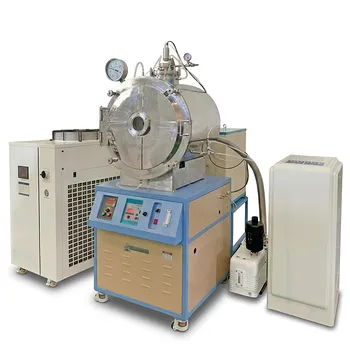
Ultra High Temperature Induction Heated Vacuum Furnace with Molten Salt Electrolysis Capability and 3000 Degree Precision Control
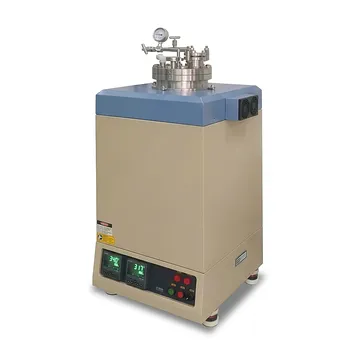
High Temperature 1000C Vacuum Furnace with 8 Inch ID Chamber for Material Sintering and Research Annealing
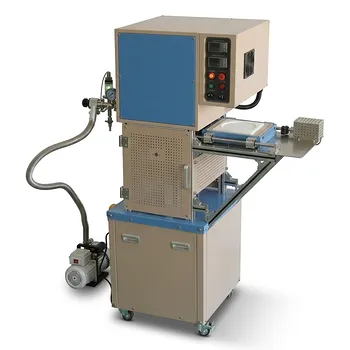
1200°C Bottom Loading Vacuum Furnace with Rapid Gas Cooling and 8.6 Inch Diameter Quartz Chamber
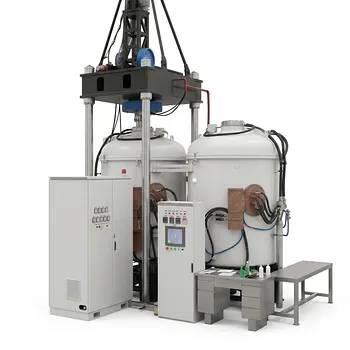
High Pressure 600T Vacuum Induction Hot Press Furnace for Advanced Material Heat Treatment and Sintering
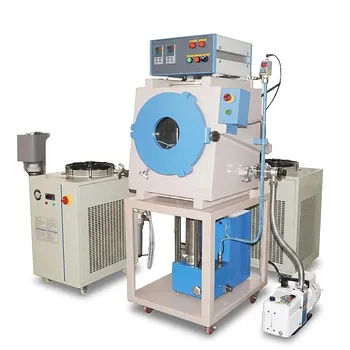
High Temperature Vacuum Lamination Hot Press Furnace Machine for Semiconductor Wafer Bonding and Advanced Composite Thermal Processing
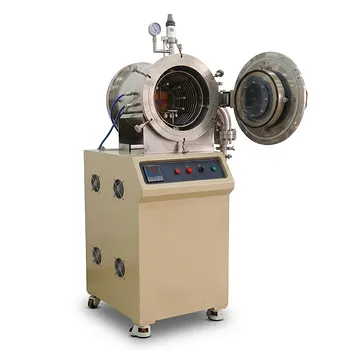
High Temperature Cold Wall High Vacuum Chamber Furnace 1400C for Advanced Material Processing

High Vacuum Compact Tube Furnace 1200C with Integrated Turbo Pump System and 8 Inch Heating Zone
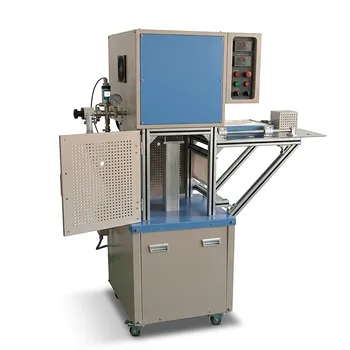
Bottom Loading Vacuum Furnace 1200C Rapid Cooling Atmosphere Control Quartz Chamber
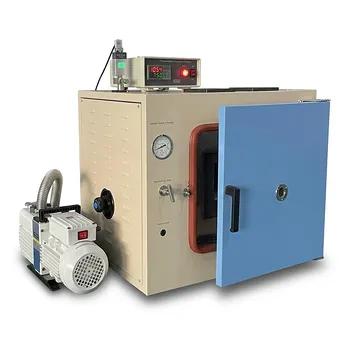
Compact High Vacuum Box Furnace 1050C Max 6.2L Ceramic Chamber Stainless Steel Shell Programmable Temperature Controller for Material Science Research
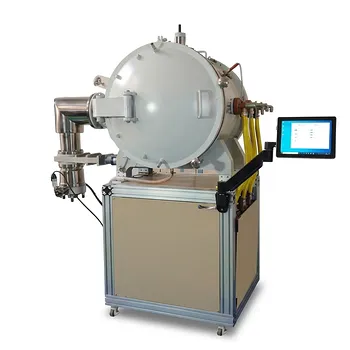
High Temperature Cold Wall Vacuum Furnace for Advanced Material Sintering and Annealing 1600C Heating Area 200x200x300mm
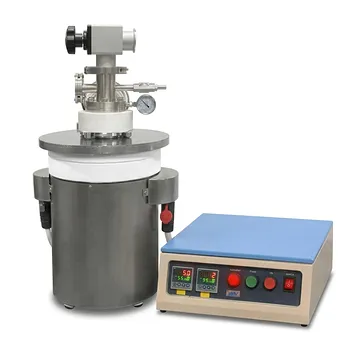
1100C High Temperature Vacuum Crucible Furnace with Quartz Chamber for Thermal Processing and Sintering
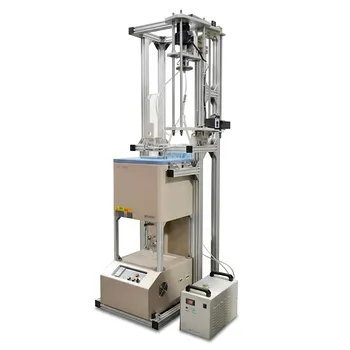
500C Vacuum Vertical Tube Furnace 84mm OD Sample Rotation Lifting System
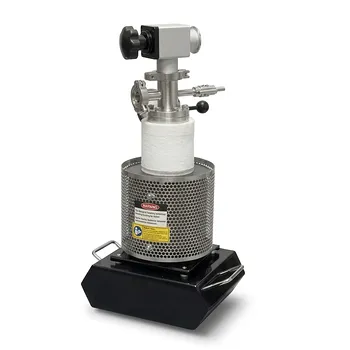
High Temperature 1100C Compact Top Loading Vertical Vacuum Tube Furnace for High Vacuum Noble Metal Melting and Material Research

1800C High Temperature Compact Vacuum Tube Furnace with 60mm OD Alumina Tube and Kanthal MoSi2 Heating Elements
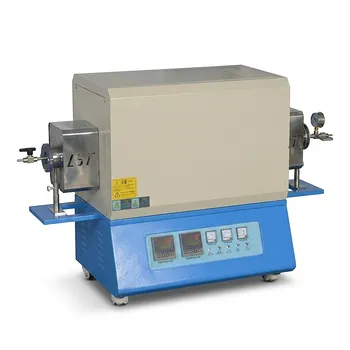
High Temperature Dual Zone Vacuum Tube Furnace for Material Research and CVD Processing
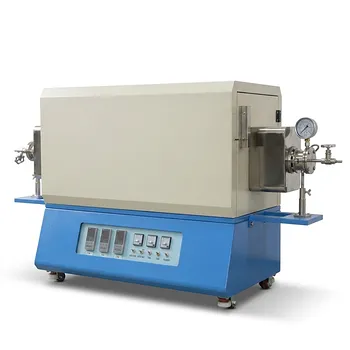
Three Temperature Zone High Temperature Vacuum Tube Furnace for CVD and Material Sintering
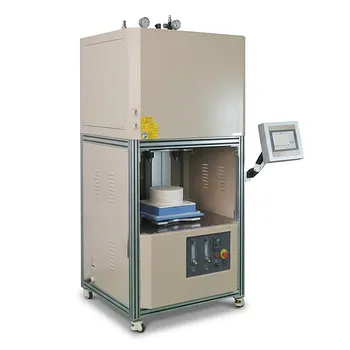
High Temperature Vertical Atmosphere Controlled Furnace 1700C Automatic Bottom Loading 13 Liter Vacuum Thermal System
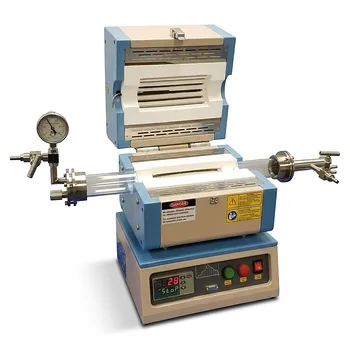
Compact Split Tube Furnace with Integrated Vacuum System and Precision Temperature Calibrator

Compact Vertical Split Quartz Tube Furnace with Stainless Steel Vacuum Flanges for Rapid Thermal Quenching and Controlled Atmosphere Material Processing
