Why is argon gas essential for Ti3C2Tx MXene treatment? Protect structure and electrochemical performance.
Updated 3 months ago
High-purity argon gas is the critical barrier that prevents the irreversible degradation of $Ti_3C_2T_x$ MXene during high-temperature processing. By excluding oxygen and moisture from the reaction environment, argon ensures the MXene layers do not oxidize into titanium dioxide ($TiO_2$). This inert atmosphere is fundamental for maintaining the material's interlayer spacing, allowing for the successful intercalation of cations like $Li^+$ and $K^+$ while preserving its essential electrochemical properties.
High-purity argon serves as a chemically inert shield that prevents the oxidation of $Ti_3C_2T_x$ into $TiO_2$, thereby safeguarding the material's conductive structure and facilitating ion intercalation. Without this controlled environment, the high temperatures required for molten salt treatment would lead to structural failure and a total loss of electrochemical performance.
Preventing the Transition to Titanium Dioxide ($TiO_2$)
The Chemical Vulnerability of MXenes
MXenes are inherently sensitive to oxygen, especially at the elevated temperatures used in molten salt synthesis. High-purity argon eliminates $O_2$ and $H_2O$ from the furnace, preventing the titanium atoms in the MXene lattice from reacting to form $TiO_2$ crystals.
Maintaining the 2D Layered Structure
Oxidation typically results in the growth of $TiO_2$ nanoparticles on the surface or the complete transformation of the 2D sheets into bulk oxides. Argon shielding ensures the MXene retains its layered morphology, which is critical for its high surface area and functional performance.
Avoiding Material Embrittlement
Titanium alloys and MXene substrates react aggressively with oxygen and nitrogen at high temperatures. This reaction can lead to the formation of brittle layers (such as the alpha-case in alloys) that destroy the mechanical integrity and flexibility of the 2D sheets.
Enabling Successful Ion Intercalation and Activity
Facilitating Cation Entry
The molten salt process relies on the movement of ions like $Li^+$ or $K^+$ into the spaces between MXene layers. By preventing oxide formation, argon keeps these interlayer channels open and accessible for successful intercalation.
Preserving Electrochemical and Electronic Properties
$Ti_3C_2T_x$ is valued for its metallic-like conductivity and high pseudocapacitance. Argon gas protects the electronic pathways within the layers, ensuring that the final material remains electrochemically active and suitable for energy storage applications.
Stabilizing Functional Defects
Controlled heat treatment in argon can help maintain specific defects, such as oxygen vacancies, within the material's heterostructure. These defects are often essential for enhancing the catalytic or sensing properties of the MXene.
Understanding the Technical Trade-offs
Purity Requirements vs. Operating Costs
Using lower-purity argon may seem cost-effective, but it often leads to "secondary oxidation" from trace contaminants. Even parts-per-million levels of moisture can trigger the formation of oxide films that block ion transport.
Flow Rate and Pressure Management
A continuous, stable flow of argon is required to maintain positive pressure inside the furnace and exclude external air leaks. However, excessively high flow rates can cause thermal gradients that lead to non-uniform reactions within the molten salt bath.
Inertness at Extreme Temperatures
While argon is inert, the materials it protects become increasingly reactive as temperatures rise (often exceeding 1200°C in related smelting processes). The gas must be introduced before heating begins to ensure no "flash oxidation" occurs during the ramp-up phase.
How to Apply This to Your Project
- If your primary focus is maximizing ion intercalation for batteries: Maintain a high-purity argon flow (99.999%) throughout both the heating and cooling cycles to keep the interlayer galleries free of oxide debris.
- If your primary focus is high electrical conductivity: Use a vacuum-sealed tube furnace with a triple pre-purge cycle to eliminate all residual oxygen before the temperature exceeds 300°C.
- If your primary focus is fundamental material characterization: Monitor the exhaust gas for moisture levels to ensure the inert environment remains stable, preventing the formation of unintended titanium sub-oxides.
Controlling the atmosphere with high-purity argon is not merely a preference but a structural necessity for transforming $Ti_3C_2T_x$ into a high-performance functional material.
Summary Table:
| Key Role | Impact on MXene | Technical Requirement |
|---|---|---|
| Oxidation Prevention | Stops transformation into $TiO_2$ | High-purity Argon (99.999%) |
| Structural Integrity | Preserves 2D layered morphology | Stable flow & positive pressure |
| Conductivity | Safeguards electronic pathways | Pre-purge vacuum cycles |
| Ion Intercalation | Keeps interlayer channels open | Precise atmospheric control |
Master Your MXene Synthesis with THERMUNITS
Precision in atmospheric control is the difference between a high-performance functional material and structural failure. THERMUNITS is a leading manufacturer of high-temperature laboratory equipment, specializing in solutions that provide the ultra-pure environments necessary for material science and industrial R&D.
Our comprehensive range of thermal processing equipment—including Vacuum, Atmosphere, and Tube Furnaces, as well as CVD/PECVD systems—is engineered to maintain the strict inert conditions required to prevent oxidation and maximize the conductivity of materials like $Ti_3C_2T_x$ MXenes.
Ready to elevate your research efficiency? Explore our full suite of Muffle, Rotary, and Hot Press furnaces designed for excellence.
Contact THERMUNITS for a Professional Solution
References
- Wen Lei. Modulation of Ti<sub>3</sub>C<sub>2</sub>T<sub><i>x</i></sub> interlayer spacing and functional groups by Lewis‐basic halides and their effects on Li<sup>+</sup> storage properties. DOI: 10.1002/ece2.88
Mentioned Products
- Ultra High Temperature Induction Heated Vacuum Furnace with Molten Salt Electrolysis Capability and 3000 Degree Precision Control
- 1750C Bench Top Muffle Furnace 3.6L High Grade Molybdenum Disilicide Heating Elements Laboratory Heat Treatment Equipment
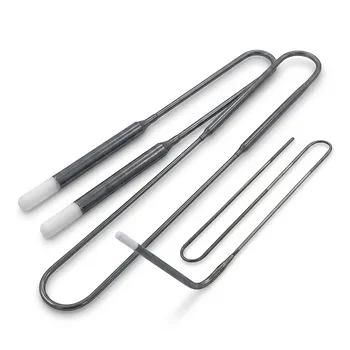
- Molybdenum Disilicide MoSi2 Thermal Elements Electric Furnace Heating Element High Temperature Resistance
People Also Ask
- What roles do an induction furnace and a graphite crucible play in the slag pre-melting process? Optimize Slag Prep.
- What is the function of high-vacuum furnaces in (Mo2/3V1/3)n+1AlCn MAX phase synthesis? Ensure Purity & Diffusion.
- What is the typical operating temperature range for vacuum furnaces? Expert Guide to High-Precision Heat Treatment
- How do vacuum furnaces compare to atmosphere or salt-bath furnaces in terms of material properties? Gain Peak Purity
- What are the technical advantages of using a vacuum furnace over a traditional atmosphere furnace? Maximize Purity

Tech Team · ThermUnits
Last updated on Jun 03, 2026
Related Products
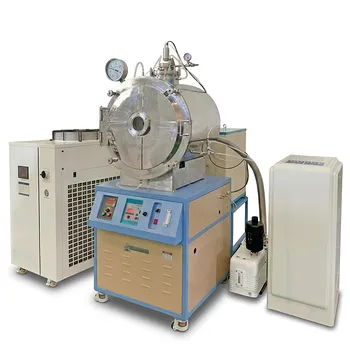
Ultra High Temperature Induction Heated Vacuum Furnace with Molten Salt Electrolysis Capability and 3000 Degree Precision Control
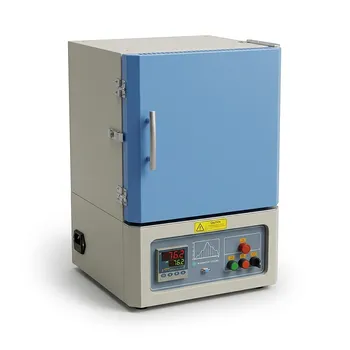
1750C Bench Top Muffle Furnace 3.6L High Grade Molybdenum Disilicide Heating Elements Laboratory Heat Treatment Equipment