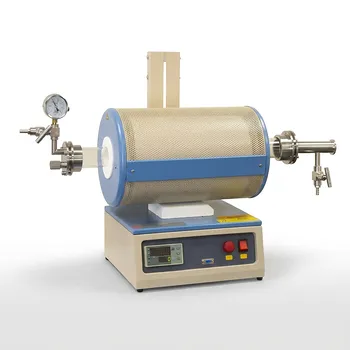
What is the function of high-vacuum furnaces in (Mo2/3V1/3)n+1AlCn MAX phase synthesis? Ensure Purity & Diffusion.
Updated 3 months ago
The primary function of high-vacuum or atmosphere-controlled high-temperature furnaces is to facilitate solid-state diffusion while preventing the oxidation of reactive precursor materials. These furnaces provide the precise thermal energy and inert chemical environment required to transform raw metal powders and carbon sources into the stable, layered atomic structure characteristic of $(Mo_{2/3}V_{1/3})_{n+1}AlC_n$ MAX phases.
The core role of these specialized furnaces is to drive the complex atomic migration needed to form layered MAX phases while maintaining a high-purity environment. By strictly controlling the atmosphere and temperature profile, they ensure that reactive elements like aluminum do not oxidize, which would otherwise compromise the structural integrity of the final material.
The Role of Atmosphere Control in High-Purity Synthesis
Prevention of Elemental Oxidation
MAX phase precursors often contain highly reactive and refractory elements such as aluminum (Al), molybdenum (Mo), and vanadium (V). At high temperatures, these elements have a high affinity for oxygen; if exposed to air, they form stable oxides that prevent the formation of the desired MAX phase.
High-vacuum environments (often maintained at levels like $1.2 \times 10^{-3}$ Pa) or inert atmospheres (such as high-purity argon) effectively displace oxygen. This protective barrier ensures that the raw materials remain in their metallic state, which is necessary for the subsequent reaction.
Removal of Volatile Impurities
Vacuum systems assist in the rapid removal of gaseous byproducts and contaminants generated during the heating process. This may include the removal of hydrogen from metallic hydrides or the pyrolysis products of organic forming agents.
By constantly evacuating these gases, the furnace prevents internal pressure buildup that could lead to cracking or structural defects in the precursors. This process is also instrumental in promoting a uniform, dense structure within the resulting material.
Driving Solid-State Reaction and Phase Stability
Facilitating Atomic Diffusion
The synthesis of $(Mo_{2/3}V_{1/3})_{n+1}AlC_n$ relies on solid-phase reactions, where atoms from individual powders must migrate and rearrange into a specific layered lattice. High temperatures provide the necessary kinetic energy for this diffusion to occur across the interfaces of the metal and carbon powders.
The furnace maintains a uniform thermal field, which is essential for ensuring that the diffusion is consistent throughout the entire sample. This uniformity prevents the formation of localized secondary phases or "dead zones" where the reaction remains incomplete.
Precise Control of Heating Profiles
The formation of complex MAX phases requires specific isothermal holding times and precise heating rates (often around 10°C/min). These profiles allow the different components to reach their reaction temperatures at the correct intervals, ensuring the formation of a stable, layered $M_{n+1}AX_n$ structure.
Precise cooling rates are equally important to prevent thermal shock and to lock in the desired crystalline phase. This control ensures that the final precursor possesses the high purity and structural integrity required for its intended application.
Understanding the Trade-offs
Equipment Complexity and Cost
Operating at high vacuum and extreme temperatures (often exceeding 1600°C) requires sophisticated infrastructure, including specialized seals and high-power heating elements. The high energy consumption and maintenance requirements for vacuum pumps can significantly increase the cost of production compared to standard atmospheric sintering.
Processing Time and Throughput
The need for slow, controlled heating and cooling cycles, combined with the time required to achieve high-vacuum levels, limits the throughput of these systems. Furthermore, the sensitivity of the atmosphere means that even a minor leak can lead to the total loss of a batch due to contamination.
How to Apply This to Your Synthesis Project
Strategic Implementation of Furnace Controls
The choice of furnace settings directly dictates the quality of the resulting MAX phase precursors. Tailoring the environment to the specific chemistry of your raw materials is essential for success.
- If your primary focus is phase purity: Utilize a high-vacuum environment (better than $10^{-2}$ Pa) to minimize the partial pressure of oxygen and prevent the formation of deleterious oxide phases.
- If your primary focus is structural integrity and density: Prioritize precise heating rate control and extended isothermal holding times to ensure complete atomic diffusion and the elimination of internal stresses.
- If your primary focus is scaling for production: Consider atmosphere-controlled tube furnaces using high-purity argon, as they often offer faster cycling times than high-vacuum batch systems while still providing sufficient protection against oxidation.
Success in MAX phase synthesis is defined by the rigorous management of the thermal and chemical environment to allow atomic-level restructuring without atmospheric interference.
Summary Table:
| Key Function | Primary Benefit | Critical Control Parameters |
|---|---|---|
| Oxidation Prevention | Protects reactive elements like Al, Mo, and V | High-vacuum (≤10⁻³ Pa) or Argon atmosphere |
| Atomic Diffusion | Drives solid-state reaction for layered structures | High isothermal temperatures (>1600°C) |
| Impurity Removal | Eliminates volatile byproducts to prevent defects | Continuous vacuum evacuation systems |
| Phase Stability | Ensures uniform Mₙ+₁AXₙ crystalline formation | Precise heating/cooling rates (e.g., 10°C/min) |
Elevate Your Material Research with THERMUNITS
Precision is non-negotiable when synthesizing complex materials like (Mo2/3V1/3)n+1AlCn MAX phases. THERMUNITS is a leading manufacturer of high-temperature laboratory equipment, providing the advanced thermal processing solutions required for high-purity industrial R&D.
Our comprehensive range includes Vacuum, Atmosphere, Tube, and Hot Press furnaces, as well as CVD/PECVD systems and Vacuum Induction Melting (VIM) furnaces, all engineered to deliver the strict atmosphere control and thermal uniformity your synthesis projects demand.
Ready to optimize your heat treatment process? Contact our experts today to discuss your specific requirements and discover how our equipment can enhance your lab's efficiency and material integrity.
References
- M. Downes, Yury Gogotsi. Synthesis of Three Isoelemental MXenes and Their Structure–Property Relationships. DOI: 10.1021/jacs.4c11111
Mentioned Products
- High Temperature 1000C Vacuum Furnace with 8 Inch ID Chamber for Material Sintering and Research Annealing
- High Temperature Cold Wall High Vacuum Chamber Furnace 1400C for Advanced Material Processing
- 1100C High Temperature Vacuum Crucible Furnace with Quartz Chamber for Thermal Processing and Sintering
- Ultra High Temperature Induction Heated Vacuum Furnace with Molten Salt Electrolysis Capability and 3000 Degree Precision Control
- Compact High Vacuum Box Furnace 1050C Max 6.2L Ceramic Chamber Stainless Steel Shell Programmable Temperature Controller for Material Science Research
People Also Ask
- How does the temperature control precision of a high-temperature sintering furnace affect Na1+xLa1-xZr2O6-δ ceramics?
- How does a high-temperature sintering furnace environment enhance NdFeB magnets? Achieve 98%+ density with precision.
- What role does a high-temperature annealing furnace play in forming ordered Pt3(CoNi) intermetallic catalysts?
- How does a vacuum or atmosphere sintering furnace contribute to the congener-welding process of carbon nitride membranes?
- What Role Does a Vacuum Sintering Furnace Play in Ni-Mn-Ga Alloy Fabrication? Optimizing Porous Structures

Tech Team · ThermUnits
Last updated on Jun 03, 2026
Related Products
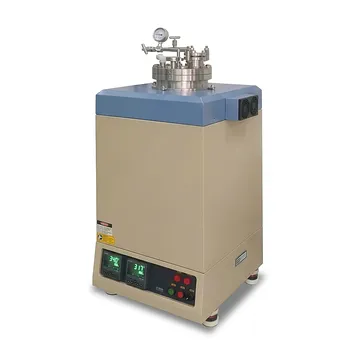
High Temperature 1000C Vacuum Furnace with 8 Inch ID Chamber for Material Sintering and Research Annealing
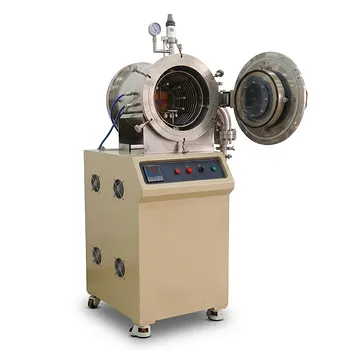
High Temperature Cold Wall High Vacuum Chamber Furnace 1400C for Advanced Material Processing
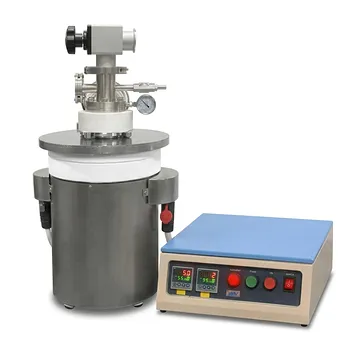
1100C High Temperature Vacuum Crucible Furnace with Quartz Chamber for Thermal Processing and Sintering
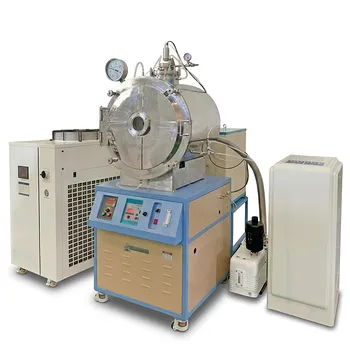
Ultra High Temperature Induction Heated Vacuum Furnace with Molten Salt Electrolysis Capability and 3000 Degree Precision Control
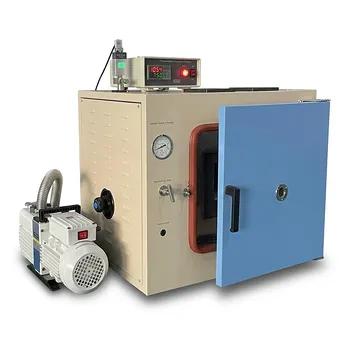
Compact High Vacuum Box Furnace 1050C Max 6.2L Ceramic Chamber Stainless Steel Shell Programmable Temperature Controller for Material Science Research
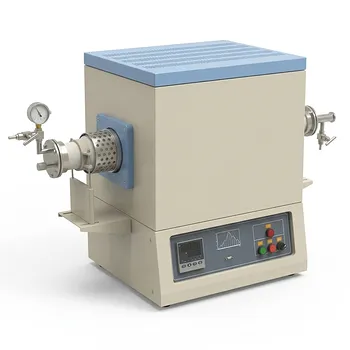
1750°C High Temperature Benchtop Vacuum Atmosphere Tube Furnace with Kanthal Super 1800 Heating Elements and 60mm Alumina Processing Tube
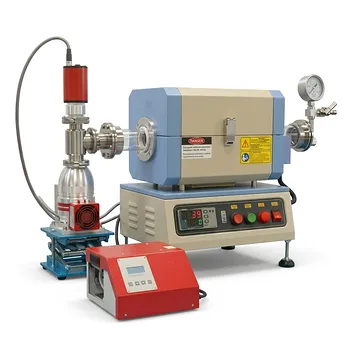
High Vacuum Compact Tube Furnace 1200C with Integrated Turbo Pump System and 8 Inch Heating Zone
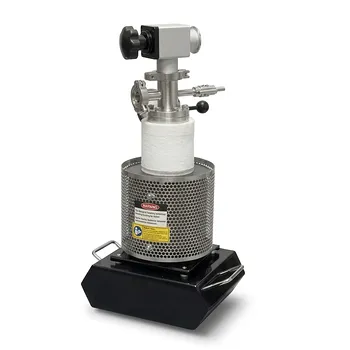
High Temperature 1100C Compact Top Loading Vertical Vacuum Tube Furnace for High Vacuum Noble Metal Melting and Material Research
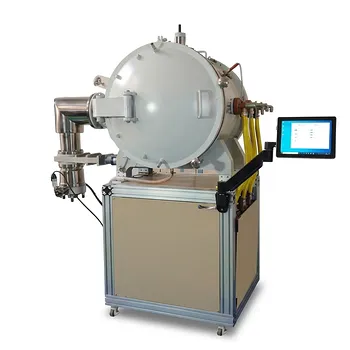
High Temperature Cold Wall Vacuum Furnace for Advanced Material Sintering and Annealing 1600C Heating Area 200x200x300mm

1800C High Temperature Compact Vacuum Tube Furnace with 60mm OD Alumina Tube and Kanthal MoSi2 Heating Elements
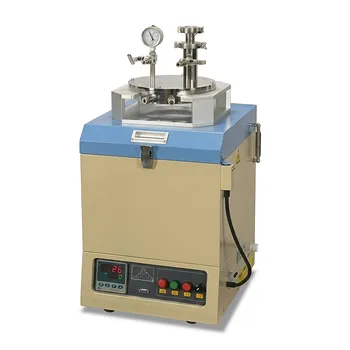
Vertical Vacuum Furnace 1100C High Temperature 8 Inch Quartz Chamber Water Cold Flange System

High Temperature 1700C Tube Furnace with High Vacuum Turbomolecular Pump System and Multi Channel Mass Flow Controller Gas Mixer
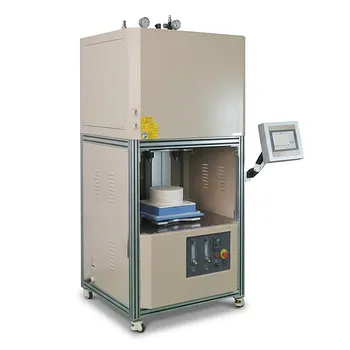
High Temperature Vertical Atmosphere Controlled Furnace 1700C Automatic Bottom Loading 13 Liter Vacuum Thermal System
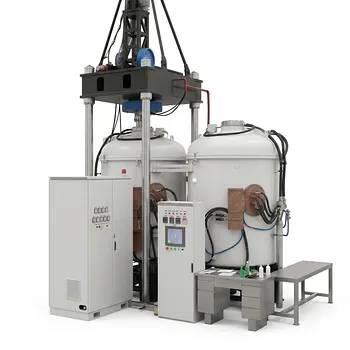
High Pressure 600T Vacuum Induction Hot Press Furnace for Advanced Material Heat Treatment and Sintering
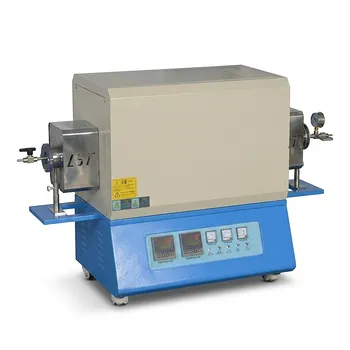
High Temperature Dual Zone Vacuum Tube Furnace for Material Research and CVD Processing
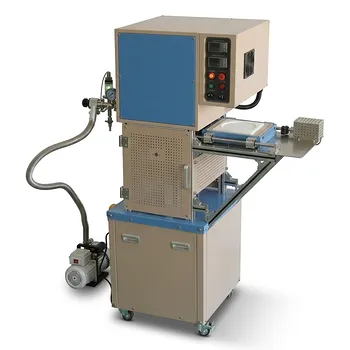
1200°C Bottom Loading Vacuum Furnace with Rapid Gas Cooling and 8.6 Inch Diameter Quartz Chamber
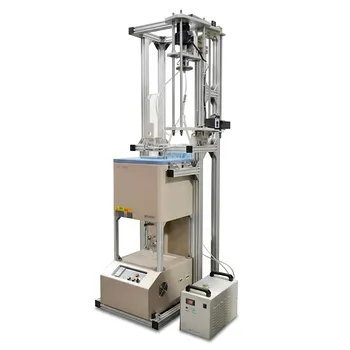
500C Vacuum Vertical Tube Furnace 84mm OD Sample Rotation Lifting System
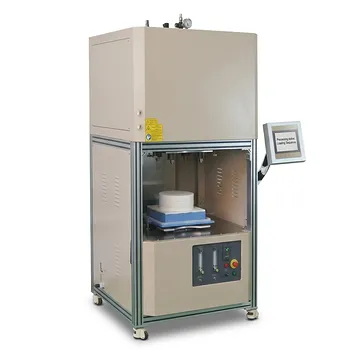
High Temperature Vertical Atmosphere Controlled Furnace with Automatic Bottom Loading and 1700°C Capacity for Advanced Material Research
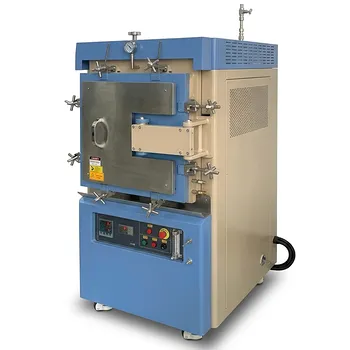
Atmosphere Controlled Muffle Furnace 1700C Maximum Temperature 80L High Capacity Vacuum Inert Gas Box Furnace