Why is high-purity argon gas required as a protective atmosphere during the heat treatment of regenerated graphite?
Updated 3 months ago
High-purity argon gas is the critical safeguard that prevents graphite from physically evaporating through oxidation during high-temperature processing. By creating a strictly inert atmosphere, argon allows the heat treatment to selectively destroy surface contaminants and binders (pyrolysis) without damaging the underlying carbon lattice. This protection is essential for maintaining the material’s structural integrity and its ability to function in electrochemical applications, such as batteries.
High-purity argon acts as a chemical shield, isolating graphite from atmospheric oxygen to prevent structural erosion at temperatures between 600°C and 800°C. This inert environment ensures that thermal energy is used solely for removing impurities rather than consuming the graphite itself.
The Mechanics of Oxidative Protection
Preventing High-Temperature Ablation
Graphite is highly susceptible to "oxidative ablation" when exposed to oxygen at temperatures exceeding 600°C. In the absence of a protective argon shield, the carbon atoms would react with oxygen to form carbon dioxide gas, effectively "burning" the material away. High-purity argon displaces this oxygen, ensuring the graphite remains a solid, stable structure throughout the heating cycle.
Enabling Selective Pyrolysis
The primary goal of regenerating graphite is to remove organic pollutants and spent binders from its surface. Argon provides the neutral environment necessary for these substances to undergo pyrolysis—breaking down into simpler volatile compounds—without triggering a combustion reaction. This selectivity ensures that only the "trash" is removed while the "treasure" (the graphite) is preserved.
Ensuring Process Repeatability
The use of a continuous argon flow, often regulated at specific rates like 0.5 NLPM, helps maintain a consistent internal furnace pressure. This stability prevents external air from leaking into the system through microscopic gaps or seals. By excluding oxygen and nitrogen interference, manufacturers can achieve consistent results across different batches of regenerated material.
Preserving Material Performance
Maintaining the Layered Lattice
The electrochemical performance of graphite depends entirely on its layered crystal structure, which allows for the intercalation of ions. Oxidative damage at high temperatures causes "pitting" or lattice distortion, which permanently degrades the material's capacity. Argon ensures that the heat treatment preserves these layers, allowing the regenerated graphite to retain its original energy storage capabilities.
Avoiding Surface Contamination
At high temperatures, graphite can become reactive with various atmospheric gases, not just oxygen. Using high-purity argon prevents the formation of unwanted chemical functional groups on the graphite surface that could interfere with its final application. This ensures that any observed changes in the material's performance are a result of the intended thermal evolution rather than external chemical interference.
Understanding the Trade-offs
The Necessity of High Purity
Using low-grade argon can be a costly mistake in graphite regeneration. Trace amounts of moisture or oxygen in "industrial-grade" argon can still cause localized oxidation, leading to a loss of surface area and reduced electrochemical activity. Therefore, the "high-purity" designation is a technical requirement, not a luxury, to ensure the carbon substrate is not eroded.
Balancing Flow Rates and Pressure
While a steady flow of argon is required to purge volatiles, excessive flow rates can lead to thermal gradients within the furnace. If the flow is too low, the pyrolysis byproducts may not be efficiently removed, potentially redepositing on the graphite surface. Achieving the correct balance is critical for ensuring the purity of the final regenerated product.
How to Apply This to Your Project
Making the Right Choice for Your Goal
- If your primary focus is Maximum Electrochemical Capacity: Prioritize the highest possible argon purity to prevent even microscopic lattice distortions caused by trace oxygen.
- If your primary focus is Process Efficiency and Cost: Optimize the argon flow rate to the minimum level required to maintain positive furnace pressure, preventing air ingress without wasting gas.
- If your primary focus is Surface Cleanliness: Ensure the argon atmosphere is combined with a sufficient "soak time" at 600-800°C to allow all pyrolysis byproducts to be fully purged from the chamber.
By strictly controlling the inert environment with high-purity argon, you transform a destructive heating process into a precise tool for material restoration.
Summary Table:
| Feature/Function | Purpose in Graphite Heat Treatment |
|---|---|
| Oxygen Displacement | Prevents oxidative ablation (burning) at temperatures >600°C. |
| Inert Environment | Enables selective pyrolysis of organic contaminants without combustion. |
| Lattice Protection | Preserves the layered crystal structure for optimal ion intercalation. |
| Atmospheric Stability | Prevents external air ingress and unwanted surface chemical reactions. |
Elevate Your Materials Research with THERMUNITS
High-purity atmosphere control is critical for successful graphite regeneration and advanced material processing. As a leading manufacturer of high-temperature laboratory equipment, THERMUNITS provides the precision tools required for cutting-edge industrial R&D.
Our comprehensive range of thermal solutions includes:
- Atmosphere & Vacuum Furnaces: Engineered for precise argon-shielded heat treatments.
- Tube & Rotary Furnaces: Ideal for continuous material processing and uniform results.
- CVD/PECVD Systems & Hot Press Furnaces: Designed for advanced material synthesis and structural integrity.
Whether you are working on battery technology or advanced carbon materials, our equipment ensures consistent, repeatable performance.
Contact our technical experts today to find your perfect furnace solution!
References
- Riquan Yu, Yaguang Zhang. Efficient Regeneration of Graphite from Spent Lithium-Ion Batteries through Combination of Thermal and Wet Metallurgical Approaches. DOI: 10.3390/ma17163883
Mentioned Products
- High Temperature Vacuum Graphitization Chamber Furnace 2800C Graphite Heating Elements Bottom Loading
- High Power 25KW Induction Heating System with Precision Timer Control and 80kHz Frequency for Metal Melting and Heat Treatment
- 30KW High Frequency Induction Heater for Metal Melting and Industrial Heat Treatment 80-200kHz
People Also Ask
- Why is a high-temperature graphitization furnace needed for ZrC/SiC/C ceramic aerogels? Master UHTC Synthesis at 1700°C
- What conditions does a graphitization furnace provide for pitch-based carbon? Achieve Superior Crystalline Quality
- How does a high-temp furnace enhance thermal conductivity of graphene & CNT films? Superior Material Graphitization
- Why is an ultra-high temperature graphitization furnace required for coal-based graphite? Unlock Crystalline Performance
- What core technical conditions must an ultra-high temperature graphitization furnace meet? Achieve 2800°C Peak Performance

Tech Team · ThermUnits
Last updated on Jun 03, 2026
Related Products
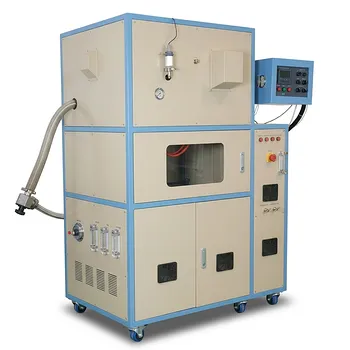
High Temperature Vacuum Graphitization Chamber Furnace 2800C Graphite Heating Elements Bottom Loading
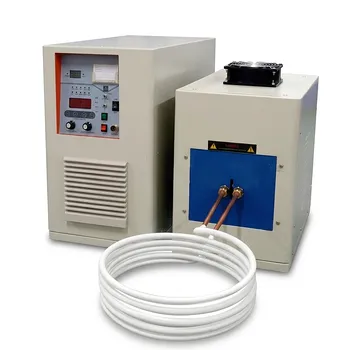
High Power 25KW Induction Heating System with Precision Timer Control and 80kHz Frequency for Metal Melting and Heat Treatment