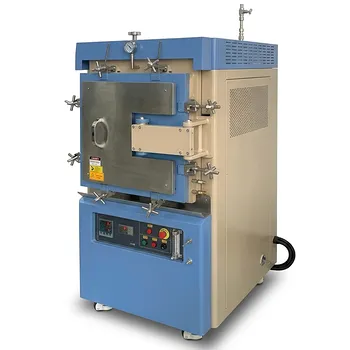
What is the function of a muffle furnace in g-C3N4 synthesis? Optimize Your Thermal Polycondensation Process
Updated 3 months ago
The high-temperature muffle furnace serves as the foundational reactor for the thermal polycondensation of nitrogen-rich precursors into graphitic carbon nitride (g-C3N4). By providing a stable and uniform thermal environment—typically between 500°C and 600°C—it triggers the pyrolysis and deamination of molecules like dicyandiamide (DCDA), melamine, or urea. This controlled heating facilitates the reorganization of these small organic molecules into a stable, layered heptazine-based polymeric framework.
The muffle furnace provides the precise thermal energy and uniform temperature field necessary to transform organic precursors into a solid, layered semiconductor. This process is critical for ensuring the material achieves the specific crystallinity and chemical structure required for photocatalytic activity.
Driving the Chemical Transformation
Thermal Polycondensation and Deamination
The muffle furnace supplies the thermal energy required to break and reform chemical bonds within the chosen precursor. During this process, small organic molecules undergo deamination (the loss of ammonia) and polymerization, gradually building the complex triazine or heptazine ring structures that define g-C3N4.
Structural Evolution of the Framework
As the temperature remains constant—often at 550°C to 600°C for approximately four hours—the precursor molecules reorganize into a stable, layered solid. This "graphitic" arrangement is what gives the material its name and its unique electronic properties, which are essential for applications like water splitting or pollutant degradation.
Consistency Through Temperature Uniformity
A critical function of the muffle furnace is maintaining a uniform temperature field throughout the heating chamber. This ensures that the entire batch of precursor reacts at the same rate, preventing the formation of secondary phases or incomplete conversion, which would degrade the material's performance.
Ensuring Material Quality and Performance
Controlling Crystallinity
The precise control over heating rates and dwell times provided by the furnace directly influences the crystallinity of the resulting powder. High crystallinity is generally associated with better charge carrier mobility, which is a key factor in the material's efficiency as a photocatalyst.
Precursor Versatility
Muffle furnaces allow researchers to utilize various precursors, including urea, melamine, and dicyandiamide (DCDA), within the same setup. While the specific temperature may vary (e.g., 520°C for melamine vs. 600°C for DCDA), the furnace provides the adaptable environment needed to reach these specific thermal thresholds.
Atmosphere Management
Most g-C3N4 synthesis occurs in a static air atmosphere within the furnace. The muffle furnace's design allows for the stable containment of these gases during the pyrolysis process, ensuring the reaction environment remains consistent from start to finish.
Understanding the Trade-offs and Pitfalls
Temperature Sensitivity
If the furnace temperature is too low (below 500°C), the polycondensation may be incomplete, resulting in a material with poor stability and low surface area. Conversely, exceeding 600°C can lead to the thermal decomposition of the g-C3N4 framework, significantly reducing the final yield of the powder.
Heating Rate Impact
Ramping the temperature too quickly can lead to non-uniform heating and the entrapment of gases within the layered structure. This often results in a "bulky" material with reduced active sites, whereas a controlled heating rate promotes the formation of a more refined, high-surface-area powder.
Applying This to Your Synthesis Goals
How to Optimize Your Process
Choosing the right furnace parameters depends heavily on your desired material characteristics and the specific precursor used.
- If your primary focus is high yield and stability: Use dicyandiamide (DCDA) at a higher temperature threshold of 600°C for 4 hours to ensure complete conversion.
- If your primary focus is photocatalytic activity: Target a temperature around 550°C with melamine or urea to balance high crystallinity with a high surface area heptazine structure.
- If your primary focus is structural consistency: Ensure the furnace is calibrated for maximum temperature uniformity and use a slow heating rate (e.g., 2-5°C per minute) to avoid localized overheating.
The muffle furnace is the indispensable tool that bridges the gap between simple organic precursors and advanced semiconducting carbon nitride frameworks.
Summary Table:
| Factor | Parameter/Material | Impact on g-C3N4 Synthesis |
|---|---|---|
| Precursors | Urea, Melamine, DCDA | Determines initial molecular structure and yield |
| Temp Range | 500°C – 600°C | Triggers pyrolysis and heptazine framework formation |
| Heating Rate | 2°C – 5°C / min | Affects surface area and prevents gas entrapment |
| Environment | Static Air | Facilitates stable deamination and polymerization |
| Key Outcome | High Crystallinity | Enhances charge carrier mobility for photocatalysis |
Elevate Your Material Research with THERMUNITS Precision
Achieving the perfect heptazine-based framework for g-C3N4 requires more than just heat—it requires absolute thermal precision and uniformity. THERMUNITS is a leading manufacturer dedicated to supporting material science and industrial R&D with high-performance laboratory equipment.
Whether you are performing thermal polycondensation, CVD/PECVD, or complex atmospheric heat treatments, our equipment is engineered for accuracy. Our comprehensive range includes:
- Muffle & Tube Furnaces for precise polycondensation.
- Vacuum & Atmosphere Furnaces for controlled synthesis environments.
- Rotary Kilns & Hot Press Furnaces for specialized material processing.
- VIM & Dental Furnaces for advanced metallurgy and ceramics.
Ready to optimize your synthesis yields? Our technical team is standing by to help you select the ideal furnace configuration for your research goals.
Contact THERMUNITS Today to Get a Quote
References
- Mariusz Pietrowski, Robert Wojcieszak. <i>In situ</i> growth of N-doped carbon nanotubes from the products of graphitic carbon nitride etching by nickel nanoparticles. DOI: 10.1039/d3na00983a
Mentioned Products
- High Temperature 1500C Benchtop Muffle Furnace 3.6L Alumina Fiber Chamber Programmable Controller Sintering Annealing Carbonization Thermal Processing System
- 1200C High Temperature 125L Muffle Furnace 5 Side Heating for Large Batch Sintering with Optional Alloy Debinding Chamber
- Large Bench Top 1700C High Temperature Muffle Furnace with 19L Chamber for Advanced Material Sintering and Annealing
- High Temperature Compact Muffle Furnace 1700 C with 30 Segment Programmable Controller and 1.7L Cubic Chamber
- 1200°C High Temperature Muffle Furnace 19L Chamber with 50 Segment Programmable Controller
People Also Ask
- Why is annealing in a high-temperature muffle furnace necessary for SiO2/Si substrate pretreatment before monolayer WS2 synthesis?
- What is the purpose of using muffle or tube furnaces in glass synthesis? Achieve Precise Melt-Quenching & Homogeneity
- What is the role of a high-temperature muffle furnace in the synthesis of graphitic carbon nitride (g-C3N4)? - Guide
- What is the necessity of 950 °C muffle furnace for aluminate spinel supports? Achieve Phase Purity & Lattice Integration
- What is the function of a high-temp muffle furnace in Ni-V oxide synthesis? Optimize your material's performance.

Tech Team · ThermUnits
Last updated on Jun 03, 2026
Related Products
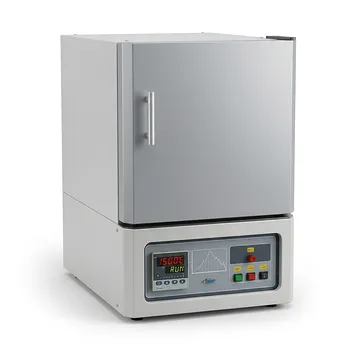
High Temperature 1500C Benchtop Muffle Furnace 3.6L Alumina Fiber Chamber Programmable Controller Sintering Annealing Carbonization Thermal Processing System
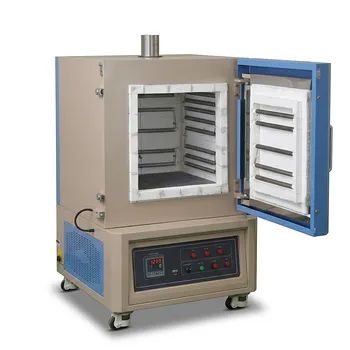
1200C High Temperature 125L Muffle Furnace 5 Side Heating for Large Batch Sintering with Optional Alloy Debinding Chamber
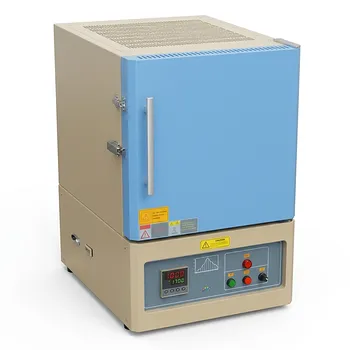
Large Bench Top 1700C High Temperature Muffle Furnace with 19L Chamber for Advanced Material Sintering and Annealing
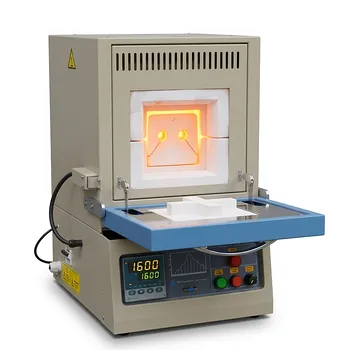
High Temperature Compact Muffle Furnace 1700 C with 30 Segment Programmable Controller and 1.7L Cubic Chamber
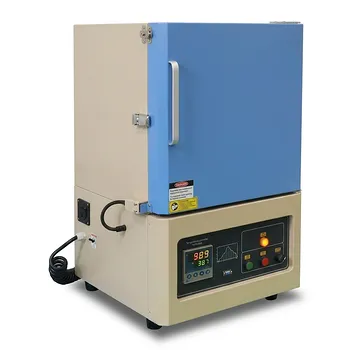
1200°C High Temperature Muffle Furnace 19L Chamber with 50 Segment Programmable Controller
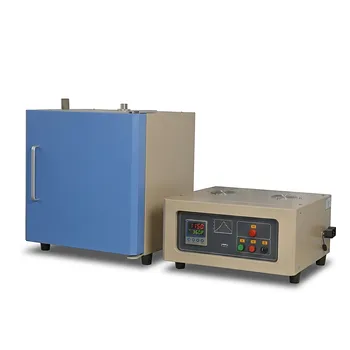
High Temperature Muffle Furnace with Alloy Chamber for Debinding and Sintering Applications
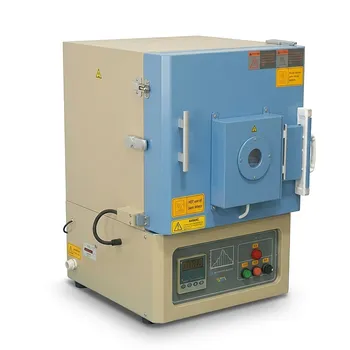
High Temperature Benchtop Muffle Furnace 1500C with 3.6L Chamber and Quartz Observation Window
Ultra High Temperature Bench Top Muffle Furnace 1750C Sintering System with Kanthal Super Heating Elements and Precision Digital Control
Top Loading Muffle Furnace 1200°C High Temperature Crucible Furnace with 9 Liter Chamber and Programmable PID Controller
High Temperature Bench Top Muffle Furnace 1700C with Integrated Evaporating Particle Collection and 8x8x8 Alumina Fiber Chamber
1750C Compact Muffle Furnace 1.7L Ultra High Temperature Laboratory Sintering System for Advanced Ceramics and Material Science Research
1800C Bench Top Muffle Furnace with Kanthal Super 1900 Heating Elements and 3.6L Alumina Fiber Chamber
High Temperature Benchtop Muffle Furnace with Quartz Observation Window for Thermal Imaging and Material Analysis
High Temperature Vacuum Graphitization Chamber Furnace 2800C Graphite Heating Elements Bottom Loading
High Temperature Benchtop Muffle Furnace 1700C 10L Chamber Alumina Fiber Insulation MoSi2 Heating Elements
Ultra High Temperature 2300C Induction Heated Graphite Tube Furnace with Infrared Control
1800C Bench Top Muffle Furnace 18 Liters with Kanthal Super 1900 Heating Elements for High Purity Ceramic Sintering and Material Research
Large Capacity 1200C Muffle Furnace 64 Liter Chamber with Digital PID Controller and Built In Venting Port
1750C Bench Top Muffle Furnace 3.6L High Grade Molybdenum Disilicide Heating Elements Laboratory Heat Treatment Equipment