Why is a high-temperature graphitization furnace needed for ZrC/SiC/C ceramic aerogels? Master UHTC Synthesis at 1700°C
Updated 3 months ago
The necessity of a high-temperature graphitization furnace lies in its ability to provide the extreme 1700°C thermal environment required to trigger carbothermal reduction. This specific temperature threshold is the catalyst for a solid-phase reaction where zirconia and silica react in-situ with the carbon matrix, transforming into zirconium carbide (ZrC) and silicon carbide (SiC) nanocrystals.
A high-temperature graphitization furnace serves as the critical reactor for in-situ ceramic synthesis, enabling the precise chemical conversion of precursors into ultra-high temperature ceramics (UHTCs) while maintaining the structural integrity of the aerogel's carbon skeleton.
Driving Carbothermal Reduction at 1700°C
Overcoming Thermodynamic Barriers
The transformation of oxides like zirconia ($ZrO_2$) and silica ($SiO_2$) into carbides requires significant energy to break existing atomic bonds. At 1700°C, the furnace provides the necessary enthalpy to drive the carbothermal reduction reaction, a process where carbon acts as a reducing agent to strip oxygen from the oxides.
In-Situ Nanocrystal Formation
Rather than simply mixing powders, the furnace facilitates the growth of ZrC and SiC nanocrystals directly within the aerogel's pores. This in-situ growth ensures that the ceramic phases are uniformly embedded and chemically bonded to the carbon matrix, which is vital for the material’s final mechanical properties.
Maintaining Structural and Phase Integrity
Stable Thermal Field for Uniformity
A graphitization furnace provides a stable and uniform thermal field, which is essential for preventing localized overheating or under-reaction. Consistent temperature distribution ensures that the entire aerogel sample achieves a homogeneous phase composition, preventing structural weaknesses caused by unreacted precursors.
Control of Grain Growth and Porosity
Precise control over the heating rate and "dwell time" at 1700°C allows researchers to manage the nucleation and growth of ceramic grains. By strictly managing these parameters, the furnace prevents the formation of overly large crystals that could collapse the delicate pore structure of the aerogel.
Atmospheric Protection
The furnace operates under an inert atmosphere (typically Argon or Nitrogen) to protect the carbon matrix from oxidation. This controlled environment is necessary to ensure that the carbon reacts only with the metallic oxides and is not consumed by external oxygen, which would destroy the aerogel skeleton.
Understanding the Trade-offs
Thermal Stress and Shrinkage
The intense heat required for carbothermal reduction often leads to significant volumetric shrinkage of the aerogel. While 1700°C is necessary for carbide formation, it can also cause the carbon skeleton to become more brittle as it undergoes partial structural reorganization.
Energy Intensity and Equipment Wear
Operating at 1700°C places extreme stress on the furnace's heating elements and insulation. This results in high energy consumption and requires specialized materials, such as graphite heating elements, which can be costly to maintain and replace over time.
Risk of Oversintering
Extended exposure to high temperatures can lead to abnormal grain growth, where smaller nanocrystals merge into larger clusters. This "oversintering" can reduce the total surface area and degrade the thermal insulation performance of the final ceramic aerogel.
Making the Right Choice for Your Goal
How to Apply This to Your Project
The selection of furnace parameters should be dictated by the specific performance requirements of your ZrC/SiC/C composite.
- If your primary focus is Anti-Ablation Performance: Prioritize a stable 1700°C soak time to ensure the complete conversion of oxides into carbides, as unreacted oxides significantly lower the melting point of the composite.
- If your primary focus is Thermal Insulation (Low Conductivity): Optimize for a faster heating rate and shorter dwell time to minimize grain growth and preserve the ultra-fine pore structure of the aerogel.
- If your primary focus is Mechanical Strength: Use the furnace to facilitate high-temperature "inorganization," ensuring the carbon matrix and ceramic phases are fully integrated to prevent delamination under stress.
By precisely mastering the 1700°C thermal environment, you transform a fragile precursor into a robust, multi-phase ceramic aerogel capable of withstanding extreme aerospace environments.
Summary Table:
| Feature | Role in Aerogel Synthesis | Key Benefit |
|---|---|---|
| 1700°C Thermal Energy | Triggers carbothermal reduction | Converts oxides into ZrC/SiC nanocrystals |
| Inert Atmosphere | Protects carbon matrix from oxidation | Maintains structural integrity of the aerogel |
| Uniform Thermal Field | Ensures consistent reaction rates | Produces homogeneous phase composition |
| Dwell Time Control | Manages nucleation and grain growth | Preserves fine porosity and prevents oversintering |
Elevate Your Material Research with Precision Thermal Solutions
Are you looking to push the boundaries of high-temperature material science? THERMUNITS is a leading manufacturer of advanced laboratory equipment designed for the most demanding industrial R&D. We provide the stable, extreme environments necessary for the successful synthesis of Ultra-High Temperature Ceramics (UHTCs) and advanced aerogels.
Our comprehensive range of thermal processing solutions includes:
- Furnaces: Muffle, Vacuum, Atmosphere, Tube, Rotary, and Hot Press Furnaces.
- Advanced Systems: CVD/PECVD systems, Vacuum Induction Melting (VIM) furnaces, and Electric Rotary Kilns.
- Specialized Equipment: Dental Furnaces, Thermal Elements, and custom laboratory heat treatment solutions.
Whether your project requires precise 1700°C graphitization or complex chemical vapor deposition, THERMUNITS delivers the reliability and accuracy your research deserves.
Ready to optimize your heat treatment process?
Contact our expert engineering team today to find the perfect furnace for your laboratory!
References
- Ding Nie, Boxing Zhang. Preceramic polymer-hybridized phenolic aerogels and the derived ZrC/SiC/C ceramic aerogels with ultrafine nanocrystallines. DOI: 10.1039/d4nr03470h
Mentioned Products
- High Temperature Vacuum Graphitization Chamber Furnace 2800C Graphite Heating Elements Bottom Loading
- Ultra High Temperature 2300C Induction Heated Graphite Tube Furnace with Infrared Control
- 1200C Sliding Tube Furnace for Rapid Thermal Processing and CVD Graphene Growth with 100mm OD Capacity
- High Temperature 1500C Benchtop Muffle Furnace 3.6L Alumina Fiber Chamber Programmable Controller Sintering Annealing Carbonization Thermal Processing System
- High Temperature Muffle Furnace with Alloy Chamber for Debinding and Sintering Applications
People Also Ask
- What conditions does a graphitization furnace provide for pitch-based carbon? Achieve Superior Crystalline Quality
- How does a high-temp furnace enhance thermal conductivity of graphene & CNT films? Superior Material Graphitization
- Why is an ultra-high temperature graphitization furnace required for coal-based graphite? Unlock Crystalline Performance
- What core technical conditions must an ultra-high temperature graphitization furnace meet? Achieve 2800°C Peak Performance
- What role does a sacrificial graphite liner play in furnaces? Protect Components and Stabilize Slag Experiments

Tech Team · ThermUnits
Last updated on Jun 03, 2026
Related Products
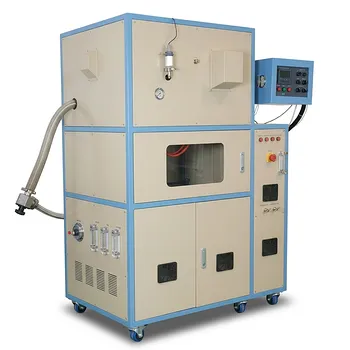
High Temperature Vacuum Graphitization Chamber Furnace 2800C Graphite Heating Elements Bottom Loading
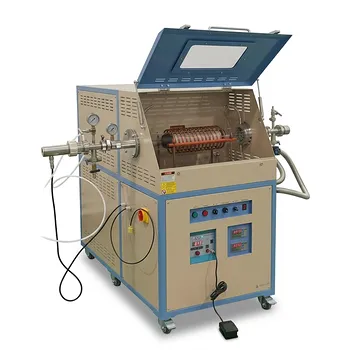
Ultra High Temperature 2300C Induction Heated Graphite Tube Furnace with Infrared Control
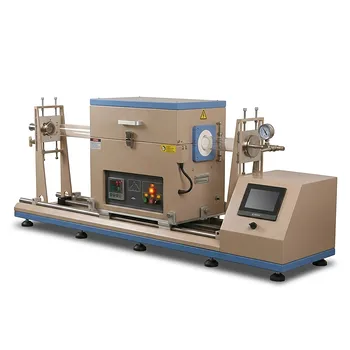
1200C Sliding Tube Furnace for Rapid Thermal Processing and CVD Graphene Growth with 100mm OD Capacity
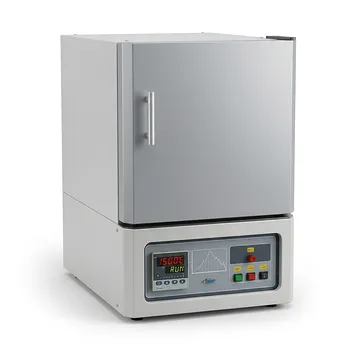
High Temperature 1500C Benchtop Muffle Furnace 3.6L Alumina Fiber Chamber Programmable Controller Sintering Annealing Carbonization Thermal Processing System
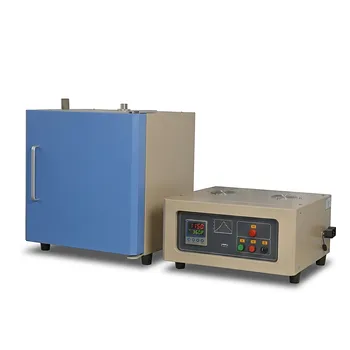
High Temperature Muffle Furnace with Alloy Chamber for Debinding and Sintering Applications
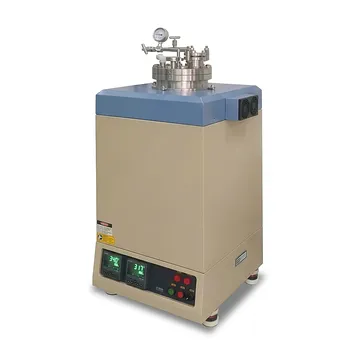
High Temperature 1000C Vacuum Furnace with 8 Inch ID Chamber for Material Sintering and Research Annealing

High Temperature Tube Furnace 1500C with Sliding Flanges and 50mm OD for Rapid Thermal Processing Fast Heating and Cooling
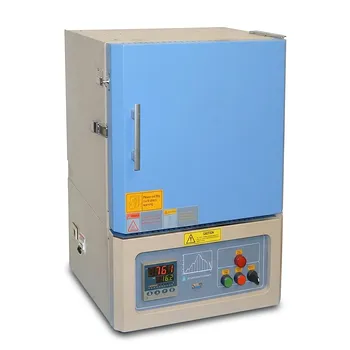
High Temperature 1700C Bench Top Muffle Furnace with Alumina Fiber Insulation and 3.6L Chamber Capacity for Precision Sintering and Heat Treatment

High Temperature 1700C Benchtop Tube Furnace with 5 Inch Heating Zone High Purity Alumina Tube and Vacuum Sealing Flanges
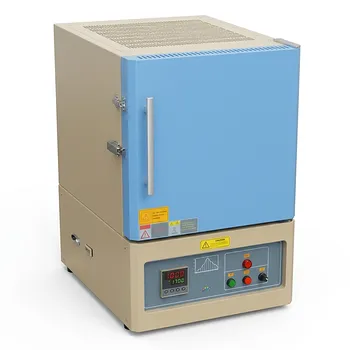
Large Bench Top 1700C High Temperature Muffle Furnace with 19L Chamber for Advanced Material Sintering and Annealing
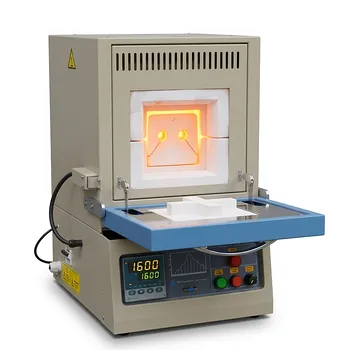
High Temperature Compact Muffle Furnace 1700 C with 30 Segment Programmable Controller and 1.7L Cubic Chamber

High Temperature 1700C Tube Furnace with High Vacuum Turbomolecular Pump System and Multi Channel Mass Flow Controller Gas Mixer
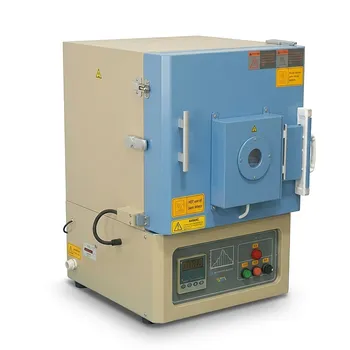
High Temperature Benchtop Muffle Furnace 1500C with 3.6L Chamber and Quartz Observation Window
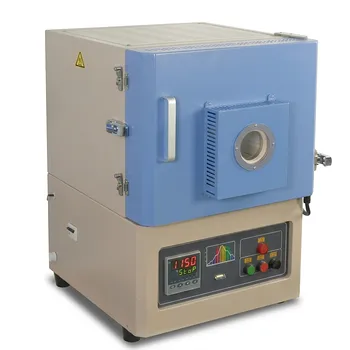
High Temperature Benchtop Muffle Furnace with Quartz Observation Window for Thermal Imaging and Material Analysis
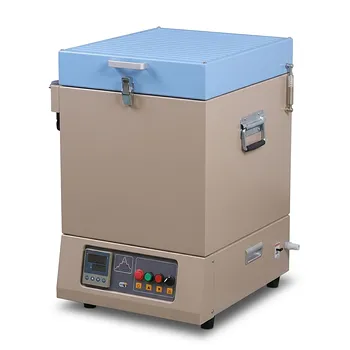
High Temperature Vertical Crucible Furnace with 22L Heating Chamber and 1200C Maximum Temperature
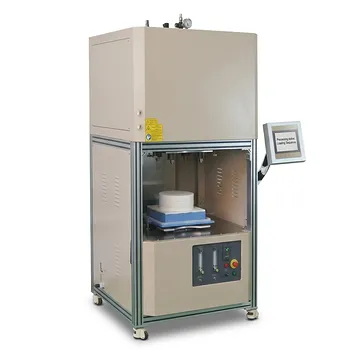
High Temperature Vertical Atmosphere Controlled Furnace with Automatic Bottom Loading and 1700°C Capacity for Advanced Material Research
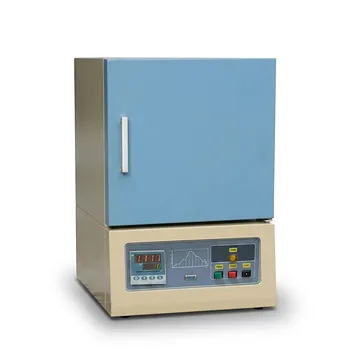
Ultra High Temperature Bench Top Muffle Furnace 1750C Sintering System with Kanthal Super Heating Elements and Precision Digital Control
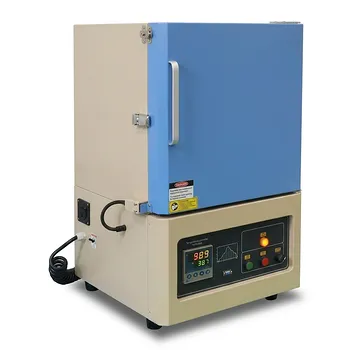
1200°C High Temperature Muffle Furnace 19L Chamber with 50 Segment Programmable Controller
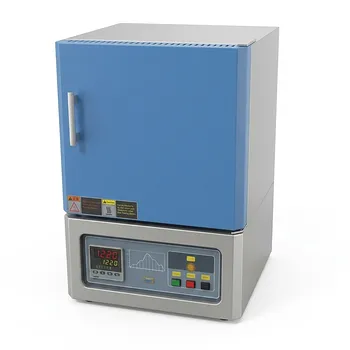
High Temperature Benchtop Muffle Furnace 1700C 10L Chamber Alumina Fiber Insulation MoSi2 Heating Elements
