Why is a reduction furnace with atmosphere control required for Ru/3D PG heat treatment? Achieve Precise Catalyst Synthesis
Updated 3 months ago
Achieving peak catalytic performance requires precise chemical transformation. A reduction furnace with atmosphere control is necessary to transform ruthenium salt precursors into uniform metallic nanoparticles while simultaneously protecting the structural integrity of the 3-D porous graphene (3D PG) support. This equipment ensures a stable, oxygen-free reducing environment—typically using an Argon/Hydrogen (Ar/H2) mixture—to prevent particle sintering and the oxidative destruction of the carbon framework.
The atmosphere-controlled furnace acts as a chemical regulator that balances the reduction of ruthenium ions into active metallic sites with the preservation of the highly conductive graphene network. Without this precision, the catalyst would suffer from poor dispersion, metallic over-sintering, or the complete combustion of the graphene support.
The Necessity of Precise Reduction Chemistry
Converting Precursors to Active Metallic Sites
To function as a catalyst, ruthenium must be transitioned from a salt precursor into an active metallic state. The atmosphere furnace facilitates this by providing a consistent flow of reducing gas, such as a 5% H2/Ar mixture, at a controlled temperature of 350 °C (523 K).
Regulating Particle Size and Dispersion
A primary challenge in catalyst synthesis is preventing over-sintering, where metal particles clump together and lose surface area. The furnace’s strict temperature program control ensures that ruthenium is reduced into uniform particles of approximately 5 nanometers, which are highly dispersed across the 3D PG surface.
Controlling the Metal Oxidation State
The ability to regulate the partial pressure and flow of reducing gases allows researchers to tune the initial oxidation state of the metal. This precision is critical for optimizing the oxygen evolution reaction (OER) efficiency, as the metallic phase must be perfectly established to maximize catalytic activity.
Safeguarding the Graphene Framework
Preventing Oxidative Combustion
Graphene is highly susceptible to oxidative combustion when heated in the presence of oxygen. An atmosphere-controlled furnace creates an oxygen-free environment using inert gases like Argon or Nitrogen, which is essential for protecting the 3D PG structure during high-temperature treatment.
Enhancing Network Conductivity
The heat treatment process does more than just reduce the metal; it also refines the 3D interconnected network of the graphene. By operating in a controlled environment, the furnace helps eliminate residual oxygen within the carbon lattice, significantly improving the material's electrical conductivity and chemical stability.
Maintaining Structural Porosity
The "3D" aspect of the porous graphene is vital for mass transport during catalysis. Atmosphere control ensures that the thermal reduction of graphene oxide into reduced graphene oxide (rGO) occurs without collapsing the delicate pores that provide the high surface area needed for ruthenium dispersion.
Understanding the Trade-offs and Pitfalls
The Risk of Hydrogen Over-exposure
While hydrogen is necessary for reduction, excessive concentrations or improper flow rates can lead to unwanted side reactions or safety hazards. Specialized tube furnaces are required to maintain strictly sealed conditions to handle flammable H2/Ar mixtures safely while ensuring the reduction process remains uniform.
Thermal Management and Sintering
Setting the temperature too high in an attempt to speed up the process can lead to metal particle growth. If the temperature exceeds the stable window, the 5nm particles will migrate and fuse, drastically reducing the active centers available for the catalytic reaction.
Cost and Complexity of High-Purity Gases
Maintaining a precise atmosphere requires a constant supply of high-purity gases, which increases the operational cost and complexity of the setup. However, using lower-grade gases introduces impurities that can poison the catalyst or cause unintended oxidation of the ruthenium sites.
How to Apply This to Your Project
When configuring your heat treatment process, your technical requirements should be driven by your specific material goals:
- If your primary focus is Maximum Catalytic Activity: Use a precise Ar/H2 mixture at 350 °C to ensure ruthenium particles remain at the 5nm scale and do not over-sinter.
- If your primary focus is Structural Integrity of the Support: Prioritize a strictly oxygen-free environment with high-purity Argon to prevent the 3D graphene framework from burning at high temperatures.
- If your primary focus is Electrical Conductivity: Extend the thermal treatment duration in an inert nitrogen or argon atmosphere to maximize the removal of oxygen groups from the graphene lattice.
Precise control over the thermal and chemical environment is the only way to synthesize a stable, high-performance ruthenium-on-graphene catalyst.
Summary Table:
| Key Requirement | Function of Atmosphere Furnace | Benefit to Ru/3D PG Catalyst |
|---|---|---|
| Precursor Conversion | Controlled Ar/H2 reducing environment | Transforms Ru salts into active metallic nanoparticles |
| Particle Size Control | Precise temperature programming (350°C) | Prevents over-sintering; maintains uniform ~5nm size |
| Framework Protection | Oxygen-free (Inert/Reducing) environment | Prevents oxidative combustion of the 3D graphene |
| Network Conductivity | Targeted residual oxygen removal | Enhances electrical conductivity and chemical stability |
| Porosity Maintenance | Regulated thermal reduction | Preserves the 3D pore structure for efficient mass transport |
Optimize Your Catalyst Research with THERMUNITS
As a global leader in high-temperature laboratory equipment for material science, THERMUNITS provides the precision thermal solutions required for advanced catalyst synthesis. Our specialized Atmosphere and Tube Furnaces are engineered to deliver the stable, oxygen-free reducing environments essential for creating high-performance Ru/3D PG catalysts while preventing sintering and framework degradation.
From Muffle and Vacuum furnaces to CVD/PECVD systems, Rotary kilns, and Hot Press furnaces, our comprehensive range of thermal processing equipment supports industrial R&D teams in achieving superior material performance and repeatability.
Ready to elevate your heat treatment precision? Contact our technical team today to find the perfect solution for your laboratory needs.
References
- Yanna Liu, Xiao Liang. Binder-Free Three-Dimensional Porous Graphene Cathodes via Self-Assembly for High-Capacity Lithium–Oxygen Batteries. DOI: 10.3390/nano14090754
Mentioned Products
- Rapid Thermal Processing Furnace 1100C Atmosphere Controlled Bottom Loading RTP System for Wafer Annealing and Catalysis Research
- Compact Atmosphere Controlled Rapid Thermal Processing RTP Furnace with 4 Inch ID Quartz Tube 1100C
- Rapid Thermal Processing RTP Atmosphere Controlled Bottom Loading Furnace 1100C High Throughput 50C per Second Heating Rate
- Rapid Thermal Processing Atmosphere Controlled Bottom Loading Furnace 1100C with 50C Per Second Heating Rate for Wafer Annealing
- High Temperature Oxygen and Inert Atmosphere Controlled Furnace 8 Liter 1700C Sintering System for Advanced Materials RD
People Also Ask
- What role does a SiC-coated graphite susceptor play in H2Se selenization? Boost RTP Thermal Uniformity & Film Purity.
- What are the functional advantages of an RTP system for surface deposition? Enhance Heterojunction Interface Integrity
- Why is an atmosphere-controlled annealing furnace required for the post-treatment of synthesized KTiOPO4 thin films? KTP
- What are the advantages of RTPR for Pd1/PU catalyst synthesis? Achieve superior single-atom dispersion and stability.
- Why is 1100°C in situ annealing required after LZO and DTO deposition? Achieve High-Quality Thin Film Synthesis

Tech Team · ThermUnits
Last updated on Jun 03, 2026
Related Products
Rapid Thermal Processing Furnace 1100C Atmosphere Controlled Bottom Loading RTP System for Wafer Annealing and Catalysis Research
Compact Atmosphere Controlled Rapid Thermal Processing RTP Furnace with 4 Inch ID Quartz Tube 1100C
Rapid Thermal Processing RTP Atmosphere Controlled Bottom Loading Furnace 1100C High Throughput 50C per Second Heating Rate
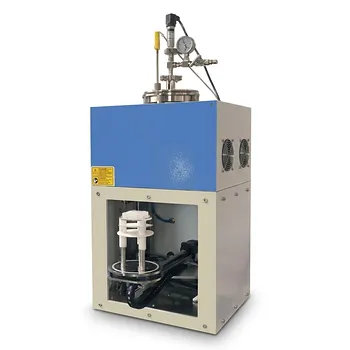
Rapid Thermal Processing Atmosphere Controlled Bottom Loading Furnace 1100C with 50C Per Second Heating Rate for Wafer Annealing
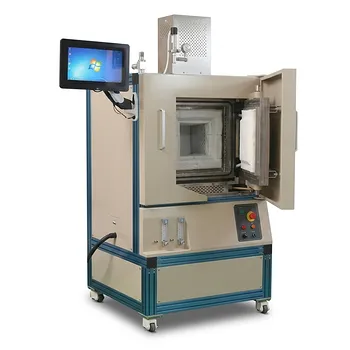
High Temperature Oxygen and Inert Atmosphere Controlled Furnace 8 Liter 1700C Sintering System for Advanced Materials RD
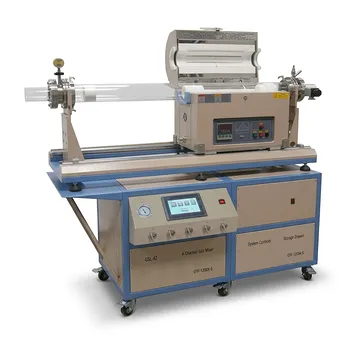
Dual Tube 100mm 80mm CVD Sliding Furnace with 4 Channel Gas Mixing and Vacuum System
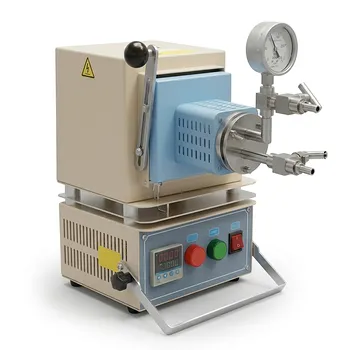
Compact Hybrid Muffle and Tube Furnace for 1000C Controlled Atmosphere Laboratory Material Sintering
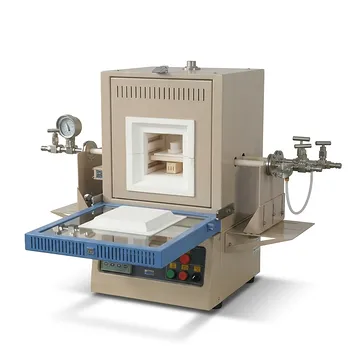
1700C Compact Hybrid Furnace with Dual Layer Box Sintering and Controlled Atmosphere Alumina Tubes
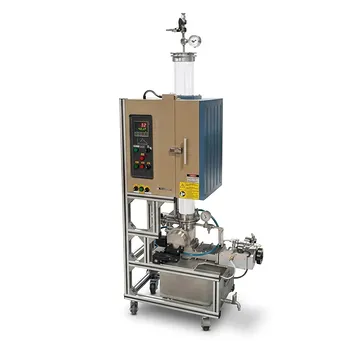
1200C High Temperature Atmosphere Controlled Vertical Quenching Tube Furnace with 4 Inch Quartz Tube
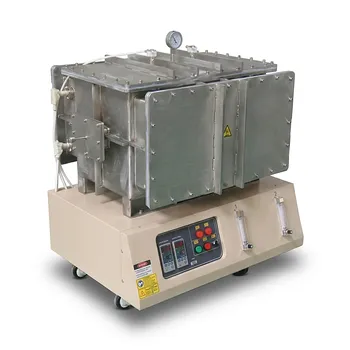
1500°C Atmosphere Controlled Rapid Heating Furnace for Material Science and Battery Powder Sintering
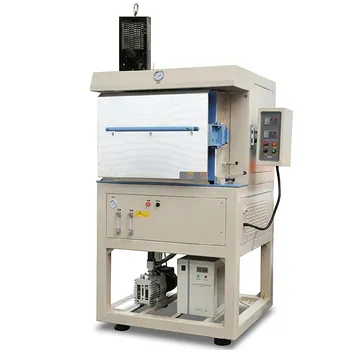
1200C Hydrogen Atmosphere Box Furnace with 5 Heated Sides and 64L Chamber
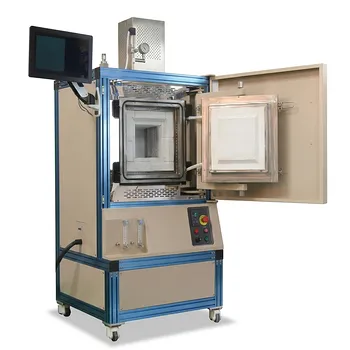
High Temperature Hydrogen Atmosphere Box Furnace 1650C Max Reducing Environment Material Synthesis System 8x8x8 Chamber
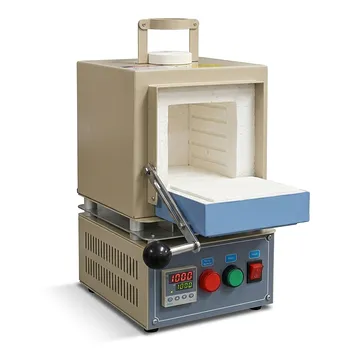
Compact 1000C Muffle Furnace with Programmable Controller and 2 Inch Top Port for Vacuum and Atmosphere Material Research
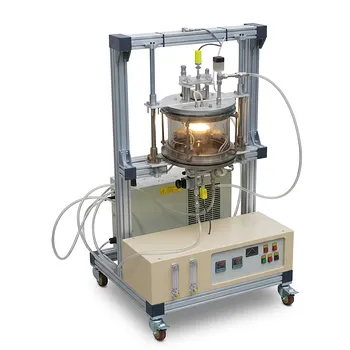
Two Zones CSS Furnace for Rapid Thermal Processing Thin Film Coating 3 Inch Diameter 650C
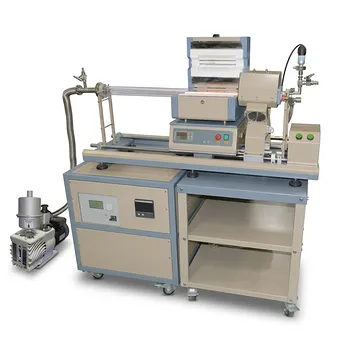
1200C Max Compact Auto-Sliding PECVD Furnace with 2 Inch Tube and Vacuum Pump
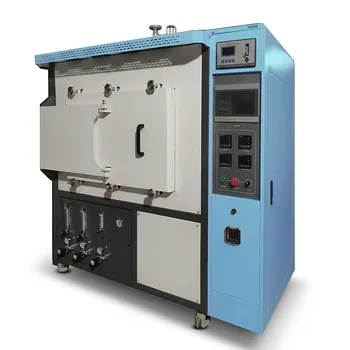
Roller Table Atmosphere Furnace 1500C High Temperature Battery Material Sintering System 112L Capacity
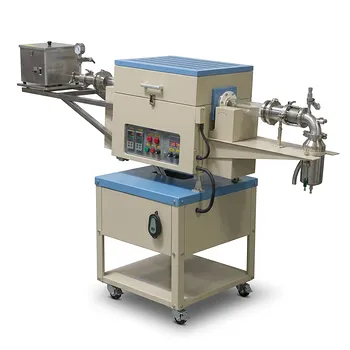
Two Zone Rotary CVD Furnace with Automatic Feeding and Receiving System for Powder Processing
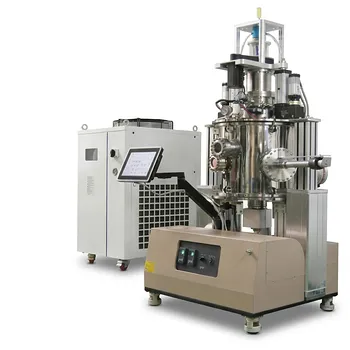
950C Rapid Thermal Processing Furnace for 12 Inch Wafer CSS Coating with Rotating Substrate Holder
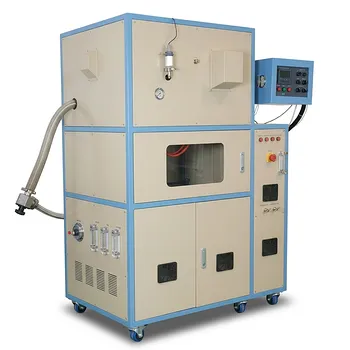
High Temperature Vacuum Graphitization Chamber Furnace 2800C Graphite Heating Elements Bottom Loading