The Geometry of Heat: Why Precision is the Silent Architect of Li-S Batteries
Jun 12, 2026
The Margin of Error in Material Science
In the laboratory, we often treat temperature as a constant—a number typed into a controller and forgotten. But in the synthesis of SP-Fe3O4-C/S composite cathodes, temperature is not a static value; it is a dynamic force that dictates the internal architecture of the material.
The difference between a battery that fails after fifty cycles and one that lasts for five hundred often comes down to what happened during a single 12-hour window in a furnace.
When working with sulfur-based composites, the margin for error is razor-thin. We are not just heating a material; we are managing a phase transition that relies on the subtle interplay of viscosity, surface tension, and capillary pressure.
The Thermodynamics of Infiltration
The goal of the melt-diffusion process is to coax liquid sulfur into a three-dimensionally connected mesoporous carbon host. This is a journey of infiltration.
At 155 °C, sulfur reaches a state of "kinetic grace." It is liquid enough to flow, yet stable enough not to vaporize. This specific temperature is the key to unlocking capillary action—the force that pulls the sulfur deep into the skeletal structure of the SP-Fe3O4-C matrix.
Why 155 °C is the "Goldilocks Zone"
- Viscosity Optimization: At this threshold, sulfur’s flow characteristics are ideal for penetrating microscopic voids.
- Surface Tension: The energy balance allows the sulfur to wet the carbon surface without being repelled.
- Vapor Management: It sits safely below the point where sulfur loss through evaporation becomes a systemic failure.
If the furnace fluctuates by even a few degrees, this balance breaks. The sulfur remains on the surface, coating the outside like a shell rather than filling the core.
The 12-Hour Vigil: Stability as a Strategy
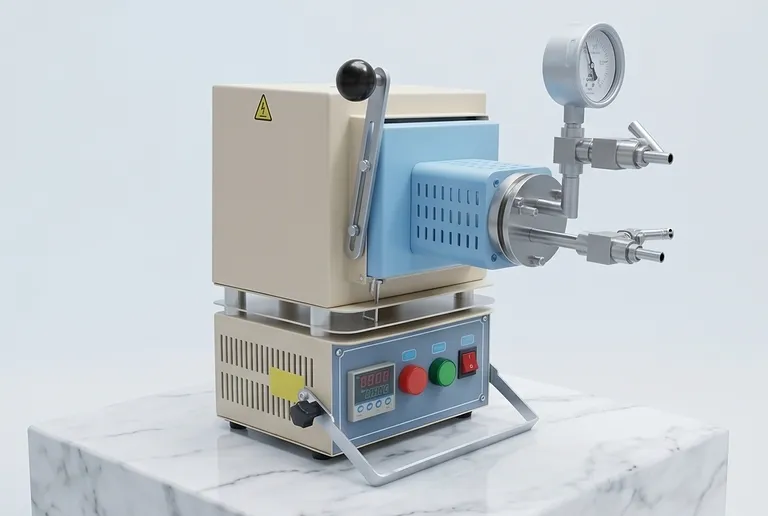
A 12-hour holding period is a long time for a machine to stay perfect. In the world of high-performance R&D, "close enough" is the enemy of "repeatable."
When sulfur is sequestered deep within the carbon pores, the host acts as a mechanical buffer. This is critical because sulfur expands significantly during battery discharge. If the infiltration is shallow due to inconsistent heat, the expansion will eventually crack the cathode, leading to rapid capacity fade.
The Risks of Thermal Instability
| Risk Factor | Consequence | Impact on Battery |
|---|---|---|
| Temperature Drop | Increased viscosity, halted diffusion | Shallow pore filling, low energy density |
| Temperature Spike | Sulfur vaporization/sublimation | Loss of active material, chemical imbalance |
| Localized Gradients | Uneven sulfur loading | Internal stress, localized "hot spots" during cycling |
| Duration Drift | Incomplete phase transition | Brittle cathode structure, poor cycle life |
Engineering for Certainty
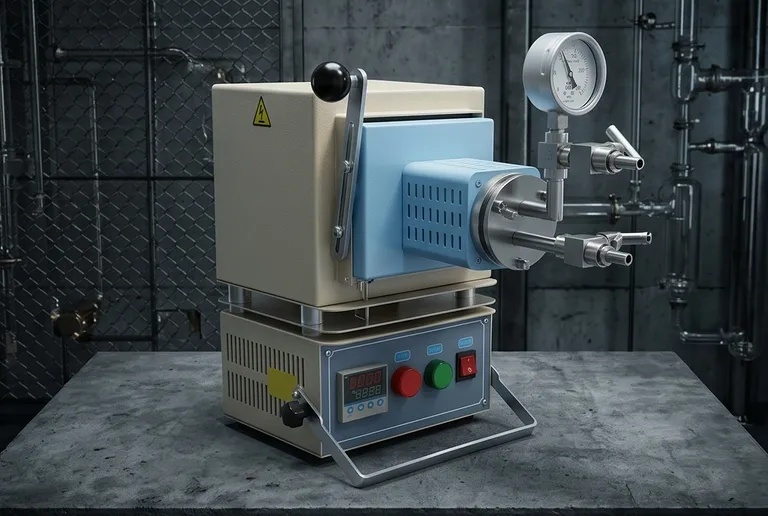
Precision is a psychological necessity for the researcher. When an experiment fails, you need to know it was the chemistry that failed, not the equipment.
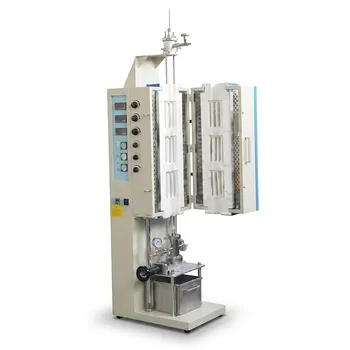
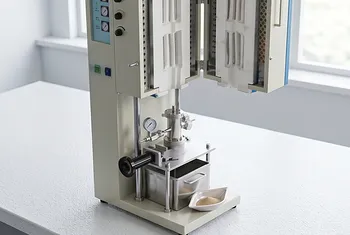
At THERMUNITS, we design thermal systems that eliminate the variables. Whether you are performing melt-diffusion in a Tube furnace or exploring large-scale synthesis in an Electric Rotary Kiln, the requirement remains the same: absolute thermal fidelity.
Our suite of high-temperature solutions is engineered for the rigors of material science:
- Muffle & Tube Furnaces: For precise atmospheric control during sensitive diffusion.
- Vacuum & Atmosphere Systems: To prevent oxidation and manage volatile phases.
- VIM & Hot Press Furnaces: For advanced metallurgical and composite density requirements.
- Rotary Kilns: Ensuring batch-to-batch homogeneity in scalable production.
The Path to High-Performance Energy
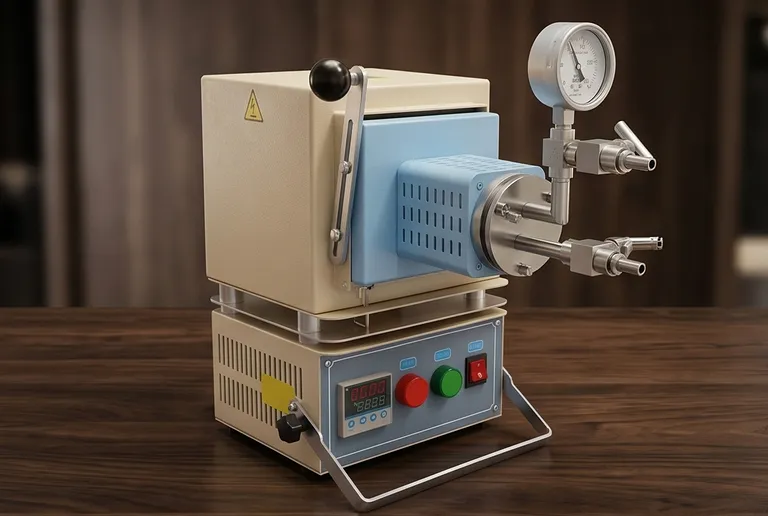
The synthesis of SP-Fe3O4-C/S is a microcosm of a larger truth in industrial R&D: the quality of the output is limited by the control of the input. To maximize active material utilization and mitigate mechanical stress, your thermal processing must be invisible—so reliable that it is no longer a variable.
We provide the tools to make that reliability a reality. From CVD/PECVD systems to specialized Dental Furnaces and Thermal Elements, we ensure your focus stays on the breakthrough, not the equipment.
Quick Links
Suggested Products
Compact Atmosphere Controlled Rapid Thermal Processing RTP Furnace with 4 Inch ID Quartz Tube 1100C 1100°C Vertical Laboratory Furnace for DIY Tubular Reactors with PID Temperature Controller Induction Heating System with Temperature Control for High Temperature Vacuum Sintering and Melting High Temperature Ultrafast Heating Pressing Furnace 2900C Max 100kgf Rapid Thermal Processing System Rapid Thermal Processing RTP Atmosphere Controlled Bottom Loading Furnace 1100C High Throughput 50C per Second Heating RateFurther Reading
The Calculus of Heat: Why Precision Control is the Soul of Material Science The Invisible Barrier: Why Precision Thermal Control Requires Chemical Silence The Physics of Redemption: Surface Restoration of Violet Phosphorus in the Thermal Field The Silent Cost of Efficiency: Healing Plasma-Induced Damage via Thermal Precision The Architecture of Silence: Why Atmosphere Control Defines the TiO2/In2S3 Heterojunction
ThermUnits
Last updated on Apr 14, 2026
Related Products
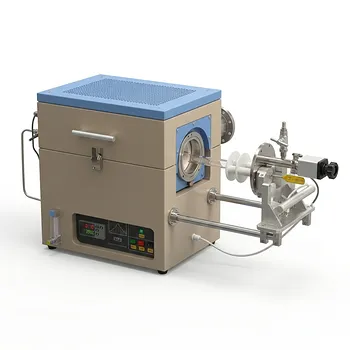
Compact Atmosphere Controlled Rapid Thermal Processing RTP Furnace with 4 Inch ID Quartz Tube 1100C
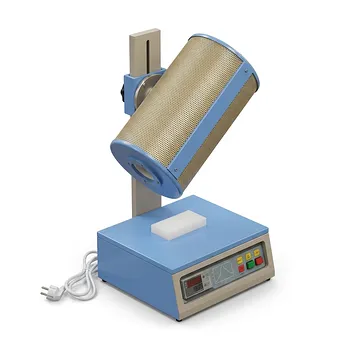
1100°C Vertical Laboratory Furnace for DIY Tubular Reactors with PID Temperature Controller
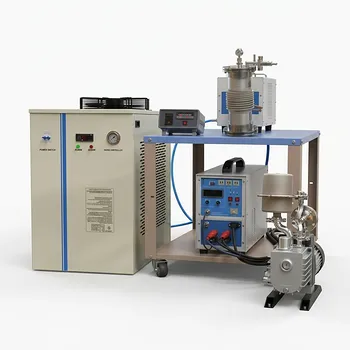
Induction Heating System with Temperature Control for High Temperature Vacuum Sintering and Melting
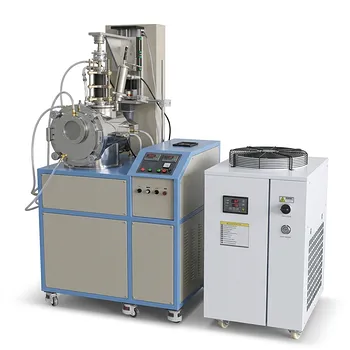
High Temperature Ultrafast Heating Pressing Furnace 2900C Max 100kgf Rapid Thermal Processing System
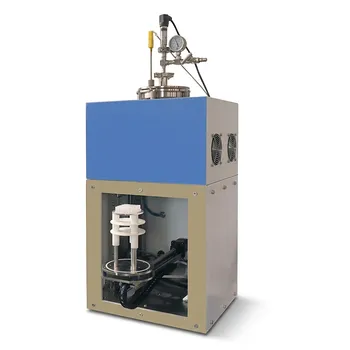
Rapid Thermal Processing RTP Atmosphere Controlled Bottom Loading Furnace 1100C High Throughput 50C per Second Heating Rate
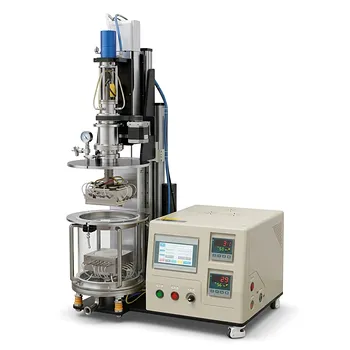
High Temperature 800C Rapid Thermal Processing Furnace with Rotating Sample Holder for Close Spaced Sublimation and Thin Film Solar Cell Research