The Invisible Symphony: Mastering Thermal Synchronicity in Dental Ceramics
Jul 10, 2026
The Sound of Systematic Failure
In the precision world of dental laboratory work, there is a specific, heartbreaking sound: the "clink."
It is the sound of a microscopic fracture propagating through a ceramic crown that has just undergone hours of meticulous layering. To the technician, it feels like bad luck. To an engineer, it is a predictable failure of synchronicity.
At its core, material cracking during thermal cycles is not a mystery of chemistry, but a conflict of physics. When heat is applied or removed, the material enters a race against itself. If the surface moves faster than the core, the material breaks.
The Physics of Differential Expansion
Every material has a thermal coefficient—a predetermined rate at which it expands or contracts. The danger arises from the thermal gradient.
- Surface Tension: During heating, the outer shell of a restoration absorbs energy first. It expands.
- Core Resistance: The interior remains cooler and smaller, resisting the expansion of the shell.
- The Breaking Point: This push-and-pull creates internal stress. If the furnace does not manage this gradient, the stress exceeds the material's structural integrity, leading to immediate failure or latent "spiderweb" fractures.
Thermal Rhythms: The Logic of Ramp Rates
To prevent the surface from outrunning the core, modern furnaces employ Programmable Ramp Rates. This is the art of slowing down to move faster.
Most advanced systems allow for modulation between 20°C and 220°C per minute. By precisely controlling the speed of energy transfer, we ensure that the restoration reaches a "thermal equilibrium."
When the heat penetrates the core at the same rate it affects the surface, expansion becomes uniform. The stress is neutralized because the material moves as a single, cohesive unit.
The Nervous System: Closed-Loop PID Control
If the heating element is the heart of the furnace, the PID (Proportional-Integral-Derivative) controller is its nervous system.
A simple thermostat is reactive—it turns on when it’s cold and off when it’s hot. This leads to "overshoot," where the temperature spikes past the target, shocking the ceramic.
A PID controller uses a sophisticated mathematical feedback loop:
- Proportional: It calculates the current error between actual and target heat.
- Integral: It looks at the history of the temperature trend.
- Derivative: It predicts future changes.
This allows the furnace to "soften" its approach as it nears the target temperature, maintaining a stability of ±5 K or better. In the world of high-performance ceramics, this stability is the difference between a durable restoration and a fragile one.
The Dangerous Exit: Controlled Cooling
The most volatile part of the cycle isn't the heat; it's the return to Earth.
Thermal shock occurs most frequently during the cooling phase. If a technician removes a restoration into the ambient air too quickly, the surface contracts violently against a still-expanded core.
Modern systems utilize multi-stage automated cooling. By gradually lowering the temperature in a controlled environment, the furnace allows the ceramic lattice to "settle" into its final state without the traumatic contraction that causes "clinking."
The Hardware of Uniformity
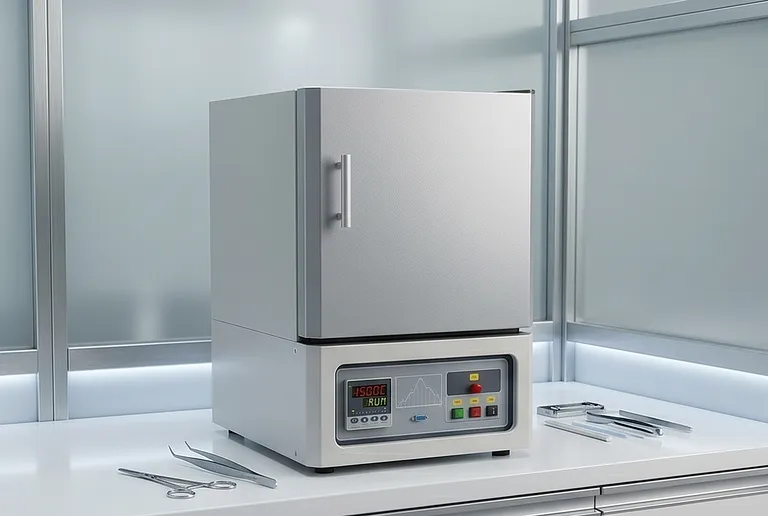
Software precision is meaningless without hardware consistency. To achieve a truly stress-free firing, the physical environment must be perfect:
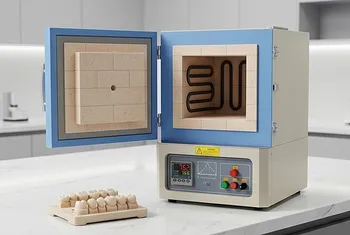
- All-Round Heating Elements: Arranging elements concentrically eliminates "cold spots," ensuring the restoration is bathed in uniform energy from every angle.
- Ceramic Fiber Insulation: High-purity refractory materials act as a thermal buffer, shielding the internal process from the chaos of the outside world’s temperature fluctuations.
The Strategic Balance
Choosing the right firing protocol is a lesson in risk management.
| Feature | Mechanism | Clinical Benefit |
|---|---|---|
| Ramp Rate Control | Managed heating (up to 220°C/min) | Synchronizes core/surface expansion |
| PID Modulation | Real-time power adjustment | Eliminates thermal spikes and overshoot |
| All-Round Heating | Concentric element design | Uniformity within ±5 K |
| Automated Cooling | Multi-stage temperature reduction | Prevents contraction "shock" |
| Refractory Lining | High-purity ceramic fiber | Maintains internal thermal stability |
Precision Engineering for Material Integrity
Successful material science requires a system that respects the physics of the material. At THERMUNITS, we engineer our high-temperature laboratory equipment to act as the ultimate safeguard for your R&D and clinical workflows.
From high-precision Dental Furnaces to advanced CVD/PECVD systems and Vacuum Induction Melting (VIM) units, our products are designed by engineers who understand that precision is not just a feature—it is a requirement for structural integrity.
Whether you are scaling industrial production or perfecting a single restoration, our range of Muffle, Atmosphere, and Tube furnaces provides the thermal stability your materials demand.
Refine your thermal process and eliminate the risk of failure.
Contact Our Experts
Quick Links
Suggested Products
Dental Porcelain Zirconia Sintering Ceramic Vacuum Press Furnace Vacuum Dental Porcelain Sintering Furnace for High Precision Ceramic Restorations Dental Porcelain Zirconia Sintering Ceramic Furnace Chairside with Transformer 1800C Bench Top Muffle Furnace 18 Liters with Kanthal Super 1900 Heating Elements for High Purity Ceramic Sintering and Material Research High Temperature 1500C Benchtop Muffle Furnace 3.6L Alumina Fiber Chamber Programmable Controller Sintering Annealing Carbonization Thermal Processing System
ThermUnits
Last updated on Apr 14, 2026
Related Products
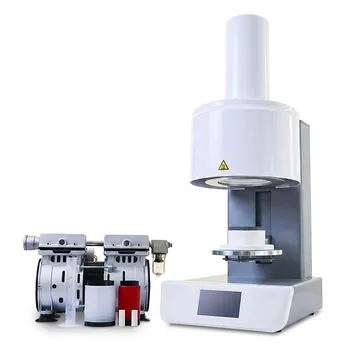
Dental Porcelain Zirconia Sintering Ceramic Vacuum Press Furnace
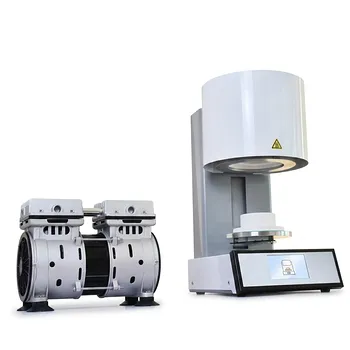
Vacuum Dental Porcelain Sintering Furnace for High Precision Ceramic Restorations
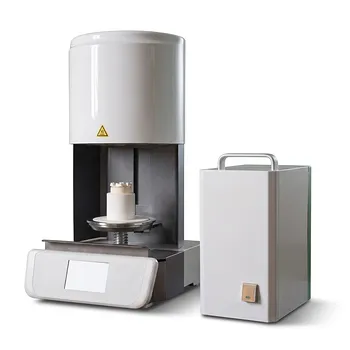
Dental Porcelain Zirconia Sintering Ceramic Furnace Chairside with Transformer
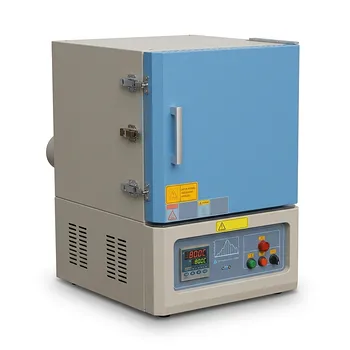
1800C Bench Top Muffle Furnace 18 Liters with Kanthal Super 1900 Heating Elements for High Purity Ceramic Sintering and Material Research
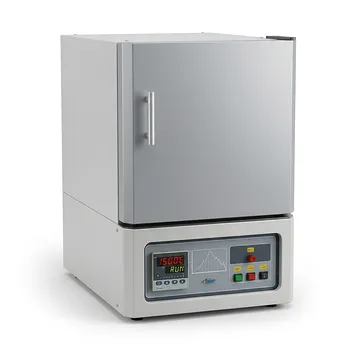
High Temperature 1500C Benchtop Muffle Furnace 3.6L Alumina Fiber Chamber Programmable Controller Sintering Annealing Carbonization Thermal Processing System
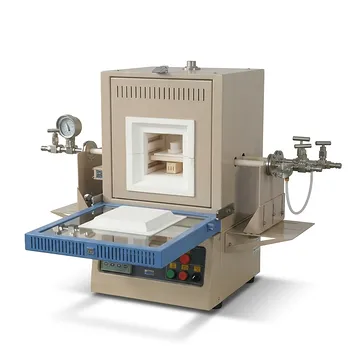
1700C Compact Hybrid Furnace with Dual Layer Box Sintering and Controlled Atmosphere Alumina Tubes
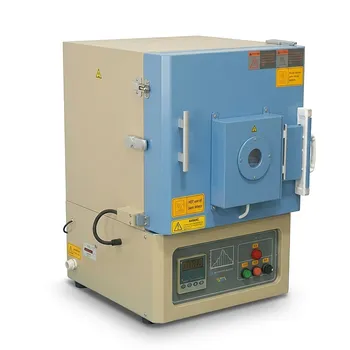
High Temperature Benchtop Muffle Furnace 1500C with 3.6L Chamber and Quartz Observation Window
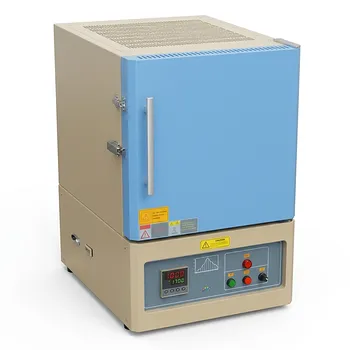
Large Bench Top 1700C High Temperature Muffle Furnace with 19L Chamber for Advanced Material Sintering and Annealing
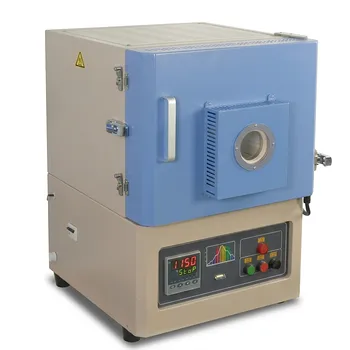
High Temperature Benchtop Muffle Furnace with Quartz Observation Window for Thermal Imaging and Material Analysis
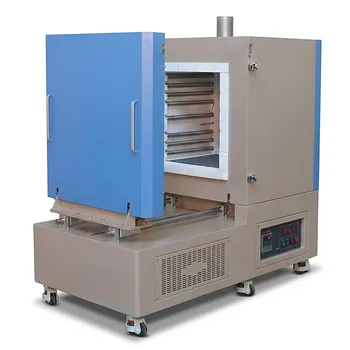
1200C Five Side Heating Muffle Furnace with Sliding Door 125L Volume High Temperature Heat Treatment System for Large Scale Sintering and Annealing
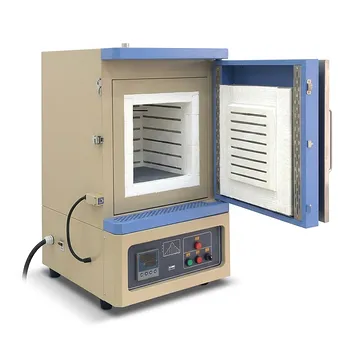
Five Side Heating Muffle Furnace High Purity Alumina Fiber 27L Chamber 1200C High Temperature Thermal Processing System for Sintering Annealing and Materials Research

1800C High Temperature Compact Vacuum Tube Furnace with 60mm OD Alumina Tube and Kanthal MoSi2 Heating Elements
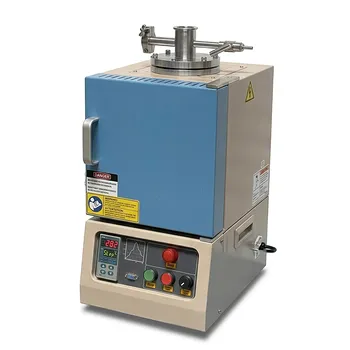
High Temperature Hybrid Muffle and Tube Furnace with Vacuum Capability and PID Control

1200°C 5 Inch Vertical Quartz Tube Furnace with Stainless Steel Vacuum Flanges
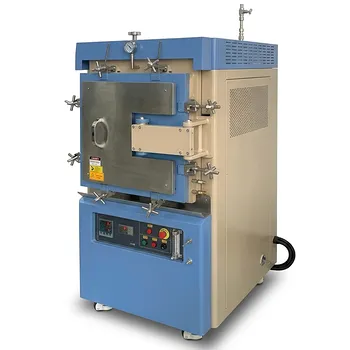
Atmosphere Controlled Muffle Furnace 1700C Maximum Temperature 80L High Capacity Vacuum Inert Gas Box Furnace
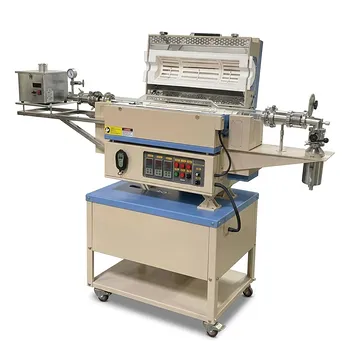
5 Inch Rotary Tube Furnace with Automatic Feeding and Receiving System 1200C Three Zone CVD Powder Processing
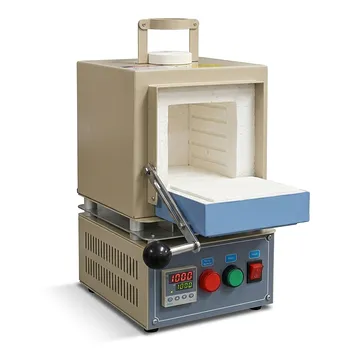
Compact 1000C Muffle Furnace with Programmable Controller and 2 Inch Top Port for Vacuum and Atmosphere Material Research
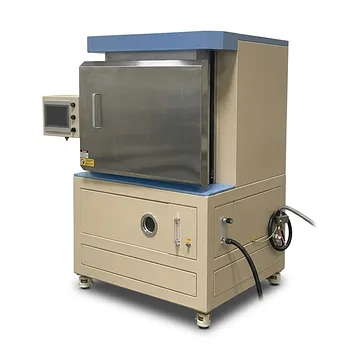
1650C High Temperature Atmosphere Controlled Box Furnace with 65L Chamber for Advanced Material Sintering and Industrial Heat Treatment
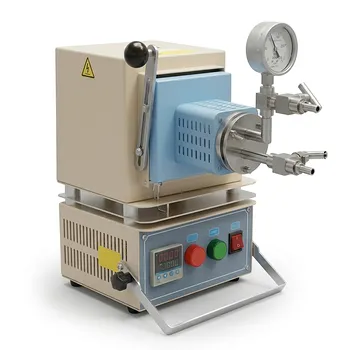
Compact Hybrid Muffle and Tube Furnace for 1000C Controlled Atmosphere Laboratory Material Sintering