The Thermodynamics of Precision: Why the Vessel is the Architect of the Crystal
Jul 04, 2026
In the world of material science, the difference between a groundbreaking discovery and a failed experiment often lies in the invisible.
We tend to focus on the "recipe"—the precursors, the temperatures, the dwell times. But as any seasoned researcher knows, the reaction doesn't happen in a vacuum of theory. It happens inside a vessel.
In the synthesis of Fe1+yTe (Iron Telluride), the vessel—specifically the high-purity ceramic boat—is not a passive observer. It is the architect of the crystal's soul.
The Chemistry of Aggression
At the temperatures required for high-performance synthesis, chemicals change their personality. Ferrous chloride (FeCl2), a common precursor for Fe1+yTe, becomes a predatory halide vapor.
Standard materials fail here. A lower-grade crucible doesn't just hold the precursor; it participates in the reaction. It leaches, it etches, and it contaminates.
High-purity ceramic boats are chosen for their chemical silence. They provide a sanctuary where the halide chemistry can proceed without the interference of the container.
The "y" Factor: Stoichiometry as Destiny
In Fe1+yTe, the "y" value represents the excess iron content. In the realm of superconductivity and quantum materials, this small variable is everything. It dictates the magnetic order and the electronic phase of the material.
Control over "y" is actually control over vapor pressure.
- Uniformity: High-grade ceramics offer the thermal conductivity necessary to eliminate hot spots.
- Saturation: Even heating ensures a stable saturated vapor pressure of the FeCl2.
- Kinetics: When the vapor pressure is predictable, the growth kinetics become repeatable.
If your thermal environment fluctuates by even a few degrees, or if your boat has poor thermal response, the "y" value drifts. Your "perfect" crystal becomes a statistical outlier.
The Invisible Tax of Purity
There is a psychological trap in lab procurement: the belief that "95% purity is close enough."
In precision synthesis, the remaining 5% is a tax you pay in the form of degraded data. Trace metallic impurities from low-quality boats migrate into the crystal lattice.
These impurities act as "accidental dopants." They scatter electrons, quench superconductivity, and render your findings irreproducible. High-purity alumina (>99.9%) isn't a luxury; it is the baseline for scientific integrity.
Engineering the Ideal Environment
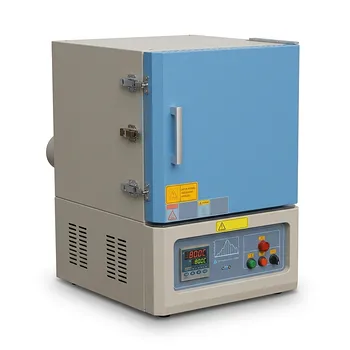
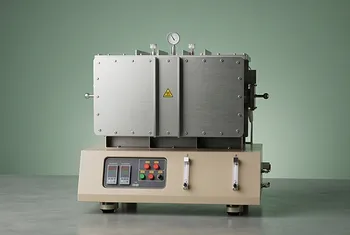
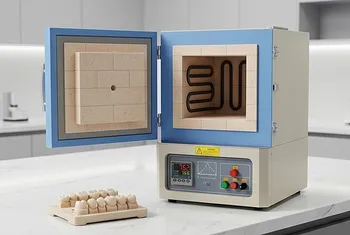
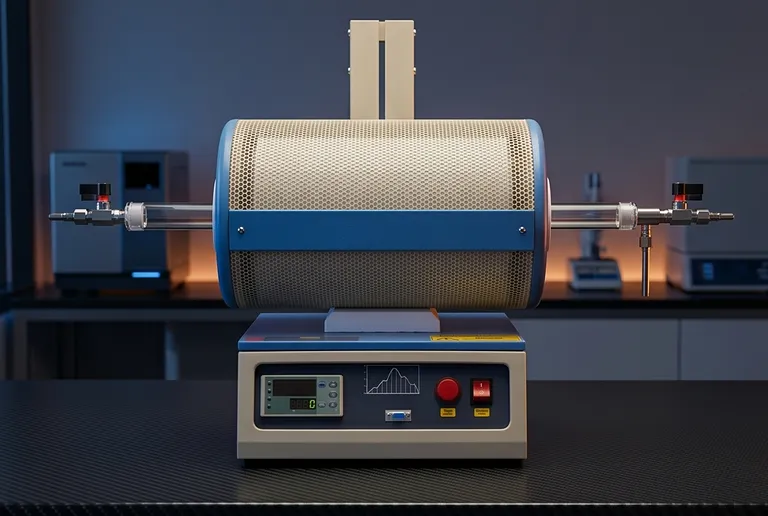
A high-purity boat is only as good as the furnace that breathes life into it. To achieve the delicate balance required for Fe1+yTe, the thermal system must offer more than just raw heat.
| Feature | Technical Benefit | Impact on Fe1+yTe |
|---|---|---|
| Chemical Inertness | Resistance to FeCl2 halide attack | Prevents vessel etching and lattice contamination |
| Thermal Stability | Uniform heat distribution across the boat | Regulates vapor pressure for precise "y" value control |
| Structural Integrity | Withstands temperatures >1050°C | Prevents failure during long-term annealing cycles |
| Atmosphere Control | Prevents oxidation of chalcogen vapors | Maintains the intended reducing environment |
The Engineer’s Perspective on Growth
Precision is a system, not an event. It starts with the purity of the ceramic and ends with the stability of the heating elements.
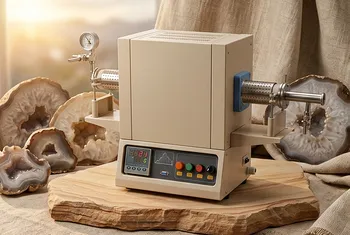
At THERMUNITS, we understand that a furnace is more than an oven—it is a controlled ecosystem for the birth of new materials. From Vacuum and Atmosphere Tube Furnaces designed for volatile precursors to Vacuum Induction Melting (VIM) systems for bulk purity, we engineer the tools that make precision possible.
Whether you are fine-tuning the stoichiometry of iron-based tellurides or exploring the next frontier of R&D, your results are only as reliable as your thermal environment.
To find the right system for your synthesis challenges, Contact Our Experts.
Quick Links
Suggested Products
1800C Bench Top Muffle Furnace 18 Liters with Kanthal Super 1900 Heating Elements for High Purity Ceramic Sintering and Material ResearchFurther Reading
The Invisible Boundary: Mastering Chemistry within the Architecture of Sintering The Architecture of Atoms: Decoding the Thermal Divide Between Sintering and Firing The Invisible Architecture of a Smile: Engineering Dental Ceramics at 1700°C The Physics of Permanence: Why Bismuth Sulfide Requires a Thermal Metamorphosis The Invisible Forge: Why Thermal Precision Governs Human Anatomy
ThermUnits
Last updated on Apr 14, 2026