The Physics of Permanence: Why Bismuth Sulfide Requires a Thermal Metamorphosis
May 17, 2026
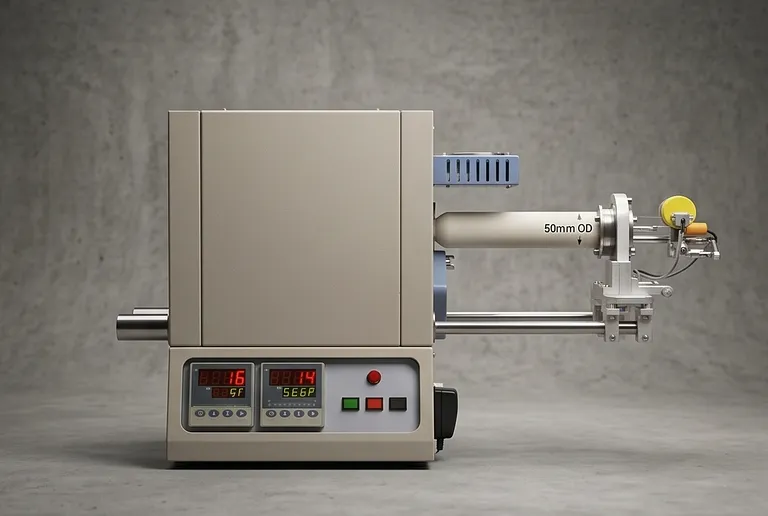
The Fragility of the "Green" Body
In material science, a "green" body is a paradox. It has the shape of a finished component, but none of its soul.
When Bismuth Sulfide ($Bi_2S_3$) nanobelts are pressed into pellets, they are held together by little more than mechanical entanglement and hope. They are brittle. They are electrically noisy. They are vulnerable to the very pressures they are designed to measure.
To move from a temporary assembly of particles to an industrial-grade sensor, the material must undergo a thermal metamorphosis. This is the objective of sintering.
The Alchemy of Contact
Sintering is the bridge between a collection of powders and a unified functional material. It is not merely heating; it is the strategic application of thermal energy to trigger atomic-level change.
The Thermal Diffusion Bridge
At the correct temperature, atoms begin to migrate across the boundaries of individual nanobelts. This process, known as thermal diffusion, welds the contact points together.
In a $Bi_2S_3$ matrix, this doesn't just make the pellet "harder"—it fundamentally changes how energy moves through the material.
The Release of Internal Stress
The physical act of pressing nanobelts creates a landscape of internal mechanical tension. Without heat treatment, these stresses act like microscopic fault lines.
Sintering allows the lattice to relax. It redistributes the internal load, ensuring that when the pellet is removed from its mold, it doesn't warp or succumb to spontaneous cracking.
From Structure to Signal
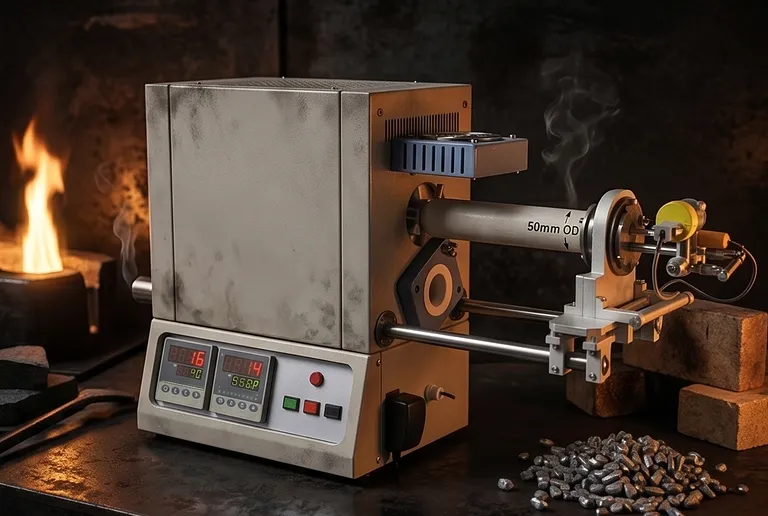
A sensor is only as good as its stability. For $Bi_2S_3$, structural integrity is a prerequisite for electrical reliability.
Eliminating Signal Noise
In an unsintered pellet, the junctions between nanobelts are inconsistent. This creates "bottlenecks" for electrons, leading to erratic resistance readings and signal noise.
Controlled thermal treatment stabilizes these pathways. By perfecting the junctions, we create a consistent electrical highway, ensuring the sensor’s response is repeatable and precise.
Survival Under Pressure
Industrial sensors often face thousands of pressure cycles. A material that relies solely on mechanical friction will eventually fatigue and collapse. Sintering provides the structural reinforcement necessary to survive the rigors of the field without degrading the sensor’s morphology.
The Precision of the Trade-off
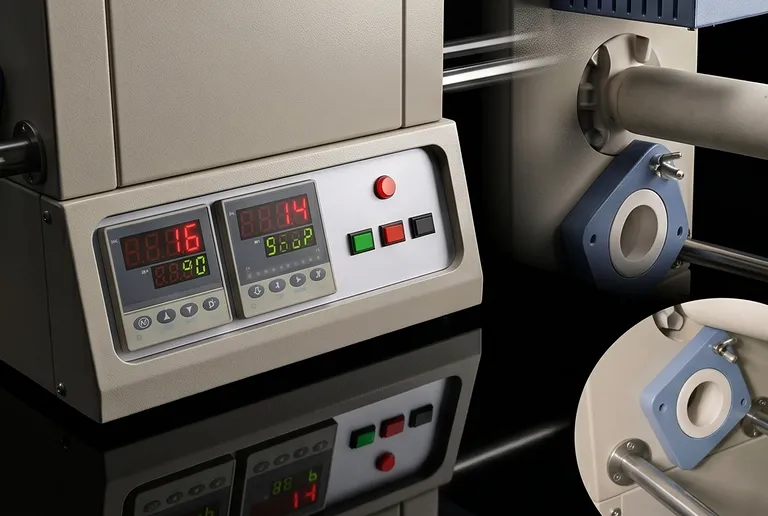
Sintering is a game of margins. It requires an engineer’s eye for balance and a high-precision thermal environment.
| Variable | The Risk of "Too Little" | The Risk of "Too Much" |
|---|---|---|
| Temperature | Brittle junctions; poor connectivity. | Melting; loss of nanostructure sensitivity. |
| Duration | Incomplete densification; internal stress remains. | Grain growth; increased production costs. |
| Atmosphere | Oxidation of the $Bi_2S_3$ surface. | Unnecessary gas consumption. |
For Bismuth Sulfide, the threshold is often subtle. A temperature around 100°C is common, but the uniformity of that heat is what determines the yield.
The Systemic Solution
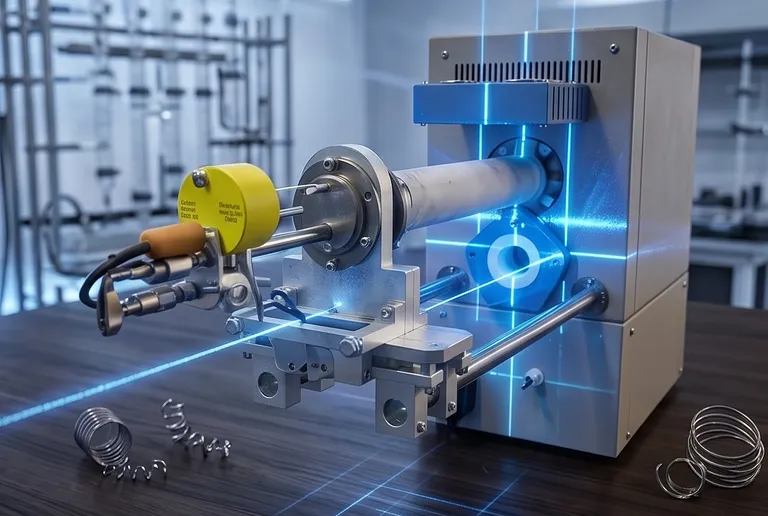
The difference between a failed experiment and a breakthrough often comes down to the environment in which the material is born. At THERMUNITS, we understand that thermal processing is a system, not just a set point.
Whether you are working with $Bi_2S_3$ nanobelts or complex semiconductor alloys, your research demands a furnace that can maintain the delicate balance between structural solidification and the preservation of nanoscopic properties.
Our range of Muffle, Vacuum, and Atmosphere furnaces is engineered to provide the exact thermal stability required for advanced material R&D. We provide the tools; you provide the discovery.
Ready to stabilize your material performance? Contact Our Experts
Quick Links
Suggested Products
Compact Spark Plasma Sintering SPS Furnace 1200 C Max 100 MPa Pressure High Speed Sintering System for Material Research High Temperature 1700C Vertical Tube Furnace for Powder Spherification and Material Sintering 1750C Compact Muffle Furnace 1.7L Ultra High Temperature Laboratory Sintering System for Advanced Ceramics and Material Science Research Ultra High Temperature Bench Top Muffle Furnace 1750C Sintering System with Kanthal Super Heating Elements and Precision Digital Control 1650C High Temperature Atmosphere Controlled Box Furnace with 65L Chamber for Advanced Material Sintering and Industrial Heat Treatment
ThermUnits
Last updated on Apr 14, 2026
Related Products
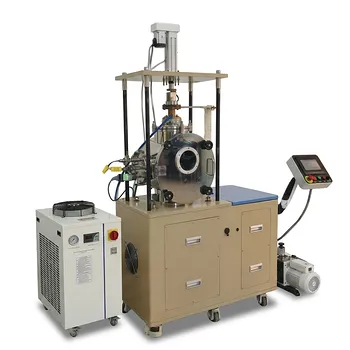
Compact Spark Plasma Sintering SPS Furnace 1200 C Max 100 MPa Pressure High Speed Sintering System for Material Research

High Temperature 1700C Vertical Tube Furnace for Powder Spherification and Material Sintering
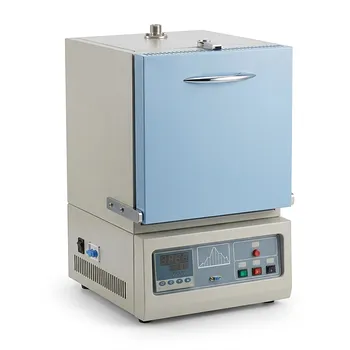
1750C Compact Muffle Furnace 1.7L Ultra High Temperature Laboratory Sintering System for Advanced Ceramics and Material Science Research
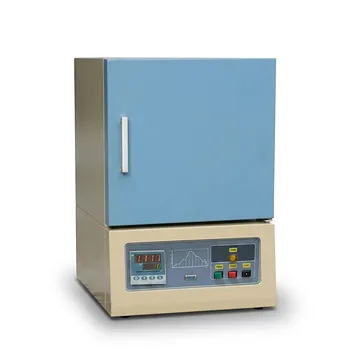
Ultra High Temperature Bench Top Muffle Furnace 1750C Sintering System with Kanthal Super Heating Elements and Precision Digital Control
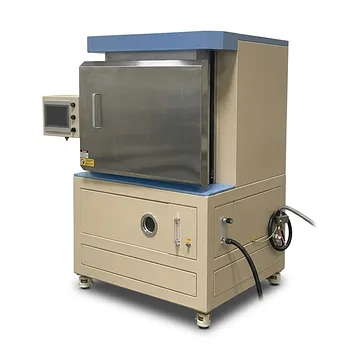
1650C High Temperature Atmosphere Controlled Box Furnace with 65L Chamber for Advanced Material Sintering and Industrial Heat Treatment
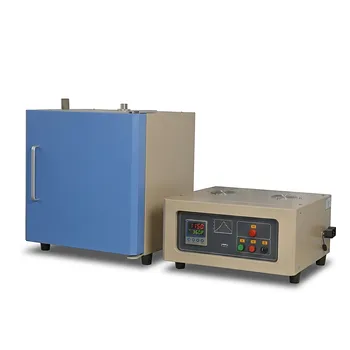
High Temperature Muffle Furnace with Alloy Chamber for Debinding and Sintering Applications
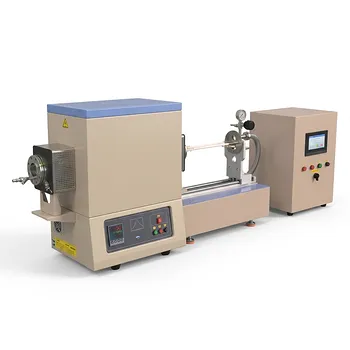
High Temperature Horizontal Electrical Assisted Sintering Furnace with 3KW Programmable Power Source for Advanced Ceramic Materials
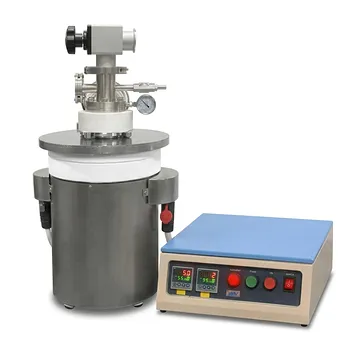
1100C High Temperature Vacuum Crucible Furnace with Quartz Chamber for Thermal Processing and Sintering
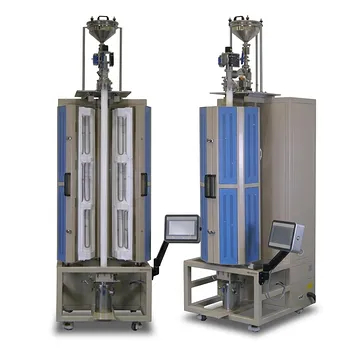
High Temperature Vertical Three Zone Powder Spheroidizing Furnace for Advanced Material Synthesis and Industrial Thermal Processing
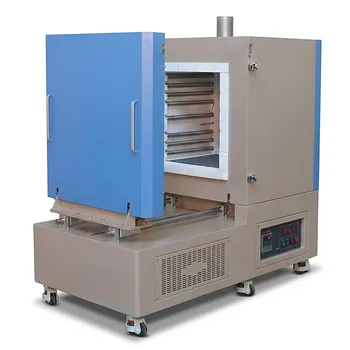
1200C Five Side Heating Muffle Furnace with Sliding Door 125L Volume High Temperature Heat Treatment System for Large Scale Sintering and Annealing
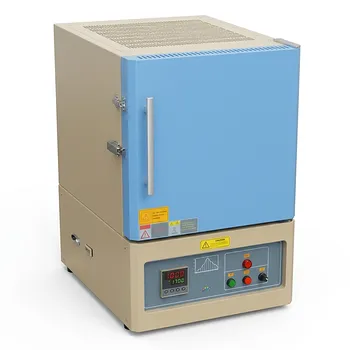
Large Bench Top 1700C High Temperature Muffle Furnace with 19L Chamber for Advanced Material Sintering and Annealing
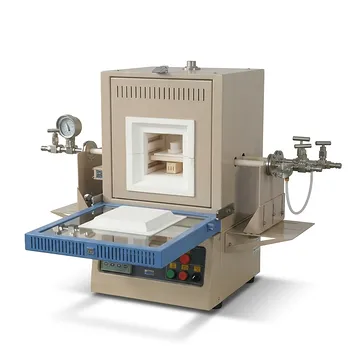
1700C Compact Hybrid Furnace with Dual Layer Box Sintering and Controlled Atmosphere Alumina Tubes
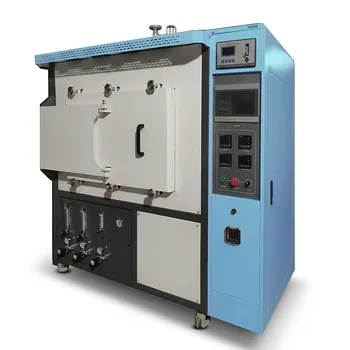
Roller Table Atmosphere Furnace 1500C High Temperature Battery Material Sintering System 112L Capacity
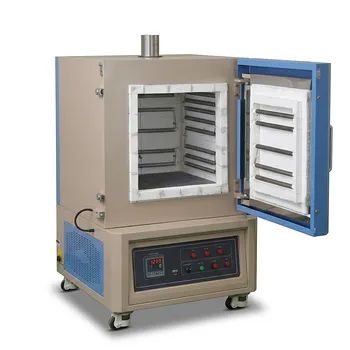
1200C High Temperature 125L Muffle Furnace 5 Side Heating for Large Batch Sintering with Optional Alloy Debinding Chamber
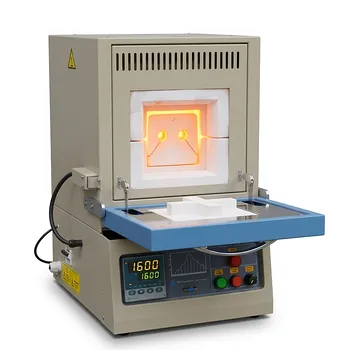
High Temperature Compact Muffle Furnace 1700 C with 30 Segment Programmable Controller and 1.7L Cubic Chamber
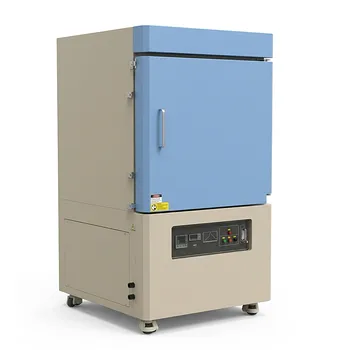
Industrial Large Box Furnace 1700C 216L High Temp Muffle Sintering System
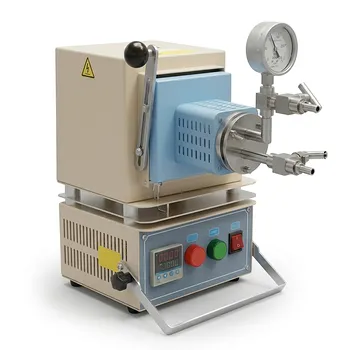
Compact Hybrid Muffle and Tube Furnace for 1000C Controlled Atmosphere Laboratory Material Sintering
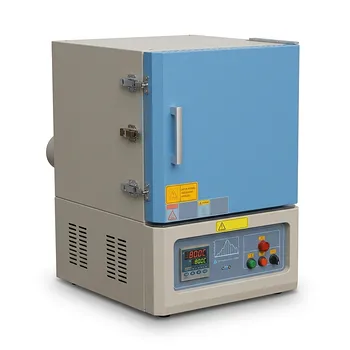
1800C Bench Top Muffle Furnace 18 Liters with Kanthal Super 1900 Heating Elements for High Purity Ceramic Sintering and Material Research
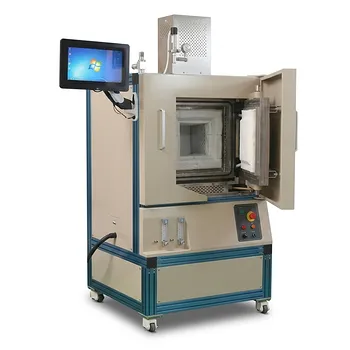
High Temperature Oxygen and Inert Atmosphere Controlled Furnace 8 Liter 1700C Sintering System for Advanced Materials RD
