The Invisible Boundary: Mastering Chemistry within the Architecture of Sintering
May 20, 2026
The Psychology of Dust
In the world of material science, sintering is an act of persuasion. You are taking millions of individual metallic particles—essentially dust—and convincing them to abandon their boundaries to become a single, coherent whole.
It is a process governed by thermodynamics, but in practice, it is a battle against the environment. Every grain of powder possesses a massive surface area, and that surface area is a target for oxygen.
Without a controlled atmosphere, you aren't building a component; you are growing a collection of oxides. To achieve structural integrity, the environment must be as precisely engineered as the part itself.
The Chemistry of Cohesion
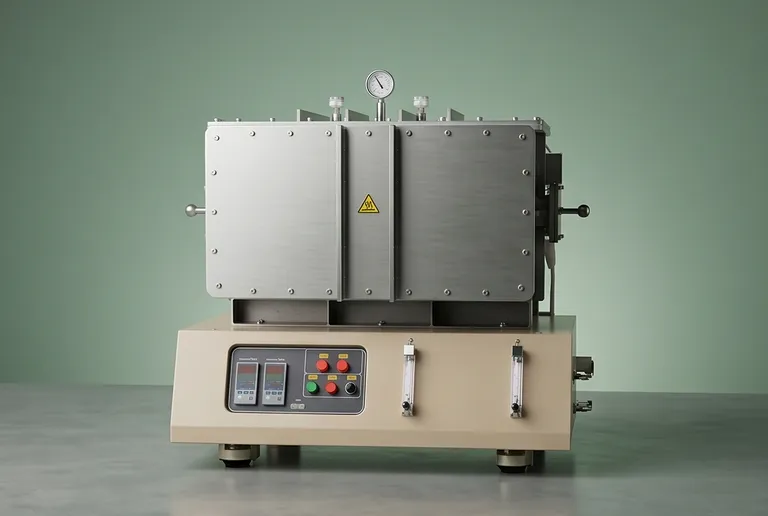
An atmosphere furnace is more than a heating vessel; it is a chemical shield. At temperatures reaching 1200°C to 1600°C, metal becomes hyper-reactive.
Defending the Surface
The primary role of the atmosphere is to displace oxygen. By flooding the chamber with inert or reducing gases, we stop the formation of weak oxide layers that act as "insulators" against metallurgical bonding.
The Reduction Ritual
In many cases, the powder arrives already "tainted" by thin layers of surface oxygen. Using a hydrogen-rich atmosphere creates a chemical cleaning effect. The hydrogen strips the oxygen away, leaving behind raw, virgin metal surfaces that are ready to fuse at the atomic level.
Purging the Past
Modern manufacturing relies on binders to hold shapes before they are "fired." An atmosphere furnace facilitates the clean removal of these sacrificial carbons. If these residues remain, they become internal flaws—tiny fracture points waiting for high stress to trigger a failure.
The Diffusion Paradox: Strength from the Void
The goal of sintering is high density. As heat is applied, atoms begin a slow migration. This movement, known as atomic diffusion, creates "necks" between the powder grains.
- Pore Elimination: As these necks grow, the empty spaces (micropores) are squeezed out of the material.
- Structural Metamorphosis: What was once a porous mass transforms into a singular microstructure with uniform mechanical properties.
- Dimensional Discipline: Precision is not just about the final size, but the uniformity of the shrinkage. A perfectly controlled atmosphere ensures that the part contracts at the same rate in every dimension.
The Economy of the Controlled Void
Engineering is the science of trade-offs. Choosing an atmosphere is a balance between the "ideal" chemistry and the "practical" reality of production.
| Factor | Inert Atmosphere (Argon/Nitrogen) | Reducing Atmosphere (Hydrogen) |
|---|---|---|
| Primary Goal | Protection against oxidation | Active removal of existing oxides |
| Risk Level | Low; safe and stable | High; requires specialized safety protocols |
| Material Fit | General alloys, stainless steels | High-performance R&D, specialized metals |
| Density Result | Standard industrial density | Near-theoretical maximum density |
The Engineer’s Choice
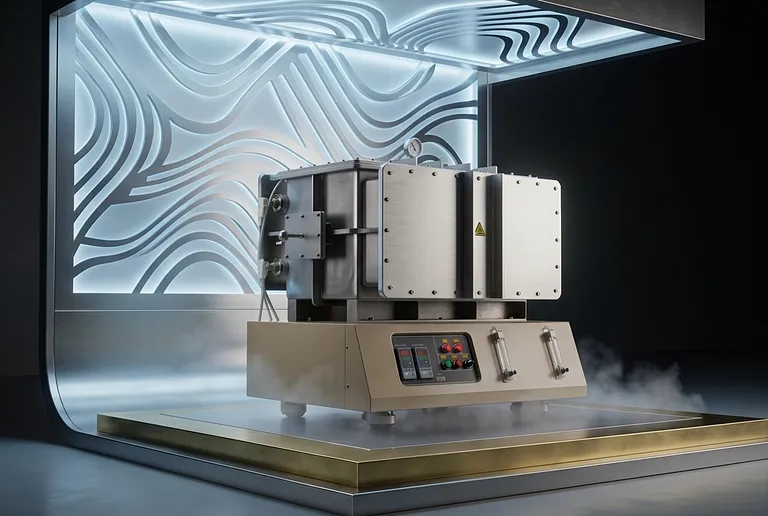
The difference between a part that holds and a part that fails often comes down to the sub-micron level. If the thermal gradient is off by a few degrees, or the gas flow stutters for a moment, the structural integrity of the component is compromised.
To master this process, the equipment must be an extension of the researcher’s intent—predictable, precise, and ruthless in its exclusion of contaminants.
Elevate Your Material Research with THERMUNITS
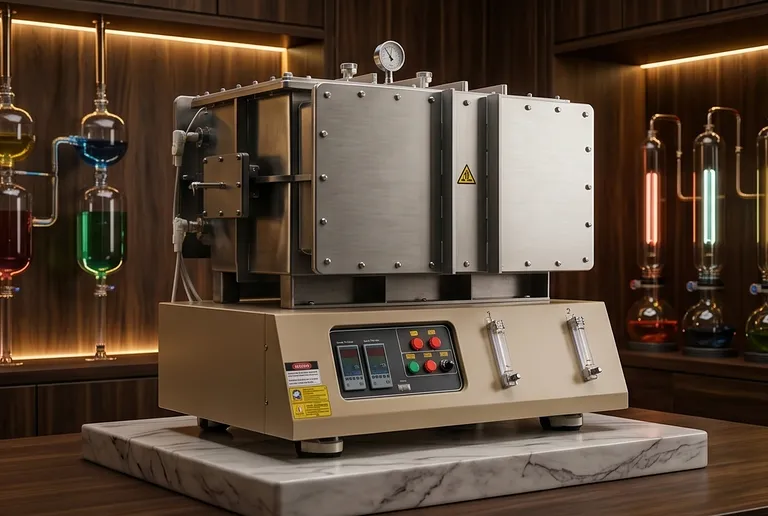
At THERMUNITS, we understand that the atmosphere is the most critical variable in the sintering equation. Our systems are designed to provide the rigorous chemical and thermal control required for the most demanding material science applications.
Our comprehensive catalog serves every stage of the R&D and industrial cycle:
- Precision Atmosphere & Vacuum Furnaces for high-integrity sintering.
- Tube & Rotary Kilns for continuous material processing.
- CVD/PECVD Systems for advanced surface engineering.
- VIM & Hot Press Furnaces for specialized metallurgical bonding.
Whether your priority is maximizing mechanical strength or achieving absolute dimensional precision, our engineering team ensures your thermal process is never the weak link.
Quick Links
Suggested Products
High Temperature Horizontal Electrical Assisted Sintering Furnace with 3KW Programmable Power Source for Advanced Ceramic Materials 1700C Compact Hybrid Furnace with Dual Layer Box Sintering and Controlled Atmosphere Alumina Tubes Roller Table Atmosphere Furnace 1500C High Temperature Battery Material Sintering System 112L Capacity Ultra High Temperature Bench Top Muffle Furnace 1750C Sintering System with Kanthal Super Heating Elements and Precision Digital Control Industrial Large Box Furnace 1700C 216L High Temp Muffle Sintering SystemFurther Reading
The Architecture of Atoms: Decoding the Thermal Divide Between Sintering and Firing The Invisible Architecture of a Smile: Engineering Dental Ceramics at 1700°C The Architecture of Equilibrium: Simulating the Extreme Geometry of Silicomanganese Reactions The Physics of Permanence: Why Bismuth Sulfide Requires a Thermal Metamorphosis The Physics of Clarity: Why 1300°C and $10^{-6}$ Bar are Non-Negotiable for Silica Glass
ThermUnits
Last updated on Apr 14, 2026
Related Products
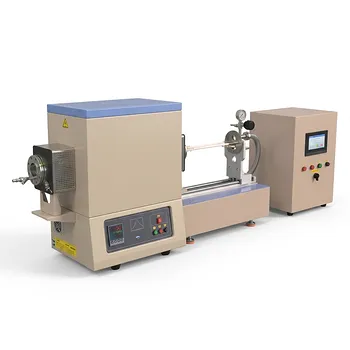
High Temperature Horizontal Electrical Assisted Sintering Furnace with 3KW Programmable Power Source for Advanced Ceramic Materials
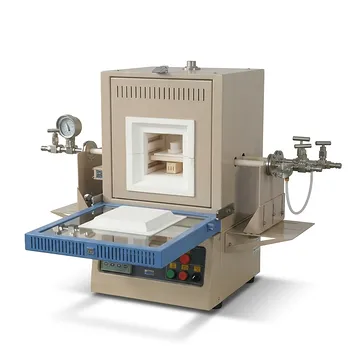
1700C Compact Hybrid Furnace with Dual Layer Box Sintering and Controlled Atmosphere Alumina Tubes
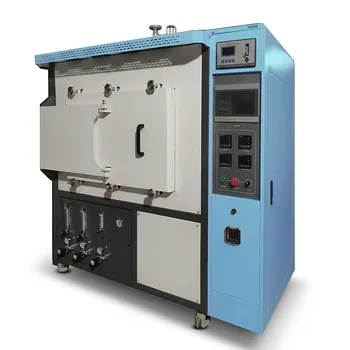
Roller Table Atmosphere Furnace 1500C High Temperature Battery Material Sintering System 112L Capacity
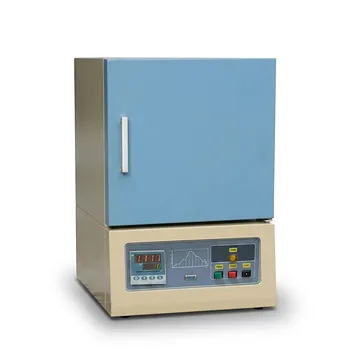
Ultra High Temperature Bench Top Muffle Furnace 1750C Sintering System with Kanthal Super Heating Elements and Precision Digital Control
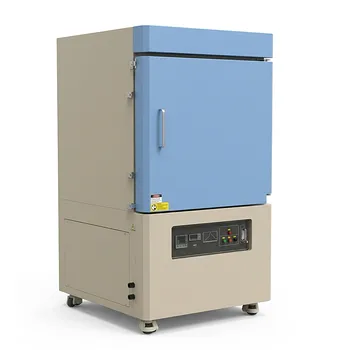
Industrial Large Box Furnace 1700C 216L High Temp Muffle Sintering System
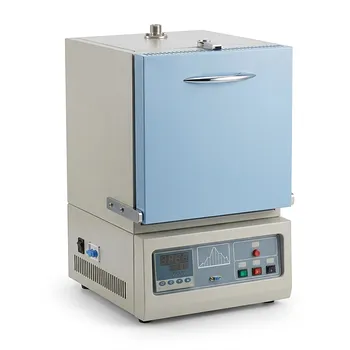
1750C Compact Muffle Furnace 1.7L Ultra High Temperature Laboratory Sintering System for Advanced Ceramics and Material Science Research

Compact High Temperature 1600C Tube Furnace with 50mm Alumina Tube and Vacuum Flanges for Material Sintering

High Temperature 1700C Vertical Tube Furnace for Powder Spherification and Material Sintering
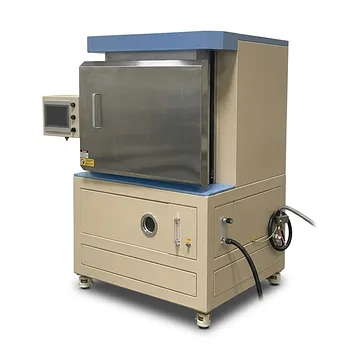
1650C High Temperature Atmosphere Controlled Box Furnace with 65L Chamber for Advanced Material Sintering and Industrial Heat Treatment
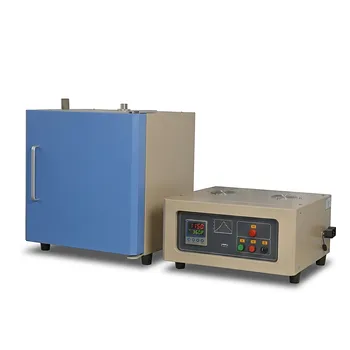
High Temperature Muffle Furnace with Alloy Chamber for Debinding and Sintering Applications
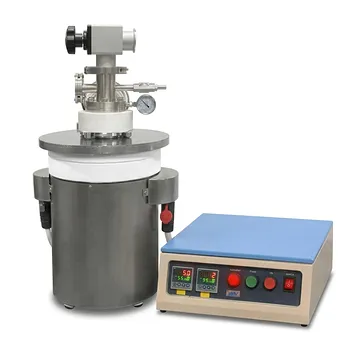
1100C High Temperature Vacuum Crucible Furnace with Quartz Chamber for Thermal Processing and Sintering
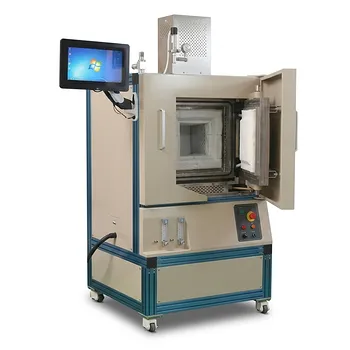
High Temperature Oxygen and Inert Atmosphere Controlled Furnace 8 Liter 1700C Sintering System for Advanced Materials RD
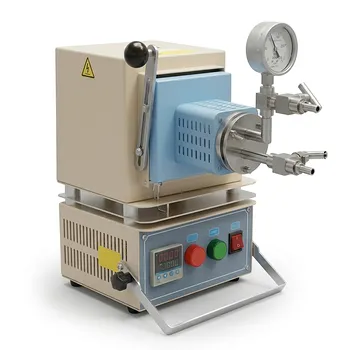
Compact Hybrid Muffle and Tube Furnace for 1000C Controlled Atmosphere Laboratory Material Sintering
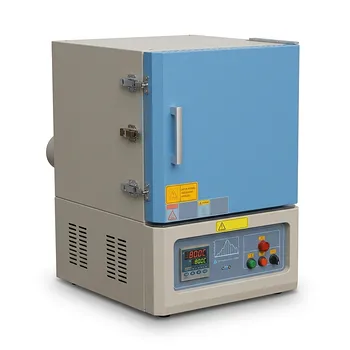
1800C Bench Top Muffle Furnace 18 Liters with Kanthal Super 1900 Heating Elements for High Purity Ceramic Sintering and Material Research
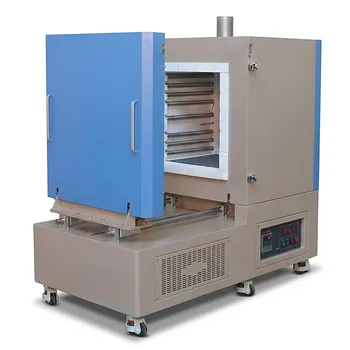
1200C Five Side Heating Muffle Furnace with Sliding Door 125L Volume High Temperature Heat Treatment System for Large Scale Sintering and Annealing
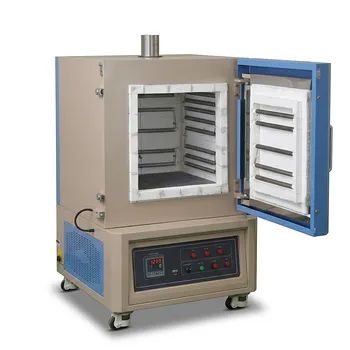
1200C High Temperature 125L Muffle Furnace 5 Side Heating for Large Batch Sintering with Optional Alloy Debinding Chamber
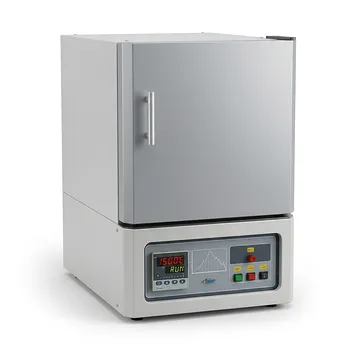
High Temperature 1500C Benchtop Muffle Furnace 3.6L Alumina Fiber Chamber Programmable Controller Sintering Annealing Carbonization Thermal Processing System
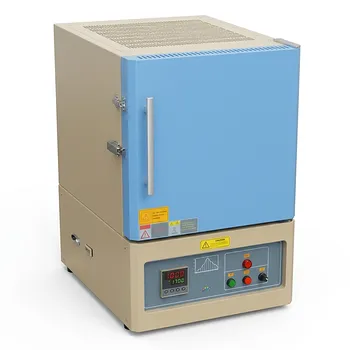
Large Bench Top 1700C High Temperature Muffle Furnace with 19L Chamber for Advanced Material Sintering and Annealing
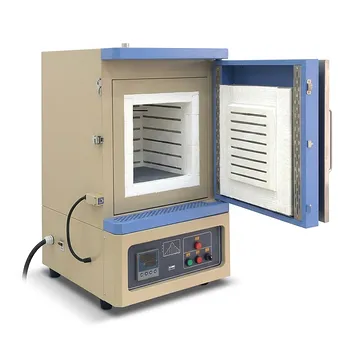
Five Side Heating Muffle Furnace High Purity Alumina Fiber 27L Chamber 1200C High Temperature Thermal Processing System for Sintering Annealing and Materials Research