How do laboratory vacuum pumps and gas circulation systems function during the initial stage of WTe2 thin film preparation? Master CVD Purity
Updated 3 months ago
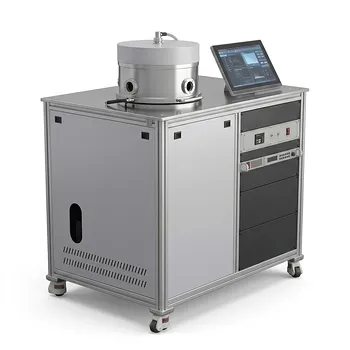
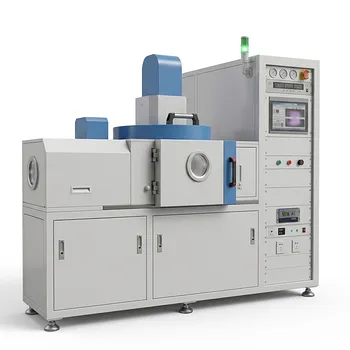
The initial stage of WTe2 thin film preparation relies on a high-precision synergy between laboratory vacuum pumps and gas circulation systems to eliminate atmospheric contaminants. By executing multiple "evacuation-argon filling" cycles, these systems reduce the internal pressure of the tube furnace to 1 Pa or lower before introducing high-purity inert gas. This rigorous process ensures that the growth environment is entirely free of oxygen and moisture, which is critical for the chemical stability of the precursors.
Core Takeaway: Laboratory vacuum and gas systems function as a dual-action purification mechanism, using deep evacuation and inert gas purging to prevent the oxidation of tellurium and ensure the high purity of nanocrystalline WTe2 thin films.
The Mechanism of Atmosphere Control
Achieving Ultra-Low Base Pressure
The process begins with laboratory vacuum pumps drawing the internal atmosphere of the tube furnace down to a near-vacuum state. Reaching a threshold of 1 Pa or lower is essential to remove the bulk of reactive oxygen and nitrogen molecules. This low base pressure establishes a "blank slate" for the chemical vapor deposition (CVD) process to follow.
The Evacuation-Argon Filling Cycle
Efficiency is achieved through a repetitive process known as "purging," where the system alternates between vacuuming and backfilling with high-purity argon. Each cycle exponentially dilutes any remaining contaminants that were not removed during the first evacuation. This redundancy is the standard protocol for ensuring a truly inert environment in sensitive semiconductor synthesis.
Protecting Material Integrity
Preventing Tellurium Oxidation
Tellurium powder, a key precursor for WTe2, is highly susceptible to oxidation when exposed to even trace amounts of oxygen at elevated temperatures. The vacuum system’s primary role is to shield this material from forming unwanted oxides, which would compromise the stoichiometry of the film. Without this inert atmosphere, the resulting thin film would suffer from structural defects and reduced electrical performance.
Ensuring Nanocrystalline Purity
The gas circulation system maintains a continuous flow of high-purity argon to carry vapors and maintain a stable pressure environment. By controlling the purity of the gas stream, the system prevents cross-contamination during the growth phase. This level of control is what allows for the production of high-quality nanocrystalline thin films with consistent electronic properties.
Understanding the Trade-offs and Limitations
The Risk of Residual Contamination
While the 1 Pa threshold is standard, any micro-leaks in the gas lines or furnace seals can reintroduce oxygen during the heating phase. Even if the initial vacuum is deep, the integrity of the seals must be verified to prevent "virtual leaks" or outgassing from the tube walls.
Balancing Purge Time and Throughput
Executing multiple "evacuation-filling" cycles increases the purity of the environment but also extends the preparation time. Operators must find the balance between the number of cycles and the required film quality, as excessive cycling may lead to diminishing returns in purity while delaying production.
How to Apply This to Your Project
To achieve the best results in WTe2 thin film preparation, consider your specific experimental goals when configuring your vacuum and gas systems.
- If your primary focus is Maximum Crystal Purity: Perform at least three to five evacuation-argon cycles and use a secondary gas purification filter to ensure the argon is 99.999% pure.
- If your primary focus is High Throughput: Optimize the vacuum pump speed to reach 1 Pa more rapidly, allowing for fewer but more efficient purging cycles without sacrificing the inert state.
- If your primary focus is Material Research on New Precursors: Monitor the pressure stability over time to ensure that no outgassing from the furnace components is interfering with the chemical reaction.
Proper management of the initial vacuum phase is the foundational step in transforming raw tellurium and tungsten precursors into high-performance nanocrystalline films.
Summary Table:
| System Component | Primary Function | Critical Parameter | Key Benefit |
|---|---|---|---|
| Vacuum Pump | Atmosphere Removal | < 1 Pa Pressure | Eliminates oxygen and moisture |
| Gas Circulation | Purging & Vapour Transport | 99.999% Argon Purity | Prevents tellurium oxidation |
| Purge Cycle | Contaminant Dilution | 3-5 Repetitions | Ensures high-purity nanocrystalline growth |
| Sealing System | Atmosphere Integrity | Leak-free Interface | Prevents secondary contamination |
Elevate Your Nanomaterial Synthesis with THERMUNITS
Precise atmosphere control is the foundation of high-performance $WTe_2$ thin film preparation. THERMUNITS is a leading manufacturer of high-temperature laboratory equipment, providing the advanced thermal processing solutions required for cutting-edge material science and industrial R&D.
From high-vacuum Tube Furnaces and CVD/PECVD systems to specialized Atmosphere and Vacuum Induction Melting (VIM) furnaces, our equipment is engineered to achieve the ultra-low base pressures and high-purity inert environments your research demands.
Why choose THERMUNITS?
- Superior Purity: Optimized gas circulation systems to prevent oxidation of sensitive precursors like Tellurium.
- Comprehensive Range: Solutions including Muffle, Rotary, Hot Press, and Dental furnaces.
- R&D Expertise: Tailored equipment for semiconductor synthesis and nanocrystalline material growth.
Ready to achieve superior heat treatment results? Contact our technical experts today to discuss your project requirements and discover how our thermal solutions can enhance your lab's efficiency!
References
- Zhisong Yu, Yue Wang. Direct Growth of Low Thermal Conductivity WTe2 Nanocrystalline Films on W Films. DOI: 10.3390/nano14050401
Mentioned Products
- Inclined Rotary Plasma Enhanced Chemical Vapor Deposition PECVD System for Thin Film Deposition and Nanomaterial Synthesis
- Radio Frequency Plasma Enhanced Chemical Vapor Deposition RF PECVD System for Laboratory and Industrial Thin Film Growth
People Also Ask
- What types of materials can be deposited using PECVD systems? Explore Versatile Thin-Film Coating Solutions
- How does the non-equilibrium nature of plasma facilitate low-temperature deposition in PECVD systems? Pro Tips for R&D
- How is Plasma-Enhanced Chemical Vapor Deposition (PECVD) utilized in the production of photovoltaic solar cells? Study
- How do RF frequency and power settings influence the characteristics of a PECVD process? Master Quality & Efficiency
- What are the advantages of PECVD systems for nano flame retardant films? Protect Heat-Sensitive Polymers with Precision

Tech Team · ThermUnits
Last updated on Jun 03, 2026