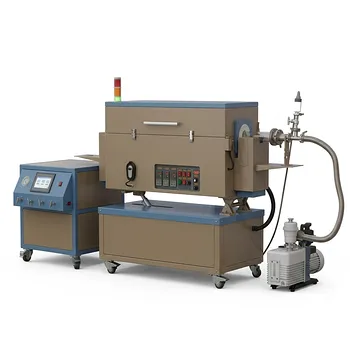
How does the non-equilibrium nature of plasma facilitate low-temperature deposition in PECVD systems? Pro Tips for R&D
Updated 5 months ago
The non-equilibrium nature of plasma allows Plasma-Enhanced Chemical Vapor Deposition (PECVD) to function at low temperatures by using high-energy electrons to drive chemical reactions. In a PECVD system, electrons are accelerated to extreme temperatures while the bulk gas and substrate remain relatively cool. This allows for the creation of reactive radicals and precursors without needing the intense thermal energy required in traditional, purely thermal CVD.
The core advantage of PECVD is the decoupling of chemical activation energy from the substrate temperature. By leveraging "hot" electrons within a "cold" gas, the system can deposit high-quality films on temperature-sensitive materials that would otherwise be destroyed by high heat.
The Mechanics of Non-Equilibrium Plasma
Defining Thermal Disparity
In a non-equilibrium (cold) glow discharge, the different species within the plasma do not share a single temperature.
Electrons reach extreme temperatures of tens of thousands of kelvins (several electron-volts) because their low mass allows them to be easily accelerated by electric fields.
Conversely, the neutral gas molecules and ions remain near room temperature or are heated only moderately, typically staying between room temperature and 400°C.
Impact Collisions and Dissociation
The high-energy electrons serve as the primary "engines" of the chemical process.
Through electron impact collisions, these energetic electrons transfer their kinetic energy to the precursor gas molecules, breaking their chemical bonds.
This process generates highly reactive radicals and ions in the gas phase, effectively preparing the chemistry for deposition without requiring the substrate to provide thermal energy.
The Decoupling of Activation Energy
Gas-Phase Activation vs. Surface Temperature
In standard Thermal CVD, the substrate must be heated to extreme levels to provide the activation energy necessary to break precursor bonds.
In PECVD, the plasma provides this activation energy directly in the gas phase.
This shift allows the substrate's role to change from an energy source to a surface for film growth, significantly lowering the overall thermal budget of the manufacturing process.
Enabling Temperature-Sensitive Substrates
Because the bulk gas and the substrate remain cool, PECVD can deposit thin films on materials with low melting points or low glass transition temperatures.
This is a critical requirement for flexible electronics, polymers, and advanced semiconductor nodes where high heat would cause layers to interdiffuse or melt.
The non-equilibrium state effectively bypasses the thermodynamic limits of traditional chemical reactions.
Understanding the Trade-offs and Challenges
Plasma-Induced Damage
While low-temperature operation is a major benefit, the presence of energetic ions can lead to physical bombardment of the substrate.
High-energy ion impact can cause lattice defects, trapped charges, or surface roughness, which may degrade the electrical performance of sensitive devices.
Film Composition and Impurities
Lower deposition temperatures often result in higher concentrations of residual precursors, such as hydrogen, within the film.
Compared to high-temperature CVD, PECVD films may exhibit lower density or different stoichiometric ratios, requiring careful tuning of the RF power and pressure to achieve the desired material properties.
How to Apply This to Your Project
When selecting a deposition strategy, consider how the non-equilibrium nature of PECVD aligns with your material constraints and performance requirements.
- If your primary focus is protecting temperature-sensitive substrates: Utilize PECVD to maintain temperatures below 250°C, ensuring that polymers or pre-processed layers remain structurally intact.
- If your primary focus is maximizing film density: Adjust the bias voltage to increase ion bombardment, which can "pack" the film tighter even at low temperatures, though you must monitor for surface damage.
- If your primary focus is high-purity dielectric layers: Be prepared to perform post-deposition annealing or use specific precursor chemistries to reduce hydrogen content that is common in low-temperature plasma processes.
By mastering the balance between electron energy and surface temperature, PECVD enables the fabrication of complex, multi-layered devices that are otherwise impossible to create.
Summary Table:
| Feature | Non-Equilibrium Plasma Mechanism | Impact on Deposition |
|---|---|---|
| Energy Carrier | High-energy "hot" electrons | Drives chemical dissociation without bulk heat |
| Bulk Temperature | Low (Room temp to 400°C) | Protects polymers and flexible electronics |
| Activation Energy | Decoupled from substrate heat | Enables reactions at significantly lower thermal budgets |
| Key Outcome | Gas-phase radical generation | High-quality film growth on sensitive materials |
| Process Tuning | RF Power & Pressure control | Balances film density vs. plasma-induced damage |
Elevate Your Thin-Film Research with THERMUNITS
As a leading manufacturer of high-temperature laboratory equipment, THERMUNITS provides state-of-the-art thermal processing solutions tailored for material science and industrial R&D. Our high-precision CVD/PECVD systems are engineered to leverage non-equilibrium plasma dynamics, ensuring superior film quality even on the most sensitive substrates.
Whether you need Muffle, Vacuum, Atmosphere, Tube, or Hot Press furnaces, or specialized equipment like vacuum induction melting furnaces (VIM) and electric rotary kilns, we offer the technical expertise to optimize your heat treatment workflows.
Ready to enhance your lab's capabilities? Contact us today to discuss your specific thermal processing needs with our engineering team!
Mentioned Products
- Inclined Rotary Plasma Enhanced Chemical Vapor Deposition PECVD System for Thin Film Deposition and Nanomaterial Synthesis
- Radio Frequency Plasma Enhanced Chemical Vapor Deposition RF PECVD System for Laboratory and Industrial Thin Film Growth
- Chemical Vapor Deposition CVD System Slide PECVD Tube Furnace with Liquid Gasifier PECVD Machine
- 1200C Max Compact Auto-Sliding PECVD Furnace with 2 Inch Tube and Vacuum Pump
- 1200C Dual Sliding Tube Furnace with Dual Tubes and Flanges for PECVD Processes
People Also Ask
- What types of materials can be deposited using PECVD systems? Explore Versatile Thin-Film Coating Solutions
- How is Plasma-Enhanced Chemical Vapor Deposition (PECVD) utilized in the production of photovoltaic solar cells? Study
- How do RF frequency and power settings influence the characteristics of a PECVD process? Master Quality & Efficiency
- What are the advantages of PECVD systems for nano flame retardant films? Protect Heat-Sensitive Polymers with Precision
- What are the benefits of using PECVD for optical and photonic coatings? Achieve High-Precision Thin-Film Deposition

Tech Team · ThermUnits
Last updated on Apr 14, 2026
Related Products
Inclined Rotary Plasma Enhanced Chemical Vapor Deposition PECVD System for Thin Film Deposition and Nanomaterial Synthesis
Radio Frequency Plasma Enhanced Chemical Vapor Deposition RF PECVD System for Laboratory and Industrial Thin Film Growth
Chemical Vapor Deposition CVD System Slide PECVD Tube Furnace with Liquid Gasifier PECVD Machine
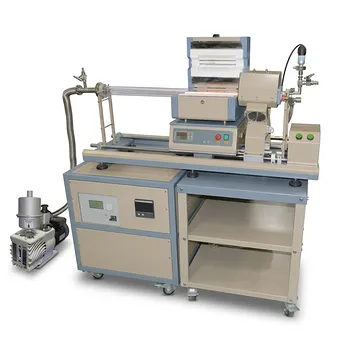
1200C Max Compact Auto-Sliding PECVD Furnace with 2 Inch Tube and Vacuum Pump
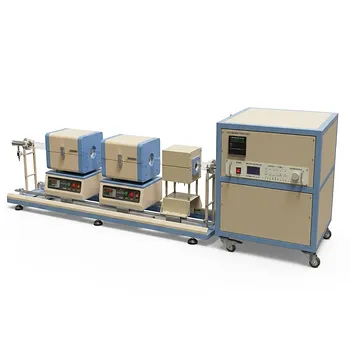
1200C Dual Sliding Tube Furnace with Dual Tubes and Flanges for PECVD Processes
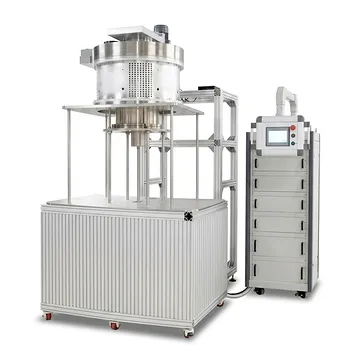
915MHz MPCVD Diamond Machine Microwave Plasma Chemical Vapor Deposition System Reactor
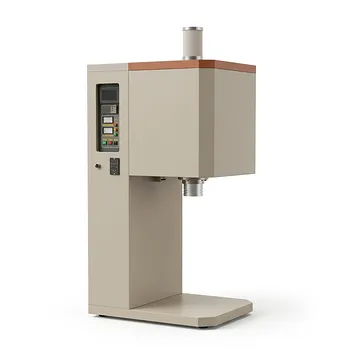
Vertical Openable Tube Furnace 0-1700c High Temperature Laboratory System for CVD and Vacuum Heat Treatment
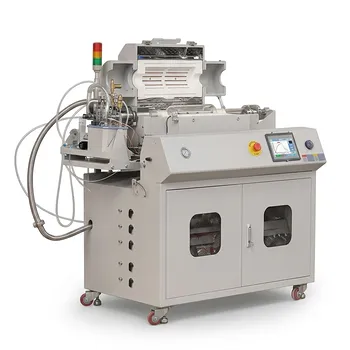
Versatile Chemical Vapor Deposition Tube Furnace System for Advanced Material Research and Industrial Coating Processes
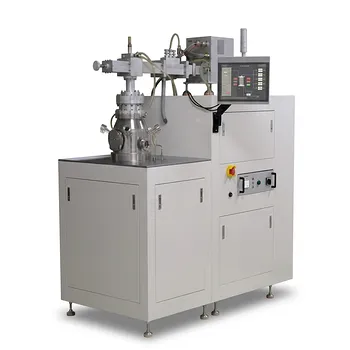
Cylindrical Resonator MPCVD Machine System for Microwave Plasma Chemical Vapor Deposition and Lab Diamond Growth
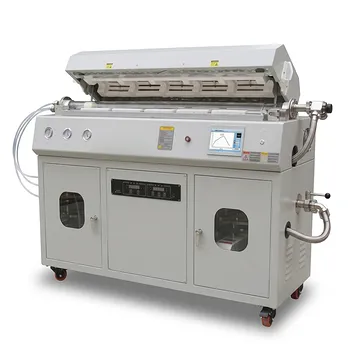
Multi Heating Zones CVD Tube Furnace System for Precision Chemical Vapor Deposition and Advanced Material Synthesis
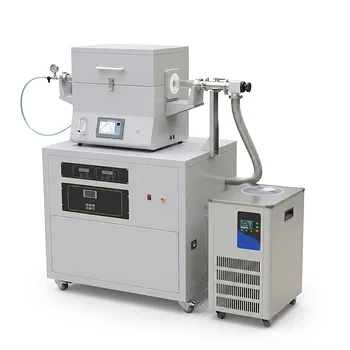
Split Chamber CVD Tube Furnace with Vacuum Station Chemical Vapor Deposition System Machine
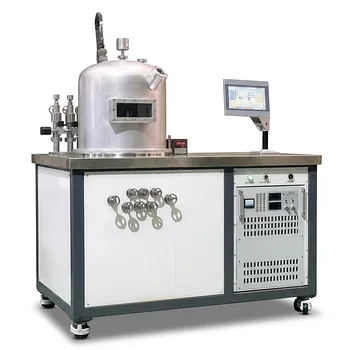
HFCVD Machine System for Nano Diamond Coating on Drawing Dies and Industrial Tools
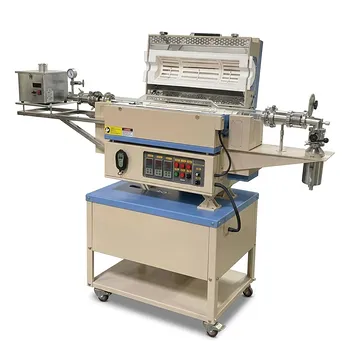
5 Inch Rotary Tube Furnace with Automatic Feeding and Receiving System 1200C Three Zone CVD Powder Processing
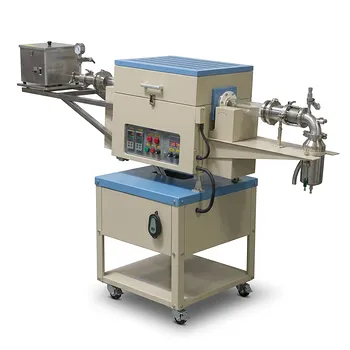
Two Zone Rotary CVD Furnace with Automatic Feeding and Receiving System for Powder Processing

High Temperature 1700C Tube Furnace with High Vacuum Turbomolecular Pump System and Multi Channel Mass Flow Controller Gas Mixer
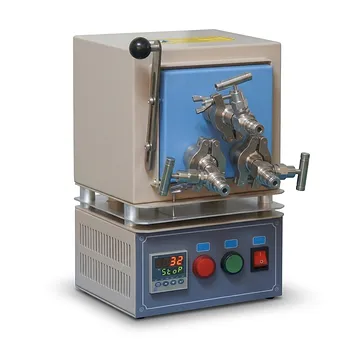
Triple Tube Compact Hybrid Muffle Furnace 1000C High Vacuum Thermal Processing System
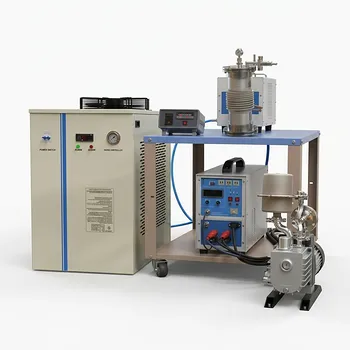
Induction Heating System with Temperature Control for High Temperature Vacuum Sintering and Melting
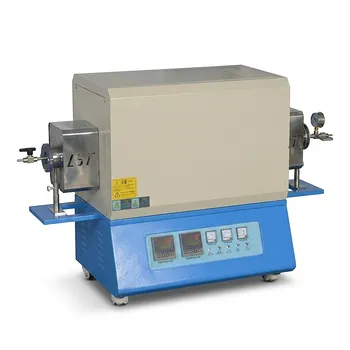
High Temperature Dual Zone Vacuum Tube Furnace for Material Research and CVD Processing
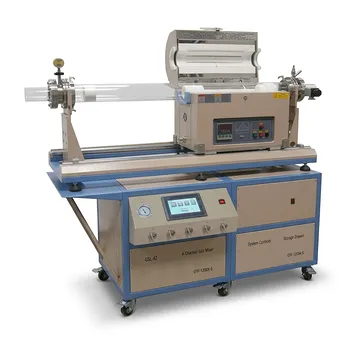
Dual Tube 100mm 80mm CVD Sliding Furnace with 4 Channel Gas Mixing and Vacuum System