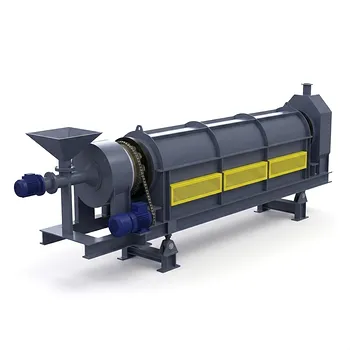
How do internal alternating plates guide particle movement in a rotary furnace? Optimize Heat Exchange & Flow Control
Updated 3 months ago
The movement of particles within a rotary calcination furnace is driven by a sophisticated "spiral-path" mechanism created by alternating plate sizes and specialized fin orientations. This design forces catalyst particles to cycle between the inner and outer edges of the heating surfaces as they descend through the furnace, maximizing heat exchange and ensuring uniform processing.
Core Takeaway: By utilizing alternating large and small plates with opposing fin configurations, the furnace creates a controlled, high-contact environment that optimizes heat transfer and allows for precise management of particle residence time.
The Mechanics of Spiral Particle Flow
Small Plates and Inward Migration
The small plates within the furnace are equipped with external fins designed to capture and direct material. As these plates rotate, the fins guide the catalyst particles toward the inner edges of the plate surface.
Once the particles reach the inner edge, they fall via gravity to the next level in the sequence. This inward movement ensures that the material does not simply sit at the periphery but is actively moved across the heated surface.
Large Plates and Outward Migration
In direct contrast to the small plates, the large plates feature internal fins. These fins are oriented to transport the falling particles from the center toward the outer edges of the plate.
This alternating "in-and-out" motion creates a complex spiral flow path. By constantly shifting the particles' radial position, the system dramatically increases the effective contact time between the particles and the heating surfaces.
Optimizing Residence Time and Heat Exchange
The Role of Baffle Angles
The efficiency of this movement is heavily influenced by the baffle angle of the fins. Research indicates that the specific angle (often ranging between 40 and 50 degrees) directly dictates the radial velocity of the particles.
Adjusting this angle allows operators to align particle trajectories more closely with the intended design flow. This precision is vital for maintaining the "spiral" rather than allowing particles to move erratically.
Controlling Residence Time
The baffle angle is the primary lever for controlling residence time—the duration the catalyst remains on the plates. A higher baffle angle (closer to 50 degrees) reduces the tendency of particles to migrate too quickly toward the edges.
By slowing the radial migration, the system ensures that every particle undergoes the necessary calcination effect. This prevents under-processing and ensures the chemical properties of the catalyst are uniform.
Understanding the Trade-offs
Flow Control vs. Throughput
While increasing the baffle angle improves control and residence time, it can potentially limit the overall volumetric throughput of the furnace. If the angle is too steep, particles move too slowly, creating a bottleneck that reduces the amount of material processed per hour.
Mechanical Wear and Particle Integrity
The constant redirection of particles against fins and plates increases mechanical friction. While this is necessary for heat exchange, it can lead to the gradual wear of the internal fins or the unintended attrition (breaking) of delicate catalyst particles if the rotation speed or angles are not perfectly calibrated.
How to Apply This to Your Process
Choosing the right configuration depends on your specific material properties and thermal requirements.
- If your primary focus is Maximum Heat Uniformity: Prioritize a design with a higher number of alternating levels to ensure the "spiral" path is repeated as many times as possible.
- If your primary focus is High-Volume Throughput: Optimize for a lower baffle angle (closer to 40 degrees) to increase radial velocity and move material through the furnace faster.
- If your primary focus is Precise Chemical Transformation: Use a higher baffle angle (closer to 50 degrees) to extend residence time and ensure every particle reaches the target temperature.
The synergy between plate geometry and fin orientation transforms a simple rotary motion into a precision-engineered thermal treatment system.
Summary Table:
| Component | Design Feature | Particle Movement | Key Benefit |
|---|---|---|---|
| Small Plates | External Fins | Inward Migration | Directs material to the inner edge for gravity descent. |
| Large Plates | Internal Fins | Outward Migration | Expands contact area with heated surfaces via spiral flow. |
| Baffle Angles | 40° - 50° Pitch | Velocity Control | Precise management of residence time and thermal uniformity. |
| Rotation Speed | Variable | Radial Momentum | Balances volumetric throughput with mechanical integrity. |
Elevate Your Thermal Processing with THERMUNITS Precision Engineering
Are you looking to optimize heat uniformity and material throughput in your R&D or industrial processes? THERMUNITS is a leading manufacturer specializing in high-performance laboratory heat treatment equipment designed for the rigorous demands of material science.
Our comprehensive range of thermal solutions includes:
- Advanced Furnaces: Muffle, Vacuum, Atmosphere, Tube, and Rotary Furnaces.
- Specialized Systems: CVD/PECVD systems, Dental Furnaces, and Vacuum Induction Melting (VIM) furnaces.
- Industrial Solutions: Electric rotary kilns, Hot Press furnaces, and high-quality thermal elements.
Whether you need to master the "spiral-path" flow in a rotary kiln or require precise atmosphere control for CVD, our expert team provides the technical excellence and durable equipment your research deserves.
Contact our specialists today to find your custom solution and see how our expertise can drive your next breakthrough.
References
- Tiezhuang Zhou, Wenchun Jiang. Impact of Structure Parameters on the Critical Performance of a Novel Calciner—A DEM-Based Study. DOI: 10.2478/pjct-2024-0036
Mentioned Products
- 900°C Max Rotary Tube Furnace with 8 Inch 310S Alloy Tube and Optional Multi Zone Heating for Industrial Material Calcination
- Dual Zone Rotary Tube Furnace for Uniform Powder Calcination 1000C 2 Inch Quartz Tube
- 4 Inch Two Zone Rotary CVD Tube Furnace for High Temperature Battery Material Synthesis and Advanced Material Calcination
- Electric Rotary Kiln Continuous Working Small Rotary Furnace Heating Pyrolysis Plant
- 1500C 3-Zone Rotary Tube Furnace 60mm with Automatic Powder Feeding and Receiving System for Continuous Material Synthesis
People Also Ask
- How does a rotary tube furnace improve the processing of granular materials? Enhance Uniformity and Reaction Kinetics
- Why use a rotary tube furnace for FACS carbonization? Ensure uniform morphology and prevent sphere agglomeration.
- Why is the precise optimization of residence time essential in the catalyst calcination process? Maximize Your Yields.
- In what ways do rotary tube furnaces enhance chemical and specialty mineral processing? Drive Precision and Uniformity.
- What parameters must operators control to maintain product quality in a rotary furnace? Master Your Heat Treatment.

Tech Team · ThermUnits
Last updated on Jun 03, 2026
Related Products
900°C Max Rotary Tube Furnace with 8 Inch 310S Alloy Tube and Optional Multi Zone Heating for Industrial Material Calcination
Dual Zone Rotary Tube Furnace for Uniform Powder Calcination 1000C 2 Inch Quartz Tube
4 Inch Two Zone Rotary CVD Tube Furnace for High Temperature Battery Material Synthesis and Advanced Material Calcination
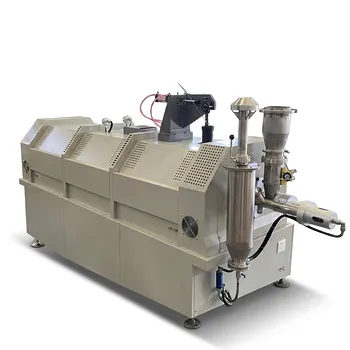
Electric Rotary Kiln Continuous Working Small Rotary Furnace Heating Pyrolysis Plant
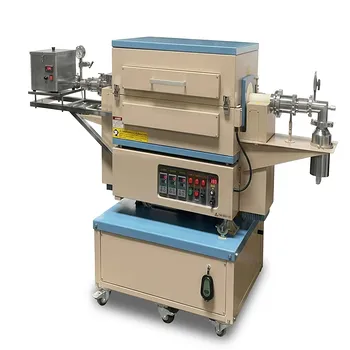
1500C 3-Zone Rotary Tube Furnace 60mm with Automatic Powder Feeding and Receiving System for Continuous Material Synthesis
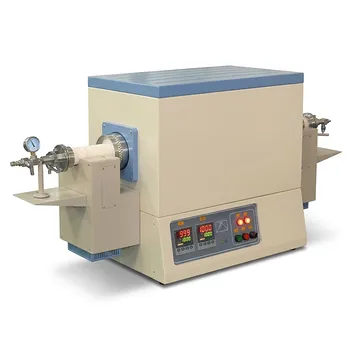
High Temperature 1700C Dual Zone Rotary Tube Furnace with 60mm Alumina Tube and Precision Rotation Control
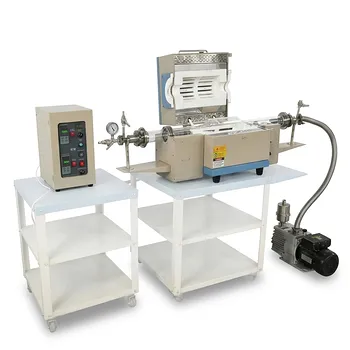
Two Zone Rotary Tube Furnace for Powder CVD Coating and Core Shell Material Synthesis 1100C
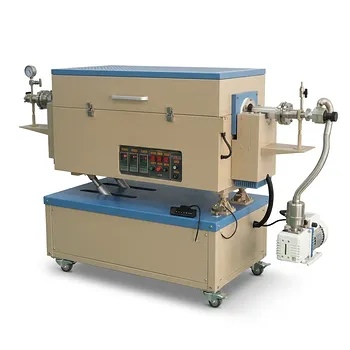
Three Zone Rotary Tube Furnace for High Temperature Powder Processing and Material Research
Desktop Induction Melting Furnace with Automatic Rotary Casting Function up to 1700C for Advanced Metal Alloy Research
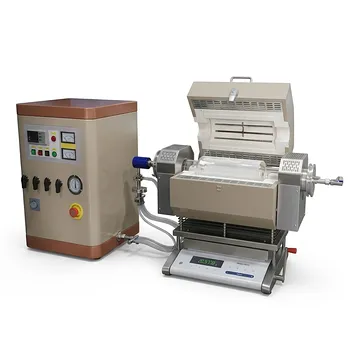
Mini Rotary Tubular Furnaces for Precision Powder Heat Treatment and Thermogravimetric Analysis
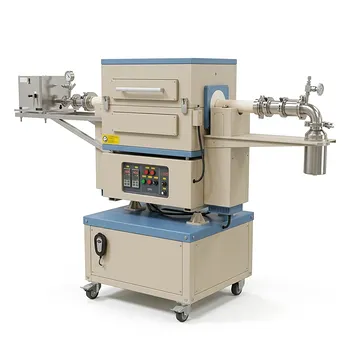
1500C Max Dual Zone Rotary Tube Furnace with 60 mm OD Alumina Tube for High Temperature Material Synthesis
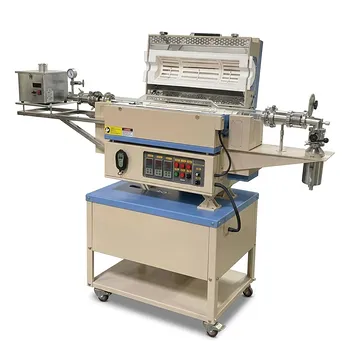
5 Inch Rotary Tube Furnace with Automatic Feeding and Receiving System 1200C Three Zone CVD Powder Processing
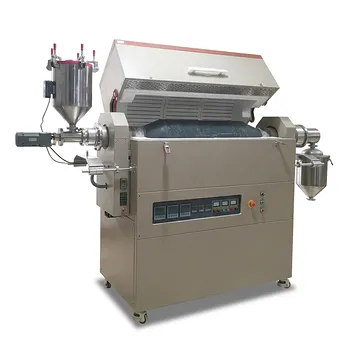
High Temperature Tilting Rotary Tubular Furnace for Continuous Powder Thermal Processing and Controlled Atmosphere Sintering
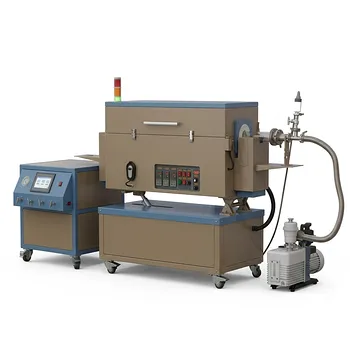
5 Inch Three Zone Rotary Tube Furnace with Integrated Gas Delivery System and 1200C Capability for Advanced Material CVD Processing
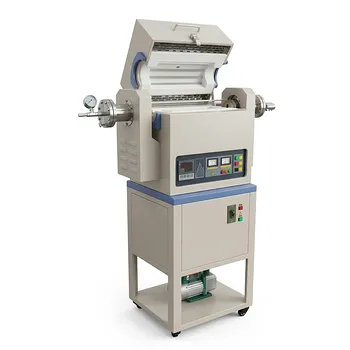
High Temperature Rotary Tilt Tubular Furnaces for Advanced Powder Sintering and Material Processing
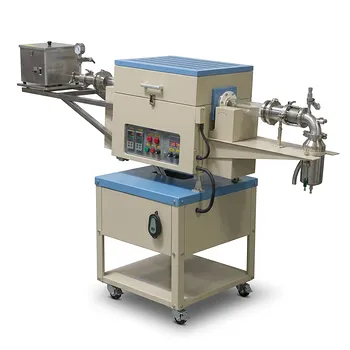
Two Zone Rotary CVD Furnace with Automatic Feeding and Receiving System for Powder Processing
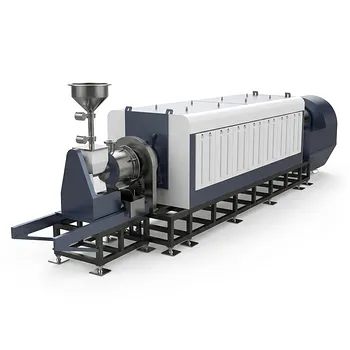
Electric Rotary Kiln Small Rotary Furnace Biomass Pyrolysis Plant
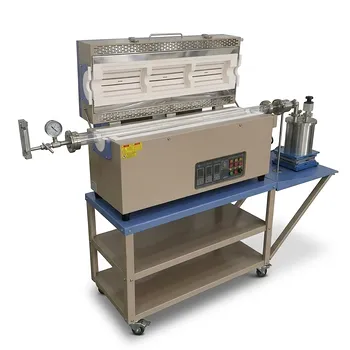
5 Inch Two Zone Rotary Tube Furnace 1100C for Powder CVD and Material Synthesis
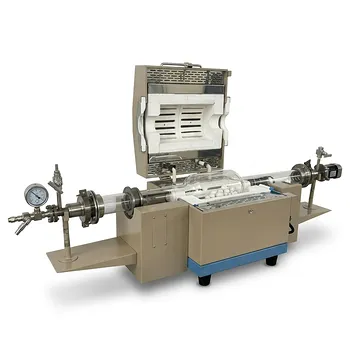
High Temperature Rotary Tube Furnace with Integrated Ball Milling and Gas Flow Function for Powder Nitriding