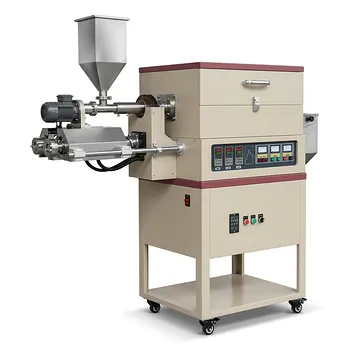
How does a rotary tube furnace improve the processing of granular materials? Enhance Uniformity and Reaction Kinetics
Updated 5 months ago
The rotation of a rotary tube furnace fundamentally transforms material processing by replacing static heating with dynamic mechanical agitation. By continuously tumbling granular materials, these furnaces ensure that every particle is uniformly exposed to the heat source and the surrounding process atmosphere. This eliminates the thermal gradients and "dead zones" inherent in stationary systems, resulting in superior product consistency and higher purity.
Rotary tube furnaces leverage continuous mechanical movement to overcome the heat transfer limitations of static beds. By ensuring dynamic mixing and constant gas-solid interaction, these systems provide the thermal uniformity and precise reaction kinetics essential for high-quality powder and granular synthesis.
Achieving Superior Thermal Uniformity
Eliminating Internal Temperature Gradients
In static furnaces, material in the center of a crucible often remains cooler than the material on the outer edges, leading to incomplete reactions. Rotary motion ensures that the entire batch is mixed, preventing the formation of hotspots and ensuring that every grain reaches the target temperature simultaneously.
Maximizing Surface Area Exposure
The continuous tumbling action of the tube constantly brings fresh material to the surface of the bed. This dynamic exposure allows for more efficient heat absorption and ensures that the reaction atmosphere reaches all particle surfaces, rather than just the top layer of a static pile.
Handling Specialized Material Behaviors
Some materials become "sticky" or tend to clump during thermal processing. Many rotary furnaces utilize internal lifters or specialized tube geometries to break up aggregates, ensuring the material remains granular and free-flowing throughout the cycle.
Enhancing Reaction Kinetics and Process Control
Optimizing Gas-Solid Interactions
Many processes, such as carbothermal reduction, require precise interaction between solid granules and process gases like hydrogen or inert nitrogen. The rolling motion of the furnace tube creates a "fluidized-like" environment that maximizes the contact time and surface area available for these chemical reactions.
Precision Residence Time Management
The throughput and quality of the material are directly influenced by how long it stays in the heated zone. By adjusting the rotation speed (typically between 0.5 to 5 RPM) and the tilt angle of the tube, operators can precisely control the material flow rate and residence time.
Controlled Microenvironments for Nanomaterials
For advanced applications like nanomaterial synthesis, the ability to maintain a stable, sealed microenvironment is critical. Rotary tube furnaces allow for rapid heating and cooling cycles that inhibit the coarsening of particles, resulting in a significantly narrower and more desirable particle size distribution.
Understanding the Trade-offs and Limitations
Mechanical Complexity and Maintenance
Unlike stationary box furnaces, rotary systems involve moving parts, seals, and drive mechanisms that operate under high heat. This increased complexity requires more frequent maintenance to ensure vacuum integrity and prevent mechanical failure of the rotation drive.
Risk of Material Attrition
The constant tumbling action can be physically demanding on fragile granules or delicate crystalline structures. In some cases, the mechanical agitation may lead to particle degradation or the generation of fine dust, which may require secondary filtration or collection systems.
Feed Consistency Requirements
Rotary furnaces perform best with relatively uniform feed sizes. If the raw material has a highly irregular shape or a wide range of moisture levels, it can lead to uneven flow through the tube, potentially negating the benefits of uniform thermal exposure.
Making the Right Choice for Your Goal
To maximize the effectiveness of a rotary tube furnace, your configuration should align with your specific material objectives:
- If your primary focus is high-volume batch consistency: Prioritize a system with a large tube diameter and automated tilt controls to ensure repeatable material transit times.
- If your primary focus is high-purity chemical synthesis: Select a furnace that supports multiple independent temperature zones and high-integrity gas seals for atmosphere control.
- If your primary focus is processing sticky or cohesive powders: Ensure the furnace tube is equipped with internal lifters or a mechanical "tapper" to prevent material build-up on the tube walls.
- If your primary focus is nanomaterial production: Invest in a system with rapid cooling capabilities and precise RPM control to strictly manage particle growth and morphology.
By moving from a static to a dynamic heating environment, you gain the control necessary to produce materials with the exacting specifications required by modern industry.
Summary Table:
| Key Feature | Processing Benefit | Material Impact |
|---|---|---|
| Continuous Rotation | Eliminates thermal gradients | Uniform heating & product consistency |
| Mechanical Agitation | Maximizes surface area exposure | Faster reaction kinetics & higher purity |
| Adjustable Tilt/RPM | Precision residence time control | Optimized throughput and particle size |
| Sealed Atmosphere | Controlled gas-solid interaction | Superior synthesis of specialized powders |
Elevate Your Material Research with THERMUNITS
As a leading manufacturer of high-temperature laboratory equipment, THERMUNITS provides cutting-edge thermal processing solutions tailored for material science and industrial R&D. Our Rotary Tube Furnaces are specifically engineered to solve the challenges of static heating, ensuring unparalleled thermal uniformity and process repeatability for your granular materials.
Our comprehensive range includes:
- Rotary & Tube Furnaces for dynamic powder processing.
- Muffle, Vacuum, & Atmosphere Furnaces for precision heat treatment.
- CVD/PECVD Systems for advanced thin-film and nanomaterial synthesis.
- Vacuum Induction Melting (VIM) & Hot Press Furnaces for metallurgy.
- Dental Furnaces & Electric Rotary Kilns for specialized industrial use.
Ready to optimize your lab’s efficiency and product quality? Contact THERMUNITS today to discuss how our high-performance thermal solutions can advance your research and production goals.
Mentioned Products
- 900°C Max Rotary Tube Furnace with 8 Inch 310S Alloy Tube and Optional Multi Zone Heating for Industrial Material Calcination
- 1500C 3-Zone Rotary Tube Furnace 60mm with Automatic Powder Feeding and Receiving System for Continuous Material Synthesis
- High Temperature 1700C Dual Zone Rotary Tube Furnace with 60mm Alumina Tube and Precision Rotation Control
- High Temperature Rotary Tube Furnace with Integrated Ball Milling and Gas Flow Function for Powder Nitriding
- 5 Inch Three Zone Rotary Tube Furnace with Integrated Gas Delivery System and 1200C Capability for Advanced Material CVD Processing
People Also Ask
- Why use a rotary tube furnace for FACS carbonization? Ensure uniform morphology and prevent sphere agglomeration.
- Why is the precise optimization of residence time essential in the catalyst calcination process? Maximize Your Yields.
- In what ways do rotary tube furnaces enhance chemical and specialty mineral processing? Drive Precision and Uniformity.
- What parameters must operators control to maintain product quality in a rotary furnace? Master Your Heat Treatment.
- What are the typical operating temperature ranges and mechanical specifications for rotary furnaces? A Complete Guide

Tech Team · ThermUnits
Last updated on Apr 14, 2026
Related Products
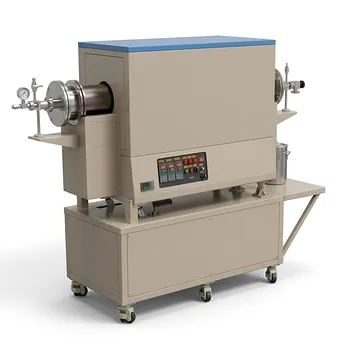
900°C Max Rotary Tube Furnace with 8 Inch 310S Alloy Tube and Optional Multi Zone Heating for Industrial Material Calcination
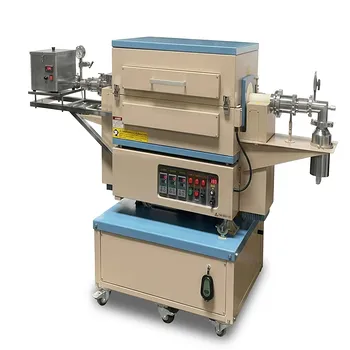
1500C 3-Zone Rotary Tube Furnace 60mm with Automatic Powder Feeding and Receiving System for Continuous Material Synthesis
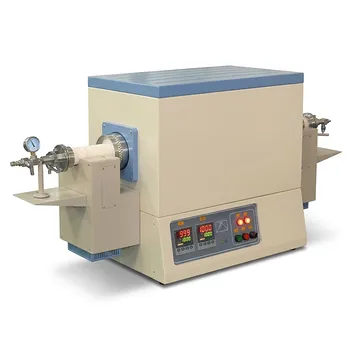
High Temperature 1700C Dual Zone Rotary Tube Furnace with 60mm Alumina Tube and Precision Rotation Control
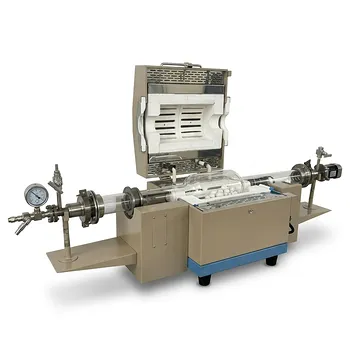
High Temperature Rotary Tube Furnace with Integrated Ball Milling and Gas Flow Function for Powder Nitriding

5 Inch Three Zone Rotary Tube Furnace with Integrated Gas Delivery System and 1200C Capability for Advanced Material CVD Processing
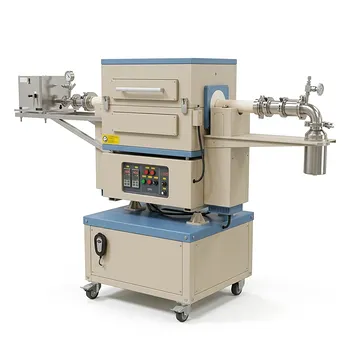
1500C Max Dual Zone Rotary Tube Furnace with 60 mm OD Alumina Tube for High Temperature Material Synthesis
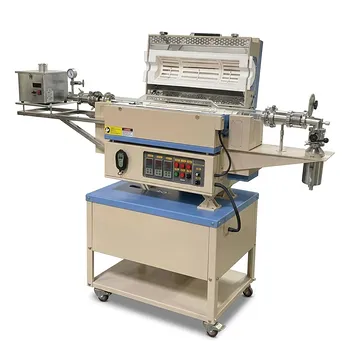
5 Inch Rotary Tube Furnace with Automatic Feeding and Receiving System 1200C Three Zone CVD Powder Processing
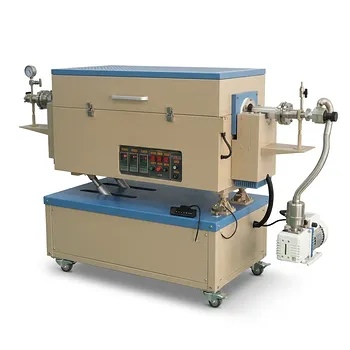
Three Zone Rotary Tube Furnace for High Temperature Powder Processing and Material Research
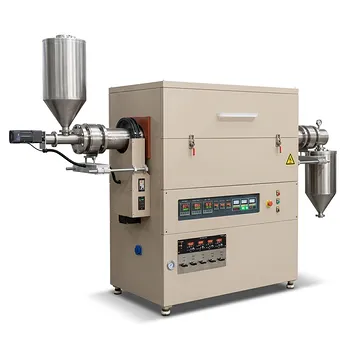
High Temperature Tilting Rotary Tube Furnace with Integrated Mass Flow Control and Multi Zone Heating
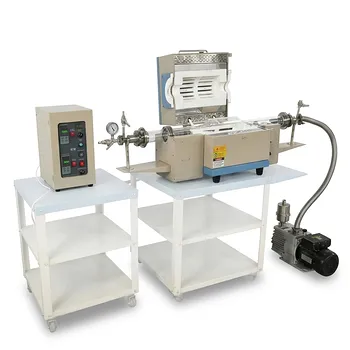
Two Zone Rotary Tube Furnace for Powder CVD Coating and Core Shell Material Synthesis 1100C
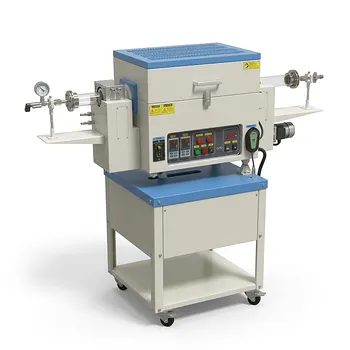
4 Inch Two Zone Rotary CVD Tube Furnace for High Temperature Battery Material Synthesis and Advanced Material Calcination
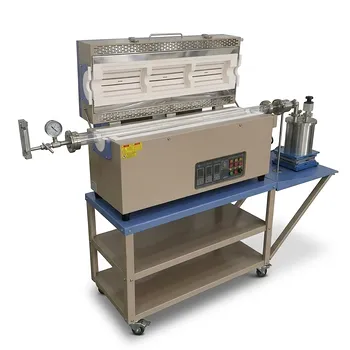
5 Inch Two Zone Rotary Tube Furnace 1100C for Powder CVD and Material Synthesis
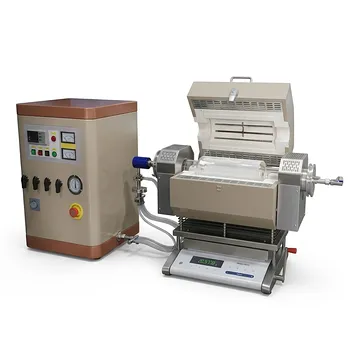
Mini Rotary Tubular Furnaces for Precision Powder Heat Treatment and Thermogravimetric Analysis
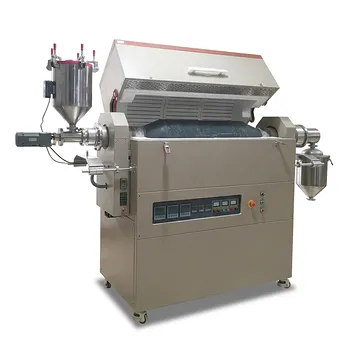
High Temperature Tilting Rotary Tubular Furnace for Continuous Powder Thermal Processing and Controlled Atmosphere Sintering
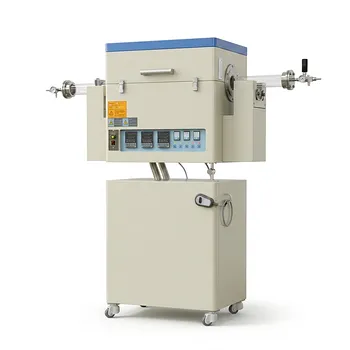
Three Temperature Zone Rotating Tube Furnace for Material Sintering and Controlled Atmospheric Heat Treatment
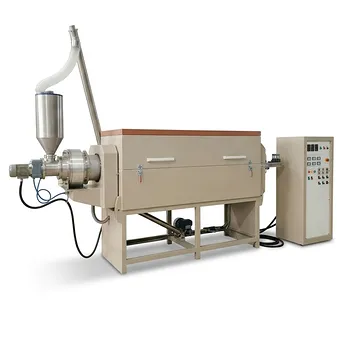
Continuous Feeding Rotary Tube Furnace for Industrial Powder Heat Treatment and Material Research
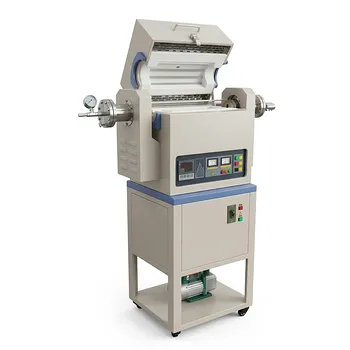
High Temperature Rotary Tilt Tubular Furnaces for Advanced Powder Sintering and Material Processing
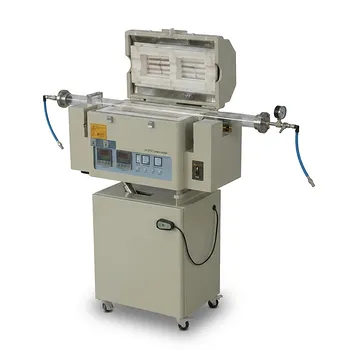
Double Temperature Revolving Tube Furnace with Precision Rotation and Adjustable Inclination for Advanced Material Research
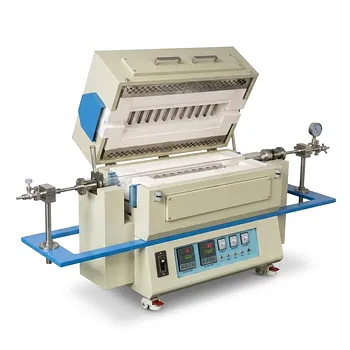
High Temperature Dual Zone Rotating Tube Furnace 1500C Silicon Carbide Heating for Advanced Material Synthesis