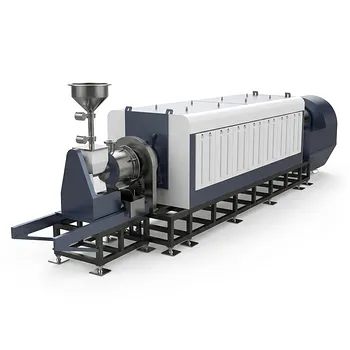
What parameters must operators control to maintain product quality in a rotary furnace? Master Your Heat Treatment.
Updated 5 months ago
Maintaining high product quality in a rotary furnace requires the simultaneous management of four critical operational variables. Operators must precisely adjust the rotation speed, material feed rate, fuel input, and the angle of inclination. These parameters collectively dictate the temperature profiles and the residence time of the material, which are essential for ensuring consistent chemical reactions and preventing mechanical failure.
Core Takeaway: To achieve optimal product quality, operators must balance the physical movement of material with precise thermal energy input to stabilize the material’s residence time and temperature exposure.
Managing Material Residence Time
The Role of Rotation Speed
Changing the rotation speed directly influences how quickly material moves through the furnace. Higher speeds decrease the residence time, which can prevent overheating but may result in incomplete chemical reactions if the material does not spend enough time in the heating zone.
Adjusting the Angle of Inclination
The angle of inclination works in tandem with rotation to move material down the kiln via gravity. A steeper angle increases the velocity of the material bed, requiring the operator to balance this tilt against the rotation speed to maintain a steady flow.
Managing the Material Feed Rate
The material feed rate determines the volume of the material bed inside the furnace. If the feed rate is too high relative to the heat input, the core of the material bed may not reach the required temperature, leading to non-uniform product quality.
Controlling Thermal and Chemical Profiles
Fuel Input and Temperature Graduation
Fuel input is the primary lever for managing the internal temperature profile. Operators must precisely calibrate fuel levels to ensure the material reaches specific thermal "plateaus" required for the desired chemical transformations.
Consistent Chemical Reactions
Proper control of both heat and movement ensures that chemical reactions occur uniformly throughout the material bed. This stability is critical for producing a product with predictable physical and chemical properties.
Optimizing Heat Recovery
Effective parameter control allows for better heat recovery from the exhaust gases or the material itself. By managing the airflow and fuel-to-material ratio, operators can significantly reduce energy waste and lower operational costs.
Understanding the Trade-offs and Pitfalls
Throughput vs. Product Consistency
Increasing the feed rate or rotation speed boosts throughput but risks "short-circuiting" the process. This occurs when material exits the furnace before the necessary chemical reactions are fully completed.
Mechanical Stress vs. Thermal Efficiency
Running a furnace at maximum temperature may improve reaction speeds but significantly increases mechanical stress on the kiln shell and lining. Operators must often find a "sweet spot" that maintains quality without accelerating equipment degradation or causing warping.
The Danger of Uneven Heating
Failure to balance the material bed depth with the rotation speed can lead to a "cold core." In this scenario, the outer layers of the material are processed correctly, while the center remains under-processed, ruining the consistency of the batch.
How to Apply These Controls to Your Process
Achieving the perfect balance depends on your specific production priorities and the nature of the raw material.
- If your primary focus is Maximum Throughput: Increase the rotation speed and feed rate incrementally while monitoring the exit temperature to ensure the material bed is still reaching its reaction threshold.
- If your primary focus is Product Purity: Prioritize a slower residence time and steady fuel input to ensure that every particle within the material bed undergoes a complete and uniform chemical reaction.
- If your primary focus is Equipment Longevity: Maintain a consistent, moderate angle of inclination and avoid rapid fluctuations in fuel input to minimize thermal shock and mechanical fatigue on the furnace structure.
By mastering the interplay between movement and heat, you transform the rotary furnace from a simple heater into a precision chemical reactor.
Summary Table:
| Key Parameter | Impact on Process | Quality Outcome |
|---|---|---|
| Rotation Speed | Controls material residence time | Prevents overheating or incomplete reactions |
| Feed Rate | Determines bed volume and depth | Ensures uniform heating through the material core |
| Fuel Input | Manages internal temperature profiles | Drives stable and consistent chemical transformations |
| Angle of Inclination | Regulates material movement velocity | Maintains steady flow and prevents blockages |
Unlock High-Precision Thermal Processing with THERMUNITS
As a global leader in high-temperature laboratory equipment for material science and industrial R&D, THERMUNITS provides the advanced tools you need to master complex heat treatment processes. Whether you are optimizing a rotary furnace for high throughput or require ultra-pure chemical reactions, our engineering expertise ensures your success.
Our comprehensive range of thermal solutions includes:
- Industrial & Lab Furnaces: Rotary, Muffle, Vacuum, Atmosphere, Tube, and Hot Press furnaces.
- Advanced Systems: CVD/PECVD systems, dental furnaces, and vacuum induction melting furnaces (VIM).
- Specialized Components: High-quality thermal elements and rotary kilns.
Take the guesswork out of your production. Contact our technical experts today to find the perfect thermal processing equipment tailored to your specific R&D or manufacturing requirements.
Mentioned Products
- 900°C Max Rotary Tube Furnace with 8 Inch 310S Alloy Tube and Optional Multi Zone Heating for Industrial Material Calcination
- Mini Rotary Tubular Furnaces for Precision Powder Heat Treatment and Thermogravimetric Analysis
- 1500C 3-Zone Rotary Tube Furnace 60mm with Automatic Powder Feeding and Receiving System for Continuous Material Synthesis
- High Temperature 1700C Dual Zone Rotary Tube Furnace with 60mm Alumina Tube and Precision Rotation Control
- Three Zone Rotary Tube Furnace for High Temperature Powder Processing and Material Research
People Also Ask
- How does a rotary tube furnace improve the processing of granular materials? Enhance Uniformity and Reaction Kinetics
- Why use a rotary tube furnace for FACS carbonization? Ensure uniform morphology and prevent sphere agglomeration.
- Why is the precise optimization of residence time essential in the catalyst calcination process? Maximize Your Yields.
- In what ways do rotary tube furnaces enhance chemical and specialty mineral processing? Drive Precision and Uniformity.
- What are the typical operating temperature ranges and mechanical specifications for rotary furnaces? A Complete Guide

Tech Team · ThermUnits
Last updated on Apr 14, 2026
Related Products
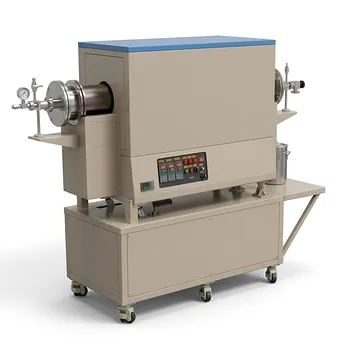
900°C Max Rotary Tube Furnace with 8 Inch 310S Alloy Tube and Optional Multi Zone Heating for Industrial Material Calcination
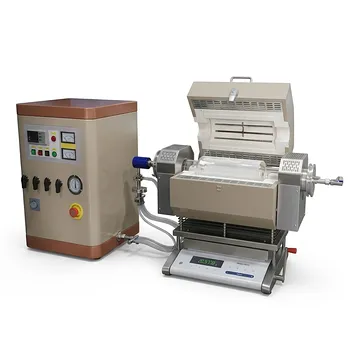
Mini Rotary Tubular Furnaces for Precision Powder Heat Treatment and Thermogravimetric Analysis
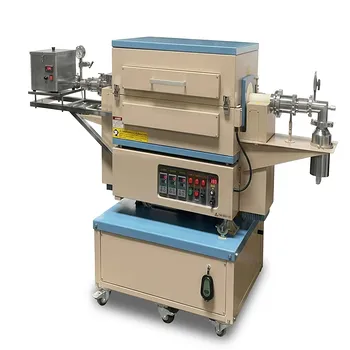
1500C 3-Zone Rotary Tube Furnace 60mm with Automatic Powder Feeding and Receiving System for Continuous Material Synthesis
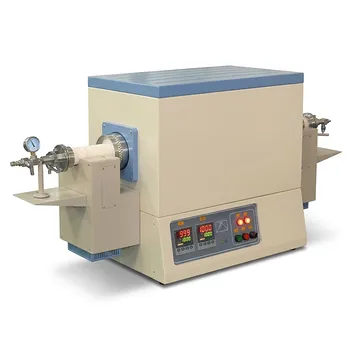
High Temperature 1700C Dual Zone Rotary Tube Furnace with 60mm Alumina Tube and Precision Rotation Control
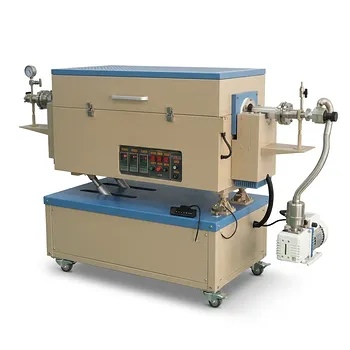
Three Zone Rotary Tube Furnace for High Temperature Powder Processing and Material Research
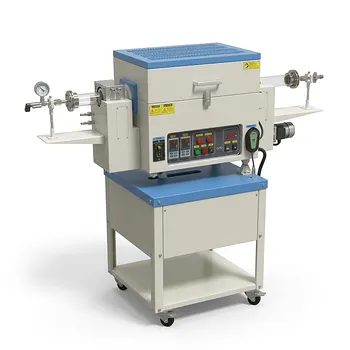
4 Inch Two Zone Rotary CVD Tube Furnace for High Temperature Battery Material Synthesis and Advanced Material Calcination
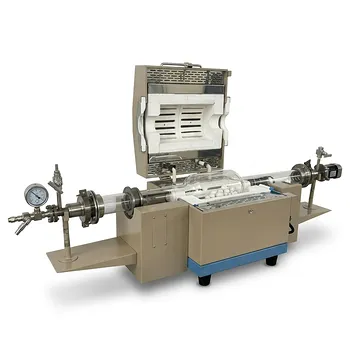
High Temperature Rotary Tube Furnace with Integrated Ball Milling and Gas Flow Function for Powder Nitriding
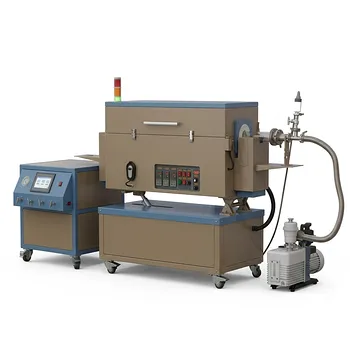
5 Inch Three Zone Rotary Tube Furnace with Integrated Gas Delivery System and 1200C Capability for Advanced Material CVD Processing
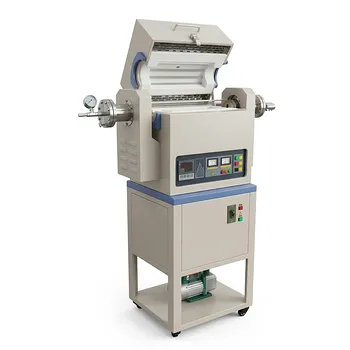
High Temperature Rotary Tilt Tubular Furnaces for Advanced Powder Sintering and Material Processing
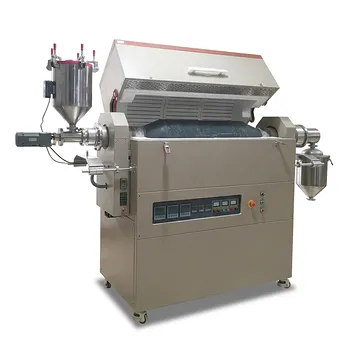
High Temperature Tilting Rotary Tubular Furnace for Continuous Powder Thermal Processing and Controlled Atmosphere Sintering
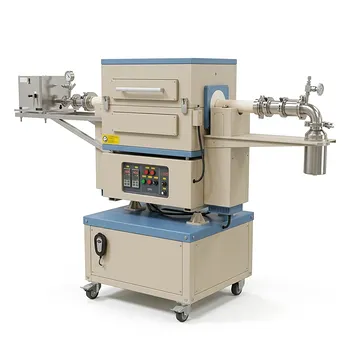
1500C Max Dual Zone Rotary Tube Furnace with 60 mm OD Alumina Tube for High Temperature Material Synthesis
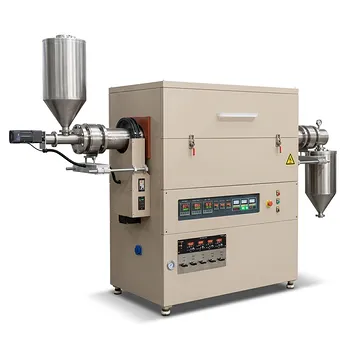
High Temperature Tilting Rotary Tube Furnace with Integrated Mass Flow Control and Multi Zone Heating
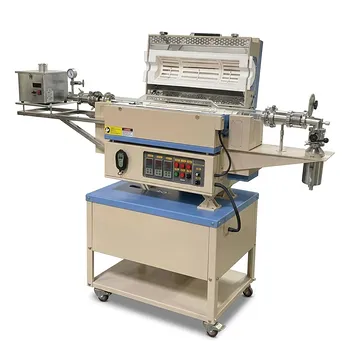
5 Inch Rotary Tube Furnace with Automatic Feeding and Receiving System 1200C Three Zone CVD Powder Processing
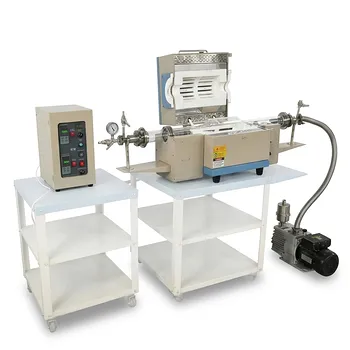
Two Zone Rotary Tube Furnace for Powder CVD Coating and Core Shell Material Synthesis 1100C
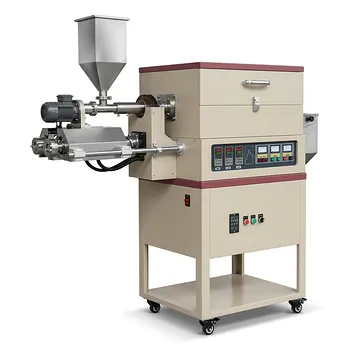
Laboratory Tilting Rotary Tubular Furnaces for Material Science and Industrial Heat Treatment
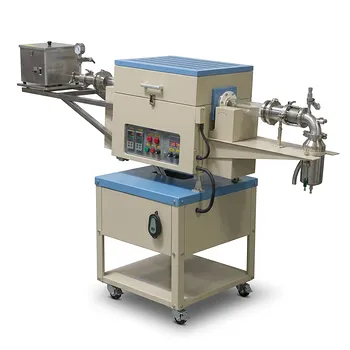
Two Zone Rotary CVD Furnace with Automatic Feeding and Receiving System for Powder Processing
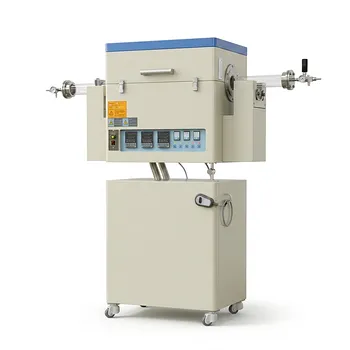
Three Temperature Zone Rotating Tube Furnace for Material Sintering and Controlled Atmospheric Heat Treatment
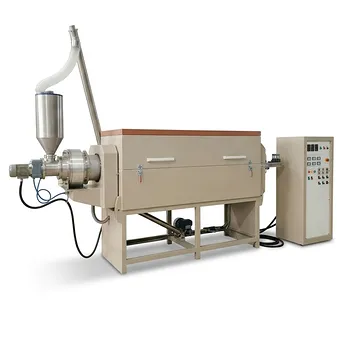
Continuous Feeding Rotary Tube Furnace for Industrial Powder Heat Treatment and Material Research
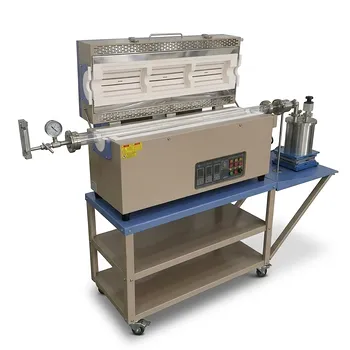
5 Inch Two Zone Rotary Tube Furnace 1100C for Powder CVD and Material Synthesis