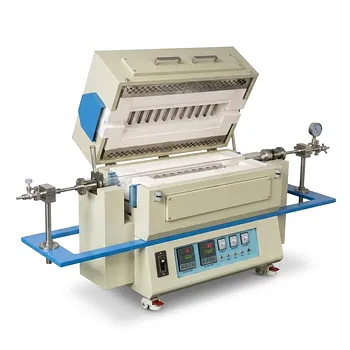
In what ways do rotary tube furnaces enhance chemical and specialty mineral processing? Drive Precision and Uniformity.
Updated 5 months ago
Rotary tube furnaces revolutionize processing by replacing static heating with dynamic material agitation. This motion ensures that every particle is uniformly exposed to heat and the reaction atmosphere, eliminating the "hotspots" and temperature gradients common in traditional batch systems. By combining precise atmosphere control with mechanical mixing, these furnaces achieve the high-purity outputs and consistent reaction kinetics required for advanced chemical synthesis and specialty mineral refinement.
The core advantage of a rotary tube furnace lies in its ability to maintain thermal and atmospheric uniformity through continuous rotation. This dynamic environment accelerates reaction rates and ensures product consistency, making it indispensable for high-value materials like catalysts, specialty chemicals, and rare earth elements.
Achieving Thermal and Kinetic Uniformity
Eliminating Stagnant Heat Zones
In static furnaces, material in the center of a pile often remains cooler than the exterior, leading to incomplete reactions. Rotary furnaces solve this by tumbling the material, ensuring that fresh surfaces are constantly exposed to the heat source and the process gas.
Optimizing Reaction Kinetics
The continuous mixing promotes superior gas-solid interaction, which is critical for processes like carbothermal reduction. This mechanical agitation prevents the formation of "dead zones," resulting in faster processing times and more predictable outcomes for complex chemical transformations.
Managing Feed Characteristics
Specialized internal components, such as lifters, allow these furnaces to handle difficult materials like fine powders or sticky feeds. These lifters physically move the material to prevent clumping, ensuring that the entire batch undergoes the same thermal history.
Precision Control in Chemical Synthesis
Atmosphere and Purity Management
Rotary tube furnaces act as sealed-tube flow reactors, allowing for the use of hydrogen, inert gases, or oxidizing atmospheres. Because many are electrically heated, there are no combustion by-products, which prevents contamination in sensitive processes like organometallic synthesis or catalyst production.
Residence-Time and Flow Regulation
The rotation speed—typically between 0.5 and 5 RPM—directly dictates how long the material stays in the heated zone. This level of control allows operators to fine-tune the residence time, ensuring that chemical reactions have sufficient time to reach completion without over-processing.
Multi-Zone Temperature Profiles
Advanced designs feature multiple temperature zones, enabling complex, multi-stage heating profiles within a single continuous process. This is particularly useful for shifting chemical equilibria toward desired products by removing reaction by-products through controlled gas flow.
Specialized Mineral and Material Processing
Calcination and Mineral Refinement
In the mineral industry, these furnaces are essential for the calcination of alumina, bauxite, and magnesite. They provide the high-intensity thermal treatment needed to drive off volatiles and transform mineral structures into stable, usable forms.
Synthesis of Advanced Ceramics and Metals
The 360-degree heating environment facilitates the high-density sintering of ceramic powders, such as silicon carbide, with minimal warping. For reactive metals like titanium or zirconium, the furnace provides a protective environment that prevents oxidation during heat treatment.
Production of Specialty Carbons and Oxides
Rotary systems are the standard for producing activated carbon, titanium dioxide, and metakaolin. The ability to maintain a strictly controlled environment while processing bulk powders makes them the most efficient choice for these high-demand specialty materials.
Understanding the Trade-offs
Mechanical Wear and Maintenance
Because the furnace tube is constantly rotating while under high thermal stress, mechanical wear is a significant consideration. Bearings, seals, and the tube itself require regular inspection and maintenance to prevent vacuum leaks or mechanical failure.
Particle Size Limitations
While excellent for granules and powders, extremely fine nanoparticles can sometimes become entrained in the gas flow and carried out of the heated zone. This requires sophisticated filtration or specialized gas velocity management to avoid material loss and equipment clogging.
Scaling and Capital Cost
Transitioning from laboratory-scale rotary furnaces to industrial-sized kilns involves significant capital investment. The complexity of the drive systems and high-temperature seals makes these units more expensive upfront than simpler box or muffle furnaces.
How to Apply This to Your Project
When integrating a rotary tube furnace into your workflow, your choice should be driven by your specific material characteristics and purity requirements.
- If your primary focus is high-purity chemical synthesis: Prioritize a model with advanced gas-tight seals and multiple heating zones to ensure precise control over reaction atmospheres.
- If your primary focus is bulk mineral calcination: Focus on robust mechanical drive systems and high-durability tube materials that can withstand continuous operation and abrasive feeds.
- If your primary focus is catalyst activation: Look for systems that offer integrated gas handling and the ability to switch between reducing and oxidizing atmospheres in-situ.
By leveraging the dynamic mixing of a rotary tube furnace, you can transform inconsistent batch processes into a precise, repeatable, and highly efficient manufacturing standard.
Summary Table:
| Key Feature | Main Benefit | Primary Applications |
|---|---|---|
| Dynamic Agitation | Eliminates hotspots; ensures uniform particle heating | Fine powders, granules, catalysts |
| Precise Atmosphere | Prevents contamination; sealed-tube flow reaction | Specialty chemicals, organometallics |
| Multi-Zone Control | Enables complex, multi-stage heating profiles | Advanced chemical transformations |
| Variable RPM | Fine-tunes residence time and reaction kinetics | Mineral calcination, ceramic sintering |
Elevate Your Material Research with THERMUNITS
Precision and repeatability are critical in material science and industrial R&D. THERMUNITS is a leading manufacturer of high-temperature laboratory equipment, providing the advanced thermal processing solutions you need to achieve superior results. From high-purity chemical synthesis to bulk mineral refinement, our equipment is engineered for performance.
Our comprehensive range includes:
- Rotary & Tube Furnaces for dynamic material processing
- Muffle, Vacuum, & Atmosphere Furnaces
- CVD/PECVD Systems and Hot Press Furnaces
- Vacuum Induction Melting (VIM) and Dental Furnaces
- Electric Rotary Kilns and high-quality Thermal Elements
Ready to optimize your heat treatment workflow? Contact our engineering team today to discuss your specific requirements and discover how THERMUNITS can empower your next breakthrough.
Mentioned Products
- 900°C Max Rotary Tube Furnace with 8 Inch 310S Alloy Tube and Optional Multi Zone Heating for Industrial Material Calcination
- 1500C 3-Zone Rotary Tube Furnace 60mm with Automatic Powder Feeding and Receiving System for Continuous Material Synthesis
- High Temperature 1700C Dual Zone Rotary Tube Furnace with 60mm Alumina Tube and Precision Rotation Control
- High Temperature Rotary Tube Furnace with Integrated Ball Milling and Gas Flow Function for Powder Nitriding
- 1500C Max Dual Zone Rotary Tube Furnace with 60 mm OD Alumina Tube for High Temperature Material Synthesis
People Also Ask
- How does a rotary tube furnace improve the processing of granular materials? Enhance Uniformity and Reaction Kinetics
- Why use a rotary tube furnace for FACS carbonization? Ensure uniform morphology and prevent sphere agglomeration.
- Why is the precise optimization of residence time essential in the catalyst calcination process? Maximize Your Yields.
- What parameters must operators control to maintain product quality in a rotary furnace? Master Your Heat Treatment.
- What are the typical operating temperature ranges and mechanical specifications for rotary furnaces? A Complete Guide

Tech Team · ThermUnits
Last updated on Apr 14, 2026
Related Products
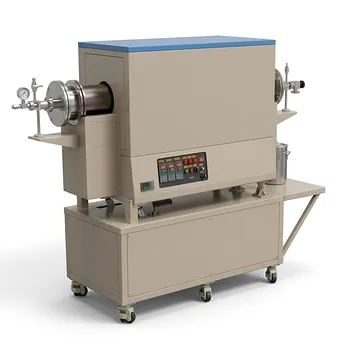
900°C Max Rotary Tube Furnace with 8 Inch 310S Alloy Tube and Optional Multi Zone Heating for Industrial Material Calcination
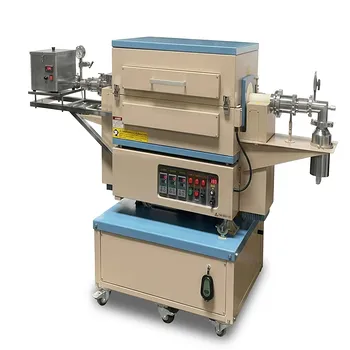
1500C 3-Zone Rotary Tube Furnace 60mm with Automatic Powder Feeding and Receiving System for Continuous Material Synthesis
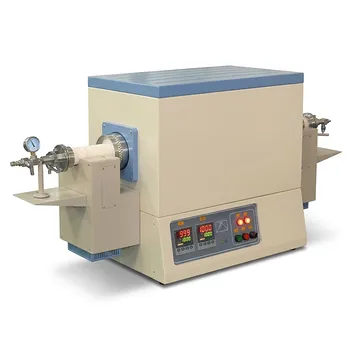
High Temperature 1700C Dual Zone Rotary Tube Furnace with 60mm Alumina Tube and Precision Rotation Control
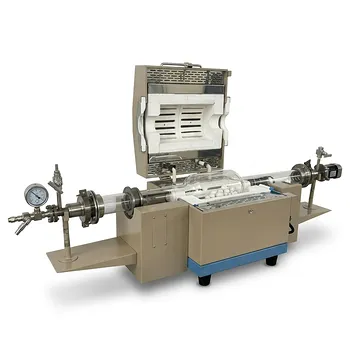
High Temperature Rotary Tube Furnace with Integrated Ball Milling and Gas Flow Function for Powder Nitriding
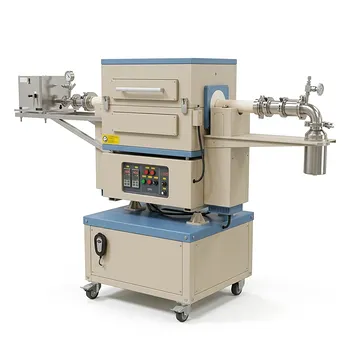
1500C Max Dual Zone Rotary Tube Furnace with 60 mm OD Alumina Tube for High Temperature Material Synthesis
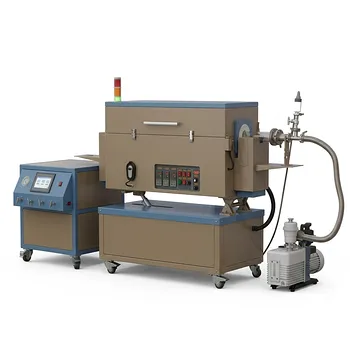
5 Inch Three Zone Rotary Tube Furnace with Integrated Gas Delivery System and 1200C Capability for Advanced Material CVD Processing
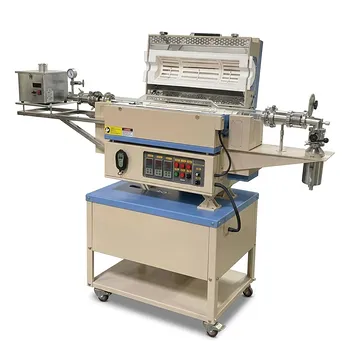
5 Inch Rotary Tube Furnace with Automatic Feeding and Receiving System 1200C Three Zone CVD Powder Processing
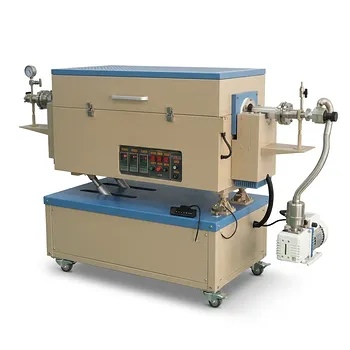
Three Zone Rotary Tube Furnace for High Temperature Powder Processing and Material Research
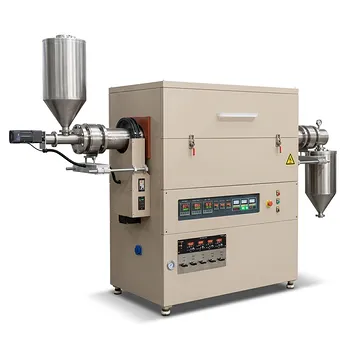
High Temperature Tilting Rotary Tube Furnace with Integrated Mass Flow Control and Multi Zone Heating
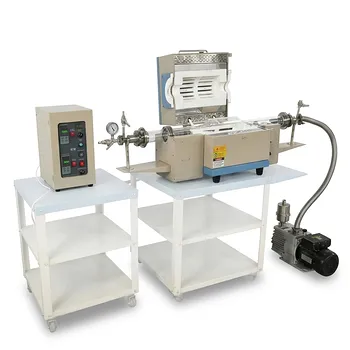
Two Zone Rotary Tube Furnace for Powder CVD Coating and Core Shell Material Synthesis 1100C
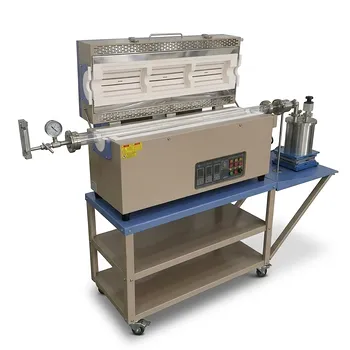
5 Inch Two Zone Rotary Tube Furnace 1100C for Powder CVD and Material Synthesis
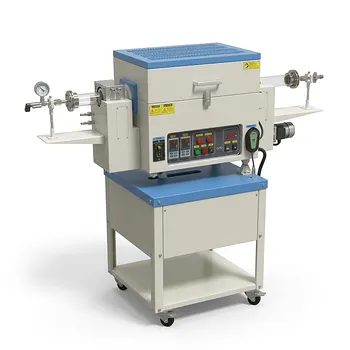
4 Inch Two Zone Rotary CVD Tube Furnace for High Temperature Battery Material Synthesis and Advanced Material Calcination
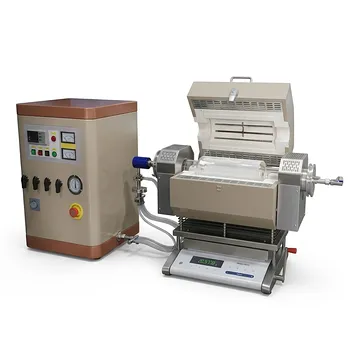
Mini Rotary Tubular Furnaces for Precision Powder Heat Treatment and Thermogravimetric Analysis
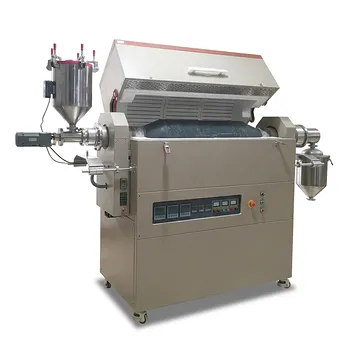
High Temperature Tilting Rotary Tubular Furnace for Continuous Powder Thermal Processing and Controlled Atmosphere Sintering
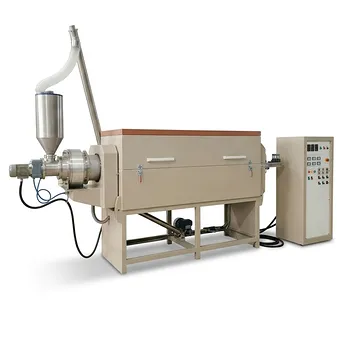
Continuous Feeding Rotary Tube Furnace for Industrial Powder Heat Treatment and Material Research
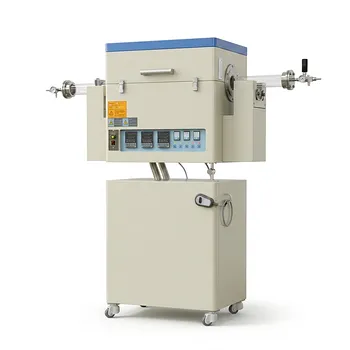
Three Temperature Zone Rotating Tube Furnace for Material Sintering and Controlled Atmospheric Heat Treatment
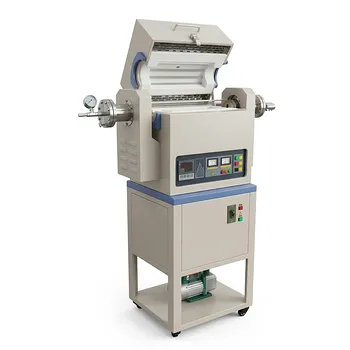
High Temperature Rotary Tilt Tubular Furnaces for Advanced Powder Sintering and Material Processing
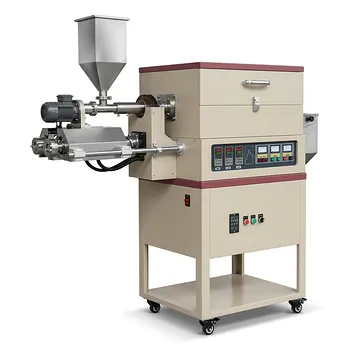
Laboratory Tilting Rotary Tubular Furnaces for Material Science and Industrial Heat Treatment
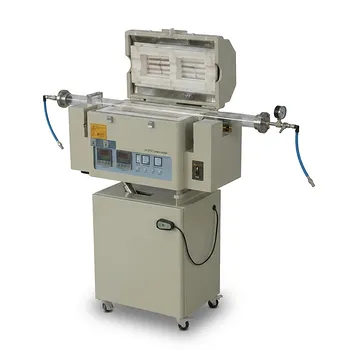
Double Temperature Revolving Tube Furnace with Precision Rotation and Adjustable Inclination for Advanced Material Research