How does high-precision temperature control ensure smithsonite sulfidization? Optimize Yield & Purity at 400°C
Updated 3 months ago
High-precision temperature control is the definitive factor in successful smithsonite sulfidization. By utilizing real-time sensors like infrared thermometers or shielded thermocouples, the system maintains a strict thermal environment of 400°C. This precision ensures complete mineral decomposition and promotes superior crystallinity in the resulting zinc sulfide while preventing the formation of harmful chemical byproducts.
The core value of a high-precision control system lies in its ability to lock the reaction within a narrow thermal window. This prevents the "thermal runaway" common in microwave processing, ensuring the chemical path stays focused on high-purity zinc sulfide.
The Role of Real-Time Monitoring
Advanced Sensing Technologies
High-precision systems utilize either infrared thermometers or shielded thermocouples to track the internal temperature of the sample. These sensors are specifically designed to operate within a microwave field without suffering from interference or creating electrical discharge.
Instantaneous Feedback Loops
The sensors provide a continuous stream of data to the central controller. This allows the system to detect minute fluctuations in temperature long before they can negatively impact the chemical structure of the smithsonite.
Maintaining the 400°C Threshold
The Decomposition "Sweet Spot"
Scientific analysis identifies 400°C as the optimal temperature for both smithsonite decomposition and subsequent zinc sulfide formation. Maintaining this exact temperature ensures the reaction kinetics are balanced for maximum yield.
Dynamic Microwave Power Adjustment
Rather than using a fixed power setting, the control system dynamically adjusts the microwave output. If the sensor detects a rise toward the upper limit, the system instantly scales back power to "lock in" the ideal reaction temperature.
Enhancing Product Crystallinity
Precise thermal management directly impacts the physical structure of the final product. Consistent heat allows for the development of high-quality crystallinity in the zinc sulfide, which is essential for its industrial utility.
Avoiding Impurity Formation
The 450°C Critical Limit
Once the reaction temperature exceeds 450°C, the chemical environment becomes unstable. Crossing this threshold triggers secondary reactions that consume the target material and produce waste.
Preventing Zinc-Iron Spinel
The primary risk of overheating is the formation of zinc-iron spinel (ZnFe2O4). This undesired byproduct is difficult to remove and significantly degrades the quality of the sulfidization process.
Understanding the Trade-offs
Equipment Complexity and Calibration
Implementing high-precision control increases the complexity of the microwave setup. Sensors must be meticulously calibrated, and shielded thermocouples require precise placement to avoid interfering with the electromagnetic field.
Line-of-Sight Requirements
Infrared sensors, while highly accurate, require a clear line of sight to the sample. Dust or chemical vapors released during the sulfidization reaction can obscure the sensor's "view," potentially leading to false readings if the system is not properly maintained.
Applying Precision to Your Sulfidization Project
Effective sulfidization requires a balance between rapid heating and strict thermal boundaries. Your choice of control logic should reflect your specific purity requirements.
- If your primary focus is Maximum Product Purity: Prioritize a system with a 450°C hard-limit cutoff to prevent any possibility of zinc-iron spinel formation.
- If your primary focus is Structural Integrity: Focus on the dynamic power adjustment features to maintain a steady 400°C, which promotes the best possible crystallinity.
- If your primary focus is Process Scalability: Invest in shielded thermocouples, as they are often more robust than infrared sensors in high-volume, vapor-heavy environments.
Precision control transforms a volatile microwave reaction into a predictable, high-quality manufacturing process.
Summary Table:
| Key Feature | Requirement/Limit | Impact on Quality |
|---|---|---|
| Optimal Temperature | 400°C | Ensures complete decomposition & superior crystallinity |
| Critical Threshold | > 450°C | Triggers waste production (Zinc-Iron Spinel) |
| Monitoring Tools | IR Thermometers / Shielded Thermocouples | Real-time data without microwave interference |
| Power Control | Dynamic Adjustment | Prevents thermal runaway and locks reaction window |
Elevate Your Material Research with THERMUNITS Precision
As a leading manufacturer of high-temperature laboratory equipment, THERMUNITS empowers material science and industrial R&D with unmatched thermal accuracy. Whether your project requires specialized smithsonite sulfidization or advanced material synthesis, our comprehensive range of solutions—including Muffle, Vacuum, Atmosphere, Tube, Rotary, and Hot Press furnaces, CVD/PECVD systems, and Vacuum Induction Melting (VIM) furnaces—is engineered to meet your strictest purity standards.
Don't let thermal instability compromise your results. Contact our technical experts today to find the perfect heat treatment solution for your lab and ensure the highest quality for your R&D outcomes.
References
- Jiawei Kang, Ting Lei. Sulfidation of Smithsonite via Microwave Roasting under Low-Temperature Conditions. DOI: 10.3390/min14090855
Mentioned Products
- 1200C Three Zone Vertical Fixed Fluidized Bed Furnace for Methane Reforming and Fischer Tropsch Reactions
- Electric Rotary Kiln Small Rotary Furnace Biomass Pyrolysis Plant
- Two Zone Rotary CVD Furnace with Automatic Feeding and Receiving System for Powder Processing
- 1200C Dual Sliding Tube Furnace with Dual Tubes and Flanges for PECVD Processes
- Dual Tube 100mm 80mm CVD Sliding Furnace with 4 Channel Gas Mixing and Vacuum System
People Also Ask
- Why use a mobile fluidized bed in high-temp furnaces? Achieve instant heating and precise kinetic data.
- What is the function of a three-zone temperature control system in a fixed-bed reactor? Achieve Precise Thermal Accuracy
- What is the role of the Fluidized Bed CVD system in CNT preparation? Key to Scalable and Uniform Support Material Growth
- How do a muffle furnace and tube reactor function in bagasse torrefaction? Precision Biomass Thermal Processing.
- What is the core function of a high-temperature vertical tube reactor? Replicate Industrial Entrained-Flow Conversion

Tech Team · ThermUnits
Last updated on Jun 03, 2026
Related Products
1200C Three Zone Vertical Fixed Fluidized Bed Furnace for Methane Reforming and Fischer Tropsch Reactions
Electric Rotary Kiln Small Rotary Furnace Biomass Pyrolysis Plant
Two Zone Rotary CVD Furnace with Automatic Feeding and Receiving System for Powder Processing
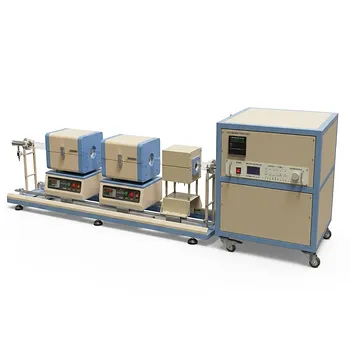
1200C Dual Sliding Tube Furnace with Dual Tubes and Flanges for PECVD Processes
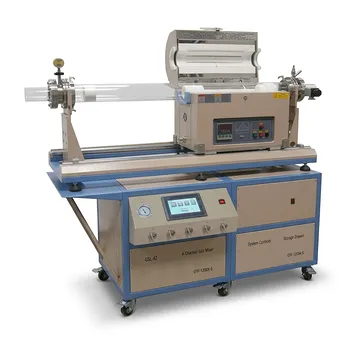
Dual Tube 100mm 80mm CVD Sliding Furnace with 4 Channel Gas Mixing and Vacuum System
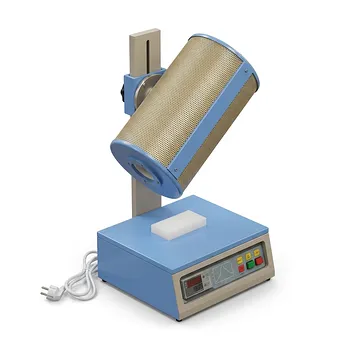
1100°C Vertical Laboratory Furnace for DIY Tubular Reactors with PID Temperature Controller