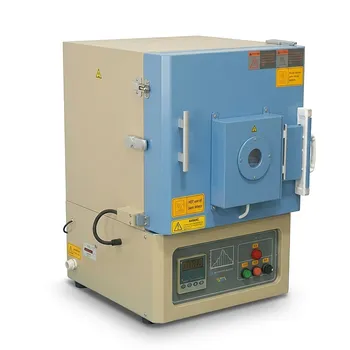
Why use a mobile fluidized bed in high-temp furnaces? Achieve instant heating and precise kinetic data.
Updated 3 months ago
The primary purpose of a mobile fluidized bed design is to achieve near-instantaneous sample heating. By moving the sample rapidly into a pre-heated high-temperature zone, researchers can bypass the slow heating ramps typical of standard laboratory equipment. This allows for the precise isolation of isothermal kinetic data while closely mimicking the extreme thermal conditions found in industrial-scale calcination.
This mobile design eliminates the "ramp-up" lag found in traditional analysis, ensuring that chemical reactions are studied at target temperatures from the very first second. It transforms the laboratory environment into a high-fidelity simulator for industrial thermal processing.
Achieving Industrial Realism in Calcination
The Limitation of Traditional TGA
In standard Thermogravimetric Analysis (TGA), samples are heated using a gradual temperature ramp. This slow increase often causes the reaction to begin before the target temperature is reached, blurring the data.
Simulating Flash Calcination Conditions
Industrial reactors often expose materials to high heat almost instantly. A mobile fluidized bed allows researchers to drop or move a magnesium carbonate sample into the heat zone in seconds, replicating this "thermal shock."
Matching Industrial Heating Rates
By achieving a rapid temperature rise, the experiment reflects the actual physics of a commercial furnace. This makes the resulting data far more applicable to plant design and process optimization than slow-ramp laboratory tests.
Capturing High-Precision Kinetic Data
Isolating the Isothermal Phase
The goal of many calcination experiments is to study the reaction at a constant, specific temperature. Rapid movement ensures the sample spends the maximum amount of time in the isothermal phase rather than the transition phase.
Eliminating Overlapping Reaction Stages
Slow heating can cause different stages of decomposition to overlap. Instantaneous heating "shocks" the material into the target state, allowing researchers to capture the specific kinetic features of the calcination reaction with high clarity.
Improving Mathematical Modeling
When the heating rate is nearly vertical, the mathematical models used to describe the reaction become much simpler and more accurate. This leads to better predictions of how the material will behave under varying industrial loads.
Understanding the Trade-offs
Mechanical and Thermal Stress
Rapidly moving a bed into a high-temperature vertical furnace subjects the equipment to significant thermal shock. This can lead to material fatigue or mechanical failure of the lifting mechanism over time.
Fluidization Stability During Transit
Maintaining a stable fluidized state while the bed is physically moving requires precise gas flow control. Any vibration or sudden movement can disrupt the bed profile, potentially leading to uneven heating during those critical first few seconds.
Complexity of Data Synchronization
Researchers must precisely sync the moment of entry with data logging equipment. If the timing is off by even a few seconds, the advantage of "instantaneous" heating is lost, and the initial kinetic data becomes unreliable.
How to Apply This to Your Research
If your goal is to bridge the gap between lab theory and industrial practice, the method of sample delivery is as important as the temperature itself.
- If your primary focus is industrial process scaling: Use a mobile fluidized bed to ensure your kinetic models account for the rapid heating rates seen in commercial calciner units.
- If your primary focus is pure kinetic theory: This design is essential for isolating the isothermal reaction phase and preventing data contamination from "pre-reaction" during slow heating ramps.
- If your primary focus is material durability testing: Use the rapid move-in feature to simulate the thermal shock that particles undergo when injected into a hot gas stream.
By mastering the transition from slow ramps to rapid thermal exposure, you ensure your experimental results are both scientifically rigorous and industrially relevant.
Summary Table:
| Feature | Key Benefit | Research/Industrial Impact |
|---|---|---|
| Rapid Entry | Eliminates ramp-up lag | Precise isolation of isothermal kinetic data. |
| Thermal Shock | Mimics industrial reactors | Accurately simulates flash calcination conditions. |
| Stable Isothermal Phase | Simplifies math modeling | Enhances accuracy of process scaling and design. |
| Dynamic Movement | High heating rates | Bridges the gap between lab theory and plant physics. |
Elevate Your Material Research with THERMUNITS Thermal Solutions
Are you looking to bridge the gap between laboratory results and industrial-scale production? At THERMUNITS, we specialize in high-performance thermal processing equipment designed for precision and reliability. Whether you need to simulate flash calcination or require stable isothermal environments, our advanced systems provide the high-fidelity data your R&D demands.
Why Choose THERMUNITS?
- Comprehensive Range: From Muffle and Tube furnaces to specialized CVD/PECVD systems and Rotary Kilns.
- Advanced Technology: High-temperature solutions including Vacuum Induction Melting (VIM), Hot Press furnaces, and Atmosphere-controlled units.
- Industry Expertise: Trusted by material science and industrial R&D leaders for calcination, sintering, and heat treatment.
Ready to optimize your thermal experiments? Contact our engineering team today to find the perfect solution for your laboratory!
References
- Hani Ababneh, Bassam B. Dally. Steam Calcination of Magnesium Carbonate: A Kinetic Study. DOI: 10.11159/mmme24.105
Mentioned Products
- 1200C Three Zone Vertical Fixed Fluidized Bed Furnace for Methane Reforming and Fischer Tropsch Reactions
- High Temperature Vertical Crucible Furnace with 22L Heating Chamber and 1200C Maximum Temperature
- High Temperature 1700C Vertical Split Tube Furnace for Material Quenching and Single Crystal Growth
- Vertical Hybrid High Temperature Furnace 1500C Alumina Tube SOFC Fuel Cell Testing Laboratory Heat Treatment Research Equipment
- High Temperature Vertical Atmosphere Controlled Furnace with Automatic Bottom Loading and 1700°C Capacity for Advanced Material Research
People Also Ask
- What is the function of a three-zone temperature control system in a fixed-bed reactor? Achieve Precise Thermal Accuracy
- What is the role of the Fluidized Bed CVD system in CNT preparation? Key to Scalable and Uniform Support Material Growth
- How do a muffle furnace and tube reactor function in bagasse torrefaction? Precision Biomass Thermal Processing.
- What is the core function of a high-temperature vertical tube reactor? Replicate Industrial Entrained-Flow Conversion
- Why is precise temperature gradient control essential in high-temperature pyrolysis? Optimize Yield and Longevity

Tech Team · ThermUnits
Last updated on Jun 02, 2026
Related Products
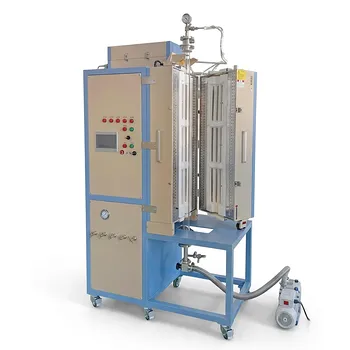
1200C Three Zone Vertical Fixed Fluidized Bed Furnace for Methane Reforming and Fischer Tropsch Reactions
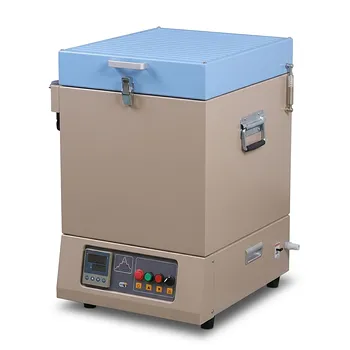
High Temperature Vertical Crucible Furnace with 22L Heating Chamber and 1200C Maximum Temperature
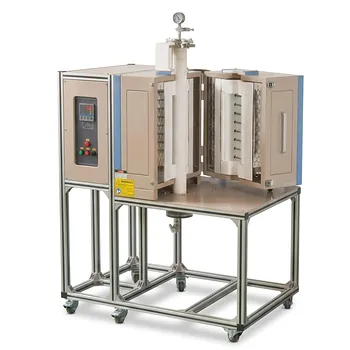
High Temperature 1700C Vertical Split Tube Furnace for Material Quenching and Single Crystal Growth
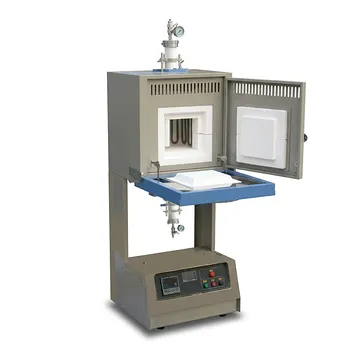
Vertical Hybrid High Temperature Furnace 1500C Alumina Tube SOFC Fuel Cell Testing Laboratory Heat Treatment Research Equipment
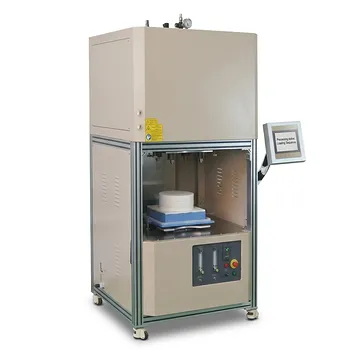
High Temperature Vertical Atmosphere Controlled Furnace with Automatic Bottom Loading and 1700°C Capacity for Advanced Material Research
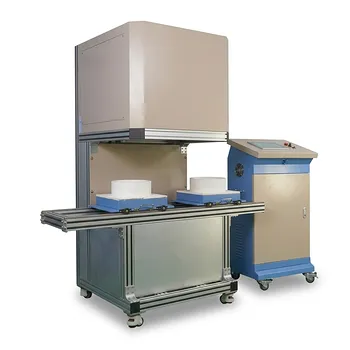
High Temperature Bottom Loading Vertical Furnace 1700C Dual Stage Sample Processing System 18L Large Capacity Thermal Treatment Equipment
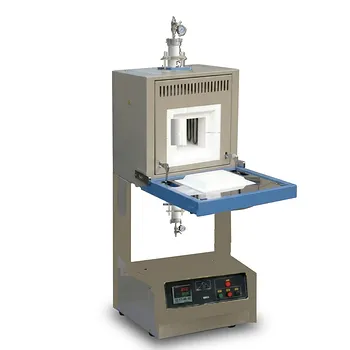
High Temperature Vertical Hybrid Furnace with Alumina Tube and SiC Heating for SOFC Coin Cell Testing and Atmosphere Processing

Vertical 1700C Vacuum and Atmosphere Tube Furnace with 80mm Alumina Tube

1200°C 5 Inch Vertical Quartz Tube Furnace with Stainless Steel Vacuum Flanges
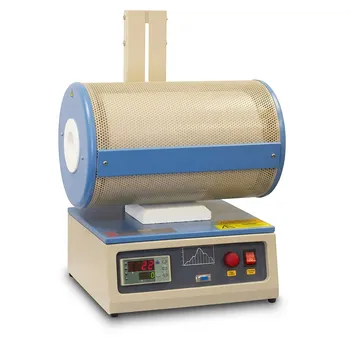
Multi Position Tube Furnace 1100C for Laboratory Material Research and Advanced Industrial Thermal Processing
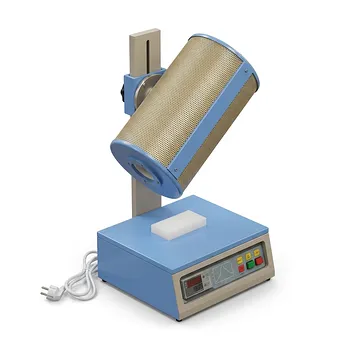
1100°C Vertical Laboratory Furnace for DIY Tubular Reactors with PID Temperature Controller
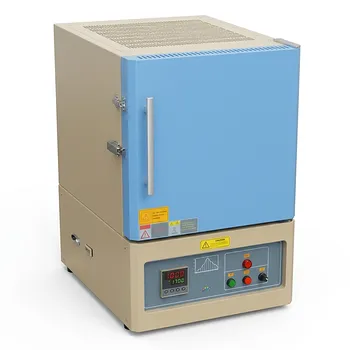
Large Bench Top 1700C High Temperature Muffle Furnace with 19L Chamber for Advanced Material Sintering and Annealing

High Temperature 1700C Tube Furnace with High Vacuum Turbomolecular Pump System and Multi Channel Mass Flow Controller Gas Mixer
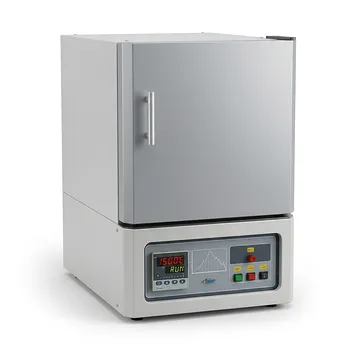
High Temperature 1500C Benchtop Muffle Furnace 3.6L Alumina Fiber Chamber Programmable Controller Sintering Annealing Carbonization Thermal Processing System
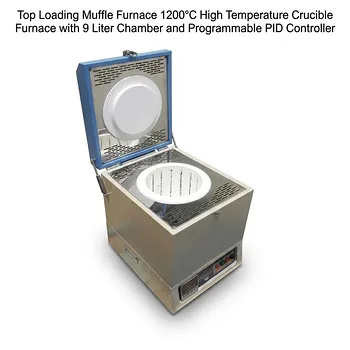
Top Loading Muffle Furnace 1200°C High Temperature Crucible Furnace with 9 Liter Chamber and Programmable PID Controller
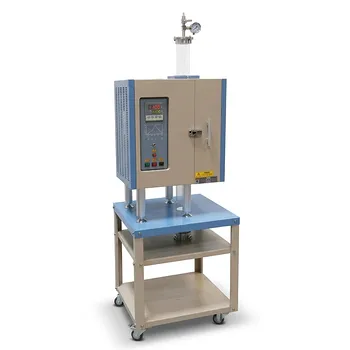
1100°C Split Vertical Tube Furnace with 80mm Quartz Tube and Stainless Steel Vacuum Flanges
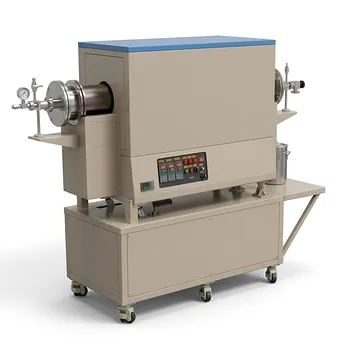
900°C Max Rotary Tube Furnace with 8 Inch 310S Alloy Tube and Optional Multi Zone Heating for Industrial Material Calcination
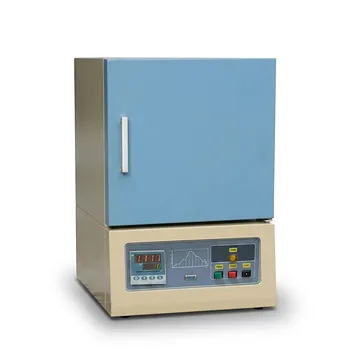
Ultra High Temperature Bench Top Muffle Furnace 1750C Sintering System with Kanthal Super Heating Elements and Precision Digital Control
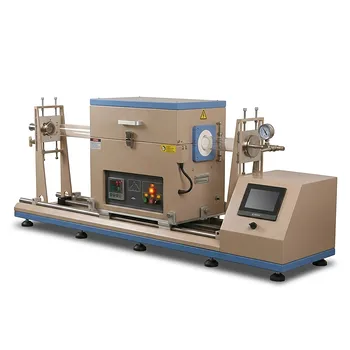
1200C Sliding Tube Furnace for Rapid Thermal Processing and CVD Graphene Growth with 100mm OD Capacity