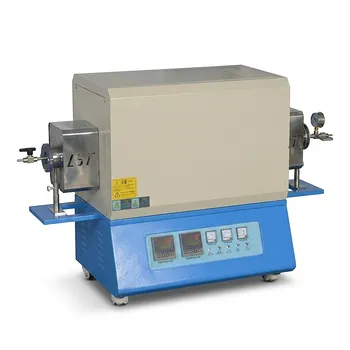
What is the role of the Fluidized Bed CVD system in CNT preparation? Key to Scalable and Uniform Support Material Growth
Updated 3 months ago
The Fluidized Bed Chemical Vapor Deposition (CVD) system is the foundational technology for producing uniform, large-scale Carbon Nanotube (CNT) support materials. It functions by utilizing a gaseous carbon source, specifically ethylene, to grow nanotubes within a specialized reactor that ensures optimal gas-solid interaction. This process creates a consistent, high-quality base carrier essential for advanced research applications, such as metal doping and hydrogen spillover studies.
The Fluidized Bed CVD system serves as a scalable synthesis engine that transforms gaseous precursors into structured carbon nanotubes with high uniformity. By maximizing heat and mass transfer, it provides the structural consistency required for nanotubes to function as reliable support materials in catalytic and electrochemical applications.
The Strategic Importance of the Fluidized Bed Design
Superior Gas-Solid Contact and Heat Transfer
The fluidized bed configuration is chosen specifically for its ability to maintain uniform reaction conditions across the entire catalyst bed. Unlike static systems, the fluidization of particles ensures that every catalyst site is equally exposed to the carbon source and the thermal field.
This high efficiency in heat transfer prevents localized "hot spots" that can lead to structural defects. The result is a more homogenous product that is critical when the CNTs are intended to serve as a support material for further chemical modifications.
Large-Scale and Continuous Production
One of the primary roles of this system is to move beyond laboratory-scale batch processing. The fluidized bed allows for the continuous production of high-quality carbon nanotubes, making it commercially viable for industrial applications.
This scalability does not sacrifice quality; the system maintains uniform structures across large volumes. This consistency is vital for researchers who need stable "base carriers" to ensure that subsequent doping or coating results are reproducible.
Technical Control and Material Synthesis
Precision Regulation via Mass Flow Controllers
The system relies on integrated Mass Flow Controllers (MFCs) to manage the precise ratio of carrier gases (such as Argon), reducing gases (Hydrogen), and the carbon source (Ethylene). This precision allows for the fine-tuning of the chemical vapor deposition reaction.
By accurately regulating these flow rates, the system determines the final morphology and diameter of the nanotubes. For multi-walled nanotubes, this control can dictate the number of graphene layers and the overall crystal quality of the material.
High-Temperature Catalytic Decomposition
The CVD process operates in a precisely controlled high-temperature environment, often ranging from 670°C to 850°C depending on the specific catalyst and carbon source used. Within this thermal field, the gaseous carbon source undergoes catalytic decomposition on the surface of metal catalyst particles (such as iron, cobalt, or copper).
This decomposition drives the directional growth of the nanotubes. The stability of the thermal field is paramount, as fluctuations can result in inconsistent growth rates or the formation of amorphous carbon impurities.
Understanding the Trade-offs
Process Complexity vs. Material Quality
While fluidized bed CVD offers superior uniformity and scale, it requires significantly more complex engineering and maintenance than horizontal tube furnaces. Managing the fluidization velocity—the speed at which gas flows through the particles—is critical; if the flow is too low, the bed won't fluidize, and if it is too high, the catalyst particles may be blown out of the reactor.
Catalyst Dependency
The success of the CVD system is heavily dependent on the catalyst preparation. While the system provides the environment for growth, the diameter and purity of the CNTs are often pre-determined by the size and composition of the catalyst particles coated on the substrate or carrier.
How to Apply This to Your Project
The choice of a CVD configuration depends entirely on the intended physical form and application of the resulting carbon nanotubes.
- If your primary focus is bulk production for catalyst supports: Utilize the Fluidized Bed CVD system to ensure high-volume uniformity and efficient heat transfer for subsequent metal doping.
- If your primary focus is individual nanotubes for sensing or imaging: Opt for a Horizontal Tube CVD with methane precursors to achieve isolated, high-quality nanotubes suitable for Raman analysis.
- If your primary focus is conductive textiles or scaffolds: Employ a Floating Catalyst CVD (FC-CVD) system to grow nanotubes directly in the gas phase for the creation of non-woven fabrics.
- If your primary focus is enhancing battery anodes: Focus on High-Precision MFC-controlled CVD to build interconnected three-dimensional conductive networks on silicon-based materials.
By mastering the Fluidized Bed CVD process, researchers can produce the high-purity, structurally consistent CNT carriers necessary for the next generation of hydrogen energy and catalytic technologies.
Summary Table:
| Feature | Function in CNT Preparation | Key Benefit |
|---|---|---|
| Fluidized Bed Design | Maximizes gas-solid interaction | Homogeneous product & uniform structure |
| Mass Flow Control | Precise regulation of gas ratios | Control over CNT morphology & diameter |
| Thermal Field | 670°C to 850°C catalytic decomposition | High crystal quality & directional growth |
| Scalable Process | Transition from batch to continuous | Commercial viability for bulk production |
Optimize Your Material Research with THERMUNITS
As a leading manufacturer of high-temperature laboratory equipment, THERMUNITS provides state-of-the-art CVD and PECVD systems tailored for material science and industrial R&D. Whether you are scaling up Carbon Nanotube (CNT) production or developing advanced catalyst supports, our comprehensive thermal solutions—including Tube, Muffle, Vacuum, and Rotary furnaces—ensure the precision your project demands.
Ready to enhance your lab's performance? Contact THERMUNITS Today to discuss your specific heat treatment requirements and discover how our advanced furnace technology can drive your innovation forward.
References
- Javier Navarro‐Ruiz, Iann C. Gerber. Mechanism of Hydrogen Spillover on Metal-Doped Carbon Materials: Surface Carboxylic Groups Are Key. DOI: 10.1021/acscatal.4c00293
Mentioned Products
- 1200C Three Zone Vertical Fixed Fluidized Bed Furnace for Methane Reforming and Fischer Tropsch Reactions
- HFCVD Machine System for Nano Diamond Coating on Drawing Dies and Industrial Tools
- Chemical Vapor Deposition CVD System Slide PECVD Tube Furnace with Liquid Gasifier PECVD Machine
- Split Chamber CVD Tube Furnace with Vacuum Station Chemical Vapor Deposition System Machine
- Two Zone Rotary CVD Furnace with Automatic Feeding and Receiving System for Powder Processing
People Also Ask
- Why use a mobile fluidized bed in high-temp furnaces? Achieve instant heating and precise kinetic data.
- What is the function of a three-zone temperature control system in a fixed-bed reactor? Achieve Precise Thermal Accuracy
- How do a muffle furnace and tube reactor function in bagasse torrefaction? Precision Biomass Thermal Processing.
- What is the core function of a high-temperature vertical tube reactor? Replicate Industrial Entrained-Flow Conversion
- Why is precise temperature gradient control essential in high-temperature pyrolysis? Optimize Yield and Longevity

Tech Team · ThermUnits
Last updated on Jun 02, 2026
Related Products
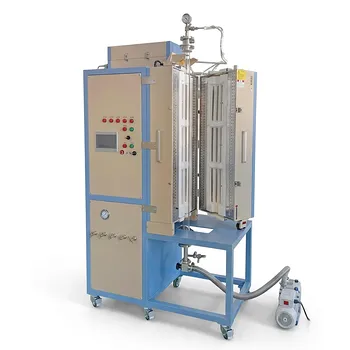
1200C Three Zone Vertical Fixed Fluidized Bed Furnace for Methane Reforming and Fischer Tropsch Reactions
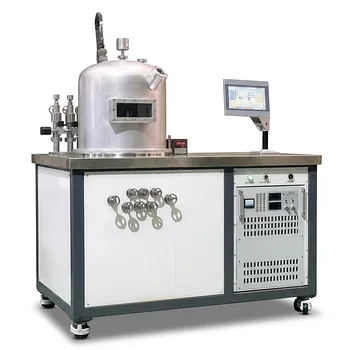
HFCVD Machine System for Nano Diamond Coating on Drawing Dies and Industrial Tools
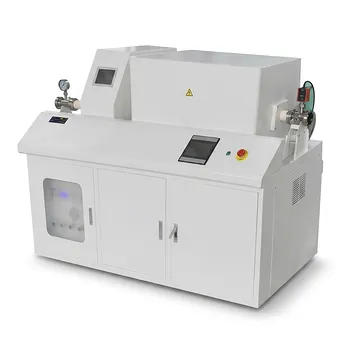
Chemical Vapor Deposition CVD System Slide PECVD Tube Furnace with Liquid Gasifier PECVD Machine
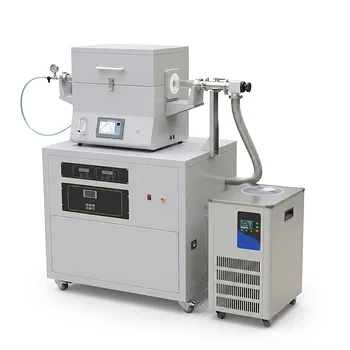
Split Chamber CVD Tube Furnace with Vacuum Station Chemical Vapor Deposition System Machine
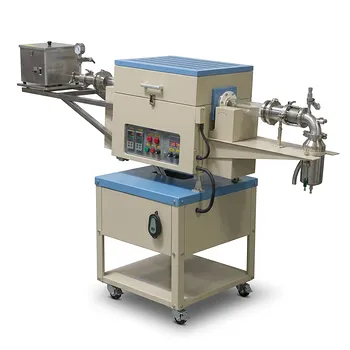
Two Zone Rotary CVD Furnace with Automatic Feeding and Receiving System for Powder Processing
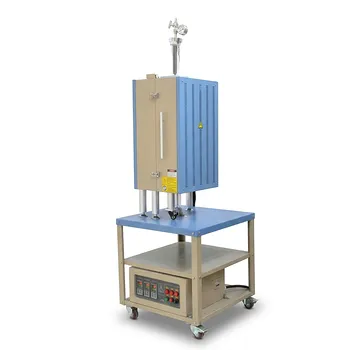
1200C Three Zone Vertical Tube Furnace with 2 Inch Quartz Tube and Vacuum Flanges
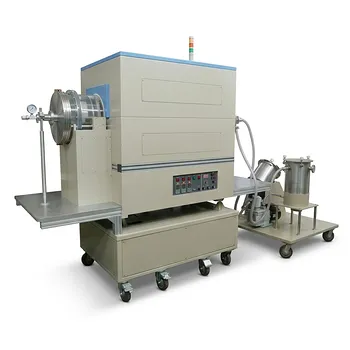
Three Zone Rotary Tube Furnace with Automatic Powder Feeding for Large Scale CVD Coating 1100C
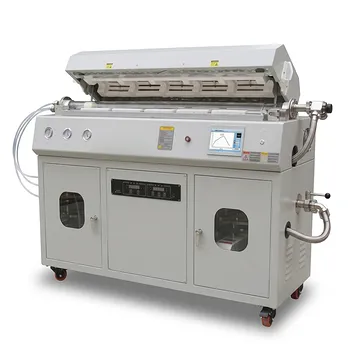
Multi Heating Zones CVD Tube Furnace System for Precision Chemical Vapor Deposition and Advanced Material Synthesis
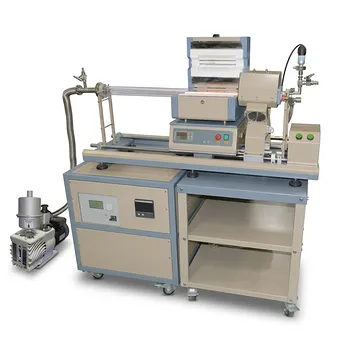
1200C Max Compact Auto-Sliding PECVD Furnace with 2 Inch Tube and Vacuum Pump
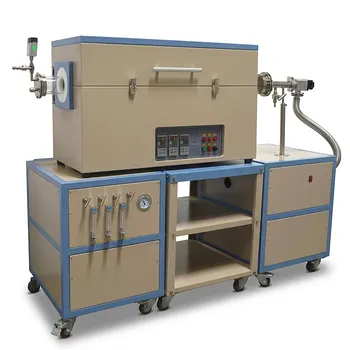
Three Zone Quartz Tube Furnace with 3 Channel Gas Mixer Vacuum Pump and Anti Corrosive Vacuum Gauge
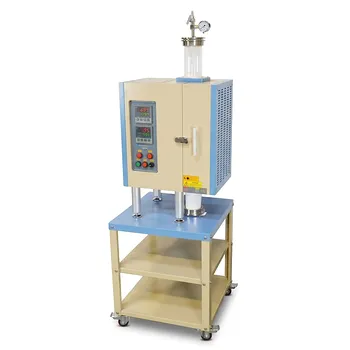
1100°C Dual Zone Split Vertical Tube Furnace with 4 Inch Quartz Tube and Vacuum Sealing Flanges
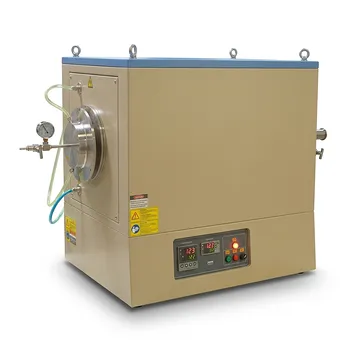
1100°C Large Diameter Quartz Tube Furnace with 24 Inch Heating Zone and Water Cooled Flanges
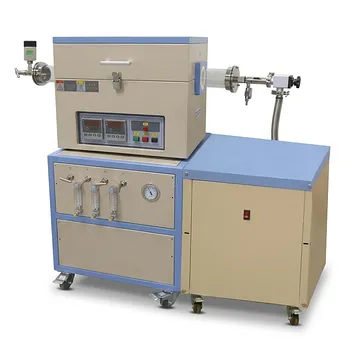
Dual Zone Quartz Tube Furnace with 80mm Diameter 1200C Max Temperature 3 Channel Gas Mixer and Vacuum Pump System
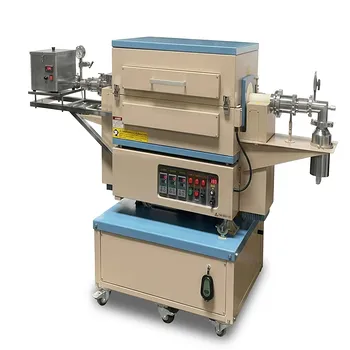
1500C 3-Zone Rotary Tube Furnace 60mm with Automatic Powder Feeding and Receiving System for Continuous Material Synthesis
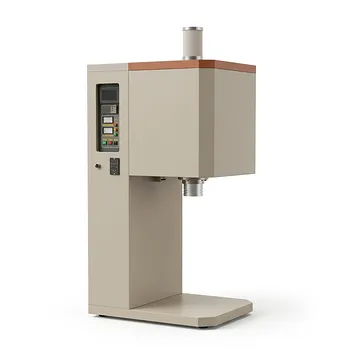
Vertical Openable Tube Furnace 0-1700c High Temperature Laboratory System for CVD and Vacuum Heat Treatment
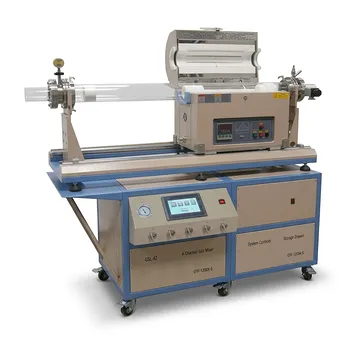
Dual Tube 100mm 80mm CVD Sliding Furnace with 4 Channel Gas Mixing and Vacuum System

High Temperature 1700C Benchtop Tube Furnace with 5 Inch Heating Zone High Purity Alumina Tube and Vacuum Sealing Flanges
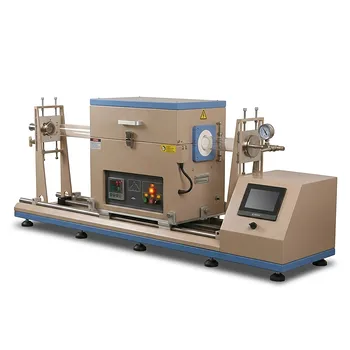
1200C Sliding Tube Furnace for Rapid Thermal Processing and CVD Graphene Growth with 100mm OD Capacity
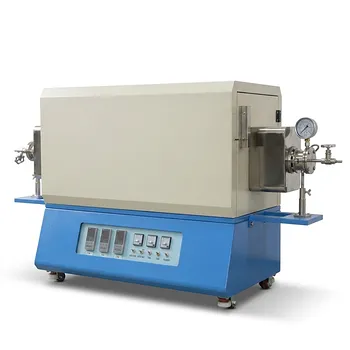
Three Temperature Zone High Temperature Vacuum Tube Furnace for CVD and Material Sintering