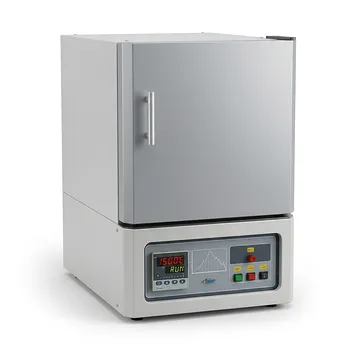
How does a laboratory oven contribute to the preparation of high-quality activated carbon? Ensure Precision & Quality
Updated 3 months ago
A laboratory oven is the fundamental tool for ensuring structural integrity and analytical accuracy in activated carbon production. By maintaining a constant, controlled thermal environment (typically between 60°C and 110°C), the oven removes moisture and volatile impurities from both raw precursors and the final activated product. This dehydration process is critical for preventing material degradation during subsequent high-temperature carbonization and for providing a stable, dry-weight basis for quality measurements.
The primary role of a laboratory oven is to provide a stable dehydration environment that ensures chemical stability and structural durability. It bridges the gap between raw biomass and high-quality activated carbon by eliminating water that would otherwise compromise pore formation or analytical precision.
Preparing Precursors for Thermal Transformation
Optimizing Physical State for Grinding and Sieving
Before carbonization can occur, raw materials—such as biomass or apricot kernels—must reach an ideal physical state. Thorough drying at approximately 110°C removes free moisture, making the materials brittle enough for precise grinding and sieving. This ensures a uniform particle size, which is essential for consistent pore development across the entire batch.
Chemical Stability and Volatile Removal
A laboratory oven facilitates the removal of unwanted volatile impurities at a constant temperature. This stage ensures the precursors reach a state of chemical stability before they enter the high-temperature furnace. Without this controlled "pre-drying," the presence of impurities can lead to inconsistent chemical reactions during the activation phase.
Preventing Pressure Accumulation During Carbonization
If precursor materials contain residual moisture when entering a high-temperature furnace, the water rapidly vaporizes, creating internal pressure. This sudden expansion can cause material degradation or physical fracturing of the carbon structure. Using a laboratory oven to ensure complete dehydration protects the integrity of the pores that will eventually provide the carbon's adsorption capacity.
Ensuring Analytical Precision and Quality Control
Standardizing Sample Weight for Accurate Yields
In a laboratory setting, calculating the yield and efficiency of the activation process requires a reliable "dry weight" basis. The oven allows researchers to dry samples until they reach a constant weight, eliminating the variable of ambient humidity. This standardization is the only way to achieve accurate, repeatable data regarding material loss and production efficiency.
Stabilizing Pore Structures for Measurement
After the activation and cleaning process, the moist activated carbon must be dried again (often at 105°C) to remove adsorbed water. This step ensures the structural stability of the final product before it undergoes rigorous testing. A dry, stable sample is mandatory for obtaining accurate measurements of surface area and pore size distribution.
Reliable Adsorption Capacity Testing
To determine how effective the activated carbon is at capturing pollutants, the material must be completely free of moisture that might block active sites. The laboratory oven removes all adsorbed moisture, ensuring that subsequent adsorption capacity measurements reflect the carbon's true performance. This provides a definitive baseline for the quality of the final product.
Understanding the Trade-offs and Limitations
Precision vs. Structural Risk
While heat is necessary for drying, excessive temperatures in a laboratory oven or furnace can be detrimental. For instance, while heating to 600°C is often required for pore formation, exceeding 700°C can cause the pore structures to collapse or sinter. Even at lower drying temperatures (105°C-110°C), prolonged exposure beyond what is necessary can occasionally lead to surface oxidation, which may alter the chemical properties of certain delicate precursors.
The Drying Time vs. Efficiency Balance
Achieving a "constant weight" is a time-intensive process that can take up to 24 hours. While shorter drying times increase laboratory throughput, they risk leaving residual internal moisture. This hidden moisture can lead to inaccurate yield calculations and poor performance in high-temperature stages, making patience a technical necessity in high-quality production.
How to Optimize Your Preparation Process
Applying Oven Protocols to Your Goals
- If your primary focus is material processing (grinding/sieving): Dry raw precursors at 110°C until brittle to ensure uniform particle size and prevent equipment clogging.
- If your primary focus is analytical accuracy: Utilize the oven to reach a constant weight both before and after activation to ensure your surface area and yield data are scientifically valid.
- If your primary focus is pore integrity: Ensure thorough dehydration at lower temperatures (60°C to 110°C) prior to high-temperature carbonization to prevent internal pressure from fracturing the carbon matrix.
By mastering the controlled dehydration provided by the laboratory oven, you secure the structural and chemical foundation required for high-performance activated carbon.
Summary Table:
| Process Stage | Primary Function | Key Benefit |
|---|---|---|
| Pre-Carbonization | Dehydration (~110°C) | Facilitates grinding and prevents structural fracturing. |
| Chemical Prep | Volatile Removal | Ensures chemical stability and reaction consistency. |
| Post-Activation | Moisture Elimination | Enables accurate surface area and pore size measurements. |
| Quality Control | Constant Weight Basis | Provides a reliable baseline for yield and adsorption data. |
Enhance Your Material R&D with THERMUNITS Expertise
High-quality activated carbon starts with precise thermal control. THERMUNITS is a leading manufacturer of high-temperature laboratory equipment, dedicated to supporting material science and industrial R&D. We offer a comprehensive suite of thermal solutions, including Muffle, Vacuum, Atmosphere, Tube, and Rotary furnaces, as well as CVD/PECVD systems, Hot Press furnaces, Dental Furnaces, and Vacuum Induction Melting (VIM) units.
Our precision-engineered equipment ensures the structural integrity and analytical accuracy required for advanced heat treatments. Contact our technical team today to find the perfect thermal processing solution for your laboratory’s unique needs.
References
- Beata Doczekalska, Andrzej Świątkowski. Activated carbons prepared from stump wood of various tree species by chemical activation and their application for water purification. DOI: 10.1007/s00107-024-02148-1
Mentioned Products
- Electric Rotary Kiln Small Rotary Furnace for Activated Carbon Regeneration
- 1200 C Maximum Three Sided Heating Top Loading Furnace with 12 x 12 x 8 Inch Chamber for Solid Oxide Fuel Cell Testing and High Temperature RD
- Compact High Temperature Bottom Loading Furnace 1700C Rapid Heating Cooling System Small Sample Thermal Cycling Equipment
- High Temperature 1500C Benchtop Muffle Furnace 3.6L Alumina Fiber Chamber Programmable Controller Sintering Annealing Carbonization Thermal Processing System
People Also Ask
- What are the primary components and heating mechanisms of an electric rotary kiln? Optimize High-Purity Heat Treatment
- Which minerals and specialty chemicals are commonly processed using electric rotary kilns? Precision Thermal Processing Guide
- What are the maintenance and service life advantages of an electric rotary kiln? 25+ Year Longevity & Low Maintenance
- How does the use of an electric rotary kiln facilitate CO2 capture in cement and lime production? Achieve High-Purity CCUS
- What thermal efficiency can be expected from an electric rotary kiln compared to fuel-fired alternatives? Gain 95% efficiency.

Tech Team · ThermUnits
Last updated on Jun 03, 2026
Related Products
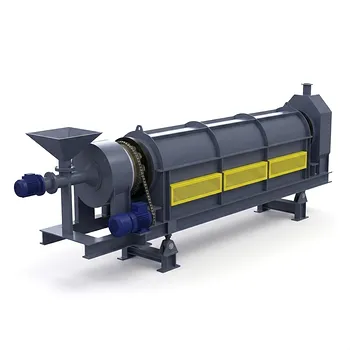
Electric Rotary Kiln Small Rotary Furnace for Activated Carbon Regeneration
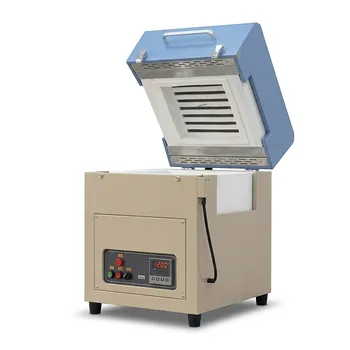
1200 C Maximum Three Sided Heating Top Loading Furnace with 12 x 12 x 8 Inch Chamber for Solid Oxide Fuel Cell Testing and High Temperature RD
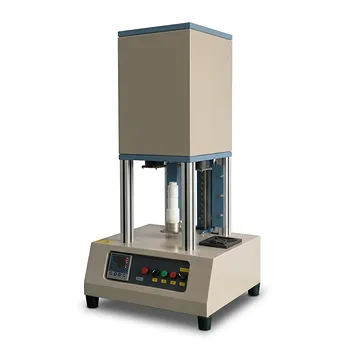
Compact High Temperature Bottom Loading Furnace 1700C Rapid Heating Cooling System Small Sample Thermal Cycling Equipment