How does a precision programmed temperature control system influence the final pore structure of biochar during pyrolysis?
Updated 5 months ago
Precision temperature control is the fundamental mechanism that dictates the pore architecture of biochar. By regulating the decomposition of biopolymers—specifically lignin, cellulose, and hemicellulose—the system ensures a controlled release of volatiles that prevents the internal framework from collapsing. This precision allows for the intentional creation of a hierarchical pore structure, balancing a high specific surface area with a mix of microporous and mesoporous channels.
A precision programmed temperature control system replaces chaotic thermal decomposition with a structured devolatilization process. This allows researchers to maximize biochar surface area and structural stability by managing heating rates and isothermal dwell times to prevent the accidental destruction of the carbon skeleton.
The Mechanics of Controlled Devolatilization
Regulating Biopolymer Decomposition
The primary function of a programmed system is to manage the distinct thermal degradation phases of lignin, cellulose, and hemicellulose. Because these components decompose at different temperatures, a precise heating curve ensures that each stage occurs in an orderly fashion. This prevents a "flash" release of gases that would otherwise rupture the delicate internal walls of the developing pores.
Managing Gas Evolution and Etching
By maintaining a stable heating rate (such as 10°C/min), the system dictates the speed at which organic volatiles escape. When used with chemical activators or additives like urea, the control system facilitates gas etching. This process, where gases like ammonia interact with the carbon matrix at specific temperatures (e.g., 700°C), is what carves out the dense network of micropores.
Isothermal Dwell Times and Pore Maturity
Setting specific isothermal holding times—or dwell times—allows the pore structure to stabilize and "mature" without further weight loss. A defined dwell time of several hours ensures the aromatic carbon skeleton is fully formed. This consistency is critical for achieving a high specific surface area, as it provides enough time for the escape of stubborn volatiles without over-exposing the char to damaging heat.
Preserving Structural Integrity and Functional Sites
Preventing Framework Collapse
Rapid temperature spikes create internal pressure as volatiles expand, often leading to the sudden collapse of the biochar framework. A precision system allows for slow heating rates (as low as 2°C/min), which are essential for preserving complex geometries like two-dimensional leaf-like skeletons. This stability ensures that the biochar retains the physical characteristics required for its intended application.
Controlling Secondary Pyrolysis and Free Radicals
Temperature precision is vital during secondary pyrolysis phases (200–600 °C) where the stability of persistent free radicals (PFRs) is determined. Specific intervals dictate the conversion of phenolic substances; for instance, exceeding 400°C in certain modified chars can cause the aggregation of metal clusters and the breakage of coordination bonds. Precise management ensures these active sites remain distributed and functional.
Synergy with Metal Catalysts
When biochar is modified with metals like iron or cobalt, temperature control prevents particle agglomeration. A stable profile ensures that metal particles remain uniformly distributed on the carbon surface rather than melting together into large, inactive clumps. This is particularly important for producing biochar with catalytic properties or magnetic functionality.
Understanding the Trade-offs
Yield vs. Specific Surface Area
One of the most significant trade-offs is the relationship between temperature and biochar yield. Increasing the set temperature—for example, from 300°C to 700°C—accelerates the escape of volatile organic compounds, which decreases the final yield of biochar. However, this loss is often acceptable because the higher temperatures facilitate a more developed microporous structure and a significantly larger surface area.
Heating Rate vs. Pore Connectivity
While ultra-slow heating rates (e.g., 2°C/min) are excellent for preserving structural skeletons, they may lead to different pore connectivity compared to moderate rates (e.g., 30°C/min). A very fast heating rate can sometimes create a honeycomb microporous structure via rapid gas expansion, but it risks structural fragility. The choice of rate must be carefully balanced against the desired mechanical strength of the final product.
How to Apply Calibration to Your Research Goals
Making the Right Choice for Your Goal
To achieve the desired biochar characteristics, you must align your programmed temperature profile with your specific physical requirements.
- If your primary focus is Soil Improvement/Adsorption: Prioritize higher temperatures (600–700°C) and moderate heating rates to maximize specific surface area and micropore development.
- If your primary focus is Catalyst Support: Utilize slow heating rates and precise dwell times at lower temperature intervals to ensure uniform metal distribution and prevent cluster aggregation.
- If your primary focus is Structural Template Retention: Implement a very slow ramp-up (2-5°C/min) to prevent internal stress and preserve the original biomass skeletal morphology.
- If your primary focus is Maximizing Biochar Yield: Limit the peak pyrolysis temperature and utilize shorter dwell times to minimize the total loss of volatile carbon.
Effective pore engineering is ultimately a balance of thermal precision, where the heating curve is used as a tool to surgically remove unwanted biomass components while preserving the carbon backbone.
Summary Table:
| Control Parameter | Influence on Pore Structure | Recommended Application |
|---|---|---|
| Slow Heating (2-5°C/min) | Preserves structural integrity; prevents framework collapse | Template Retention & Complex Geometries |
| High Peak Temp (600-700°C) | Maximizes micropore development and specific surface area | Soil Improvement & Adsorption |
| Precise Dwell Time | Ensures carbon skeleton maturity and aromatic stability | High-Stability Carbon Materials |
| Gas Etching (Controlled) | Carves dense micropore networks via ammonia/volatiles | Activated Carbon & Catalyst Support |
Elevate Your Material Research with THERMUNITS
Precision is the difference between a collapsed framework and a high-performance carbon material. THERMUNITS is a leading manufacturer of high-temperature laboratory equipment, providing the thermal precision necessary for advanced material science and industrial R&D.
Whether your research requires Tube, Rotary, Atmosphere, or Vacuum furnaces, our systems deliver the exact heating rates and isothermal dwell times needed to engineer superior biochar pore structures. We offer a comprehensive range of solutions, including CVD/PECVD systems, Muffle furnaces, and Vacuum Induction Melting (VIM) furnaces, designed for researchers who demand consistency and control.
Ready to optimize your pyrolysis process? Contact our engineering team today to find the perfect thermal processing solution for your laboratory.
References
- Douha Sabah Khudair, Yasser I. Abdul-Aziz. Preparation and Characterization of Biochar from New Precursor. DOI: 10.29194/njes.27040441
Mentioned Products
- 1100°C Vertical Laboratory Furnace for DIY Tubular Reactors with PID Temperature Controller
- 1500C Three Zone Vertical Pyrolysis Furnace for Nanoparticle Synthesis and Advanced Oxide Coating
- 1200°C Small Box Furnace 4.2 Liter Programmable Muffle Furnace with High Purity Alumina Insulation and PID Control
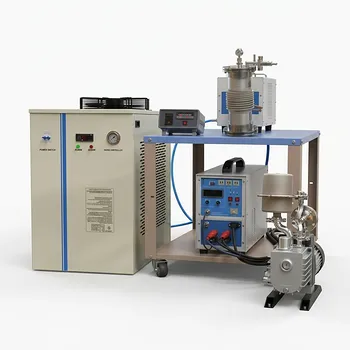
- Induction Heating System with Temperature Control for High Temperature Vacuum Sintering and Melting
People Also Ask
- What are the advantages of 1100°C tube furnaces for ORR catalysts? Boost Conductivity and Structural Stability.
- What is the objective of performing long-term annealing at 653 K on quenched PbTe-Ag2Te? Drive Ostwald Ripening.
- Why is a laboratory furnace with ultra-high heating rate capabilities necessary for simulating coal injection processes?
- Why is a tube furnace required for pre-oxidation? Enhance Ti(Nb)-Si-C coating adhesion and substrate durability.
- What specific physical conditions does a laboratory tube furnace provide for cg-N synthesis? Master Thermal Precision

Tech Team · ThermUnits
Last updated on Apr 14, 2026
Related Products
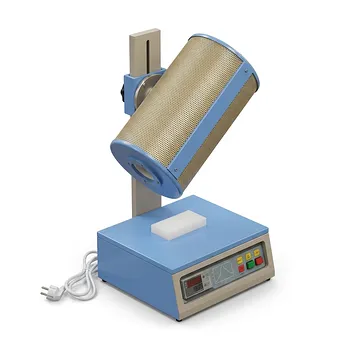
1100°C Vertical Laboratory Furnace for DIY Tubular Reactors with PID Temperature Controller
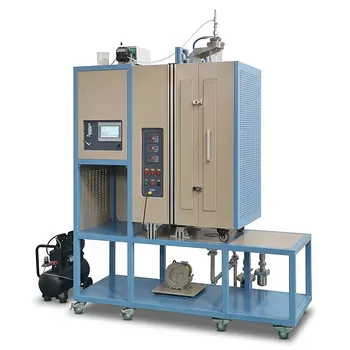
1500C Three Zone Vertical Pyrolysis Furnace for Nanoparticle Synthesis and Advanced Oxide Coating
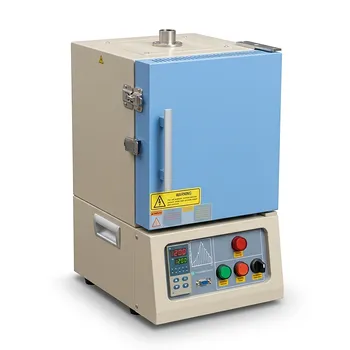
1200°C Small Box Furnace 4.2 Liter Programmable Muffle Furnace with High Purity Alumina Insulation and PID Control