What is the objective of performing long-term annealing at 653 K on quenched PbTe-Ag2Te? Drive Ostwald Ripening.
Updated 3 months ago
The primary objective of performing long-term annealing at 653 K on quenched PbTe-Ag$_2$Te is to drive Ostwald Ripening. This thermodynamic process facilitates the growth of large, plate-like Ag$_2$Te secondary phases and the induction of high-density dislocations. By restructuring the material at this specific temperature, engineers can precisely regulate the phonon and electron transport properties, which are critical for the efficiency of thermoelectric materials.
Core Takeaway: Long-term annealing at 653 K acts as a structural refinement tool that uses Ostwald Ripening to transform Ag-rich clusters into stable secondary phases. This microstructural evolution is essential for optimizing the balance between electrical conductivity and thermal resistance in PbTe-based semiconductors.
The Mechanism of Ostwald Ripening
Dissolution of Unstable Clusters
In the initial quenched state, PbTe-Ag$_2$Te samples often contain small, energetically unstable silver-rich clusters. Annealing at 653 K provides the necessary thermal energy for these small clusters to dissolve back into the matrix.
Growth of Plate-like Secondary Phases
As the smaller clusters dissolve, the silver atoms redistribute to form larger, more stable plate-like Ag$_2$Te secondary phases. This transition is driven by the system's need to reach a lower energy state by reducing the overall surface area of the precipitates.
Induction of High-Density Dislocations
The structural reorganization during the 48-hour treatment does not just grow phases; it also induces high-density dislocations within the crystal lattice. These dislocations serve as critical "scattering centers" that influence how energy moves through the material.
Optimization of Thermoelectric Transport
Regulating Phonon Transport
One of the deepest needs in thermoelectric design is the reduction of lattice thermal conductivity. The large Ag$_2$Te plates and high-density dislocations created during annealing effectively scatter phonons, hindering the flow of heat without necessarily blocking the flow of charge.
Tuning Electron Conductivity
While phonons are scattered, the annealing process also promotes atomic diffusion, which helps optimize the crystal structure's integrity. As noted in similar thermoelectric treatments, this allows for a more controlled balance between the Seebeck coefficient and electrical conductivity.
Achieving Phase Purity
By maintaining a constant temperature in a laboratory furnace, the material reaches a state of greater structural stability. This eliminates local internal stresses generated during the rapid quenching process and ensures the secondary phases are distributed in a way that provides consistent electronic performance.
Understanding the Trade-offs
Time vs. Structural Coarsening
The 48-hour duration is a significant investment in time and energy. While it facilitates ripening, excessive annealing times can lead to over-coarsening, where the secondary phases become too large to effectively scatter phonons of specific wavelengths.
Energy Cost and Equipment Wear
Maintaining a high-precision furnace at 653 K for two days requires a stable environment and consistent power. Fluctuations in temperature during this long-term process can result in non-uniform phase distribution or "unstable impurities" that degrade the material's final electrochemical or thermoelectric activity.
The Quenching Strain Balance
While annealing eliminates the internal stresses of rapid forming, some level of strain is often desirable for specific transport properties. Total stress relaxation might inadvertently reduce the density of useful defects that were contributing to the material's low thermal conductivity.
How to Apply This to Your Material Project
Recommendations for Process Control
- If your primary focus is reducing thermal conductivity: Prioritize the 48-hour duration to ensure the formation of high-density dislocations and large plate-like phases that maximize phonon scattering.
- If your primary focus is optimizing electrical mobility: Monitor the heating curve precisely to ensure atomic diffusion enhances crystal integrity without allowing Ag$_2$Te phases to grow large enough to act as barriers to electron flow.
- If your primary focus is structural stability: Use a vacuum or controlled atmosphere during the 653 K soak to prevent the oxidation of silver or the formation of oxygen vacancies that could alter the semiconductor's carrier concentration.
By precisely controlling the annealing environment to drive Ostwald Ripening, you transform a disordered quenched sample into a high-performance, structurally optimized thermoelectric material.
Summary Table:
| Process Aspect | Mechanism Involved | Resulting Material Impact |
|---|---|---|
| Thermal Energy | Ostwald Ripening | Growth of stable plate-like Ag₂Te phases |
| Structural Shift | Atomic Diffusion | Induction of high-density dislocations |
| Transport Tuning | Phonon Scattering | Reduced lattice thermal conductivity |
| 48-Hour Soak | Phase Stabilization | Balanced Seebeck coefficient & conductivity |
Master Your Material Science with THERMUNITS
Precise heat treatment is the cornerstone of advanced material R&D. At THERMUNITS, we specialize in manufacturing high-performance laboratory equipment designed to meet the rigorous demands of thermoelectric and semiconductor research.
Whether you are driving Ostwald Ripening or refining crystal structures, our comprehensive range of thermal solutions—including Muffle, Vacuum, Atmosphere, Tube, Rotary, and Hot Press furnaces, CVD/PECVD systems, and Vacuum Induction Melting (VIM) furnaces—provides the ultimate temperature stability and environment control.
Ready to elevate your lab's thermal processing capabilities? Contact THERMUNITS Today to consult with our experts and find the perfect furnace for your specific research goals.
References
- Yuan Yu, Siyuan Zhang. Ostwald Ripening of Ag<sub>2</sub>Te Precipitates in Thermoelectric PbTe: Effects of Crystallography, Dislocations, and Interatomic Bonding. DOI: 10.1002/aenm.202304442
Mentioned Products
- 1100°C Vertical Laboratory Furnace for DIY Tubular Reactors with PID Temperature Controller
- 1750C Compact Muffle Furnace 1.7L Ultra High Temperature Laboratory Sintering System for Advanced Ceramics and Material Science Research
- Vertical Crucible Furnace 1000C High Temperature Laboratory Equipment 4.7 Inch Diameter Chamber SS316 Anti Corrosive Enclosure
- Laboratory Tilting Rotary Tubular Furnaces for Material Science and Industrial Heat Treatment
- High Temperature Mini Induction Heating Furnace 1600C Laboratory Material Melting System
People Also Ask
- What are the advantages of 1100°C tube furnaces for ORR catalysts? Boost Conductivity and Structural Stability.
- Why is a laboratory furnace with ultra-high heating rate capabilities necessary for simulating coal injection processes?
- Why is a tube furnace required for pre-oxidation? Enhance Ti(Nb)-Si-C coating adhesion and substrate durability.
- What specific physical conditions does a laboratory tube furnace provide for cg-N synthesis? Master Thermal Precision
- What role does a laboratory tube furnace play in the pyrolysis and carbonization of biomass? Optimize Thermal Research.

Tech Team · ThermUnits
Last updated on Jun 02, 2026
Related Products
1100°C Vertical Laboratory Furnace for DIY Tubular Reactors with PID Temperature Controller
1750C Compact Muffle Furnace 1.7L Ultra High Temperature Laboratory Sintering System for Advanced Ceramics and Material Science Research
Vertical Crucible Furnace 1000C High Temperature Laboratory Equipment 4.7 Inch Diameter Chamber SS316 Anti Corrosive Enclosure
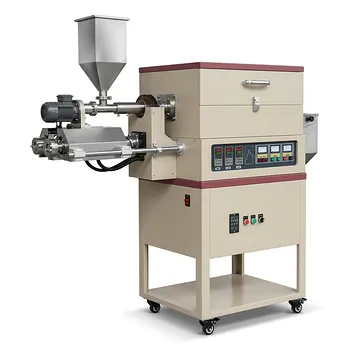
Laboratory Tilting Rotary Tubular Furnaces for Material Science and Industrial Heat Treatment
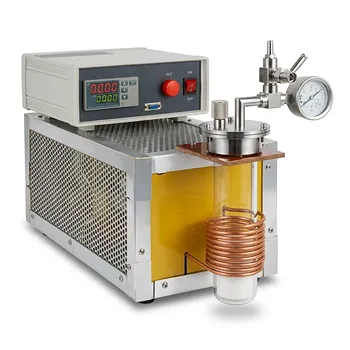
High Temperature Mini Induction Heating Furnace 1600C Laboratory Material Melting System
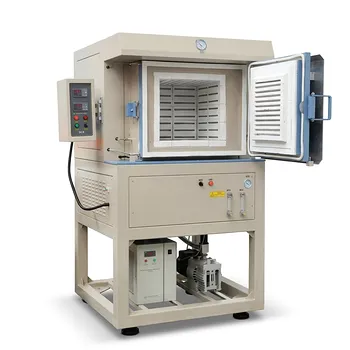
1200°C Five Side Heating Atmosphere Controlled Muffle Furnace 64 Liter High Uniformity Box Furnace for Material Synthesis
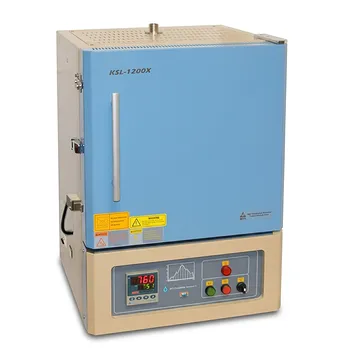
High Temperature 1200C Muffle Furnace 27L Volume 12x12x12 Chamber with Programmable PID Controller for Laboratory Material Science
1800C Bench Top Muffle Furnace with Kanthal Super 1900 Heating Elements and 3.6L Alumina Fiber Chamber
1200°C High Temperature Muffle Furnace 19L Chamber with 50 Segment Programmable Controller
Three Temperature Zone Fast Heating Furnace 1500C Laboratory High Precision Thermal Processing System
Five Sided Heating Muffle Furnace High Uniformity 1200C Lab Box Furnace 27L Alumina Fiber Chamber
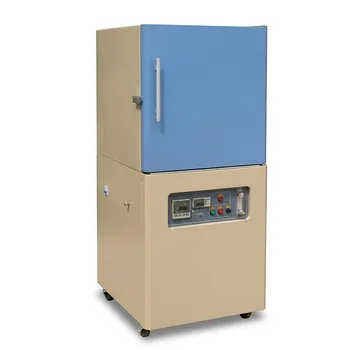
High Temperature Muffle Furnace with Dual Controllers and 36L Large Chamber 1700C Max
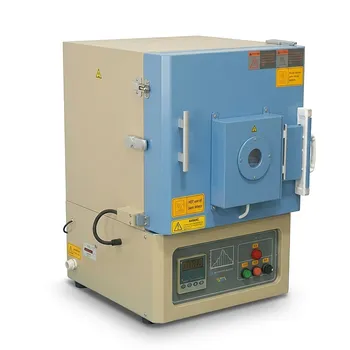
High Temperature Benchtop Muffle Furnace 1500C with 3.6L Chamber and Quartz Observation Window
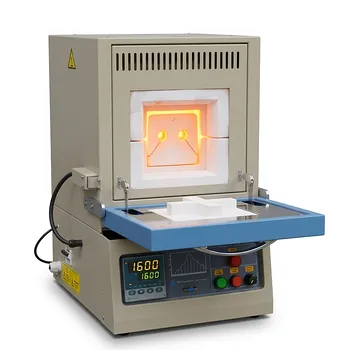
High Temperature Compact Muffle Furnace 1700 C with 30 Segment Programmable Controller and 1.7L Cubic Chamber
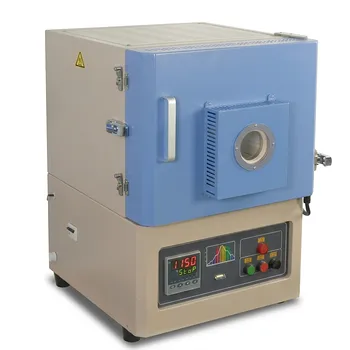
High Temperature Benchtop Muffle Furnace with Quartz Observation Window for Thermal Imaging and Material Analysis
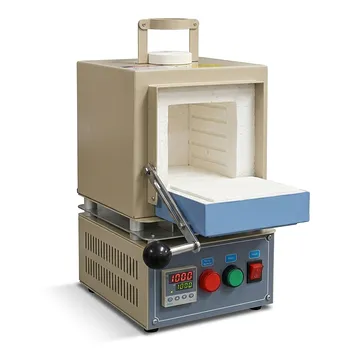
Compact 1000C Muffle Furnace with Programmable Controller and 2 Inch Top Port for Vacuum and Atmosphere Material Research
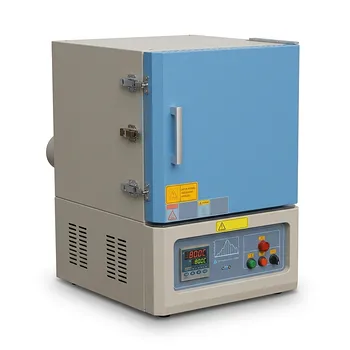
1800C Bench Top Muffle Furnace 18 Liters with Kanthal Super 1900 Heating Elements for High Purity Ceramic Sintering and Material Research
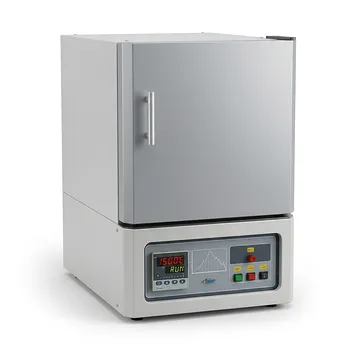
High Temperature 1500C Benchtop Muffle Furnace 3.6L Alumina Fiber Chamber Programmable Controller Sintering Annealing Carbonization Thermal Processing System
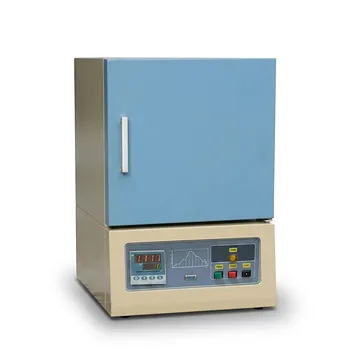
Ultra High Temperature Bench Top Muffle Furnace 1750C Sintering System with Kanthal Super Heating Elements and Precision Digital Control