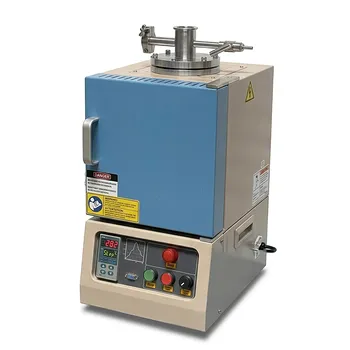
Why is a laboratory furnace with ultra-high heating rate capabilities necessary for simulating coal injection processes?
Updated 3 months ago
The necessity of ultra-high heating rates stems from the extreme physical conditions of industrial metallurgy. To accurately simulate coal injection, laboratory furnaces must reach heating rates of up to 2000°C/min. This speed is required because conventional thermal analysis equipment is too slow to mimic the near-instantaneous pyrolysis and ignition that occurs when pulverized coal enters a blast furnace tuyere.
Core Takeaway: Simulating coal injection requires ultra-high heating rates to bridge the gap between laboratory observations and industrial reality. Only by matching the rapid thermal kinetics of a blast furnace can researchers obtain the accurate data needed to optimize fuel efficiency and combustion stability.
Replicating the Industrial Blast Furnace Environment
The Extreme Reality of the Tuyere Zone
In an industrial blast furnace, pulverized coal is injected into the tuyere zone, where it encounters a high-velocity, high-temperature blast. The transition from ambient temperature to combustion temperature happens in a fraction of a second. If a laboratory setup cannot match this speed, the resulting data will fail to predict how the coal will actually behave in a real-world furnace.
The Failure of Conventional Thermal Analysis
Standard laboratory furnaces often operate at modest heating rates of 10°C to 20°C per minute. While these rates are sufficient for general heat treatment or annealing, they are orders of magnitude too slow for coal injection simulation. Slow heating allows for different chemical pathways and structural changes that do not occur during the rapid "flash" heating found in industrial processes.
The Significance of Kinetic Accuracy
Capturing Rapid Pyrolysis
The first stage of coal combustion is pyrolysis, the thermal decomposition of organic matter in the absence of oxygen. Ultra-high heating rates ensure that the release of volatile matter is captured as it happens in the tuyere—violently and nearly instantaneously. This allows researchers to calculate kinetically relevant parameters that are essential for designing more efficient injection systems.
Precision in Ignition Timing
Ignition is a time-sensitive event that dictates the efficiency of the entire combustion process. By using a furnace capable of 2000°C/min, scientists can observe the exact moment of ignition under realistic conditions. This data provides the "industrial guidance" necessary to adjust coal blends and oxygen enrichment levels in the mill.
Understanding the Trade-offs and Technical Challenges
Thermal Stress and Equipment Longevity
Operating at ultra-high heating rates puts immense thermal stress on the furnace components and the crucible. Rapid expansion can lead to material fatigue or cracking in standard ceramic linings. Specialized materials and engineering are required to maintain a stable environment while cycling temperatures so aggressively.
Data Acquisition and Sensor Sensitivity
At heating rates of 2000°C/min, traditional thermocouples may suffer from thermal lag. The speed of the reaction often outpaces the ability of standard sensors to record data accurately. Successful simulation requires high-speed data acquisition systems to ensure the "real-time" temperature of the sample matches the programmed curve.
Applying These Insights to Your Research Goals
How to Choose Your Thermal Strategy
The choice of furnace depends entirely on the specific phase of coal processing or carbon science you are investigating.
- If your primary focus is industrial coal injection: You must utilize an ultra-high heating rate furnace (up to 2000°C/min) to capture valid kinetic data for the tuyere zone.
- If your primary focus is coal gangue utilization: Use a high-temperature muffle furnace (500-800°C) to induce dehydroxylation and improve the pozzolanic activity of concrete aggregates.
- If your primary focus is graphene production: Opt for an ultra-high temperature graphitization furnace (up to 2800°C) to drive the structural reorganization of macromolecules into layered aromatics.
- If your primary focus is phase transition and crystal growth: A programmable tube or box furnace is sufficient to provide the uniform thermal field needed for controlled atomic diffusion.
Accurate simulation is not just about reaching the right temperature, but reaching it at the right speed to mirror the industrial reality.
Summary Table:
| Feature | Conventional Lab Furnace | Ultra-High Rate Furnace |
|---|---|---|
| Heating Rate | 10°C - 20°C/min | Up to 2000°C/min |
| Simulation Target | General Heat Treatment | Blast Furnace Tuyere Zone |
| Pyrolysis Stage | Slow Decomposition | Rapid "Flash" Pyrolysis |
| Kinetic Accuracy | Low (Non-representative) | High (Industrial Validity) |
| Primary Challenge | Uniformity at Stability | Thermal Stress & Data Lag |
Elevate Your Industrial R&D with THERMUNITS
Accurate simulation requires thermal equipment that can match real-world speeds and extreme conditions. THERMUNITS is a leading manufacturer of high-temperature laboratory equipment, offering a comprehensive range of solutions including Muffle, Vacuum, Atmosphere, Tube, Rotary, and Hot Press furnaces, as well as CVD/PECVD systems, Dental Furnaces, and Vacuum Induction Melting (VIM) furnaces.
We empower material science researchers to bridge the gap between laboratory observations and industrial reality with precision-engineered thermal elements and heat treatment systems.
Ready to optimize your thermal processing? Contact us today to find the perfect solution for your specific research goals!
References
- Stupak Yurii. THE METHOD OF DIFFERENTIAL THERMAL ANALYSIS IN STUDIES OF THE SOLID PULVERIZED FUEL DESTRUCTION AT A HIGH HEATING RATE. DOI: 10.34185/1991-7848.itmm.2024.01.014
Mentioned Products
- 1100°C Vertical Laboratory Furnace for DIY Tubular Reactors with PID Temperature Controller
- 1750C Compact Muffle Furnace 1.7L Ultra High Temperature Laboratory Sintering System for Advanced Ceramics and Material Science Research
- Vertical Crucible Furnace 1000C High Temperature Laboratory Equipment 4.7 Inch Diameter Chamber SS316 Anti Corrosive Enclosure
- Laboratory Tilting Rotary Tubular Furnaces for Material Science and Industrial Heat Treatment
- High Temperature Mini Induction Heating Furnace 1600C Laboratory Material Melting System
People Also Ask
- What are the advantages of 1100°C tube furnaces for ORR catalysts? Boost Conductivity and Structural Stability.
- What is the objective of performing long-term annealing at 653 K on quenched PbTe-Ag2Te? Drive Ostwald Ripening.
- Why is a tube furnace required for pre-oxidation? Enhance Ti(Nb)-Si-C coating adhesion and substrate durability.
- What specific physical conditions does a laboratory tube furnace provide for cg-N synthesis? Master Thermal Precision
- What role does a laboratory tube furnace play in the pyrolysis and carbonization of biomass? Optimize Thermal Research.

Tech Team · ThermUnits
Last updated on Jun 02, 2026
Related Products
1100°C Vertical Laboratory Furnace for DIY Tubular Reactors with PID Temperature Controller
1750C Compact Muffle Furnace 1.7L Ultra High Temperature Laboratory Sintering System for Advanced Ceramics and Material Science Research
Vertical Crucible Furnace 1000C High Temperature Laboratory Equipment 4.7 Inch Diameter Chamber SS316 Anti Corrosive Enclosure
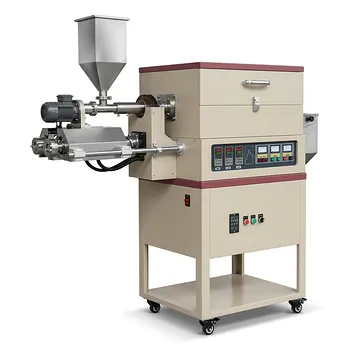
Laboratory Tilting Rotary Tubular Furnaces for Material Science and Industrial Heat Treatment
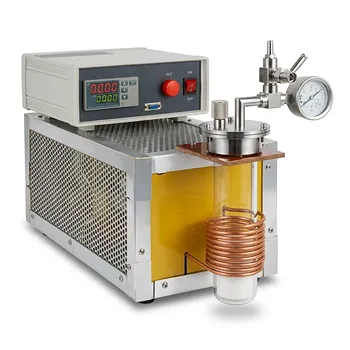
High Temperature Mini Induction Heating Furnace 1600C Laboratory Material Melting System
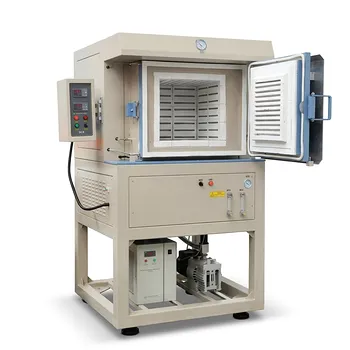
1200°C Five Side Heating Atmosphere Controlled Muffle Furnace 64 Liter High Uniformity Box Furnace for Material Synthesis
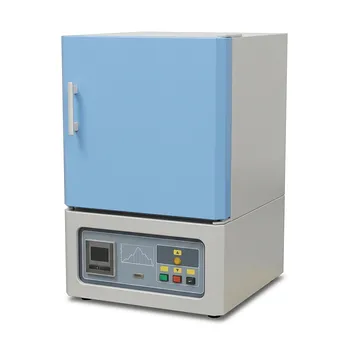
1800C Bench Top Muffle Furnace with Kanthal Super 1900 Heating Elements and 3.6L Alumina Fiber Chamber
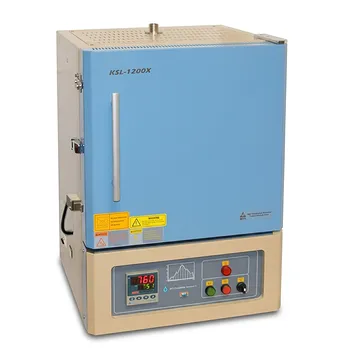
High Temperature 1200C Muffle Furnace 27L Volume 12x12x12 Chamber with Programmable PID Controller for Laboratory Material Science
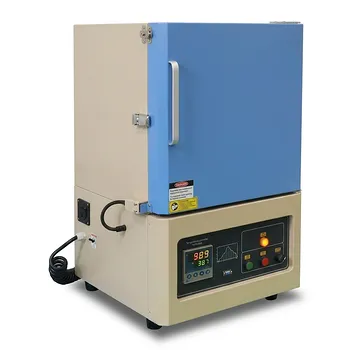
1200°C High Temperature Muffle Furnace 19L Chamber with 50 Segment Programmable Controller
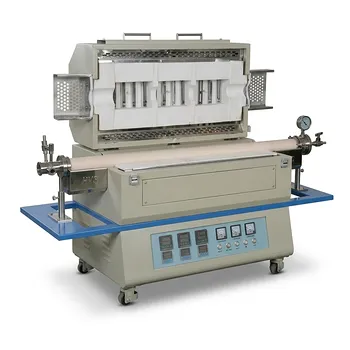
Three Temperature Zone Fast Heating Furnace 1500C Laboratory High Precision Thermal Processing System
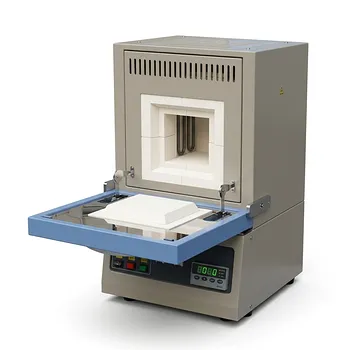
Five Sided Heating Muffle Furnace High Uniformity 1200C Lab Box Furnace 27L Alumina Fiber Chamber
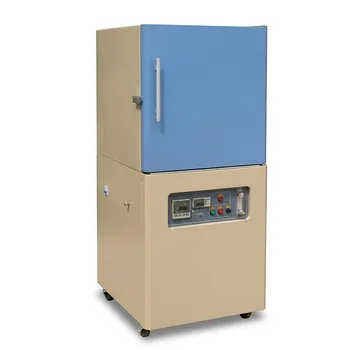
High Temperature Muffle Furnace with Dual Controllers and 36L Large Chamber 1700C Max
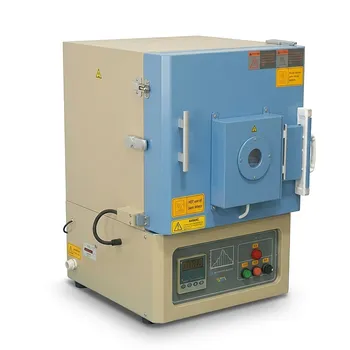
High Temperature Benchtop Muffle Furnace 1500C with 3.6L Chamber and Quartz Observation Window
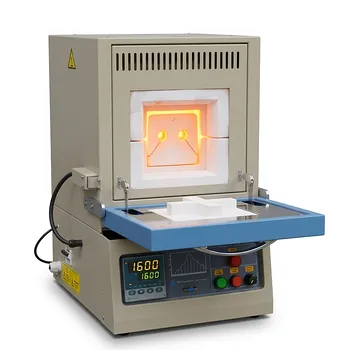
High Temperature Compact Muffle Furnace 1700 C with 30 Segment Programmable Controller and 1.7L Cubic Chamber
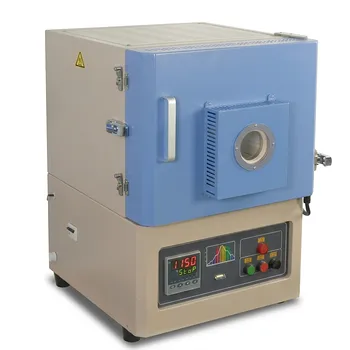
High Temperature Benchtop Muffle Furnace with Quartz Observation Window for Thermal Imaging and Material Analysis
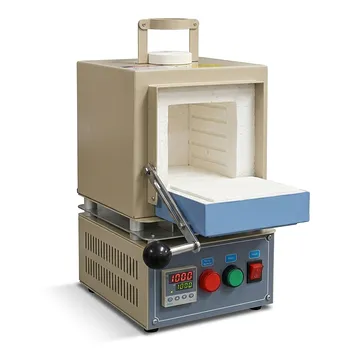
Compact 1000C Muffle Furnace with Programmable Controller and 2 Inch Top Port for Vacuum and Atmosphere Material Research
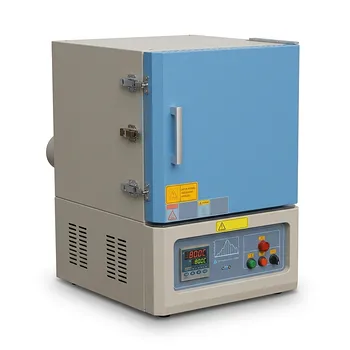
1800C Bench Top Muffle Furnace 18 Liters with Kanthal Super 1900 Heating Elements for High Purity Ceramic Sintering and Material Research
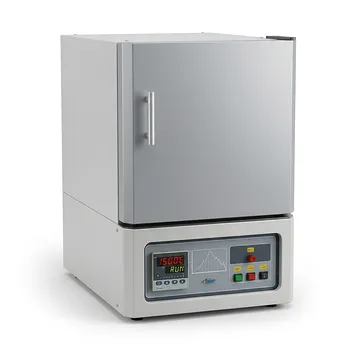
High Temperature 1500C Benchtop Muffle Furnace 3.6L Alumina Fiber Chamber Programmable Controller Sintering Annealing Carbonization Thermal Processing System
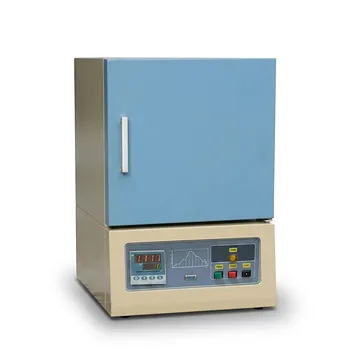
Ultra High Temperature Bench Top Muffle Furnace 1750C Sintering System with Kanthal Super Heating Elements and Precision Digital Control