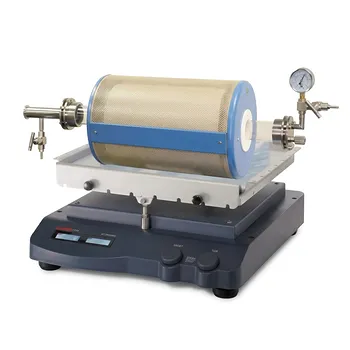
What specific physical conditions does a laboratory tube furnace provide for cg-N synthesis? Master Thermal Precision
Updated 3 months ago
The synthesis of cubic polymeric nitrogen (cg-N) in a laboratory tube furnace relies on three specific physical parameters: precise isothermal heating between 150°C and 300°C, a controlled vacuum or protective atmosphere, and high-precision thermal regulation. These conditions facilitate the chemical transformation of the Potassium Azide (KN3) precursor into a stable, three-dimensional cubic network.
Core Takeaway: A laboratory tube furnace acts as a specialized reactor that balances precursor decomposition with polymerization. By maintaining a stable thermal and atmospheric environment, it allows for the one-stage synthesis of cg-N with yields reaching up to 1.5 wt%.
The Role of Precise Isothermal Heating
Maintaining the 150–300°C Thermal Window
The primary function of the furnace is to provide a steady isothermal environment within a specific range of 150 to 300 degrees Celsius. This temperature window is narrow because it must provide enough energy to break precursor bonds without destroying the resulting polymer.
Balancing Decomposition and Polymerization
At these temperatures, the Potassium Azide (KN3) precursor begins to decompose. The tube furnace ensures that this decomposition happens at a rate that allows the nitrogen atoms to rearrange into a high-thermal-stability cubic network.
Critical Temperature Precision
Minor fluctuations in temperature can significantly impact the final product. High-precision control is mandatory to maximize yields, which typically peak at approximately 1.5 wt% under optimal conditions.
Atmospheric and Pressure Management
Implementation of Vacuum Environments
The tube furnace provides the hardware necessary to maintain a vacuum, which is often required to remove unwanted byproducts during the synthesis process. This prevents contamination of the nitrogen network as it forms.
Use of Protective Atmospheres
In some configurations, the furnace maintains a protective atmosphere using inert gases. This protects the chemical integrity of the KN3 precursor and the resulting cg-N from oxidation or other interfering reactions.
Promoting Structural Integrity
By controlling the gaseous environment, the furnace ensures that the transition metal ions and nitrogen atoms interact correctly. This stability is vital for preserving the integrity of the crystal structure during the one-stage synthesis.
Understanding the Trade-offs and Pitfalls
The Risk of Thermal Overrun
If the furnace exceeds the 300°C threshold, the polymerization process can fail, leading to the complete breakdown of the nitrogen structure. This results in the loss of the cubic network and a failed synthesis.
Insufficient Kinetic Energy
Conversely, operating below 150°C often results in incomplete transformation of the KN3 precursor. In these cases, the energy is insufficient to drive the polymerization, leading to low yields or unreacted material.
Atmospheric Contamination
Failure to maintain a strict vacuum or protective gas flow can introduce oxygen or moisture. Even trace amounts of contaminants can disrupt the nitrogen bonding, preventing the formation of a high-stability product.
How to Apply These Conditions to Your Synthesis
To achieve a successful one-stage synthesis of cubic polymeric nitrogen, your laboratory setup must prioritize environmental stability.
- If your primary focus is maximizing yield: Ensure your furnace has a PID controller capable of maintaining 0.1°C precision within the 150–300°C range to perfectly balance decomposition.
- If your primary focus is structural purity: Prioritize the integrity of the vacuum system or the purity of the protective gas to prevent any atmospheric interference with the KN3 transformation.
- If your primary focus is material stability: Focus on the isothermal cooling phase after synthesis to ensure the cubic network remains intact as it returns to room temperature.
By masterfully controlling the thermal and atmospheric variables within a tube furnace, you can successfully navigate the complex transition from azide precursors to stable polymeric nitrogen.
Summary Table:
| Physical Parameter | Optimal Requirement | Impact on cg-N Synthesis |
|---|---|---|
| Temperature Range | 150°C to 300°C | Balances KN3 decomposition with nitrogen polymerization |
| Atmosphere | Vacuum or Inert Gas | Prevents oxidation and ensures chemical integrity |
| Thermal Control | High-precision (PID) | Maximizes product yield (up to 1.5 wt%) |
| Environment | Isothermal Cooling | Preserves cubic network structure after synthesis |
Elevate Your Advanced Material Synthesis with THERMUNITS
Precise thermal and atmospheric control is the difference between success and failure in high-stability material research. THERMUNITS is a leading manufacturer of high-temperature laboratory equipment for material science and industrial R&D. We provide the specialized tools necessary for complex processes like cubic polymeric nitrogen synthesis.
Our comprehensive range includes:
- Tube and Vacuum Furnaces with high-precision PID regulation.
- Atmosphere, Muffle, and Rotary Furnaces for diverse heat treatments.
- CVD/PECVD Systems, Hot Press Furnaces, and Vacuum Induction Melting (VIM) units.
- Dental Furnaces, Thermal Elements, and Electric Rotary Kilns.
Achieve superior yields and structural integrity in your lab. Contact THERMUNITS today to discuss your specific thermal processing requirements!
References
- Liangfei Wu, Xianlong Wang. One-step synthesis of cubic gauche polymeric nitrogen with high yield just by heating. DOI: 10.1088/1674-1056/ad9569
Mentioned Products
- Multi Position Tube Furnace 1100C for Laboratory Material Research and Advanced Industrial Thermal Processing
- Ten Zone Multi Orientation Laboratory Tube Furnace for 1200C High Temperature Gradient Thermal Processing
- High Temperature 1200C Split Tube Furnace with Hinged Vacuum Flanges and 4 Inch Quartz Tube for Laboratory Research
- High Temperature Automated 5 Inch Tube Furnace for Autonomous Material Research and Advanced Laboratory R&D
- 1800C High Temperature Compact Vacuum Tube Furnace with 60mm OD Alumina Tube and Kanthal MoSi2 Heating Elements
People Also Ask
- Why use a tube furnace for oxygen annealing LaCrO3/LaMnO3? Optimize Phase Transition & Magnetic Performance.
- What key role does a laboratory high-temperature tube furnace play in the production of carbon nanofibers? Guide
- How is a laboratory high-temperature tube furnace utilized to research the products of aluminothermic reduction? Advanced Metallurgical Solutions
- What is the role of a laboratory tube furnace in the carbonization process of porous carbon foam (PCF)? Master 3D Synthesis
- What role does a laboratory tube furnace play in the pyrolysis and carbonization of biomass? Optimize Thermal Research.

Tech Team · ThermUnits
Last updated on Jun 03, 2026
Related Products
Multi Position Tube Furnace 1100C for Laboratory Material Research and Advanced Industrial Thermal Processing
Ten Zone Multi Orientation Laboratory Tube Furnace for 1200C High Temperature Gradient Thermal Processing
High Temperature 1200C Split Tube Furnace with Hinged Vacuum Flanges and 4 Inch Quartz Tube for Laboratory Research

High Temperature Automated 5 Inch Tube Furnace for Autonomous Material Research and Advanced Laboratory R&D

1800C High Temperature Compact Vacuum Tube Furnace with 60mm OD Alumina Tube and Kanthal MoSi2 Heating Elements
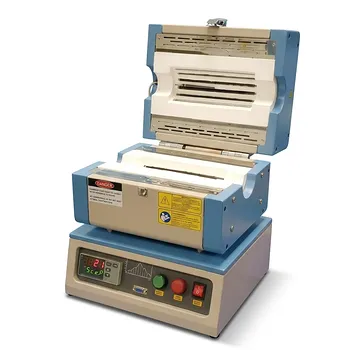
1250C Compact Split Tube Furnace with 8 Inch Heating Zone and Programmable Controller
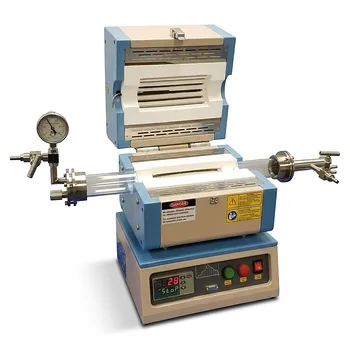
Compact Split Tube Furnace with Integrated Vacuum System and Precision Temperature Calibrator
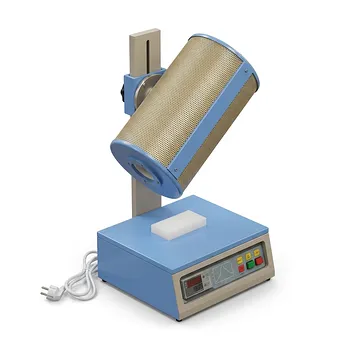
1100°C Vertical Laboratory Furnace for DIY Tubular Reactors with PID Temperature Controller
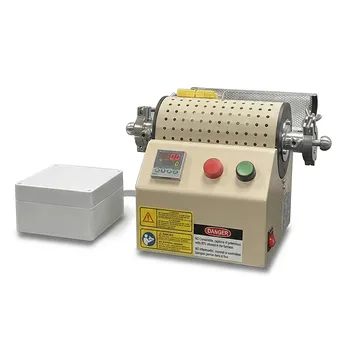
1000C Mini Tube Furnace with 20mm Quartz Tube and Vacuum Flanges for Material Science Research and Controlled Atmosphere Small Sample Processing
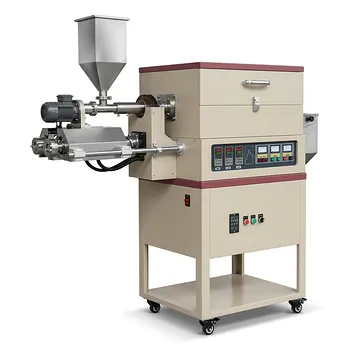
Laboratory Tilting Rotary Tubular Furnaces for Material Science and Industrial Heat Treatment
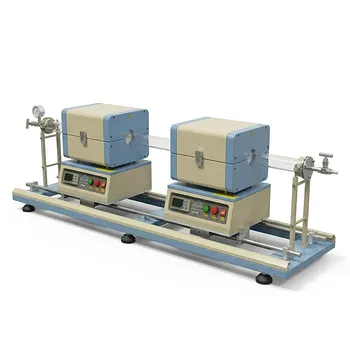
1200C Max Dual Sliding Tube Furnace with 50 mm Tube Flanges for CVD
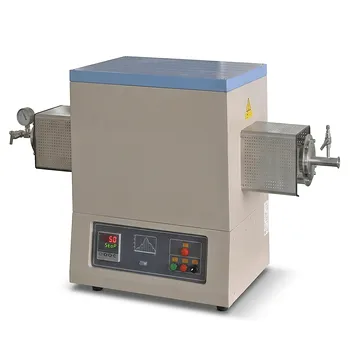
High Temperature 1700C Tube Furnace with 4 Inch OD Alumina Tube and Vacuum Sealing Flanges
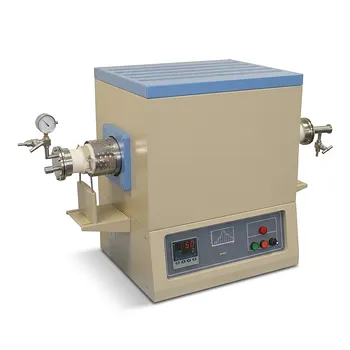
1700C High Temperature Alumina Tube Furnace with 18 Inch Heated Zone and Vacuum Sealing Flanges
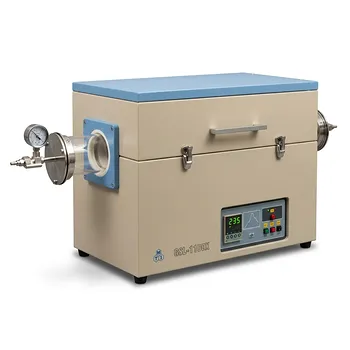
Single Zone Tube Furnace 5 Inch Quartz Tube 36 Inch Heating Zone Vacuum Flanges
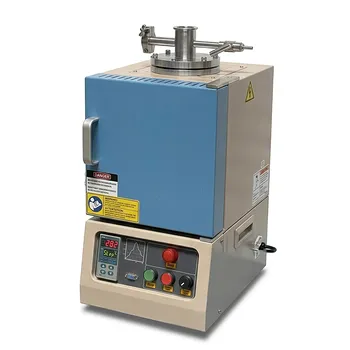
High Temperature Hybrid Muffle and Tube Furnace with Vacuum Capability and PID Control
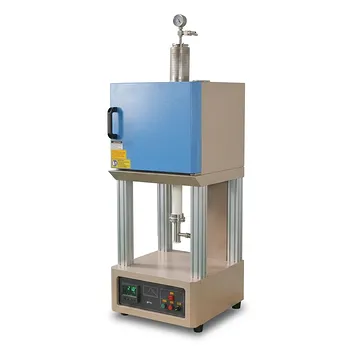
Hybrid High Temperature Tube and Box Furnace 1700C with 2 Inch Alumina Tube for Material Research
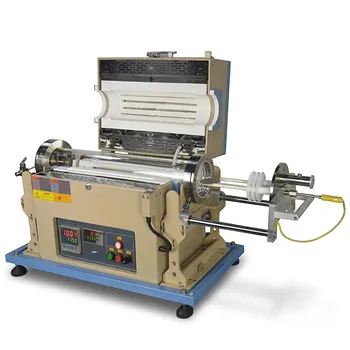
1200°C High Temperature 4 Inch Tube Furnace with Sliding Flange for CVD Systems

1200C High Throughput Multi Channel Tube Furnace with 50mm Quartz Tubes for Annealing and Material Phase Diagram Research

High Temperature 1700C Vertical Tube Furnace for Powder Spherification and Material Sintering