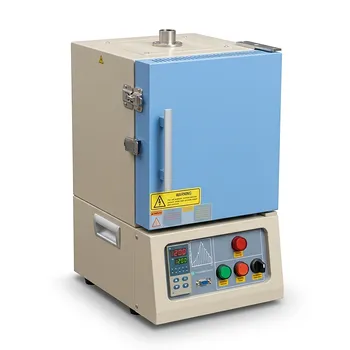
How does a programmable temperature controller ensure data reliability during thermal cycling experiments for MFX:Sm2+ materials?
Updated 3 months ago
A programmable temperature controller ensures data reliability by enforcing strict repeatability across multiple heating and cooling cycles. This consistency allows researchers to quantify temperature uncertainty and validate that MFX:Sm2+ sensors perform predictably over long durations and varying thermal conditions.
Data reliability in thermal cycling depends on the system's ability to return to specific set points with high precision. By automating cycles from 400 K to 700 K, the controller provides the statistical foundation needed to verify the long-term reproducibility of MFX:Sm2+ material performance.
The Mechanics of Automated Thermal Cycling
Precision in Temperature Set Points
The controller manages the transition between specific temperatures, such as the range from 400 K to 700 K. This automation removes human error and ensures that every cycle follows an identical thermal profile.
Establishing Statistical Significance
Executing multiple cycles allows for the collection of data points across repeated conditions. This repetition is essential for calculating the margin of error and ensuring the sensor's signal remains stable.
Consistency Across Iterations
By automating the heating and cooling phases, the controller maintains a level of consistency that manual adjustments cannot match. This uniformity is the bedrock of performance reproducibility for specialized materials like MFX:Sm2+.
Validating Sensor Reproducibility
Quantifying Temperature Uncertainty
Reliable data requires a known uncertainty value. The controller's consistency allows researchers to determine how much the material's response deviates from the expected norm during thermal stress.
Long-Term Operational Stability
MFX:Sm2+ materials are often intended for high-precision sensor applications. By mimicking real-world thermal stress through cycling, the controller proves the material can survive prolonged operation without degrading or losing calibration.
Data Integrity for Advanced Materials
For materials doped with Samarium (Sm2+), the luminescence or electrical response is highly sensitive to temperature. The programmable controller ensures that any changes in material behavior are due to the material itself, rather than fluctuations in the testing environment.
Understanding Technical Trade-offs and Constraints
Ramp Rates vs. Thermal Equilibrium
Faster heating and cooling cycles can increase throughput but may lead to thermal lag within the MFX:Sm2+ material. Achieving true data reliability requires balancing speed with the time needed for the sample to reach a uniform temperature.
Sensor Drift and Calibration
While the controller ensures cycle repeatability, the external sensors measuring the material response may still experience drift. Regular calibration of both the controller and the measurement apparatus is necessary to maintain absolute accuracy over time.
How to Maximize Reliability in Your Experiments
To ensure your thermal cycling data stands up to peer review and industrial standards, consider the specific goals of your study.
- If your primary focus is material characterization: Prioritize a high number of cycles at lower ramp rates to minimize internal thermal gradients and ensure accuracy.
- If your primary focus is long-term sensor validation: Focus on quantifying the repeatability of the material's response across the full 400 K to 700 K range to verify durability.
Ultimately, the programmable controller transforms a simple heating process into a rigorous, verifiable testing environment for advanced sensing materials.
Summary Table:
| Feature | Benefit for MFX:Sm2+ Research |
|---|---|
| Automated Cycling | Eliminates human error and ensures strict repeatability across cycles |
| Precision Control | Maintains exact set points (400 K–700 K) for consistent results |
| Statistical Validation | Enables quantification of uncertainty and measurement margin of error |
| Thermal Stability | Distinguishes intrinsic material behavior from environmental fluctuations |
Elevate Your Research with THERMUNITS Precision Heating Solutions
As a leading manufacturer of high-temperature laboratory equipment for material science and industrial R&D, THERMUNITS provides the advanced thermal processing technology required for rigorous experiments like MFX:Sm2+ cycling.
Our comprehensive range of solutions—including Muffle, Vacuum, Atmosphere, Tube, Rotary, and Hot Press furnaces, as well as CVD/PECVD systems, electric rotary kilns, and vacuum induction melting furnaces (VIM)—is engineered to ensure the data integrity and repeatability your work demands.
Don't let equipment variability compromise your findings. Contact our technical experts today to discuss how our thermal elements and custom laboratory heat treatment equipment can optimize your research outcomes!
References
- L. Cui, Andries Meijerink. High-sensitivity luminescent temperature sensors: MFX:1%Sm <sup>2+</sup> (M = Sr, Ba, X = Cl, Br). DOI: 10.1126/sciadv.ado7737
Mentioned Products
- High Temperature Compact Muffle Furnace 1700 C with 30 Segment Programmable Controller and 1.7L Cubic Chamber
- 1200°C High Temperature Muffle Furnace 19L Chamber with 50 Segment Programmable Controller
- 1250C Compact Split Tube Furnace with 8 Inch Heating Zone and Programmable Controller
- Top Loading Muffle Furnace 1200°C High Temperature Crucible Furnace with 9 Liter Chamber and Programmable PID Controller
- Compact High Temperature Bottom Loading Furnace 1700C Rapid Heating Cooling System Small Sample Thermal Cycling Equipment
People Also Ask
- What role does a high-temperature muffle furnace play in the synthesis of Melem precursors? Precision Polymerization.
- Why is annealing in a high-temperature muffle furnace necessary for SiO2/Si substrate pretreatment before monolayer WS2 synthesis?
- What is the function of a high-temperature muffle furnace in phosphorus-modified zeolite catalyst preparation?
- What is the function of a muffle furnace in aluminoborosilicate glass prep? Stabilize Raw Materials for Superior Purity
- What is the purpose of using muffle or tube furnaces in glass synthesis? Achieve Precise Melt-Quenching & Homogeneity

Tech Team · ThermUnits
Last updated on Jun 03, 2026
Related Products
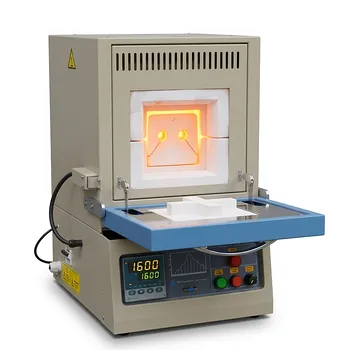
High Temperature Compact Muffle Furnace 1700 C with 30 Segment Programmable Controller and 1.7L Cubic Chamber
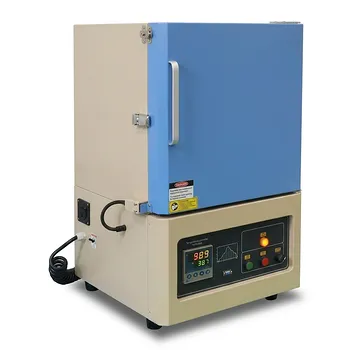
1200°C High Temperature Muffle Furnace 19L Chamber with 50 Segment Programmable Controller
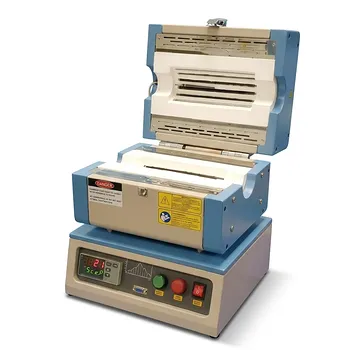
1250C Compact Split Tube Furnace with 8 Inch Heating Zone and Programmable Controller
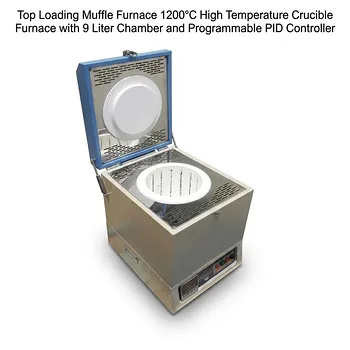
Top Loading Muffle Furnace 1200°C High Temperature Crucible Furnace with 9 Liter Chamber and Programmable PID Controller
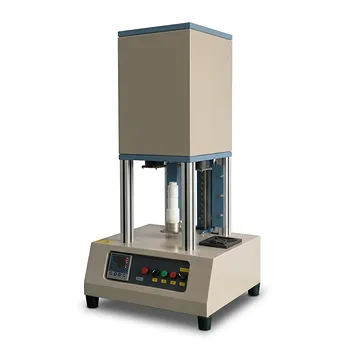
Compact High Temperature Bottom Loading Furnace 1700C Rapid Heating Cooling System Small Sample Thermal Cycling Equipment
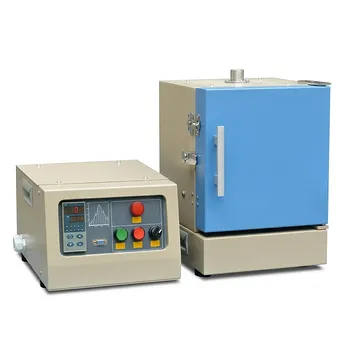
1200C Small Box Muffle Furnace with Separated Programmable Controller and 4.2L Alumina Fiber Chamber
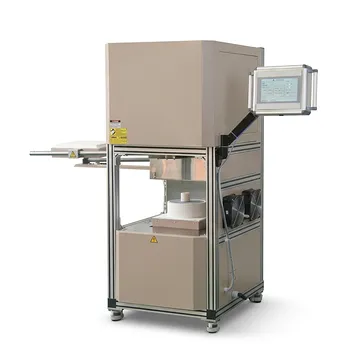
1600C High Temperature Automatic Bottom Loading Furnace for Thermal Shock Cycling and Material Fatigue Testing
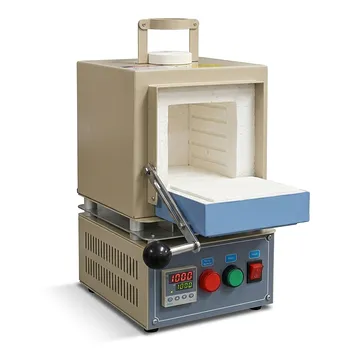
Compact 1000C Muffle Furnace with Programmable Controller and 2 Inch Top Port for Vacuum and Atmosphere Material Research