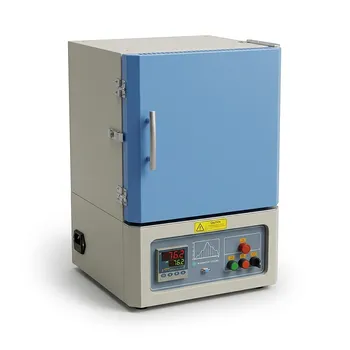
What role does a high-temperature muffle furnace play in the synthesis of Melem precursors? Precision Polymerization.
Updated 3 months ago
In the synthesis of Melem, the high-temperature muffle furnace acts as the primary reactor for the thermal polymerization of melamine. By providing a stable thermal field at 400°C for approximately 12 hours, the furnace facilitates the transition of melamine into a beige, powder-like precursor. When used with a covered ceramic crucible, it maintains the precise balance of moderate air-tightness and heat required for complete polymerization.
The muffle furnace is the critical infrastructure that enables the long-duration thermal polymerization required to transform melamine into Melem precursors. It ensures structural uniformity and phase purity by maintaining a consistent temperature field and a controlled atmosphere during the reaction.
Establishing a Stable Thermal Environment
Sustained Heat for Molecular Rearrangement
The synthesis of Melem is a time-sensitive process that requires a constant temperature of 400°C. The muffle furnace is designed to provide this stable thermal field, ensuring the energy input remains consistent throughout the 12-hour reaction period.
This stability is essential for molecular rearrangement, allowing the melamine molecules to link together into the complex tri-s-triazine structures that characterize Melem.
Uniformity of the Thermal Field
The internal chamber of a muffle furnace is engineered to minimize temperature gradients. This thermal uniformity ensures that the entire sample of melamine reaches the polymerization threshold simultaneously.
Without this precision, the resulting powder would exhibit an uneven polymerization degree, leading to a mixture of partially reacted intermediates rather than a pure Melem precursor.
Atmospheric Control and Reaction Kinetics
Role of the Covered Ceramic Crucible
The muffle furnace does not work alone; it operates in tandem with a covered ceramic crucible. This combination creates a micro-environment with moderate air-tightness within the broader air environment of the furnace.
This specific level of containment is vital to prevent the sublimation of melamine while allowing the reaction to proceed under controlled conditions.
Driving Polymerization to Completion
The furnace provides the driving force for thermal polymerization, a process where smaller molecules combine into a larger, more stable network. By maintaining the 400°C environment, the furnace ensures the reactants fully polymerize into the desired beige powder.
This process is similar to the synthesis of other carbon nitrides, where the furnace drives the release of volatile byproducts to guide the formation of a layered molecular structure.
Understanding the Trade-offs
Temperature Precision vs. Material Purity
If the furnace temperature exceeds the 400°C setpoint, the Melem precursor may begin to decompose or transition too quickly into graphitic carbon nitride (g-C3N4). Conversely, temperatures below this threshold will result in incomplete reactions and residual melamine in the final product.
Atmosphere Sensitivity
While the furnace provides a stable air environment, the air-tightness of the crucible is a variable. If the seal is too tight, pressure build-up can occur; if too loose, the melamine may escape as vapor before it can polymerize, significantly reducing the final yield.
How to Apply This to Your Synthesis
Making the Right Choice for Your Goal
To achieve the best results in Melem synthesis, the operation of the muffle furnace must be tailored to the specific material requirements.
- If your primary focus is phase purity: Ensure the furnace is calibrated to maintain exactly 400°C and use a high-quality ceramic crucible with a well-fitting lid to maintain consistent air-tightness.
- If your primary focus is high crystallinity: Extend the duration of the thermal treatment within the furnace to allow for slower, more ordered crystal growth during the polymerization phase.
- If your primary focus is maximizing yield: Use a ramp rate (e.g., 5°C per minute) to gradually bring the melamine to the reaction temperature, preventing sudden sublimation losses.
The successful synthesis of Melem precursors depends entirely on the furnace’s ability to provide a predictable, uniform, and sustained thermal environment.
Summary Table:
| Parameter | Process Requirement | Role of Muffle Furnace |
|---|---|---|
| Temperature | 400°C (Constant) | Provides a stable thermal field for molecular rearrangement. |
| Duration | ~12 Hours | Sustains heat to drive thermal polymerization to completion. |
| Uniformity | Low Gradient | Ensures phase purity and prevents uneven polymerization. |
| Atmosphere | Moderate Air-tightness | Works with crucibles to prevent sublimation of melamine. |
| Product State | Beige Powder | Facilitates transition from melamine to tri-s-triazine structures. |
Elevate Your Material Synthesis with THERMUNITS
Achieving phase purity in Melem precursors requires the absolute temperature precision that only a professional-grade reactor can provide. THERMUNITS is a leading manufacturer of high-temperature laboratory equipment for material science and industrial R&D. We offer a comprehensive range of thermal processing solutions designed for demanding research environments, including:
- Furnaces: Muffle, Vacuum, Atmosphere, Tube, Rotary, and Hot Press furnaces.
- Advanced Systems: CVD/PECVD systems, Vacuum Induction Melting (VIM) furnaces, and Electric Rotary Kilns.
- Specialized Tools: Dental Furnaces and high-quality Thermal Elements.
Whether you are synthesizing carbon nitrides or conducting complex heat treatments, our equipment ensures uniform thermal fields and reliable atmospheric control.
Ready to optimize your lab’s efficiency? Contact our technical experts today to find the perfect thermal solution for your research.
References
- Ayelet Tashakory, Menny Shalom. Minute‐Scale High‐Temperature Synthesis of Polymeric Carbon Nitride Photoanodes. DOI: 10.1002/sstr.202400123
Mentioned Products
- High Temperature 1700C Bench Top Muffle Furnace with Alumina Fiber Insulation and 3.6L Chamber Capacity for Precision Sintering and Heat Treatment
- 1200°C High Temperature Muffle Furnace 19L Chamber with 50 Segment Programmable Controller
- High Temperature 1500C Benchtop Muffle Furnace 3.6L Alumina Fiber Chamber Programmable Controller Sintering Annealing Carbonization Thermal Processing System
- Large Bench Top 1700C High Temperature Muffle Furnace with 19L Chamber for Advanced Material Sintering and Annealing
- High Temperature Muffle Furnace with Dual Controllers and 36L Large Chamber 1700C Max
People Also Ask
- What role does a high-temperature muffle furnace play in evaluating the mineral composition of rock samples? LOI & XRF Guide
- What is the function of a high-temperature muffle furnace in phosphorus-modified zeolite catalyst preparation?
- What is the function of a high-temp muffle furnace in Ni-V oxide synthesis? Optimize your material's performance.
- What is the purpose of using muffle or tube furnaces in glass synthesis? Achieve Precise Melt-Quenching & Homogeneity
- What is the function of a muffle furnace in aluminoborosilicate glass prep? Stabilize Raw Materials for Superior Purity

Tech Team · ThermUnits
Last updated on Jun 03, 2026
Related Products
High Temperature 1700C Bench Top Muffle Furnace with Alumina Fiber Insulation and 3.6L Chamber Capacity for Precision Sintering and Heat Treatment
1200°C High Temperature Muffle Furnace 19L Chamber with 50 Segment Programmable Controller
High Temperature 1500C Benchtop Muffle Furnace 3.6L Alumina Fiber Chamber Programmable Controller Sintering Annealing Carbonization Thermal Processing System
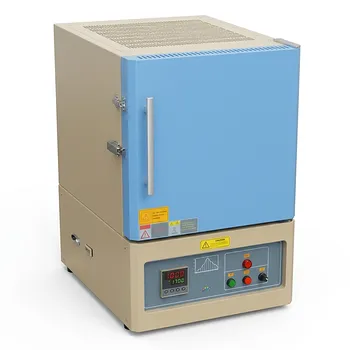
Large Bench Top 1700C High Temperature Muffle Furnace with 19L Chamber for Advanced Material Sintering and Annealing
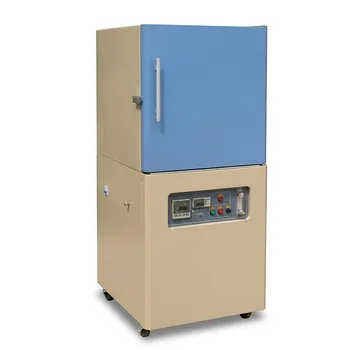
High Temperature Muffle Furnace with Dual Controllers and 36L Large Chamber 1700C Max
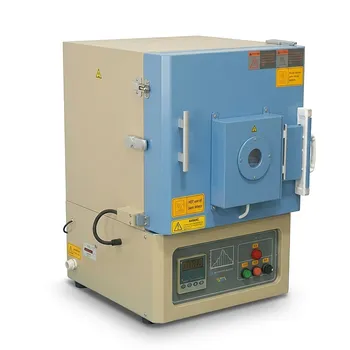
High Temperature Benchtop Muffle Furnace 1500C with 3.6L Chamber and Quartz Observation Window
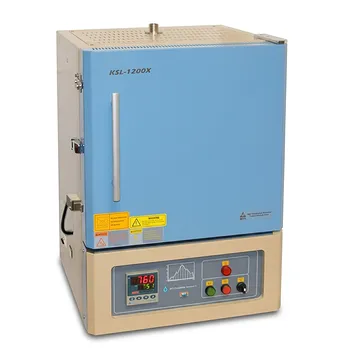
High Temperature 1200C Muffle Furnace 27L Volume 12x12x12 Chamber with Programmable PID Controller for Laboratory Material Science
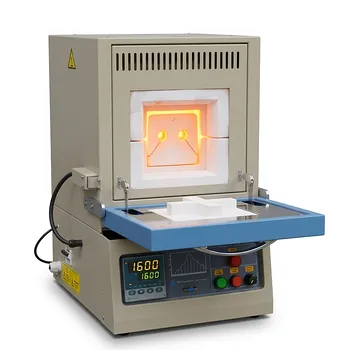
High Temperature Compact Muffle Furnace 1700 C with 30 Segment Programmable Controller and 1.7L Cubic Chamber
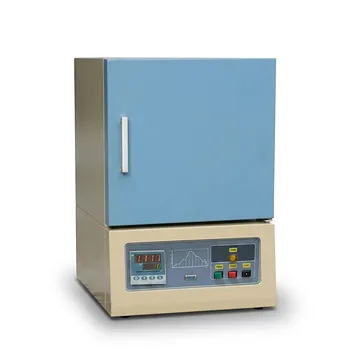
Ultra High Temperature Bench Top Muffle Furnace 1750C Sintering System with Kanthal Super Heating Elements and Precision Digital Control
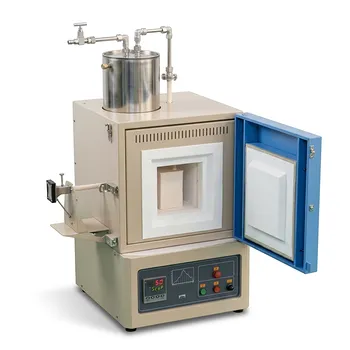
High Temperature Bench Top Muffle Furnace 1700C with Integrated Evaporating Particle Collection and 8x8x8 Alumina Fiber Chamber
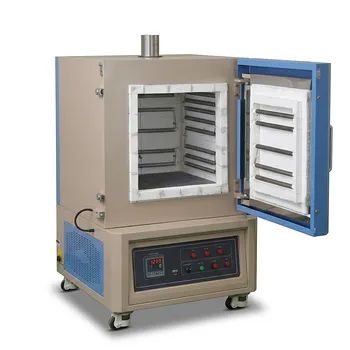
1200C High Temperature 125L Muffle Furnace 5 Side Heating for Large Batch Sintering with Optional Alloy Debinding Chamber
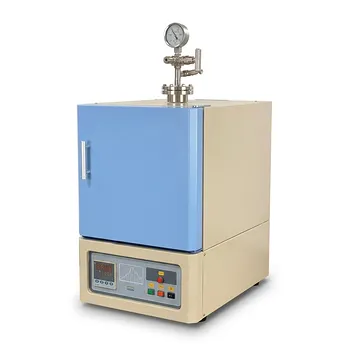
Hybrid High Temperature Muffle and Tube Furnace with 1500C Capability and Vacuum Flange Assembly
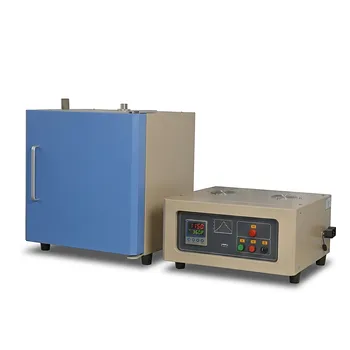
High Temperature Muffle Furnace with Alloy Chamber for Debinding and Sintering Applications
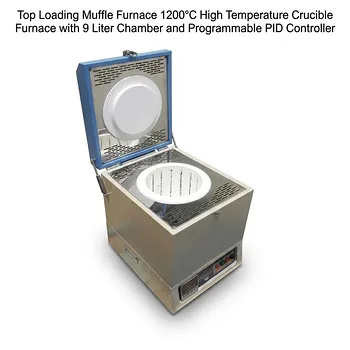
Top Loading Muffle Furnace 1200°C High Temperature Crucible Furnace with 9 Liter Chamber and Programmable PID Controller
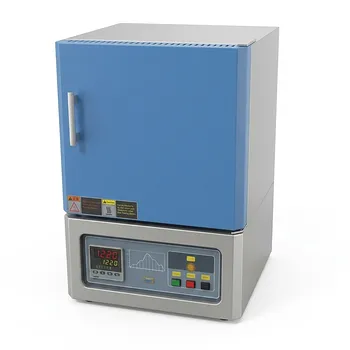
High Temperature Benchtop Muffle Furnace 1700C 10L Chamber Alumina Fiber Insulation MoSi2 Heating Elements
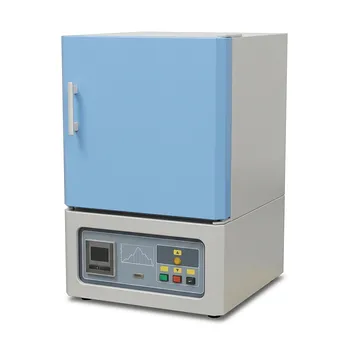
1800C Bench Top Muffle Furnace with Kanthal Super 1900 Heating Elements and 3.6L Alumina Fiber Chamber
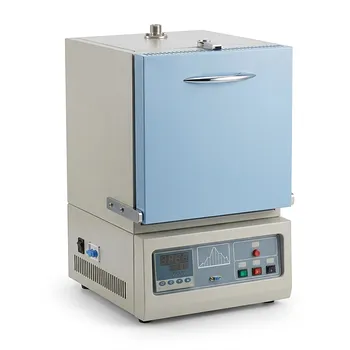
1750C Compact Muffle Furnace 1.7L Ultra High Temperature Laboratory Sintering System for Advanced Ceramics and Material Science Research
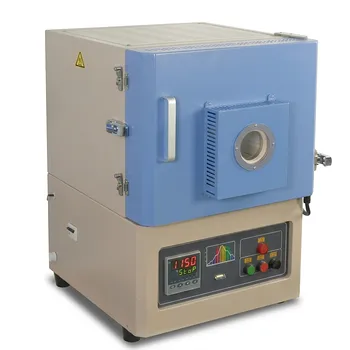
High Temperature Benchtop Muffle Furnace with Quartz Observation Window for Thermal Imaging and Material Analysis
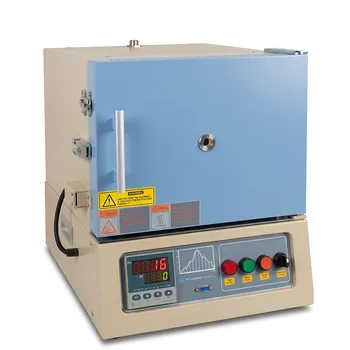
1200C Muffle Furnace 12x8x5 7.2L Heating Chamber with Quartz Observation Window and Vent Port