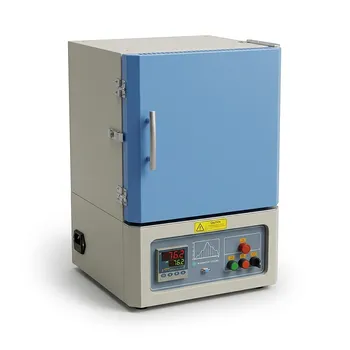
Why is annealing in a high-temperature muffle furnace necessary for SiO2/Si substrate pretreatment before monolayer WS2 synthesis?
Updated 3 months ago
Substrate pretreatment through high-temperature annealing is the critical "reset" button for the SiO2/Si surface. By heating the substrate at 600°C for four hours, you eliminate microscopic layers of organic residue and moisture that naturally accumulate on the surface. This creates a pristine, chemically stable environment that allows WS2 precursor molecules to adhere uniformly, a prerequisite for the growth of large-area, high-quality monolayer crystals.
The primary purpose of muffle furnace annealing is to standardize the substrate's surface energy and chemistry. Without this step, residual contaminants trigger unpredictable nucleation, leading to multi-layer clumps or discontinuous films rather than the desired high-quality WS2 monolayers.
Eliminating Microscopic Surface Contaminants
Removal of Organic Matter and Volatiles
Even high-grade SiO2/Si substrates harbor residual organic matter from packaging, handling, or previous processing steps. High-temperature annealing effectively "burns off" these carbon-based contaminants, preventing them from interfering with the chemical vapor deposition (CVD) reaction.
Desorption of Adsorbed Moisture
SiO2 surfaces are naturally hydrophilic and attract a thin layer of atmospheric moisture. At 600°C, this moisture is thoroughly desorbed, ensuring that water molecules do not react with sensitive transition metal precursors during the synthesis phase.
Stabilizing the Chemical and Physical State
Achieving Chemical Equilibrium
The annealing process stabilizes the chemical state of the SiO2 layer, ensuring a uniform distribution of functional groups across the surface. This uniformity is vital because any chemical gradient on the substrate will cause the WS2 crystals to grow at different rates or with varying thicknesses.
Stress Relief and Surface Optimization
Thermal treatment helps in eliminating microscopic internal stresses within the oxide layer. Much like the process used to optimize silver diffusion in silicon or phase transitions in metal oxides, annealing provides the thermal kinetic energy needed to reach a state of physical equilibrium.
Ensuring Uniform Adhesion and Nucleation
Promoting Uniform Precursor Adhesion
For a monolayer of WS2 to form, precursor molecules must distribute themselves evenly across the substrate. A clean, annealed surface provides the ideal physical foundation for these molecules to anchor, preventing the "balling up" effect that occurs on contaminated surfaces.
Controlling Nucleation Density
By providing a consistent surface energy, annealing allows for controlled nucleation. This ensures that WS2 crystals begin growing at a predictable density, which is the only way to achieve large-area continuous films rather than isolated, small flakes.
Understanding the Trade-offs
The Risk of Over-Annealing
While high temperatures are necessary, excessive heat or prolonged duration can lead to unwanted surface roughness or changes in the SiO2 thickness. Maintaining the 600°C threshold is a balance between thorough cleaning and preserving the structural integrity of the oxide layer.
Potential for Diffusion and Contamination
If the muffle furnace environment is not strictly controlled, high temperatures can inadvertently introduce metallic impurities from the furnace heating elements. It is critical to ensure the furnace is clean and the atmosphere is stable to avoid substituting one type of contamination for another.
How to Apply This to Your Project
Before beginning your CVD synthesis, ensure your substrate preparation aligns with your specific material requirements:
- If your primary focus is large-area monolayer continuity: Strictly adhere to the 600°C/4-hour annealing cycle to ensure maximum surface uniformity and minimal nucleation interference.
- If your primary focus is electronic device performance: Focus on the "chemical stabilization" aspect of annealing to reduce carrier recombination centers and optimize the interface for better charge transport.
- If your primary focus is rapid prototyping: Shorter annealing times at lower temperatures may remove moisture, but they often fail to eliminate the stubborn organic residues that prevent high-quality crystal growth.
A pristine substrate is not merely a preference; it is the fundamental requirement for the controlled synthesis of high-performance 2D materials.
Summary Table:
| Annealing Aspect | Function | Impact on WS2 Synthesis |
|---|---|---|
| Thermal Cleaning | Removes organic residue & moisture | Prevents unpredictable multi-layer clumping |
| Surface Energy | Standardizes chemical functional groups | Ensures uniform precursor adhesion |
| Physical State | Relieves internal oxide layer stresses | Promotes controlled, large-area nucleation |
| Process Control | Establishes a pristine chemical "reset" | Results in high-quality continuous monolayers |
Elevate Your 2D Material Synthesis with THERMUNITS
High-quality monolayer WS2 starts with a pristine substrate. At THERMUNITS, we provide the precision thermal technology required to achieve the exact chemical equilibrium your R&D demands. As a leading manufacturer of high-temperature laboratory equipment, we offer a comprehensive range of solutions including:
- Precision Furnaces: Muffle, Vacuum, Atmosphere, Tube, Rotary, and Hot Press furnaces.
- Advanced Systems: CVD/PECVD systems, Dental Furnaces, and Vacuum Induction Melting (VIM) furnaces.
- Specialized Equipment: Electric rotary kilns, Thermal Elements, and custom laboratory heat treatment tools.
Whether you are focusing on large-area monolayer continuity or optimizing electronic device performance, our equipment ensures the temperature uniformity and atmospheric control essential for success.
Ready to optimize your lab’s efficiency? Contact our technical experts today to find the perfect furnace for your material science research.
References
- Baojun Pan, Sui‐Dong Wang. Direct Selective Epitaxy of 2D Sb2Te3 onto Monolayer WS2 for Vertical p–n Heterojunction Photodetectors. DOI: 10.3390/nano14100884
Mentioned Products
- High Temperature 1700C Bench Top Muffle Furnace with Alumina Fiber Insulation and 3.6L Chamber Capacity for Precision Sintering and Heat Treatment
- 1200°C High Temperature Muffle Furnace 19L Chamber with 50 Segment Programmable Controller
- High Temperature 1500C Benchtop Muffle Furnace 3.6L Alumina Fiber Chamber Programmable Controller Sintering Annealing Carbonization Thermal Processing System
- Large Bench Top 1700C High Temperature Muffle Furnace with 19L Chamber for Advanced Material Sintering and Annealing
- High Temperature Muffle Furnace with Dual Controllers and 36L Large Chamber 1700C Max
People Also Ask
- What role does a high-temperature muffle furnace play in evaluating the mineral composition of rock samples? LOI & XRF Guide
- What is the function of a high-temperature muffle furnace in phosphorus-modified zeolite catalyst preparation?
- What is the function of a high-temp muffle furnace in Ni-V oxide synthesis? Optimize your material's performance.
- What is the purpose of using muffle or tube furnaces in glass synthesis? Achieve Precise Melt-Quenching & Homogeneity
- What is the function of a muffle furnace in aluminoborosilicate glass prep? Stabilize Raw Materials for Superior Purity

Tech Team · ThermUnits
Last updated on Jun 03, 2026
Related Products
High Temperature 1700C Bench Top Muffle Furnace with Alumina Fiber Insulation and 3.6L Chamber Capacity for Precision Sintering and Heat Treatment
1200°C High Temperature Muffle Furnace 19L Chamber with 50 Segment Programmable Controller

High Temperature 1500C Benchtop Muffle Furnace 3.6L Alumina Fiber Chamber Programmable Controller Sintering Annealing Carbonization Thermal Processing System
Large Bench Top 1700C High Temperature Muffle Furnace with 19L Chamber for Advanced Material Sintering and Annealing
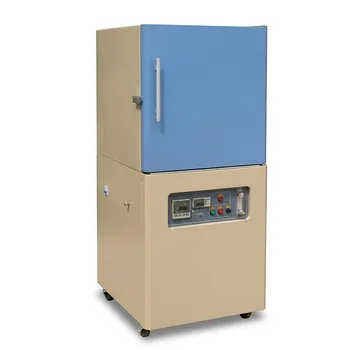
High Temperature Muffle Furnace with Dual Controllers and 36L Large Chamber 1700C Max
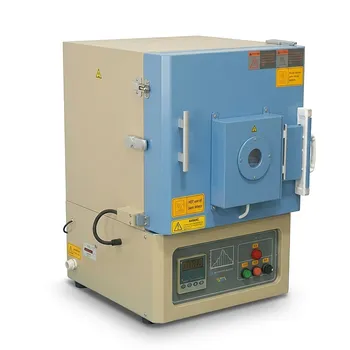
High Temperature Benchtop Muffle Furnace 1500C with 3.6L Chamber and Quartz Observation Window
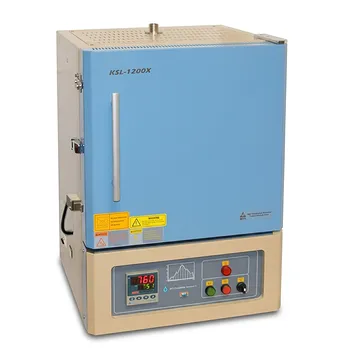
High Temperature 1200C Muffle Furnace 27L Volume 12x12x12 Chamber with Programmable PID Controller for Laboratory Material Science
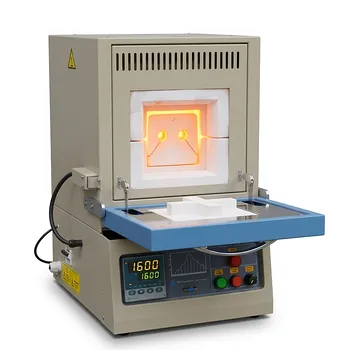
High Temperature Compact Muffle Furnace 1700 C with 30 Segment Programmable Controller and 1.7L Cubic Chamber
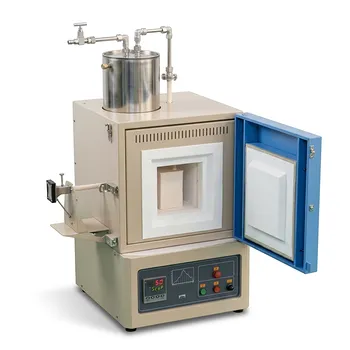
High Temperature Bench Top Muffle Furnace 1700C with Integrated Evaporating Particle Collection and 8x8x8 Alumina Fiber Chamber
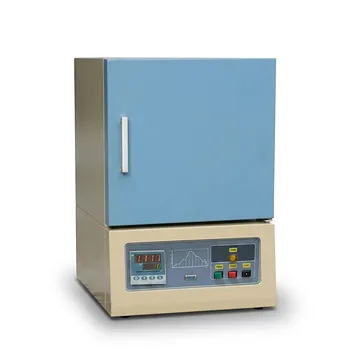
Ultra High Temperature Bench Top Muffle Furnace 1750C Sintering System with Kanthal Super Heating Elements and Precision Digital Control
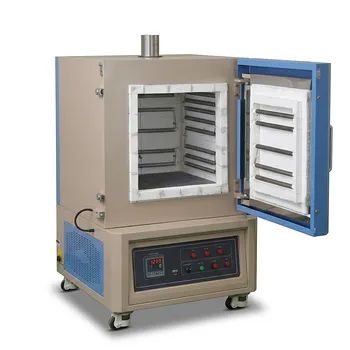
1200C High Temperature 125L Muffle Furnace 5 Side Heating for Large Batch Sintering with Optional Alloy Debinding Chamber
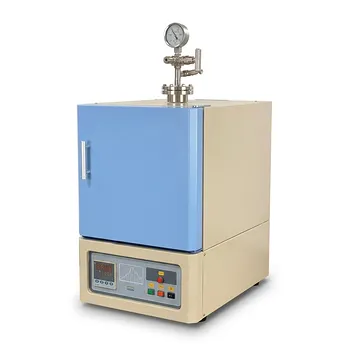
Hybrid High Temperature Muffle and Tube Furnace with 1500C Capability and Vacuum Flange Assembly
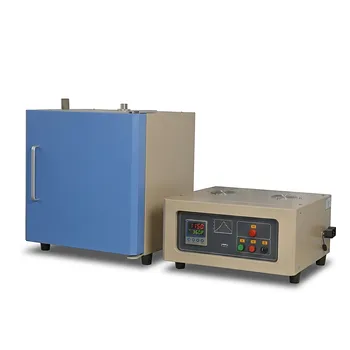
High Temperature Muffle Furnace with Alloy Chamber for Debinding and Sintering Applications
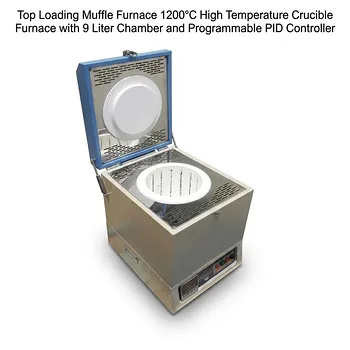
Top Loading Muffle Furnace 1200°C High Temperature Crucible Furnace with 9 Liter Chamber and Programmable PID Controller
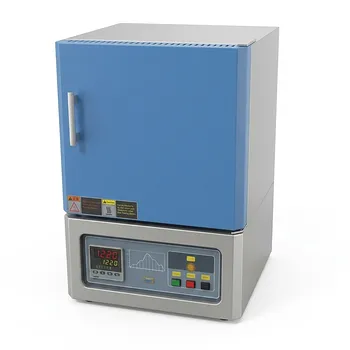
High Temperature Benchtop Muffle Furnace 1700C 10L Chamber Alumina Fiber Insulation MoSi2 Heating Elements
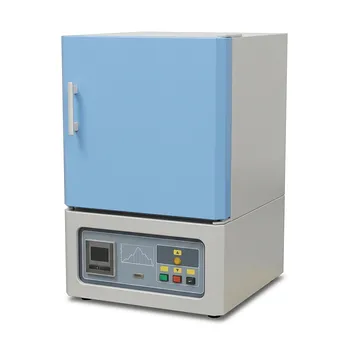
1800C Bench Top Muffle Furnace with Kanthal Super 1900 Heating Elements and 3.6L Alumina Fiber Chamber
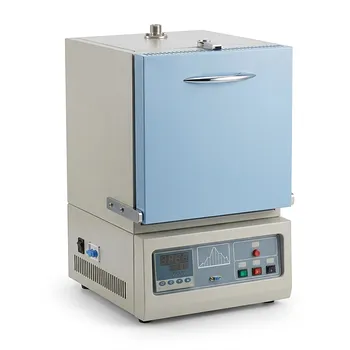
1750C Compact Muffle Furnace 1.7L Ultra High Temperature Laboratory Sintering System for Advanced Ceramics and Material Science Research
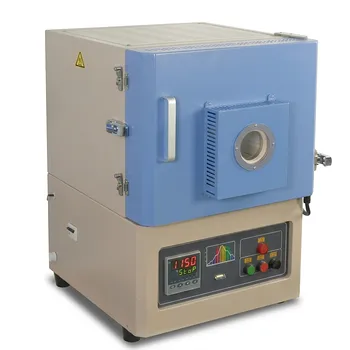
High Temperature Benchtop Muffle Furnace with Quartz Observation Window for Thermal Imaging and Material Analysis
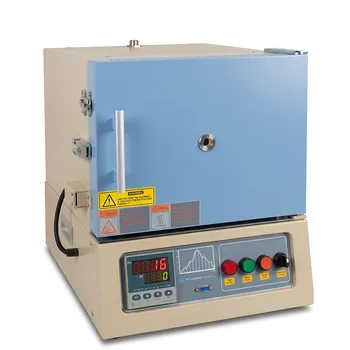
1200C Muffle Furnace 12x8x5 7.2L Heating Chamber with Quartz Observation Window and Vent Port