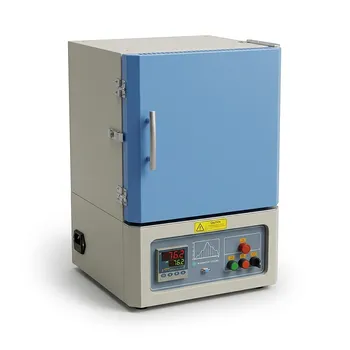
What is the function of a high-temperature muffle furnace in phosphorus-modified zeolite catalyst preparation?
Updated 3 months ago
The high-temperature muffle furnace serves as the critical thermal processing environment for the synthesis of phosphorus-modified zeolite catalysts. It is primarily used to dry the zeolite after dealumination and to perform calcination following phosphoric acid impregnation, typically at temperatures around 600 °C. This process facilitates the necessary physicochemical interaction between the phosphoric acid precursor and the zeolite framework, resulting in the formation of highly selective active centers.
The muffle furnace transforms raw impregnated materials into functional catalysts by providing the thermal energy required to stabilize active acid sites and integrate phosphorus into the zeolite framework. It is the essential tool for converting chemical precursors into a stable, crystalline, and selective catalytic structure.
Facilitating Chemical Integration and Active Site Formation
Promoting Physicochemical Interactions
The muffle furnace provides a stable high-temperature environment that induces a reaction between the phosphoric acid precursor and the dealuminated zeolite framework. At approximately 600 °C, the phosphorus is chemically integrated into the structure rather than just sitting on the surface.
Stabilizing Active Acid Sites
Calcination within the furnace is responsible for stabilizing the active acid sites that give the catalyst its performance characteristics. This thermal induction ensures that the resulting active centers are robust enough to withstand the rigors of chemical reactions.
Removal of Volatile Components
The high-heat environment effectively removes residual solvents and volatile components introduced during the impregnation process. By clearing these "blockages," the furnace ensures the zeolite's internal pore structure is accessible for catalytic activity.
Structural Preparation and Impurity Management
Post-Dealumination Drying
Before phosphorus can be added, the furnace is used to dry the zeolite following the dealumination stage. This ensures the framework is properly prepared to receive the phosphoric acid precursor without interference from excess moisture.
Establishing the Physical Foundation
Thermal treatment at high temperatures—often between 500 °C and 700 °C—removes volatile impurities from the zeolite pores. This step stabilizes the crystal framework, creating the necessary physical foundation for subsequent acid-base activation processes.
Precursor Decomposition
In broader catalyst preparation, the muffle furnace enables the complete thermal decomposition of metal precursors (such as nitrates) loaded onto a carrier. This converts them into stable metal oxide active components, a principle that supports the overall stability of modified zeolites.
Tuning Catalytic Properties through Thermal Induction
Adjusting Surface Acid-Base Properties
The furnace allows for the precise adjustment of the catalyst's surface acid-base properties and lattice structure. This is achieved through controlled thermal induction effects, which can be tuned by varying the temperature and duration of the roast.
Enhancing Mechanical Strength
Beyond chemical activity, the thermal processing in a muffle furnace promotes chemical bonding between the active sites and the carrier. This significantly enhances the mechanical strength and long-term catalytic stability of the zeolite under industrial conditions.
Optimizing Porosity and Crystallinity
Annealing at controlled temperatures facilitates the transition of catalytic components from an amorphous state to a partially crystalline state. This optimization improves the distribution of acid centers and enhances the porosity of the final material.
Understanding the Trade-offs and Risks
The Risk of Framework Collapse
While high temperatures are necessary for activation, exceeding the thermal stability limit of the zeolite can lead to sintering or framework collapse. If the temperature is too high, the crystalline structure may degrade, resulting in a total loss of surface area and catalytic activity.
Precision vs. Throughput
High-precision furnaces allow for the regulation of heating rates and isothermal holding times, which is critical for forming specific interactions like Strong Metal-Support Interaction (SMSI). However, the requirement for slow, precise heating ramps can significantly increase the total preparation time compared to rapid thermal processing.
Energy Consumption and Scaling
Muffle furnaces are energy-intensive, especially when maintaining temperatures for several hours (e.g., 500 °C for 3 hours). In industrial scaling, the cost of energy consumption and the need for uniform heat distribution across large batches present significant engineering challenges.
How to Apply Thermal Processing to Your Project
To achieve the best results in zeolite modification, the thermal treatment must be tailored to the specific chemical goals of the catalyst.
- If your primary focus is active site selectivity: Use a calcination temperature of approximately 600 °C to ensure deep physicochemical integration of phosphorus into the framework.
- If your primary focus is framework purity: Prioritize a multi-hour initial calcination at 500 °C to thoroughly remove volatile impurities and moisture before further modification.
- If your primary focus is structural stability: Focus on precise isothermal holding times to promote strong chemical bonding between the active precursors and the zeolite carrier.
By mastering the controlled environment of the muffle furnace, you ensure that your zeolite catalyst transitions from a simple mixture to a high-performance chemical tool.
Summary Table:
| Stage of Preparation | Typical Temperature | Core Function in Catalyst Synthesis |
|---|---|---|
| Post-Dealumination Drying | 100°C - 200°C | Removes moisture to prepare the framework for impregnation. |
| Calcination (Activation) | ~600°C | Facilitates phosphorus integration and stabilizes active acid sites. |
| Impurity Management | 500°C - 700°C | Removes volatile components and clears internal pore structures. |
| Structural Annealing | Variable | Enhances mechanical strength and transitions materials to crystalline states. |
| Precursor Decomposition | High Thermal Load | Converts metal nitrates/salts into stable metal oxide active components. |
Elevate Your Catalyst Research with THERMUNITS Precision
Achieving superior catalytic activity in phosphorus-modified zeolites requires more than just heat—it requires the absolute thermal precision found in THERMUNITS equipment. As a leading manufacturer of high-temperature laboratory solutions for material science and industrial R&D, we provide the tools necessary to stabilize active sites and ensure framework integrity.
Our comprehensive range of thermal processing solutions includes:
- Precision Muffle & Tube Furnaces for controlled calcination.
- Vacuum & Atmosphere Furnaces for specialized synthesis environments.
- Advanced CVD/PECVD Systems and Vacuum Induction Melting (VIM) units.
- Rotary Kilns & Hot Press Furnaces for industrial-scale R&D.
Whether you are refining zeolite porosity or developing next-generation active centers, THERMUNITS delivers the uniformity and reliability your project demands.
Ready to optimize your thermal processing? Contact our expert team today to find the perfect furnace for your laboratory and accelerate your path to discovery.
References
- Zhaoxing Wang, Dionisios G. Vlachos. Cycloaddition–dehydration continuous flow chemistry for renewable <i>para</i>-xylene production from 2,5-dimethylfuran and ethylene over phosphorous-decorated zeolite beta. DOI: 10.1039/d4gc01904k
Mentioned Products
- High Temperature 1700C Bench Top Muffle Furnace with Alumina Fiber Insulation and 3.6L Chamber Capacity for Precision Sintering and Heat Treatment
- 1200°C High Temperature Muffle Furnace 19L Chamber with 50 Segment Programmable Controller
- High Temperature 1500C Benchtop Muffle Furnace 3.6L Alumina Fiber Chamber Programmable Controller Sintering Annealing Carbonization Thermal Processing System
- Large Bench Top 1700C High Temperature Muffle Furnace with 19L Chamber for Advanced Material Sintering and Annealing
- High Temperature Muffle Furnace with Dual Controllers and 36L Large Chamber 1700C Max
People Also Ask
- What role does a high-temperature muffle furnace play in evaluating the mineral composition of rock samples? LOI & XRF Guide
- What is the function of a high-temp muffle furnace in Ni-V oxide synthesis? Optimize your material's performance.
- What is the purpose of using muffle or tube furnaces in glass synthesis? Achieve Precise Melt-Quenching & Homogeneity
- What is the function of a muffle furnace in aluminoborosilicate glass prep? Stabilize Raw Materials for Superior Purity
- What role does a high-temperature muffle furnace play in the synthesis of Melem precursors? Precision Polymerization.

Tech Team · ThermUnits
Last updated on Jun 02, 2026
Related Products
High Temperature 1700C Bench Top Muffle Furnace with Alumina Fiber Insulation and 3.6L Chamber Capacity for Precision Sintering and Heat Treatment
1200°C High Temperature Muffle Furnace 19L Chamber with 50 Segment Programmable Controller
High Temperature 1500C Benchtop Muffle Furnace 3.6L Alumina Fiber Chamber Programmable Controller Sintering Annealing Carbonization Thermal Processing System
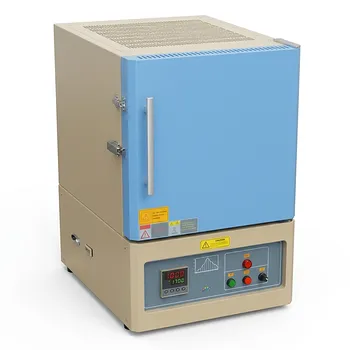
Large Bench Top 1700C High Temperature Muffle Furnace with 19L Chamber for Advanced Material Sintering and Annealing
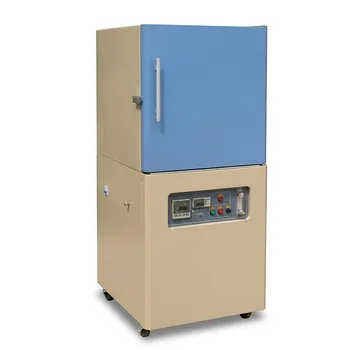
High Temperature Muffle Furnace with Dual Controllers and 36L Large Chamber 1700C Max
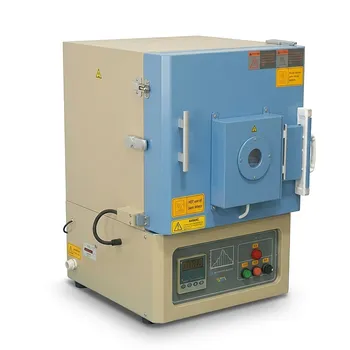
High Temperature Benchtop Muffle Furnace 1500C with 3.6L Chamber and Quartz Observation Window
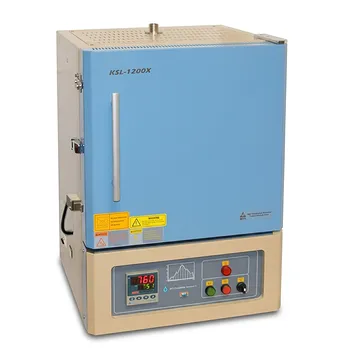
High Temperature 1200C Muffle Furnace 27L Volume 12x12x12 Chamber with Programmable PID Controller for Laboratory Material Science
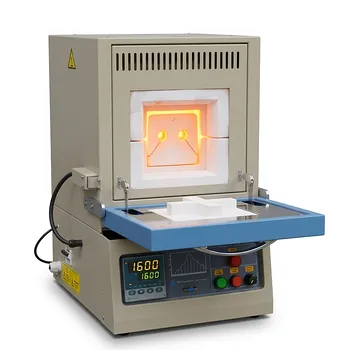
High Temperature Compact Muffle Furnace 1700 C with 30 Segment Programmable Controller and 1.7L Cubic Chamber
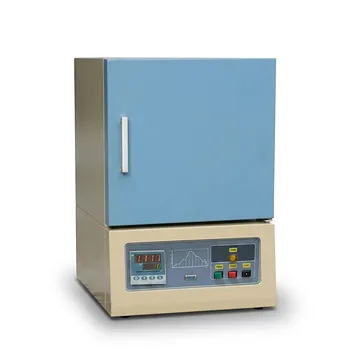
Ultra High Temperature Bench Top Muffle Furnace 1750C Sintering System with Kanthal Super Heating Elements and Precision Digital Control
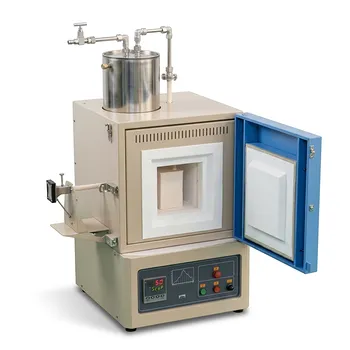
High Temperature Bench Top Muffle Furnace 1700C with Integrated Evaporating Particle Collection and 8x8x8 Alumina Fiber Chamber
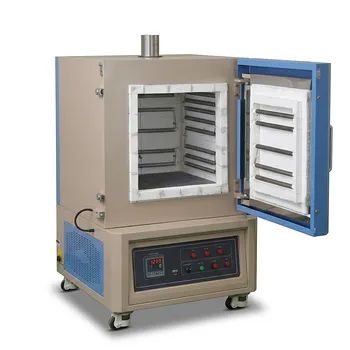
1200C High Temperature 125L Muffle Furnace 5 Side Heating for Large Batch Sintering with Optional Alloy Debinding Chamber
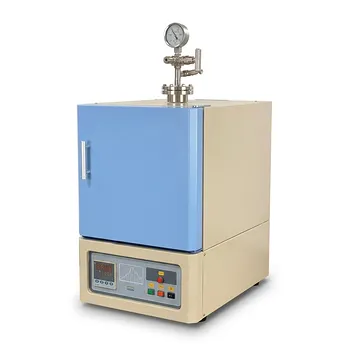
Hybrid High Temperature Muffle and Tube Furnace with 1500C Capability and Vacuum Flange Assembly
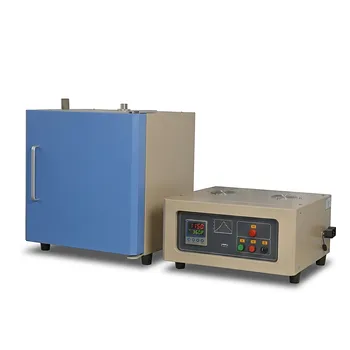
High Temperature Muffle Furnace with Alloy Chamber for Debinding and Sintering Applications
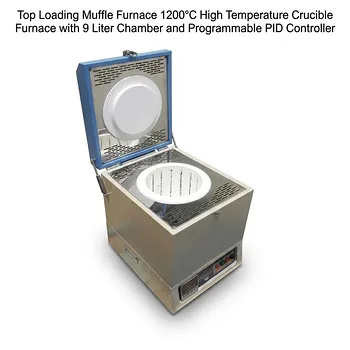
Top Loading Muffle Furnace 1200°C High Temperature Crucible Furnace with 9 Liter Chamber and Programmable PID Controller
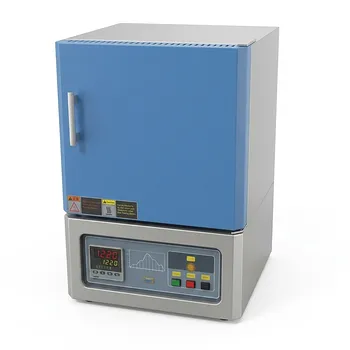
High Temperature Benchtop Muffle Furnace 1700C 10L Chamber Alumina Fiber Insulation MoSi2 Heating Elements
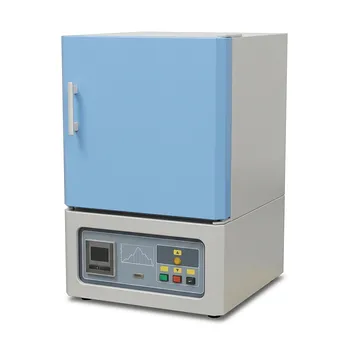
1800C Bench Top Muffle Furnace with Kanthal Super 1900 Heating Elements and 3.6L Alumina Fiber Chamber
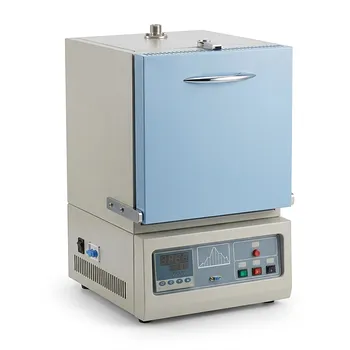
1750C Compact Muffle Furnace 1.7L Ultra High Temperature Laboratory Sintering System for Advanced Ceramics and Material Science Research
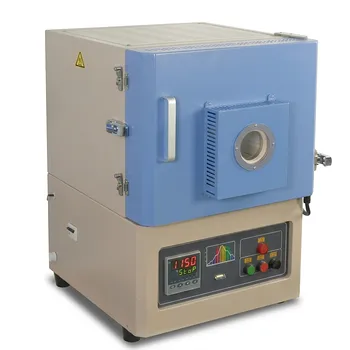
High Temperature Benchtop Muffle Furnace with Quartz Observation Window for Thermal Imaging and Material Analysis
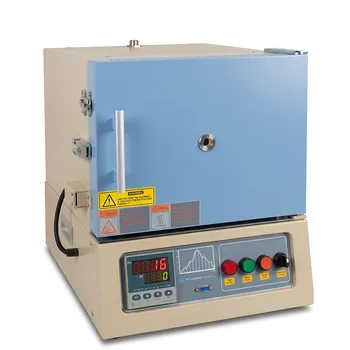
1200C Muffle Furnace 12x8x5 7.2L Heating Chamber with Quartz Observation Window and Vent Port