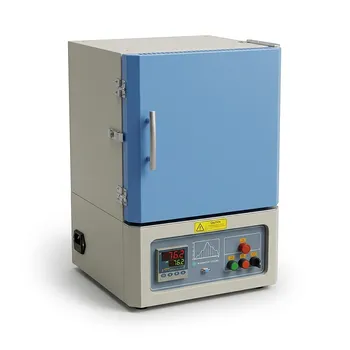
What is the function of a high-temp muffle furnace in Ni-V oxide synthesis? Optimize your material's performance.
Updated 3 months ago
In the synthesis of nickel-vanadium oxides, the high-temperature muffle furnace acts as the primary catalyst for structural and chemical metamorphosis. It provides a controlled, uniform thermal field in an air atmosphere that drives the thermal decomposition of precursors—such as Layered Double Hydroxides (LDH)—into highly dispersed oxides like $\text{Ni}_3\text{V}_2\text{O}_8$. This process is essential for establishing the material's initial porous framework and exposing the active sites necessary for electrochemical or catalytic performance.
The muffle furnace facilitates the phase transformation of precursors into functional oxides by providing a stable thermal environment for oxidation and decomposition. It is the critical tool for converting chemical intermediates into structurally complex, porous nanostructures through precisely controlled heat and thermal stress.
The Role of Thermal Decomposition in Phase Transformation
Driving Chemical Conversion
The furnace provides the energy required to break chemical bonds in precursors like nickel-vanadium layered double hydroxides (NiV-LDH). In an air atmosphere, this heat facilitates the transition from complex hydroxides or nitrates into stable nickel-vanadium oxide phases. This stage is the fundamental "bridge" between the raw chemical mixture and the final functional compound.
Achieving High Dispersion
By maintaining a uniform thermal field, the muffle furnace ensures that the conversion occurs evenly throughout the material. This prevents localized clumping and results in highly dispersed oxides. Such dispersion is critical for ensuring that the final material has a consistent chemical composition and predictable performance.
Facilitating Solid-State Reactions
Beyond simple decomposition, the furnace enables solid-state reactions between intermediate components. This allows for the formation of specific crystal nuclei, which is a prerequisite for refining the powder and enhancing the phase purity of the synthesized oxide.
Morphological Engineering via Thermal Stress
Creating Porous Architectures
One of the most vital functions of air annealing is the construction of a porous morphology. As the precursor decomposes and releases gaseous byproducts (such as water vapor or $\text{CO}_2$), it leaves behind a hollowed, high-surface-area framework. This "initial porous foundation" is essential for subsequent chemical transformations.
Introduction of Micropores
The furnace uses thermal stress to introduce micropores within the nanostructure. As the material expands and contracts during the heating cycle, internal pressures create tiny gaps in the crystal structure. These micropores are critical because they significantly increase the exposure of active sites, which are the locations where chemical reactions occur.
Controlling Crystal Growth
The muffle furnace allows for precise control over the crystallinity and grain size of the resulting oxide. By adjusting the annealing temperature, researchers can influence how the nickel oxide crystal lattice reorganizes. This structural refinement determines the physicochemical stability of the final material.
Purification and Structural Refinement
Removal of Volatile Residues
During synthesis, organic residues such as solvent molecules, nitrates, or residual citric acid often remain in the precursor. The high-temperature environment of the furnace decomposes and eliminates these impurities. This ensures the final nickel-vanadium oxide is chemically pure and free of carbonaceous "dead weight" that could hinder performance.
Elimination of Lattice Defects
Using high-precision furnaces to maintain extremely slow heating rates (e.g., $1^\circ\text{C/min}$) helps eliminate lattice defects. A slow, stable ramp-up promotes the controlled development of crystal planes. This results in a material with optimal stoichiometric ratios and a more robust crystalline structure.
Understanding the Trade-offs
Temperature vs. Surface Area
There is a critical trade-off between crystallinity and surface area. Higher temperatures improve the crystal structure and stability but can lead to sintering, where nanoparticles fuse together. This fusion reduces the porosity and the number of exposed active sites, potentially lowering the material's reactivity.
Atmosphere Sensitivity
While air annealing is necessary for oxidation, it can be a pitfall if the desired oxide requires a specific oxygen vacancy concentration. An over-oxidized environment may eliminate beneficial lattice defects that sometimes enhance conductivity in certain nickel-vanadium applications.
Heating Rate Risks
Rapid heating can lead to non-uniform decomposition or structural collapse. If gaseous byproducts are released too quickly, the resulting internal pressure can shatter the desired nanostructure rather than creating controlled micropores.
How to Apply This to Your Synthesis Project
Recommendations for Process Optimization
- If your primary focus is high catalytic activity: Prioritize the creation of micropores by using moderate temperatures ($400^\circ\text{C}$ to $500^\circ\text{C}$) to maximize surface area and active site exposure.
- If your primary focus is phase purity and stability: Utilize longer isothermal holding times and precise temperature control to ensure complete solid-state reactions and the elimination of lattice defects.
- If your primary focus is structural integrity of nanostructures: Implement a very slow heating ramp-up (e.g., $1-2^\circ\text{C/min}$) to allow for the gentle release of volatile gasses without collapsing the porous framework.
- If your primary focus is removing organic impurities: Ensure the furnace environment has sufficient airflow to carry away decomposed citrates or solvents effectively.
Properly leveraging the muffle furnace ensures the successful transition from a raw precursor to a high-performance, structurally optimized nickel-vanadium oxide.
Summary Table:
| Function | Impact on Material | Key Control Parameter |
|---|---|---|
| Thermal Decomposition | Converts precursors (LDH) into highly dispersed oxides | Uniform thermal field |
| Morphological Engineering | Creates micropores and high-surface-area frameworks | Precise thermal stress |
| Structural Refinement | Eliminates lattice defects and organic residues | Slow heating rate (1°C/min) |
| Phase Transformation | Refines crystallinity and ensures phase purity | Annealing temperature & time |
Elevate Your Material Research with THERMUNITS
Precision is the backbone of successful nickel-vanadium oxide synthesis. At THERMUNITS, we are a leading manufacturer specializing in high-temperature laboratory equipment designed for material science and industrial R&D.
Our comprehensive range of thermal solutions includes:
- High-Precision Furnaces: Muffle, Vacuum, Atmosphere, Tube, Rotary, and Hot Press furnaces.
- Advanced Systems: CVD/PECVD systems, Dental Furnaces, and Vacuum Induction Melting (VIM) furnaces.
- Specialized Equipment: Electric rotary kilns and high-quality thermal elements.
Whether you need to maximize active sites through controlled porosity or ensure stoichiometric purity with stable ramp rates, THERMUNITS provides the reliability your lab demands. Contact us today to find your ideal heat treatment solution and let our experts support your next breakthrough.
References
- Jiayao Fan, Min Han. Porous Flower‐Like Nanoarchitectures Derived from Nickel Phosphide Nanocrystals Anchored on Amorphous Vanadium Phosphate Nanosheet Nanohybrids for Superior Overall Water Splitting. DOI: 10.1002/smtd.202301279
Mentioned Products
- High Temperature 1700C Bench Top Muffle Furnace with Alumina Fiber Insulation and 3.6L Chamber Capacity for Precision Sintering and Heat Treatment
- 1200°C High Temperature Muffle Furnace 19L Chamber with 50 Segment Programmable Controller
- High Temperature 1500C Benchtop Muffle Furnace 3.6L Alumina Fiber Chamber Programmable Controller Sintering Annealing Carbonization Thermal Processing System
- Large Bench Top 1700C High Temperature Muffle Furnace with 19L Chamber for Advanced Material Sintering and Annealing
- High Temperature Muffle Furnace with Dual Controllers and 36L Large Chamber 1700C Max
People Also Ask
- What role does a high-temperature muffle furnace play in evaluating the mineral composition of rock samples? LOI & XRF Guide
- What is the function of a high-temperature muffle furnace in phosphorus-modified zeolite catalyst preparation?
- What is the purpose of using muffle or tube furnaces in glass synthesis? Achieve Precise Melt-Quenching & Homogeneity
- What is the function of a muffle furnace in aluminoborosilicate glass prep? Stabilize Raw Materials for Superior Purity
- What role does a high-temperature muffle furnace play in the synthesis of Melem precursors? Precision Polymerization.

Tech Team · ThermUnits
Last updated on Jun 03, 2026
Related Products
High Temperature 1700C Bench Top Muffle Furnace with Alumina Fiber Insulation and 3.6L Chamber Capacity for Precision Sintering and Heat Treatment
1200°C High Temperature Muffle Furnace 19L Chamber with 50 Segment Programmable Controller
High Temperature 1500C Benchtop Muffle Furnace 3.6L Alumina Fiber Chamber Programmable Controller Sintering Annealing Carbonization Thermal Processing System
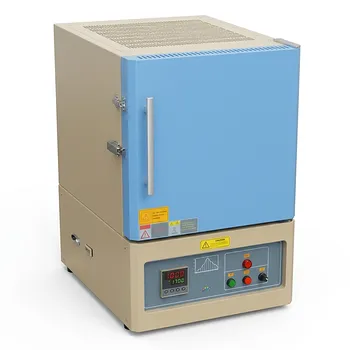
Large Bench Top 1700C High Temperature Muffle Furnace with 19L Chamber for Advanced Material Sintering and Annealing
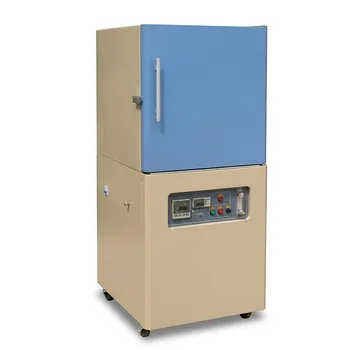
High Temperature Muffle Furnace with Dual Controllers and 36L Large Chamber 1700C Max
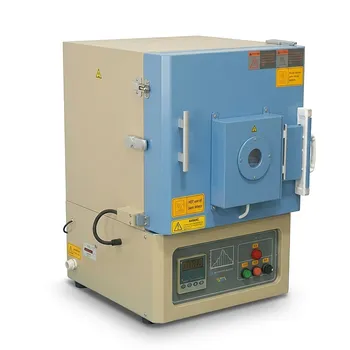
High Temperature Benchtop Muffle Furnace 1500C with 3.6L Chamber and Quartz Observation Window
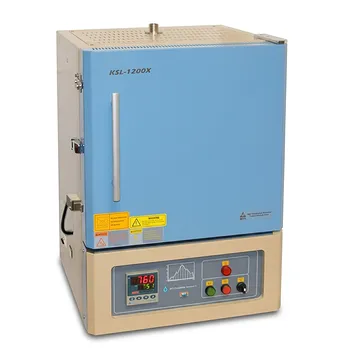
High Temperature 1200C Muffle Furnace 27L Volume 12x12x12 Chamber with Programmable PID Controller for Laboratory Material Science
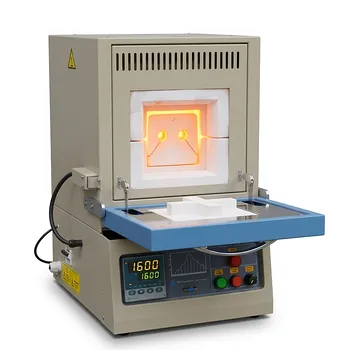
High Temperature Compact Muffle Furnace 1700 C with 30 Segment Programmable Controller and 1.7L Cubic Chamber
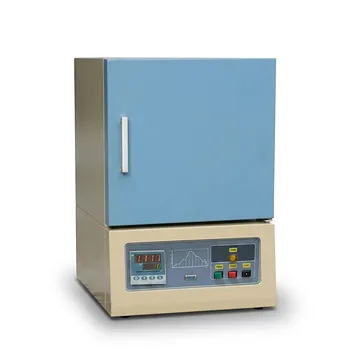
Ultra High Temperature Bench Top Muffle Furnace 1750C Sintering System with Kanthal Super Heating Elements and Precision Digital Control
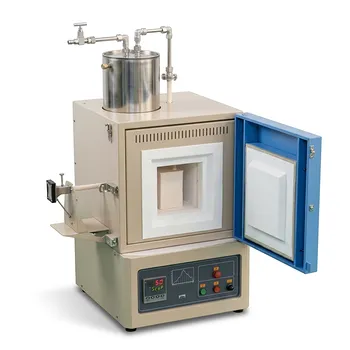
High Temperature Bench Top Muffle Furnace 1700C with Integrated Evaporating Particle Collection and 8x8x8 Alumina Fiber Chamber
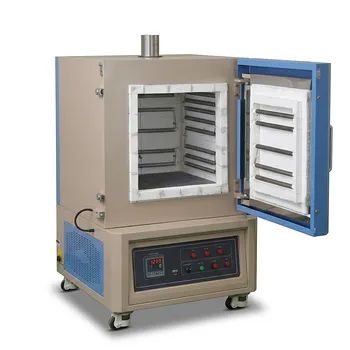
1200C High Temperature 125L Muffle Furnace 5 Side Heating for Large Batch Sintering with Optional Alloy Debinding Chamber
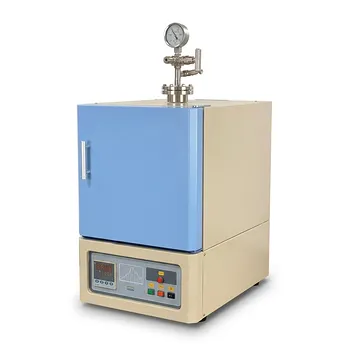
Hybrid High Temperature Muffle and Tube Furnace with 1500C Capability and Vacuum Flange Assembly
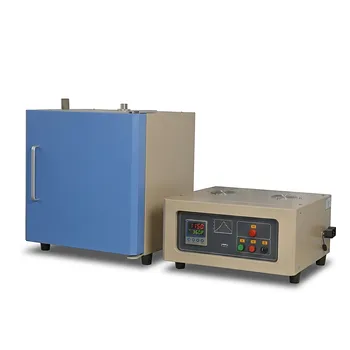
High Temperature Muffle Furnace with Alloy Chamber for Debinding and Sintering Applications
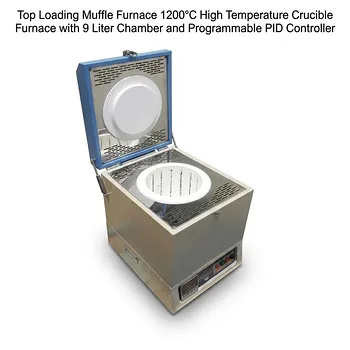
Top Loading Muffle Furnace 1200°C High Temperature Crucible Furnace with 9 Liter Chamber and Programmable PID Controller
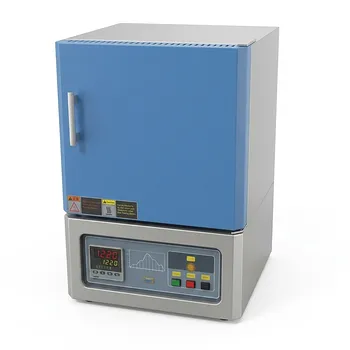
High Temperature Benchtop Muffle Furnace 1700C 10L Chamber Alumina Fiber Insulation MoSi2 Heating Elements
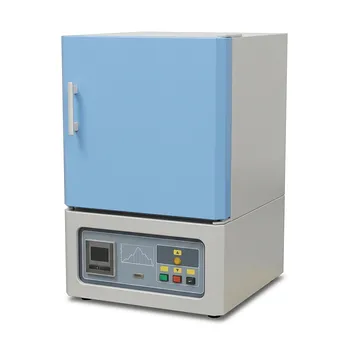
1800C Bench Top Muffle Furnace with Kanthal Super 1900 Heating Elements and 3.6L Alumina Fiber Chamber
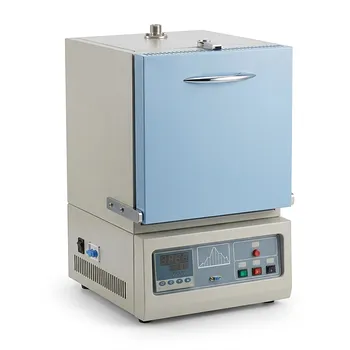
1750C Compact Muffle Furnace 1.7L Ultra High Temperature Laboratory Sintering System for Advanced Ceramics and Material Science Research
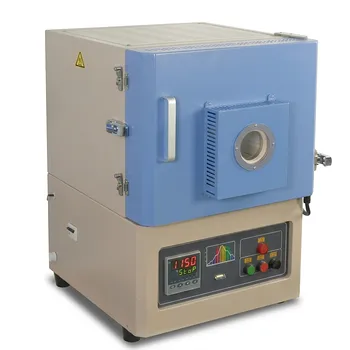
High Temperature Benchtop Muffle Furnace with Quartz Observation Window for Thermal Imaging and Material Analysis
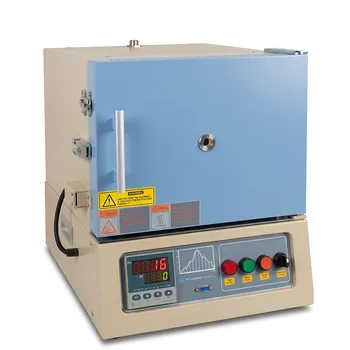
1200C Muffle Furnace 12x8x5 7.2L Heating Chamber with Quartz Observation Window and Vent Port