How does an Automatic TGA assist in biochar production in a tube furnace? Optimize parameters for superior yield.
Updated 3 months ago
The Automatic Thermogravimetric Analyzer (TGA) serves as a diagnostic map for biochar production. By monitoring the precise mass loss of biomass as temperature increases, the TGA identifies the exact thermal points where components like hemicellulose, cellulose, and lignin decompose. This data allows researchers to program a tube furnace with specific temperature setpoints—such as 450°C or 730°C—to ensure the resulting biochar has the desired chemical stability and pore structure.
Core Takeaway: TGA eliminates the guesswork in biochar production by identifying the specific decomposition stages of a precursor. This data allows for the precise calibration of tube furnace temperatures and heating rates, ensuring complete carbonization while maximizing pore development and yield.
The Science of Thermal Mapping
Identifying Critical Decomposition Nodes
An Automatic TGA monitors mass loss in real-time to pinpoint exactly when different organic polymers break down.
By observing the derivative thermogravimetric (DTG) curve, you can see distinct peaks for hemicellulose, cellulose, and lignin.
Identifying these nodes, such as a major decomposition peak at 450°C, tells you the minimum temperature required to transform raw biomass into a carbon-rich structure.
Quantifying Precursor Conversion
TGA/DSC analysis also monitors heat flow changes, providing a scientific basis for total precursor conversion.
If the TGA shows mass loss continuing until 800°C, setting a tube furnace to only 500°C would result in "under-cooked" biochar with low crystal quality.
The TGA ensures that the selected furnace temperature is high enough to achieve thorough chemical degradation of the specific biomass being used.
Translating Data to Tube Furnace Parameters
Defining Precise Heating Rates
The tube furnace allows for controlled heating rates, often ranging around 10°C/min, to mimic the conditions identified during TGA testing.
The TGA helps determine if a slow pyrolysis approach is necessary to prevent the biomass from "flashing," which could ruin the delicate pore structure.
Matching the furnace's ramp speed to the TGA's findings ensures that volatiles are released at a manageable rate, maintaining the structural integrity of the biochar.
Optimizing Atmosphere and Residence Time
While the TGA provides the "when" and "where" of decomposition, the tube furnace provides the oxygen-free environment required for carbonization.
Data from the TGA determines the necessary residence time—how long the material must stay at the peak temperature to ensure all volatile matter has been evolved.
The combination of TGA data and mass flow controllers in the tube furnace ensures that inert gases like nitrogen effectively sweep away volatiles, preventing them from re-clogging the newly formed pores.
Understanding Technical Trade-offs
The Yield vs. Surface Area Conflict
Increasing the temperature in the tube furnace based on high-temperature TGA nodes (e.g., 730°C) generally increases porosity and surface area.
However, higher temperatures also lead to greater mass loss, significantly reducing the total yield of the final biochar.
A technical decision must be made: prioritize the maximum amount of biochar or the most highly active, porous carbon structure.
Risk of Secondary Reactions
If the tube furnace is not programmed with a sufficient gas flow rate to match the TGA-identified decomposition speed, secondary reactions can occur.
Volatile gases that are not removed quickly can undergo secondary carbon deposition, which blocks the pores and reduces the biochar’s capacity for applications like vacuum impregnation.
Precision in gas flow timing is just as critical as temperature precision to avoid degrading the quality of the final product.
How to Apply This to Your Project
Once you have analyzed your precursor with a TGA, use the following guidelines to program your tube furnace:
- If your primary focus is High Porosity: Set the furnace temperature to the highest stable node identified by the TGA (e.g., 700°C–800°C) and ensure a high inert gas flow rate to clear volatiles.
- If your primary focus is Maximum Yield: Target the lower end of the primary decomposition range (e.g., 400°C–500°C) to ensure carbonization while minimizing the combustion of carbon into gas.
- If your primary focus is Structural Consistency: Use a slower heating rate (5°C–10°C/min) and match the residence time to the point where the TGA curve plateaued, ensuring the reaction is fully completed.
By leveraging TGA data to calibrate your tube furnace, you transform biochar production from a trial-and-error process into a precise, repeatable science.
Summary Table:
| Parameter | TGA Insight/Diagnostic | Tube Furnace Adjustment |
|---|---|---|
| Temperature | Identifies critical decomposition nodes (e.g., 450°C-730°C) | Sets target setpoint for complete carbonization |
| Heating Rate | Monitors volatile release speeds and "flashing" risks | Defines ramp speed (e.g., 10°C/min) to protect pores |
| Residence Time | Pinpoints at what time mass loss plateaus | Ensures material stays at peak heat for full conversion |
| Gas Flow | Quantifies total volatile mass to be evolved | Calibrates inert gas flow to prevent pore-clogging reactions |
Maximize Your Material Research Precision with THERMUNITS
Transition from guesswork to scientific certainty in your thermal processing. THERMUNITS is a leading manufacturer of high-temperature laboratory equipment, providing the precision tools needed for advanced material science and industrial R&D.
Whether you are optimizing biochar production or developing advanced ceramics, our comprehensive range of equipment delivers unmatched control:
- Furnace Solutions: Tube, Muffle, Vacuum, Atmosphere, Rotary, and Hot Press Furnaces.
- Advanced Systems: CVD/PECVD systems and Vacuum Induction Melting (VIM) furnaces.
- Specialized Equipment: Dental Furnaces, Electric Rotary Kilns, and high-quality Thermal Elements.
Ready to enhance your lab's efficiency and yield? Contact our technical team today to find the perfect thermal processing solution for your specific application requirements.
References
- Shuhui Song, Haiyang Ma. Structural Characteristics and Adsorption of Phosphorus by Pineapple Leaf Biochar at Different Pyrolysis Temperatures. DOI: 10.3390/agronomy14122923
Mentioned Products
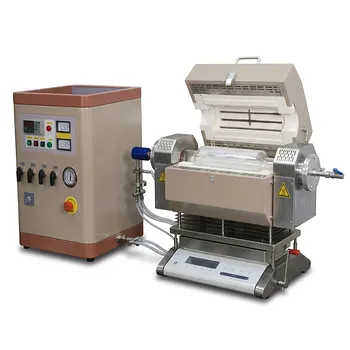
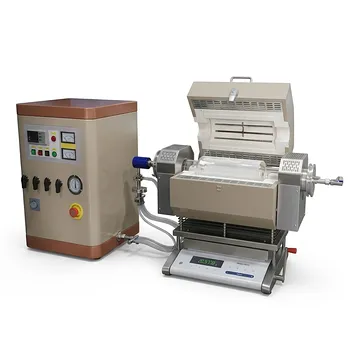
- Weighable Mini Rotary Tube Furnace for Dynamic Thermogravimetric Analysis and Powder Processing
- Mini Rotary Tubular Furnaces for Precision Powder Heat Treatment and Thermogravimetric Analysis
People Also Ask
- Why is a high-precision mass flow controller required for the growth of perovskite films? Ensure Stoichiometry & Quality
- What is the primary function of a PT100 RTD sensor? Achieve High-Precision Temperature Monitoring for Furnaces
- What is the function of high-precision Mass Flow Controllers (MFC) in an ethylene oxidation reaction system? Expert Guide
- How do MFCs regulate Syngas proportions in catalytic reactions? Master Precise Gas Ratios & Maximize H2/CO Yields.
- What is the significance of using high-precision Mass Flow Controllers (MFC) in catalyst reduction? Key to Performance

Tech Team · ThermUnits
Last updated on Jun 02, 2026