What is the function of high-precision Mass Flow Controllers (MFC) in an ethylene oxidation reaction system? Expert Guide
Updated 3 months ago
High-precision Mass Flow Controllers (MFCs) serve as the critical control mechanism for defining the chemical environment within ethylene oxidation systems. These devices are responsible for the exact regulation of feed ratios between ethylene, oxygen, carbon dioxide, and diluent gases like helium. By maintaining strict control over the partial pressures of each reactant, MFCs allow researchers to determine reaction orders with high accuracy, providing the foundational data required to build and validate Micro-Kinetic Models (MKM).
Core Takeaway: In ethylene oxidation, high-precision MFCs transition a system from simple gas mixing to a rigorous kinetic laboratory. They enable the precise manipulation of partial pressures necessary to derive reaction orders and develop reliable Micro-Kinetic Models.
Precision Control of Reactant Stoichiometry
Regulating Feed Ratios for Kinetic Accuracy
The primary role of the MFC is to deliver an exact molar ratio of ethylene and oxygen to the catalyst bed. Because ethylene oxidation is highly sensitive to reactant concentration, even minor deviations in flow can lead to incorrect assumptions about the catalyst's performance.
Controlling Partial Pressures and Reaction Orders
By strictly modulating the flow of individual gas streams against a background of diluent gases like helium, MFCs allow for the isolation of specific variables. This precision is essential for determining reaction orders, which describe how the rate of reaction changes in response to the concentration of each specific component.
Enabling Micro-Kinetic Model (MKM) Validation
The data generated through precise flow regulation is the primary input for Micro-Kinetic Modeling. Without the high-fidelity data provided by MFCs, models cannot accurately predict how the system will behave at different scales or under varying industrial conditions.
Enhancing System Stability and Reaction Steering
Managing Thermal Risks Through Passivation
Ethylene oxidation often involves catalysts that can be sensitive to intense exothermic reactions. High-precision MFCs allow for safe passivation by delivering extremely low concentrations of oxygen (such as 1% $O_2$ in $N_2$) to create a stable protective oxide layer without causing localized hotspots.
Optimizing Contact Time and WHSV
MFCs are used to control the Weight Hourly Space Velocity (WHSV) by regulating the total volume of gas passing over a specific mass of catalyst. This ensures that the contact time is optimized to maximize the selectivity of the desired products while minimizing unwanted byproducts like $CO_2$.
Maintaining Stable Atmospheric Proportions
Fluctuations in gas flow can disrupt thermal convection and the concentration of volatiles above the catalyst sample. High-precision controllers provide a stable flow that eliminates these variables, ensuring that changes in the observed reaction rate are due to chemical kinetics rather than mechanical delivery errors.
Understanding the Trade-offs and Challenges
Accuracy vs. Response Time
While high-precision MFCs offer extreme accuracy, they can sometimes exhibit a lag in response time when changing setpoints during pulse experiments. Achieving a "deadbeat" response—where the flow reaches the target instantaneously without overshoot—requires sophisticated PID tuning within the controller.
Gas-Specific Calibration Requirements
MFCs measure mass flow based on the thermal properties of a specific gas. If a controller calibrated for Nitrogen is used for Ethylene without the proper conversion factors or recalibration, the resulting flow data will be fundamentally flawed, compromising the entire kinetic study.
Sensitivity to Pressure Fluctuations
Even a high-precision MFC can struggle if the upstream pressure is inconsistent. To maintain the integrity of an ethylene oxidation system, the MFC must be supported by high-quality pressure regulators to ensure the sensor within the MFC operates within its linear range.
How to Optimize Your Reaction System
To achieve the best results in ethylene oxidation research, your approach to gas control should align with your specific experimental objectives.
- If your primary focus is Kinetic Modeling: Prioritize MFCs with the highest repeatable accuracy and lowest drift to ensure that calculated reaction orders remain valid across long-term experiments.
- If your primary focus is Catalyst Safety and Passivation: Select MFCs capable of stable delivery at the extreme low end of their scale (1–5% of full scale) to prevent accidental exothermic runaway during oxygen introduction.
- If your primary focus is Product Selectivity: Ensure your MFCs are integrated into a system that allows for rapid gas switching and precise WHSV control to minimize the residence time of intermediate products.
The integration of high-precision mass flow control is the technical bridge between observing a chemical reaction and truly quantifying the underlying kinetic mechanisms of ethylene oxidation.
Summary Table:
| Function | Key Benefit | Research Impact |
|---|---|---|
| Stoichiometry Control | Precise reactant feed ratios | Accurate determination of reaction orders |
| Kinetic Modeling | High-fidelity data input | Reliable Micro-Kinetic Model (MKM) validation |
| Thermal Management | Safe catalyst passivation | Prevention of exothermic hotspots and runaway |
| Flow Optimization | WHSV & Contact time control | Maximized selectivity and minimized byproducts |
Elevate Your R&D Precision with THERMUNITS
Precision in gas control and thermal processing is the foundation of breakthrough material science. As a leading manufacturer of high-temperature laboratory equipment, THERMUNITS provides the advanced solutions required for rigorous industrial R&D. Our comprehensive range of equipment—including Tube, Vacuum, and Atmosphere Furnaces, as well as specialized CVD/PECVD systems—is designed to integrate seamlessly with high-precision control mechanisms like MFCs.
Whether you are performing catalyst passivation in a Muffle Furnace or conducting complex reactions in a Rotary Kiln or Vacuum Induction Melting (VIM) furnace, our solutions ensure the stability and accuracy your research demands.
Ready to optimize your ethylene oxidation system or laboratory setup?
Contact our experts today to explore how THERMUNITS can bring superior thermal control to your laboratory.
References
- Adhika Setiawan, Srinivas Rangarajan. Expanding the Reaction Network of Ethylene Epoxidation on Partially Oxidized Silver Catalysts. DOI: 10.1021/acscatal.4c04521
Mentioned Products
- High Temperature Dual Zone Tube Furnace for Material Science Research and Professional Thermal Processing
- Elongated Two Temperature Zone Pipe Furnace for Industrial Heat Treatment and Material Science Research
- Two Zone Rotary CVD Furnace with Automatic Feeding and Receiving System for Powder Processing
- 1200C Max Compact Auto-Sliding PECVD Furnace with 2 Inch Tube and Vacuum Pump
- Compact Hybrid Muffle and Tube Furnace for 1000C Controlled Atmosphere Laboratory Material Sintering
People Also Ask
- What is the primary function of an industrial-grade dual-zone tube furnace? Mastering CuInP2S6 CVT Crystal Growth
- Why is it necessary to place MoS2 devices in a dual-zone tube furnace for annealing? Optimize Lattice Repair & Doping
- What are the advantages of using a dual-zone tube furnace for MoS2 CVD? Optimize Precursor Control and Material Quality
- Purpose of the reverse gradient step in CVT growth? Master Crystal Purity with Dual-Zone Furnaces
- Why is a dual-zone tube furnace necessary for ReO3-doped Cu2Te CVD? Essential for precise precursor synchronization.

Tech Team · ThermUnits
Last updated on Jun 02, 2026
Related Products
High Temperature Dual Zone Tube Furnace for Material Science Research and Professional Thermal Processing
Elongated Two Temperature Zone Pipe Furnace for Industrial Heat Treatment and Material Science Research
Two Zone Rotary CVD Furnace with Automatic Feeding and Receiving System for Powder Processing
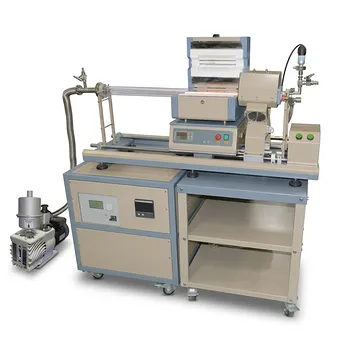
1200C Max Compact Auto-Sliding PECVD Furnace with 2 Inch Tube and Vacuum Pump
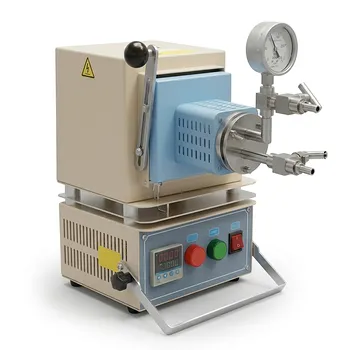
Compact Hybrid Muffle and Tube Furnace for 1000C Controlled Atmosphere Laboratory Material Sintering
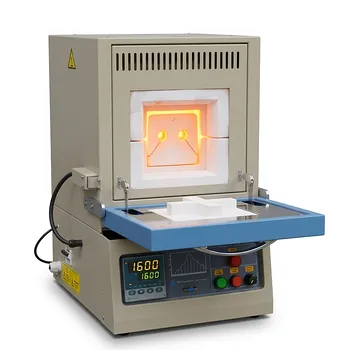
High Temperature Compact Muffle Furnace 1700 C with 30 Segment Programmable Controller and 1.7L Cubic Chamber
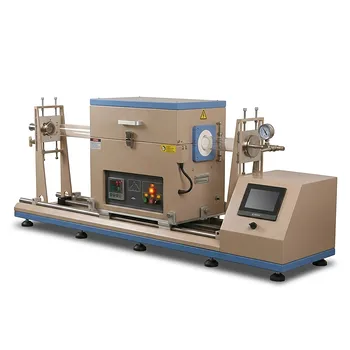
1200C Sliding Tube Furnace for Rapid Thermal Processing and CVD Graphene Growth with 100mm OD Capacity
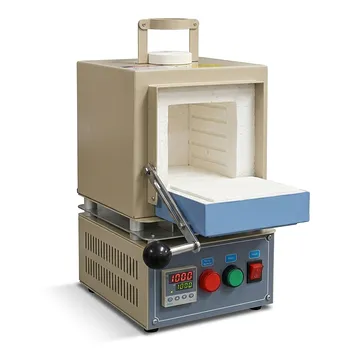
Compact 1000C Muffle Furnace with Programmable Controller and 2 Inch Top Port for Vacuum and Atmosphere Material Research
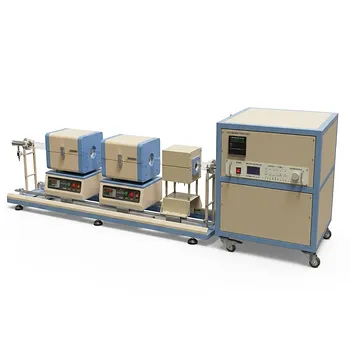
1200C Dual Sliding Tube Furnace with Dual Tubes and Flanges for PECVD Processes
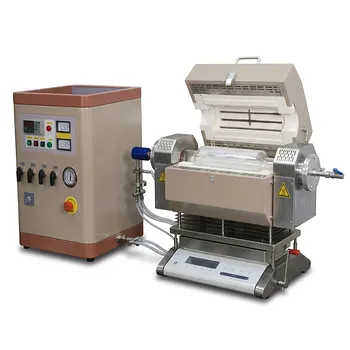
Weighable Mini Rotary Tube Furnace for Dynamic Thermogravimetric Analysis and Powder Processing

Compact Vertical Split Quartz Tube Furnace with Stainless Steel Vacuum Flanges for Rapid Thermal Quenching and Controlled Atmosphere Material Processing
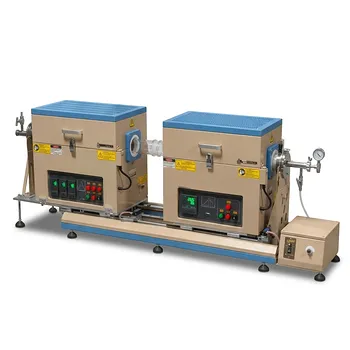
1200C Dual Temperature Zone Slidable Tube Furnace for 2D Material Growth and TCVD Synthesis
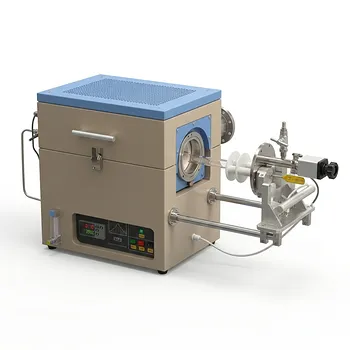
Compact Atmosphere Controlled Rapid Thermal Processing RTP Furnace with 4 Inch ID Quartz Tube 1100C
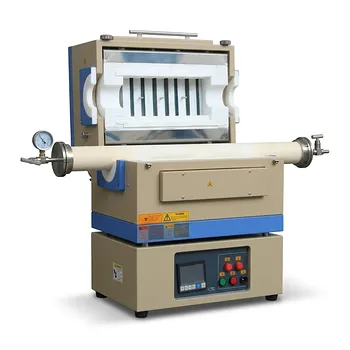
1500C Eight Zone Split Tube Furnace for Thermal Gradient Processing and Advanced Material Research
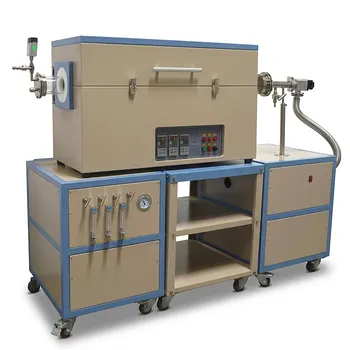
Three Zone Quartz Tube Furnace with 3 Channel Gas Mixer Vacuum Pump and Anti Corrosive Vacuum Gauge
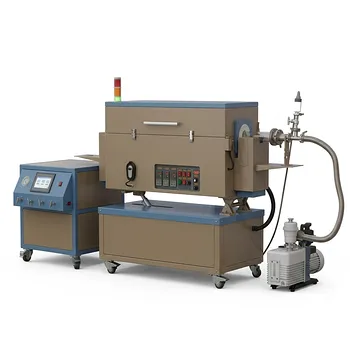
5 Inch Three Zone Rotary Tube Furnace with Integrated Gas Delivery System and 1200C Capability for Advanced Material CVD Processing
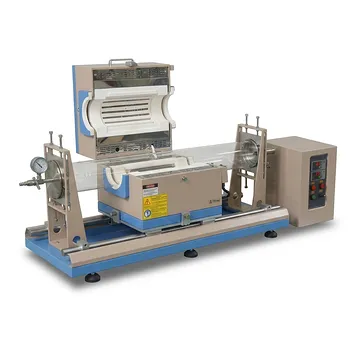
1200C High Temperature 5 Inch Sliding Tube Furnace for Rapid Thermal Processing RTP and Wafer Annealing
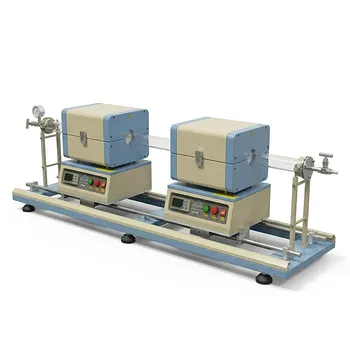
1200C Max Dual Sliding Tube Furnace with 50 mm Tube Flanges for CVD
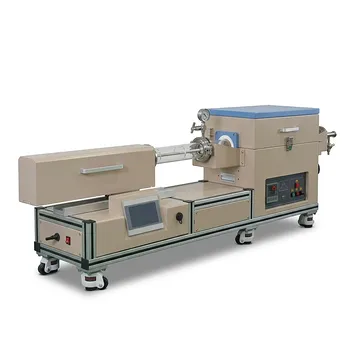
1200C Sliding Internal Crucible Tube Furnace for Controlled Atmosphere Thin Film Deposition and Material Sublimation Research