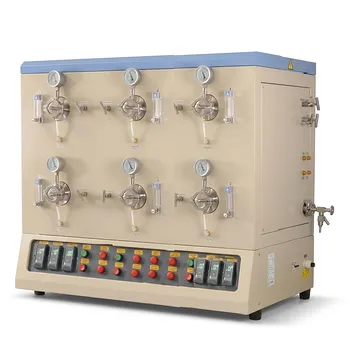
How do MFCs regulate Syngas proportions in catalytic reactions? Master Precise Gas Ratios & Maximize H2/CO Yields.
Updated 3 months ago
Laboratory Mass Flow Controllers (MFCs) regulate synthesis gas (Syngas) proportions by providing high-precision, automated control over the individual flow rates of precursor gases like methane (CH4) and carbon dioxide (CO2). By accurately adjusting these flows, researchers can maintain specific feed ratios and total flow volumes, directly influencing the resulting hydrogen-to-carbon monoxide (H2/CO) yield. This level of control ensures that experimental conditions remain constant and repeatable, even when operating at extreme gas hourly space velocities.
Core Takeaway: MFCs are the critical interface between experimental design and chemical reality, allowing for the precise manipulation of gas stoichiometry to optimize reaction yields and maintain catalyst stability.
Optimizing Reactant Ratios for Target Yields
Precise Control of CH4/CO2 Ratios
The primary function of an MFC in Syngas research is to establish and maintain exact feed ratios, such as a 1.5/1 ratio of CH4 to CO2. This precision is vital because even minor fluctuations in the input gas balance can significantly shift the chemical equilibrium of the reaction.
Maximizing H2 and CO Output
By fine-tuning these input ratios, researchers can maximize the H2/CO yield in the produced synthesis gas. This allows for the customization of Syngas properties for specific downstream applications, such as methanol synthesis or Fischer-Tropsch processes.
Maintaining High-Velocity Repeatability
MFCs ensure that experimental results are highly repeatable even at high gas hourly space velocities, such as 48,000 mL/g-h. This stability is necessary to produce reliable data that can be scaled from a laboratory setting to industrial production.
Ensuring Kinetic Stability and Transport
Managing Residence Time with Carrier Gases
MFCs accurately regulate the flow of carrier gases like Nitrogen or Argon to maintain the fluidization state within a reactor. This stable flow determines the residence time of reactants, ensuring that gasification products move quickly to the catalytic reforming zone.
Preventing Secondary Cracking
By controlling the speed at which gases transition through high-temperature regions, MFCs help prevent excessive secondary cracking. This keeps the chemical process within the desired kinetic parameters and ensures the quality of the final Syngas.
Mitigating Carbon Deposition
Precise flow control is essential for preventing carbon deposition (coking) on the catalyst surface. By maintaining the correct balance of oxidizing and reducing components, MFCs protect the catalyst's active sites and extend its operational lifespan.
Atmosphere Control and Catalyst Safety
Regulating Oxidizing and Reducing Environments
MFCs allow for the creation of specific oxidizing or reducing atmospheres by mixing oxygen, nitrogen, and other components at the milliliter level. This enables the precise execution of parameters like the excess oxygen coefficient (λ) to simulate industrial conditions.
Safely Managing Catalyst Passivation
During the passivation process, MFCs are used to proportion extremely low concentrations of oxygen (e.g., 1% O2 in N2). This prevents intense exothermic oxidation that could cause local high temperatures and damage sensitive catalysts like reduced metallic cobalt.
Fine-Tuning Reaction Kinetics
In advanced synthesis, MFCs micro-adjust the flow of reactant molecules to control how atoms enter a lattice, such as during nitrogen doping. This level of control allows for the adjustment of electrical properties like resistivity without compromising the structural integrity of the material.
Understanding the Trade-offs
Calibration and Gas Specificity
One primary challenge is that MFCs are typically calibrated for specific gases; using a controller designed for Nitrogen with Methane requires conversion factors that can introduce slight inaccuracies. For the highest precision in Syngas production, dedicated calibration for each reactive gas is often required.
Pressure Sensitivity and Response Time
While MFCs provide excellent steady-state control, they can exhibit latency or "overshoot" during rapid setpoint changes. In dynamic reactions where flow needs to change instantly, the physical response time of the MFC valve can become a limiting factor.
Maintenance and Contamination Risks
MFCs are precision instruments that are highly sensitive to particulate matter or moisture. In Syngas applications, any upstream impurities can clog the narrow sensor bypass, leading to drift in flow accuracy and requiring expensive recalibration.
How to Apply This to Your Project
Recommendations for Implementation
- If your primary focus is maximizing H2/CO yield: Use high-precision MFCs to strictly maintain CH4/CO2 ratios and minimize deviation from your calculated stoichiometric balance.
- If your primary focus is catalyst longevity: Prioritize MFCs with fast response times to ensure that oxidizing/reducing atmospheres are adjusted quickly to prevent carbon buildup.
- If your primary focus is safe catalyst handling: Implement low-flow MFCs specifically for the passivation phase to manage oxygen concentrations at the 1% level or lower.
- If your primary focus is high-velocity testing: Select MFCs with high-pressure ratings and thermal stability to ensure consistent delivery at flow rates up to 48,000 mL/g-h.
By integrating precise mass flow control, you transform a volatile chemical process into a predictable and optimized laboratory environment.
Summary Table:
| Feature | Function in Syngas Research | Research Impact |
|---|---|---|
| Ratio Control | Maintains exact CH4/CO2 feed proportions | Maximizes H2/CO yield & repeatability |
| Flow Stability | Regulates carrier gas & residence time | Prevents secondary cracking & coking |
| Atmosphere Tuning | Adjusts oxidizing/reducing environments | Protects catalyst & enables nitrogen doping |
| Passivation Control | Manages low-concentration O2 delivery | Safely handles reduced metallic catalysts |
Elevate Your Material Research with THERMUNITS
Precise gas control is the backbone of successful Syngas synthesis and catalytic R&D. As a leading manufacturer of high-temperature laboratory equipment, THERMUNITS provides the integrated thermal solutions you need to turn complex chemical designs into repeatable reality.
Our comprehensive range includes CVD/PECVD systems, Vacuum, Atmosphere, Tube, and Muffle furnaces, all designed to work seamlessly with advanced mass flow control for precise material processing. Whether you are optimizing H2 yields or developing next-generation catalysts, our equipment offers the thermal stability and atmospheric precision required for industrial-grade R&D.
Ready to optimize your laboratory setup? Contact THERMUNITS Today to discuss your specific furnace and gas delivery requirements with our experts!
References
- Nonthicha Sae-tang, Sakhon Ratchahat. Simultaneous production of syngas and carbon nanotubes from CO2/CH4 mixture over high-performance NiMo/MgO catalyst. DOI: 10.1038/s41598-024-66938-6
Mentioned Products
- High Temperature Dual Zone Tube Furnace for Material Science Research and Professional Thermal Processing
- Elongated Two Temperature Zone Pipe Furnace for Industrial Heat Treatment and Material Science Research
- Two Zone Rotary CVD Furnace with Automatic Feeding and Receiving System for Powder Processing
- 1200C Max Compact Auto-Sliding PECVD Furnace with 2 Inch Tube and Vacuum Pump
- Compact Hybrid Muffle and Tube Furnace for 1000C Controlled Atmosphere Laboratory Material Sintering
People Also Ask
- Purpose of the reverse gradient step in CVT growth? Master Crystal Purity with Dual-Zone Furnaces
- What is the primary function of an industrial-grade dual-zone tube furnace? Mastering CuInP2S6 CVT Crystal Growth
- Why is a dual-zone tube furnace necessary for ReO3-doped Cu2Te CVD? Essential for precise precursor synchronization.
- What are the advantages of using a dual-zone tube furnace for MoS2 CVD? Optimize Precursor Control and Material Quality
- Why is it necessary to place MoS2 devices in a dual-zone tube furnace for annealing? Optimize Lattice Repair & Doping

Tech Team · ThermUnits
Last updated on Jun 03, 2026
Related Products
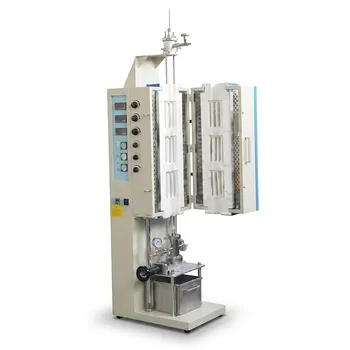
High Temperature Dual Zone Tube Furnace for Material Science Research and Professional Thermal Processing
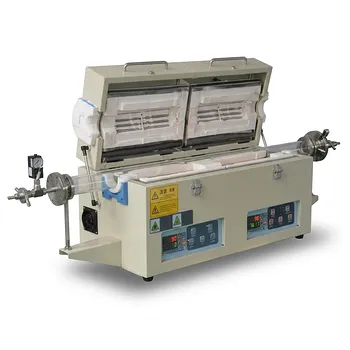
Elongated Two Temperature Zone Pipe Furnace for Industrial Heat Treatment and Material Science Research
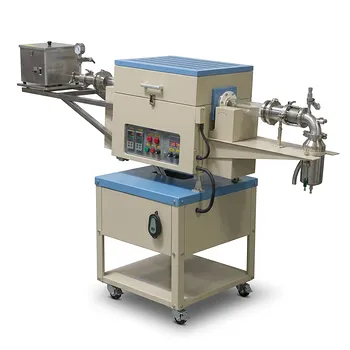
Two Zone Rotary CVD Furnace with Automatic Feeding and Receiving System for Powder Processing
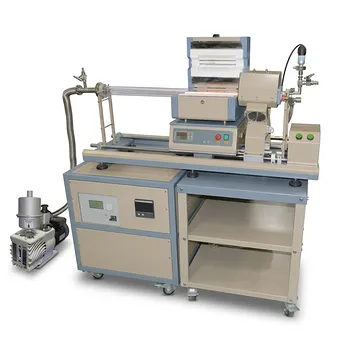
1200C Max Compact Auto-Sliding PECVD Furnace with 2 Inch Tube and Vacuum Pump
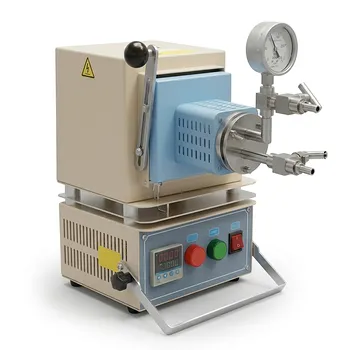
Compact Hybrid Muffle and Tube Furnace for 1000C Controlled Atmosphere Laboratory Material Sintering
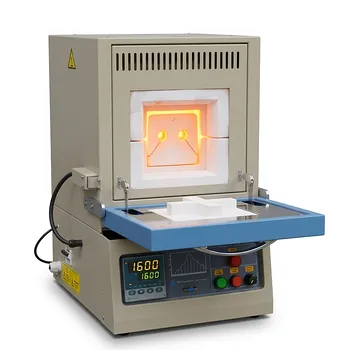
High Temperature Compact Muffle Furnace 1700 C with 30 Segment Programmable Controller and 1.7L Cubic Chamber
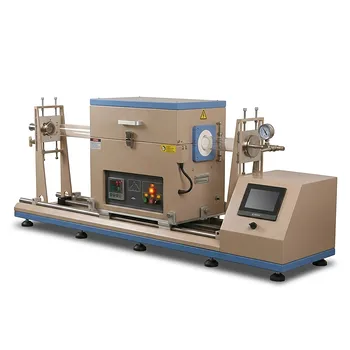
1200C Sliding Tube Furnace for Rapid Thermal Processing and CVD Graphene Growth with 100mm OD Capacity
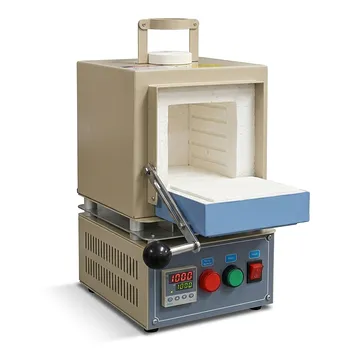
Compact 1000C Muffle Furnace with Programmable Controller and 2 Inch Top Port for Vacuum and Atmosphere Material Research
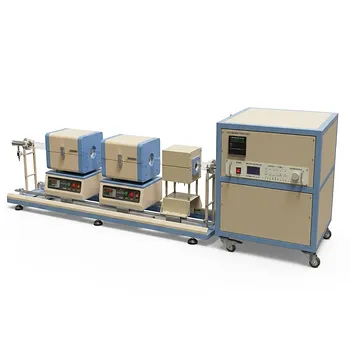
1200C Dual Sliding Tube Furnace with Dual Tubes and Flanges for PECVD Processes
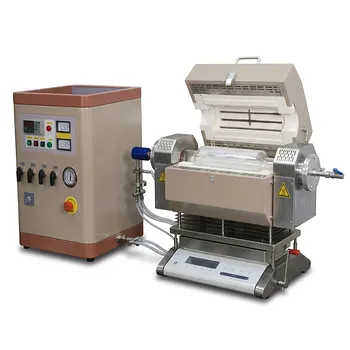
Weighable Mini Rotary Tube Furnace for Dynamic Thermogravimetric Analysis and Powder Processing

Compact Vertical Split Quartz Tube Furnace with Stainless Steel Vacuum Flanges for Rapid Thermal Quenching and Controlled Atmosphere Material Processing
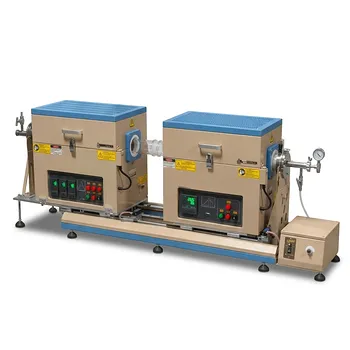
1200C Dual Temperature Zone Slidable Tube Furnace for 2D Material Growth and TCVD Synthesis
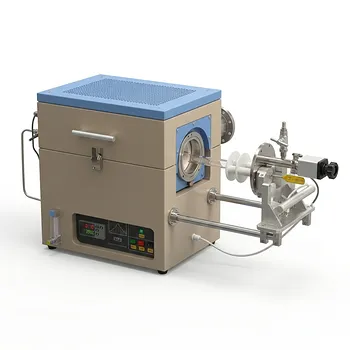
Compact Atmosphere Controlled Rapid Thermal Processing RTP Furnace with 4 Inch ID Quartz Tube 1100C
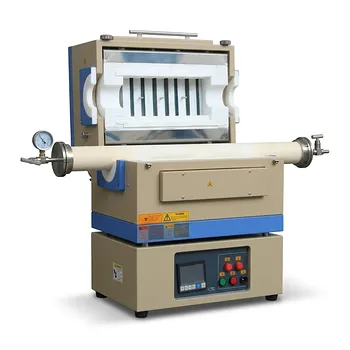
1500C Eight Zone Split Tube Furnace for Thermal Gradient Processing and Advanced Material Research
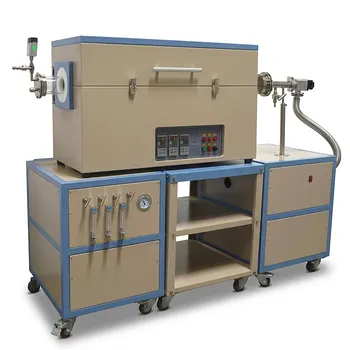
Three Zone Quartz Tube Furnace with 3 Channel Gas Mixer Vacuum Pump and Anti Corrosive Vacuum Gauge

5 Inch Three Zone Rotary Tube Furnace with Integrated Gas Delivery System and 1200C Capability for Advanced Material CVD Processing
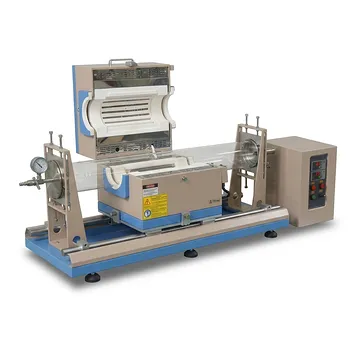
1200C High Temperature 5 Inch Sliding Tube Furnace for Rapid Thermal Processing RTP and Wafer Annealing
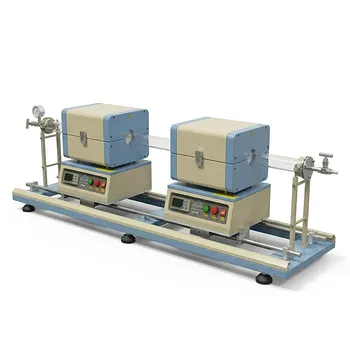
1200C Max Dual Sliding Tube Furnace with 50 mm Tube Flanges for CVD
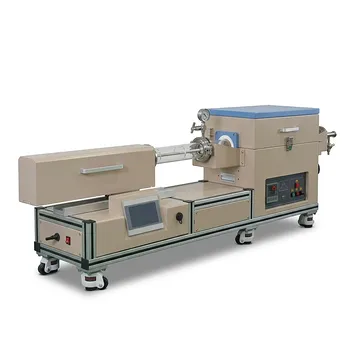
1200C Sliding Internal Crucible Tube Furnace for Controlled Atmosphere Thin Film Deposition and Material Sublimation Research