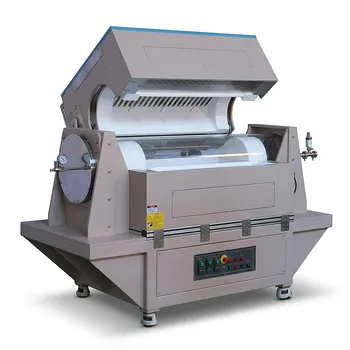
Why is a high-precision mass flow controller required for the growth of perovskite films? Ensure Stoichiometry & Quality
Updated 3 months ago
High-precision mass flow controllers (MFCs) are the primary mechanism for regulating the transport kinetics and chemical composition of precursor vapors during film deposition. By maintaining a strictly constant flow of carrier gases like argon or nitrogen, these devices ensure that precursors are delivered to the substrate at a predictable rate. This precision is required to achieve uniform film thickness, eliminate stoichiometric defects, and produce the high-quality single-crystal structures necessary for efficient optoelectronic devices.
Core Takeaway: A high-precision MFC transforms the unpredictable environment of a high-temperature furnace into a controlled growth chamber by stabilizing the concentration and delivery speed of precursor vapors. This stability is the deciding factor in whether a perovskite film achieves the structural integrity and surface flatness required for advanced micro-nanofabrication.
Managing Vapor Transport and Concentration
The growth of perovskite films often relies on the sublimation of solid precursors into a vapor phase, which is then carried to a substrate by a gas stream.
Controlling Precursor Transport Efficiency
The carrier gas flow rate directly determines how efficiently precursor vapors move from the source to the reaction zone. A high-precision MFC prevents fluctuations in this flow, ensuring that the substrate receives a steady supply of material throughout the growth cycle.
Regulating Concentration Gradients
The spatial distribution of vapors within a tube furnace is highly sensitive to gas velocity. Stable flow rates allow for a consistent concentration gradient, which is essential for uniform film growth across the entire surface of the substrate.
Ensuring Stable Nucleation
Perovskite crystals require a specific "supersaturation" level to begin forming (nucleating) on a substrate. By providing a constant flow, the MFC allows these crystals to nucleate and grow at a rhythmic, predictable rate rather than in erratic bursts.
Achieving Stoichiometric Precision
Perovskite films are complex chemical structures that require a specific ratio of components, such as methylammonium iodide (MAI) and lead acetate.
Decoupling Multiple Precursor Sources
Advanced systems use independent MFC branches for different precursors because each material has a unique vapor pressure. This configuration allows researchers to adjust the flow for each component separately, effectively balancing the chemical "recipe" in real-time.
Eliminating Structural Defects
Inaccurate flow rates can lead to an excess of one precursor, resulting in defects like residual lead iodide or iodine vacancies. High-precision control ensures the film reaches the correct stoichiometry, which significantly improves the power conversion efficiency (PCE) of resulting solar cells.
Promoting Specific Crystallographic Orientations
The way atoms arrange themselves in a lattice is often influenced by the density of the vapor phase. Strict regulation of the reaction atmosphere via an MFC helps promote growth in specific directions, leading to films with superior charge-transport properties.
Understanding the Trade-offs
While high-precision MFCs are essential, they introduce specific challenges that must be managed to ensure system reliability.
Calibration Sensitivity
MFCs are often calibrated for specific gases; using an argon-calibrated controller for nitrogen without proper conversion factors can lead to significant errors. Regular re-calibration is necessary because even minor drifts in sensor accuracy can ruin the delicate stoichiometric balance of a perovskite film.
System Complexity and Cost
Implementing independent industrial-grade carrier gas branches increases the initial capital investment and the complexity of the gas handling system. However, attempting to save costs with lower-grade controllers often results in "batch-to-batch" inconsistency, which is more expensive in terms of wasted materials and failed experiments.
How to Apply This to Your Project
To achieve the best results in perovskite film growth, your choice of flow control should align with your specific research or production goals.
- If your primary focus is single-crystal morphology: Invest in MFCs with high repeatability to ensure the surface remains flat and suitable for subsequent lithography.
- If your primary focus is maximizing solar cell efficiency: Prioritize multi-channel MFC setups that allow for the decoupled adjustment of organic and inorganic precursors to eliminate chemical defects.
- If your primary focus is large-area uniformity: Ensure your MFC can maintain stability at lower flow rates where boundary layer thickness is more easily controlled.
Precise gas regulation is the bridge between basic chemical precursors and the high-performance crystalline films that define the next generation of solar energy.
Summary Table:
| Feature Controlled by MFC | Impact on Perovskite Growth | Key Benefit |
|---|---|---|
| Vapor Transport | Regulates precursor delivery rate | Consistent film thickness |
| Stoichiometry | Balances chemical component ratios | Minimal structural defects |
| Nucleation Rate | Stabilizes supersaturation levels | Predictable crystal formation |
| Concentration Gradient | Ensures uniform vapor distribution | Superior surface flatness |
Elevate Your Material Research with THERMUNITS
Achieving the perfect perovskite film requires more than just heat; it requires absolute control over your environment. THERMUNITS is a leading manufacturer of high-temperature laboratory equipment specifically designed for the rigorous demands of material science and industrial R&D.
Our comprehensive range of thermal solutions—including CVD/PECVD systems, Tube Furnaces integrated with high-precision gas handling, Vacuum and Atmosphere furnaces, and Rotary kilns—is engineered to provide the repeatability and stoichiometric precision necessary for next-generation solar energy and micro-nanofabrication.
Ready to eliminate batch-to-batch inconsistency and boost your lab's productivity?
Contact THERMUNITS Today to discuss your specific heat treatment requirements with our technical experts!
References
- Qi Han, Ji Li. Inorganic perovskite-based active multifunctional integrated photonic devices. DOI: 10.1038/s41467-024-45565-9
Mentioned Products
- High Temperature Compact Muffle Furnace 1700 C with 30 Segment Programmable Controller and 1.7L Cubic Chamber
- High Temperature Dual Zone Tube Furnace for Material Science Research and Professional Thermal Processing
- 1200°C Atmosphere Controlled Automatic Bottom Loading Furnace with 6 Inch Quartz Tube
- Weighable Mini Rotary Tube Furnace for Dynamic Thermogravimetric Analysis and Powder Processing
- 1200C High Temperature 5 Inch Sliding Tube Furnace for Rapid Thermal Processing RTP and Wafer Annealing
People Also Ask
- What role does a high-temperature muffle furnace play in the synthesis of Melem precursors? Precision Polymerization.
- Why is annealing in a high-temperature muffle furnace necessary for SiO2/Si substrate pretreatment before monolayer WS2 synthesis?
- What is the function of a high-temperature muffle furnace in phosphorus-modified zeolite catalyst preparation?
- What is the function of a muffle furnace in aluminoborosilicate glass prep? Stabilize Raw Materials for Superior Purity
- What is the purpose of using muffle or tube furnaces in glass synthesis? Achieve Precise Melt-Quenching & Homogeneity

Tech Team · ThermUnits
Last updated on Jun 03, 2026
Related Products
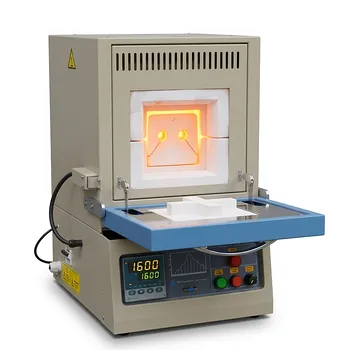
High Temperature Compact Muffle Furnace 1700 C with 30 Segment Programmable Controller and 1.7L Cubic Chamber
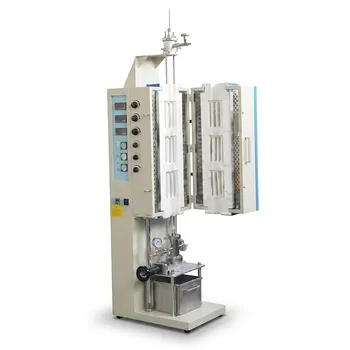
High Temperature Dual Zone Tube Furnace for Material Science Research and Professional Thermal Processing
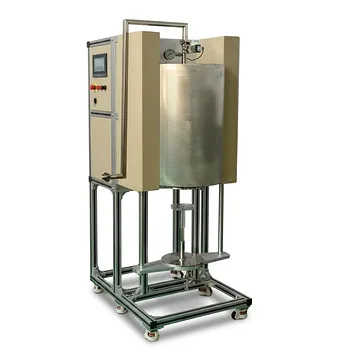
1200°C Atmosphere Controlled Automatic Bottom Loading Furnace with 6 Inch Quartz Tube
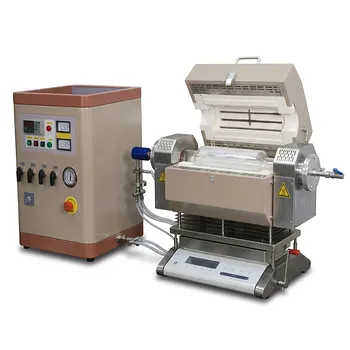
Weighable Mini Rotary Tube Furnace for Dynamic Thermogravimetric Analysis and Powder Processing
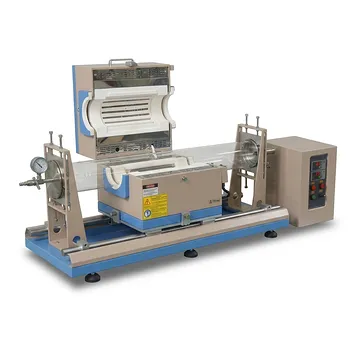
1200C High Temperature 5 Inch Sliding Tube Furnace for Rapid Thermal Processing RTP and Wafer Annealing
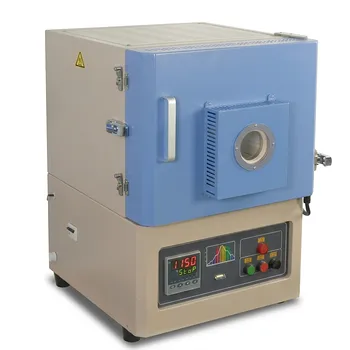
High Temperature Benchtop Muffle Furnace with Quartz Observation Window for Thermal Imaging and Material Analysis
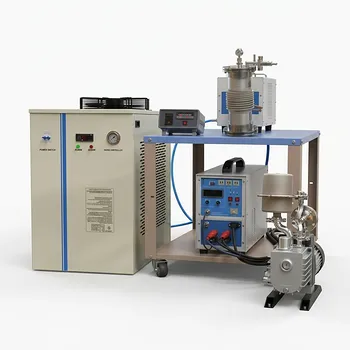
Induction Heating System with Temperature Control for High Temperature Vacuum Sintering and Melting
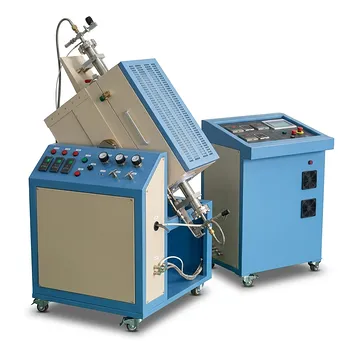
1100C High Pressure Rocking Tube Furnace with 2 Inch Super Alloy Processing Tube for Material Synthesis

Top Loading Muffle Furnace 1200°C High Temperature Crucible Furnace with 9 Liter Chamber and Programmable PID Controller
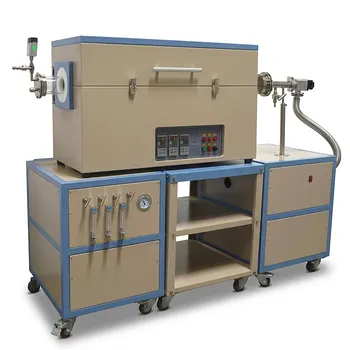
Three Zone Quartz Tube Furnace with 3 Channel Gas Mixer Vacuum Pump and Anti Corrosive Vacuum Gauge
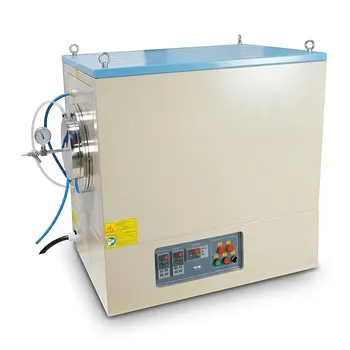
Dual Zone Tube Furnace 1100C with 11 Inch Quartz Tube and Vacuum Flanges for 8 Inch Wafer Processing
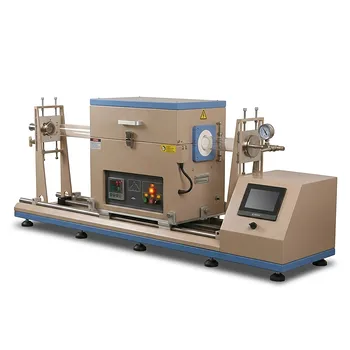
1200C Sliding Tube Furnace for Rapid Thermal Processing and CVD Graphene Growth with 100mm OD Capacity
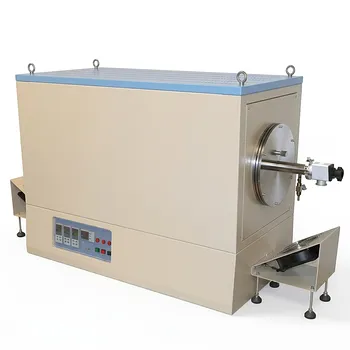
1100°C Three Zone Tube Furnace with 8.5 to 11 Inch OD Quartz Tube and Vacuum Flanges for Large Wafer Processing
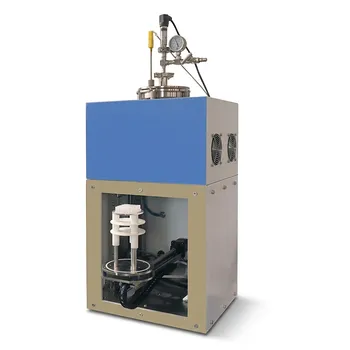
Rapid Thermal Processing RTP Atmosphere Controlled Bottom Loading Furnace 1100C High Throughput 50C per Second Heating Rate
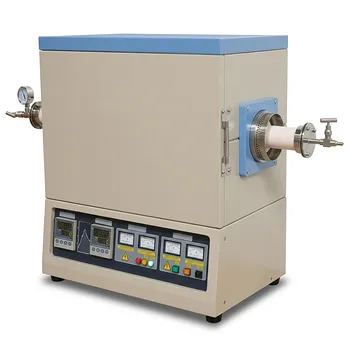
High Temperature 1700C Dual Zone Tube Furnace for Material Science and Industrial Chemical Vapor Deposition Research
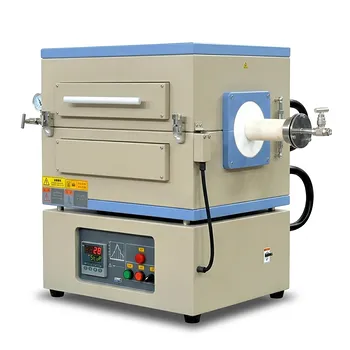
1500°C Split Tube Furnace with Alumina Tube and Vacuum Sealing Flanges for Material Research
1500C Two Zone Split Tube Furnace with Vacuum Flange and 80mm Alumina Tube
1500C Five Zone Split Tube Furnace with 84mm Mullite Tube and Vacuum Flanges
High Temperature Four Chamber Box Furnace for High Throughput Materials Research and Space Saving Thermal Processing