What is the significance of using high-precision Mass Flow Controllers (MFC) in catalyst reduction? Key to Performance
Updated 3 months ago
High-precision Mass Flow Controllers (MFCs) are the critical regulators of chemical kinetics during the catalyst reduction phase. They provide the exact gas stoichiometry and flow stability required to convert catalyst precursors into active metallic particles uniformly. This precision is the primary factor in ensuring consistent electrode performance and preventing structural defects in the final coating.
High-precision MFCs ensure the repeatable transformation of catalyst precursors by maintaining strict control over gas ratios and flow rates. This level of accuracy is vital for managing reduction kinetics, ensuring thermal safety during passivation, and achieving the specific material properties required for high-performance applications.
Precise Control of Reduction Kinetics
Achieving Uniform Particle Conversion
The primary role of an MFC in catalyst reduction is to manage the reduction kinetics by delivering stable ratios of reducing gases. This stability ensures that the conversion of precursors into metallic particles happens at specific, controlled temperatures. Without this precision, the catalyst coating may develop non-uniform active sites, leading to degraded or inconsistent electrode performance.
Managing Stoichiometric Ratios
High-precision MFCs allow researchers to regulate the exact stoichiometric ratios of gases like hydrogen and nitrogen. This is particularly important when introducing trace impurities or promoters, such as oxygen at concentrations as low as 25 ppm. Accurate regulation allows for the observation of structural evolution and the quantification of poisoning effects that could otherwise ruin a batch.
Optimizing Contact Time and WHSV
The Weight Hourly Space Velocity (WHSV) and the total flow rate entering the reaction zone are strictly governed by the MFC. By optimizing the contact time between the reactants and the catalyst surface, the MFC steers the reaction pathway toward the desired product. This control is fundamental to inhibiting byproduct formation and maximizing the quality of the gaseous products.
Thermal Management and Process Safety
Preventing Exothermic Runaway
In processes such as the passivation of reduced metallic cobalt, MFCs are responsible for proportioning extremely low concentrations of oxygen. Because reduced metals are highly prone to exothermic oxidation, the MFC prevents intense reactions that cause local high temperatures. This ensures the formation of a thin, stable protective oxide layer rather than a catastrophic thermal event.
Maintaining Atmospheric Stability
A high-precision MFC ensures the reproducibility of the flow field within the reaction zone, such as a tube furnace. This stability is essential for obtaining accurate kinetic parameters and maintaining a controlled environment for degradation or combustion. Consistent atmosphere control is the only way to prevent impurities and minimize material defects during the synthesis of sensitive coatings.
Regulating Precursor Transport
In coating processes involving vapor deposition, the MFC acts as the gatekeeper for carrier gas flow rates. This flow directly determines the transport efficiency of precursor vapors and the thickness of the boundary layer. Precise feedback control enables a uniform distribution of crystal nuclei, which is essential for large-area growth and high-quality film production.
Understanding the Trade-offs
Calibration and Gas Sensitivity
MFCs are typically calibrated for specific gases, meaning a device calibrated for Nitrogen may not provide the same accuracy for Hydrogen without a conversion factor. While high-precision models offer superior control, they require regular calibration to maintain their accuracy. Users must weigh the cost of high-end instrumentation against the risk of batch failure due to flow drift.
Response Time vs. Stability
In some reduction setups, there is a trade-off between the response time of the MFC and the stability of the flow. Rapidly changing flow rates can lead to pressure fluctuations within the reaction chamber. For catalyst reduction, a slow, stable ramp-up is usually preferred over high-speed adjustments to ensure thermal equilibrium.
How to Apply This to Your Project
Recommendations for Implementation
- If your primary focus is consistent electrode performance: Invest in MFCs with high repeatability to ensure that every batch of impregnated catalyst undergoes identical reduction kinetics.
- If your primary focus is safety during passivation: Prioritize MFCs capable of handling extremely low flow rates and precise oxygen concentrations to prevent exothermic runaway.
- If your primary focus is research and deactivation studies: Utilize high-precision controllers that allow for the stable introduction of trace impurities (ppm levels) to accurately quantify poisoning effects.
Precise flow regulation is the fundamental bridge between a successful chemical recipe and a high-performance functional catalyst coating.
Summary Table:
| Feature | Impact on Catalyst Coating | Key Parameter Managed |
|---|---|---|
| Kinetics Control | Ensures uniform active site conversion | Gas Stoichiometric Ratios |
| Thermal Safety | Prevents exothermic runaway during passivation | Low-concentration Oxygen (ppm) |
| Flow Stability | Maintains reproducible WHSV & flow fields | Carrier Gas Flow Rates |
| Precursor Transport | Controls film thickness and nucleation | Boundary Layer Efficiency |
Elevate Your Material Research with THERMUNITS
Precise gas control is only half the battle; pairing it with the right thermal environment is essential for breakthrough results. THERMUNITS is a leading manufacturer of high-temperature laboratory equipment for material science and industrial R&D. We provide the robust hardware necessary to complement high-precision MFC systems, ensuring your catalyst reduction and coating processes are safe, repeatable, and efficient.
Our comprehensive range of thermal processing solutions includes:
- Advanced Furnaces: Tube, Muffle, Vacuum, Atmosphere, and Rotary Furnaces.
- Specialized Systems: CVD/PECVD systems, Vacuum Induction Melting (VIM), and Hot Press Furnaces.
- Lab Essentials: Dental Furnaces, Thermal Elements, and custom heat treatment equipment.
Ready to optimize your lab’s thermal processing performance?
Contact our expert team today to discuss how THERMUNITS can provide the precision and reliability your research demands.
References
- Guanzhi Wang, Michael C. Tucker. Simple processing via thermal treatment and catalyst infiltration to enhance nickel electrode performance for liquid alkaline water electrolyzers. DOI: 10.1016/j.ijhydene.2024.06.246
Mentioned Products
- High Temperature Dual Zone Tube Furnace for Material Science Research and Professional Thermal Processing
- Elongated Two Temperature Zone Pipe Furnace for Industrial Heat Treatment and Material Science Research
- Two Zone Rotary CVD Furnace with Automatic Feeding and Receiving System for Powder Processing
- 1200C Max Compact Auto-Sliding PECVD Furnace with 2 Inch Tube and Vacuum Pump
- Compact Hybrid Muffle and Tube Furnace for 1000C Controlled Atmosphere Laboratory Material Sintering
People Also Ask
- What is the primary function of an industrial-grade dual-zone tube furnace? Mastering CuInP2S6 CVT Crystal Growth
- Why is it necessary to place MoS2 devices in a dual-zone tube furnace for annealing? Optimize Lattice Repair & Doping
- What are the advantages of using a dual-zone tube furnace for MoS2 CVD? Optimize Precursor Control and Material Quality
- Purpose of the reverse gradient step in CVT growth? Master Crystal Purity with Dual-Zone Furnaces
- Why is a dual-zone tube furnace necessary for ReO3-doped Cu2Te CVD? Essential for precise precursor synchronization.

Tech Team · ThermUnits
Last updated on Jun 03, 2026
Related Products
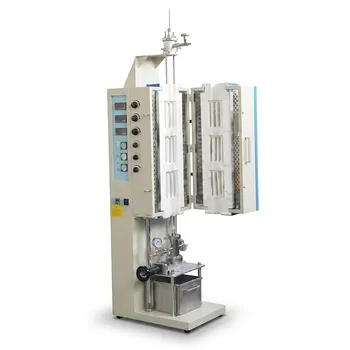
High Temperature Dual Zone Tube Furnace for Material Science Research and Professional Thermal Processing
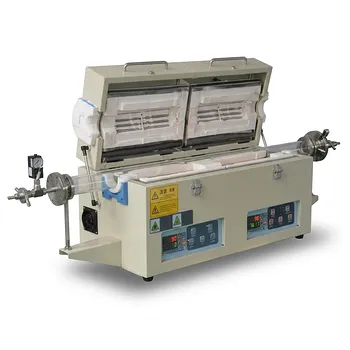
Elongated Two Temperature Zone Pipe Furnace for Industrial Heat Treatment and Material Science Research
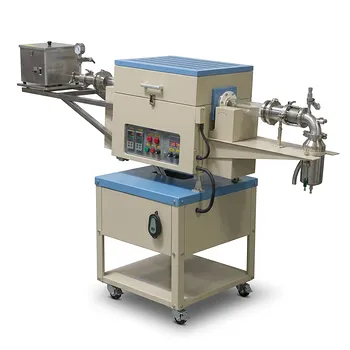
Two Zone Rotary CVD Furnace with Automatic Feeding and Receiving System for Powder Processing
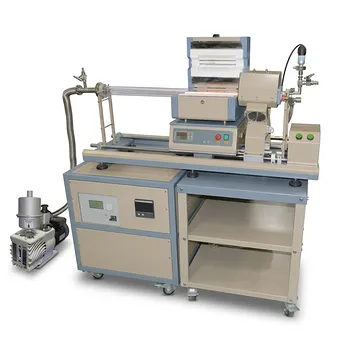
1200C Max Compact Auto-Sliding PECVD Furnace with 2 Inch Tube and Vacuum Pump
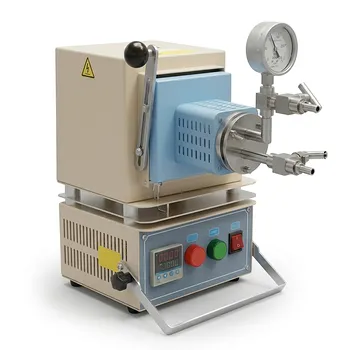
Compact Hybrid Muffle and Tube Furnace for 1000C Controlled Atmosphere Laboratory Material Sintering
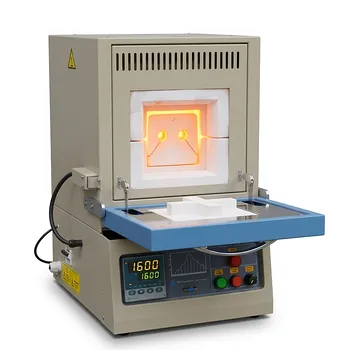
High Temperature Compact Muffle Furnace 1700 C with 30 Segment Programmable Controller and 1.7L Cubic Chamber
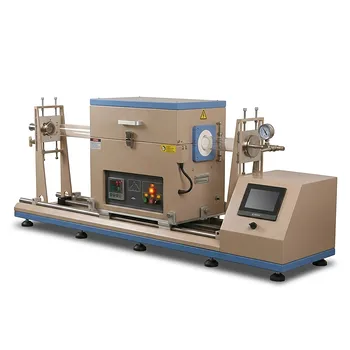
1200C Sliding Tube Furnace for Rapid Thermal Processing and CVD Graphene Growth with 100mm OD Capacity
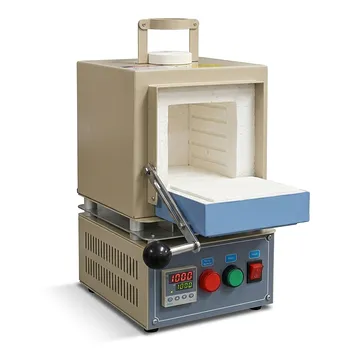
Compact 1000C Muffle Furnace with Programmable Controller and 2 Inch Top Port for Vacuum and Atmosphere Material Research
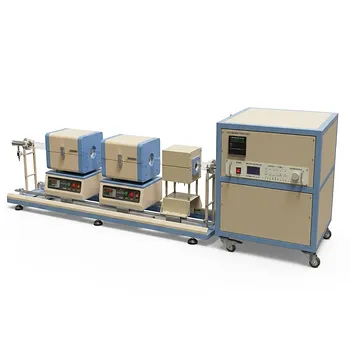
1200C Dual Sliding Tube Furnace with Dual Tubes and Flanges for PECVD Processes
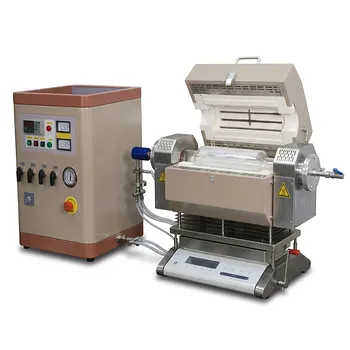
Weighable Mini Rotary Tube Furnace for Dynamic Thermogravimetric Analysis and Powder Processing

Compact Vertical Split Quartz Tube Furnace with Stainless Steel Vacuum Flanges for Rapid Thermal Quenching and Controlled Atmosphere Material Processing
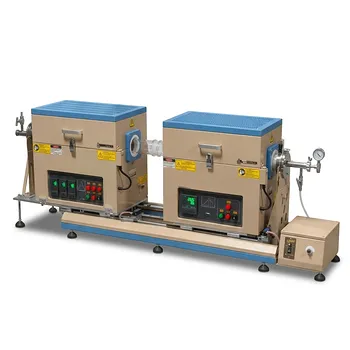
1200C Dual Temperature Zone Slidable Tube Furnace for 2D Material Growth and TCVD Synthesis
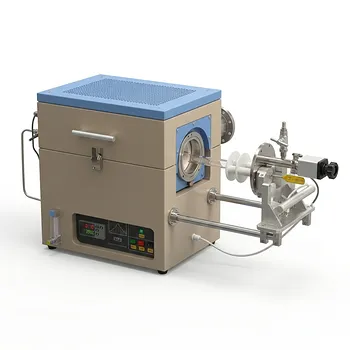
Compact Atmosphere Controlled Rapid Thermal Processing RTP Furnace with 4 Inch ID Quartz Tube 1100C
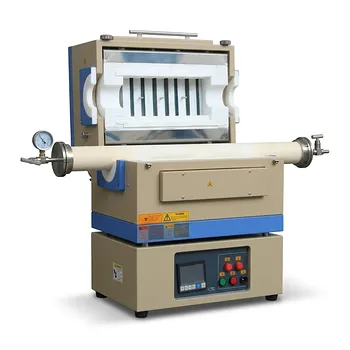
1500C Eight Zone Split Tube Furnace for Thermal Gradient Processing and Advanced Material Research
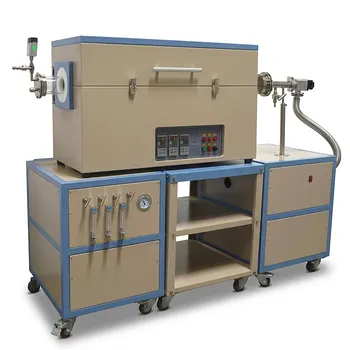
Three Zone Quartz Tube Furnace with 3 Channel Gas Mixer Vacuum Pump and Anti Corrosive Vacuum Gauge

5 Inch Three Zone Rotary Tube Furnace with Integrated Gas Delivery System and 1200C Capability for Advanced Material CVD Processing
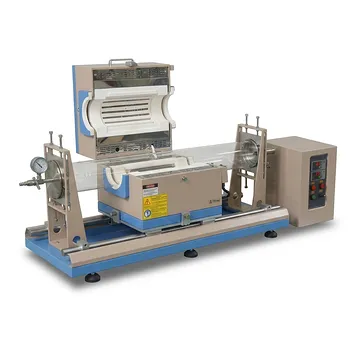
1200C High Temperature 5 Inch Sliding Tube Furnace for Rapid Thermal Processing RTP and Wafer Annealing
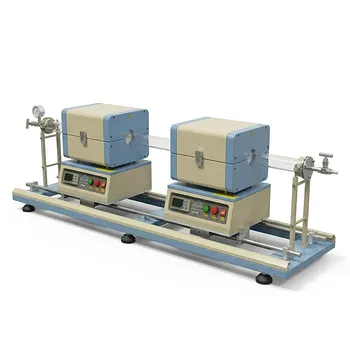
1200C Max Dual Sliding Tube Furnace with 50 mm Tube Flanges for CVD
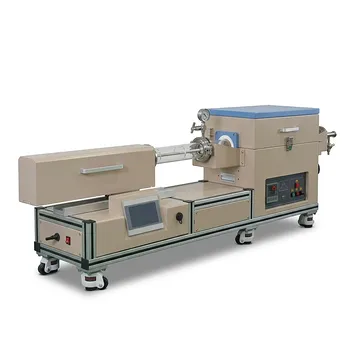
1200C Sliding Internal Crucible Tube Furnace for Controlled Atmosphere Thin Film Deposition and Material Sublimation Research
